

14 min 06 sec
Available in: English
How I Built This: The Unexpected Paths to Success from the World’s Most Inspiring Entrepreneurs
By Guy Raz
Guy Raz draws on the stories of founders behind brands like Boston Beer, FUBU, Away and Method to show how they started, survived the hardest stretch and built companies that mean more than money.
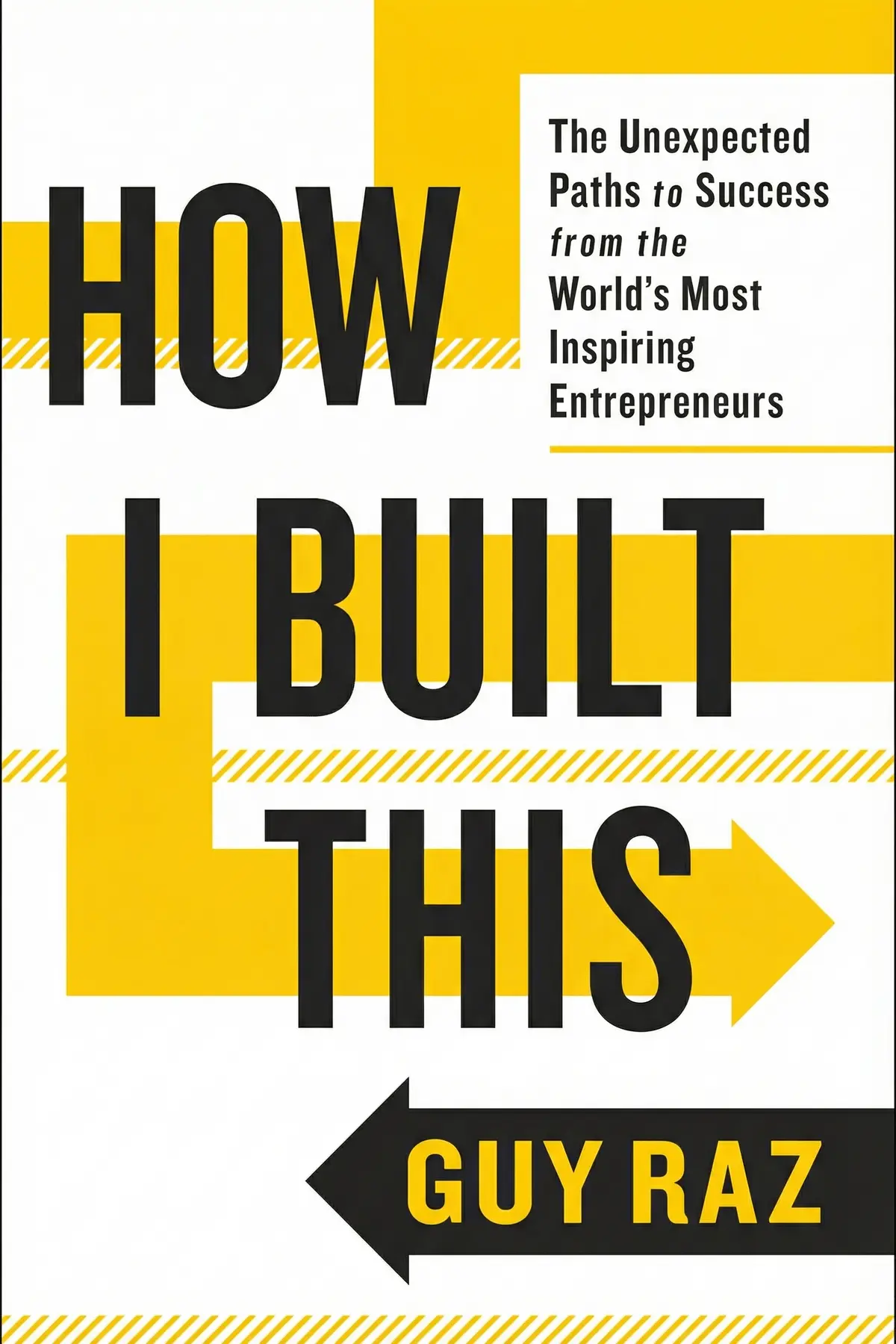
Table of Content
1. Introduction
1 min 00 sec
Most people with a business idea never start, and most of those who do start give up in the hard middle, when the money runs out and nobody is buying. In How I Built This, Guy Raz, the journalist who interviews famous founders on his podcast of the same name, argues that the stories behind successful brands follow the shape of a hero’s tale. There is an odd idea, a brush with collapse and a stubborn decision to keep going.
The founders he follows built companies such as Boston Beer, FUBU, Away and Method, and none of them got there on talent or luck alone. They came through because of a handful of habits. They leaped with a safety net and leaned on the right partners. They found a side door into crowded markets, put pride aside in a crisis and held onto a purpose larger than profit. Those habits can be copied, whether you are planning a startup or weighing a bold move inside someone else’s company.
2. Take the leap, but pack a parachute
2 min 03 sec
A consultant on track for a fortune walked away from it, and a clothing founder kept waiting tables even while his brand was popular. Both choices were right, and the reason they fit together surprises most would-be founders.
3. Pick a cofounder who covers your weak spots
1 min 58 sec
One founding pair raised millions before selling a single product. Another lived on instant noodles in a shared room for a year. Both point to the same choice that can decide whether an idea survives.
4. Beat giants by finding the door they ignore
1 min 57 sec
Store fridges were packed with drinks from huge companies, and a newcomer had no hope of winning that space. His way in had nothing to do with outspending them, and it moved ten thousand bottles a week.
5. Survive the trough of sorrow by keeping going
2 min 02 sec
There is a point in every young company when investors stop calling and nobody is buying. Most founders quit right there, and the way out is often not the one they are hoping for.
6. Owning a disaster can save your company
1 min 59 sec
Two federal agencies advised against it, and it cost over a hundred million dollars. Yet one chief executive’s decision during a poisoning scare became a model that business schools still teach.
7. A mission that shields you from setbacks
1 min 54 sec
Raz argues that the most frightening stage for a founder is not failure at all. One founder’s response to a humiliating investor meeting shows what keeps people going when anger would be easier.
8. Conclusion
1 min 13 sec
Raz’s founders look like heroes in hindsight. In the middle of their stories, though, they were a waiter, two roommates eating ramen and a newcomer staring at a fridge full of someone else’s drinks. The book’s real subject is that middle, the long stretch where giving up looks sensible and staying looks foolish. The people who came through did not avoid hardship. They prepared for it with a paycheck on the side and shared it with a partner who covered their weak spots. When the front door was blocked, they found a side door, and when a crisis hit, they swallowed their pride.
What they gained was larger than money. Raz insists that real success means finding a purpose, and Jenn Hyman’s mission did more for her than any investor’s approval.
If you are weighing a bold move, secure your parachute before you jump. Then write down, in a single sentence, why the effort matters to you beyond the paycheck. When the hard middle arrives, and Raz is sure it will, that sentence is what you will reach for. James Burke had one: the trust of the people who relied on him, worth more to him than 31 million bottles.
About this book
What is this book about?
Most entrepreneurs never make it through the hardest stretch, the point when investors go quiet and customers are not buying. Guy Raz, who talks with famous founders on his podcast How I Built This, argues that their success stories follow the shape of a hero's tale: a strange idea, a near-fatal setback and a decision to keep going. Raz follows founders such as Jim Koch of Boston Beer, Daymond John of FUBU, the creators of Away luggage and Method cleaning products, and Jenn Hyman of Rent the Runway. He pairs their experiences with the Tylenol recall at Johnson & Johnson, one of the best-known crisis responses in business history. From these stories come practical lessons. Readers learn to take a risk without losing their footing, choose partners who fill their gaps, get noticed when giants own the market, outlast the stretch Paul Graham calls the trough of sorrow, handle disaster with humility and build a mission strong enough to carry them through all of it.
Book Information
Who it's for
Professionals with business ideas
Professionals with a business idea who are afraid to leave a steady job.
Early-stage founders facing slowdowns
Early founders stuck in a slow stretch, unsure whether to push on, pivot or chase investors.
Managers wanting crisis examples
Managers and team leads who want real cases of crisis handling and partnership under strain.
About the Author
Guy Raz
Guy Raz joined NPR as an intern in 1997 and went on to serve as its Berlin bureau chief, a CNN correspondent in Jerusalem and an NPR Pentagon correspondent. He hosted Weekend All Things Considered and TED Radio Hour, won the Edward R. Murrow Award and the Daniel Schorr Journalism Prize for reporting from Iraq, and was a Nieman fellow at Harvard. On his podcast How I Built This, he interviews the people who started well-known businesses and brands.
Ratings & Reviews
Ratings at a glance

What people think
Listeners find the book educational and expertly written, noting that the captivating material keeps them engaged. Additionally, the work highlights motivational stories and insights on entrepreneurship, resulting in an excellent choice for those with an interest in business. Listeners also value the inclusion of podcast material, with one listener noting it serves as a great source of hope.
Top reviews
Aurora
This book is essentially a masterclass in resilience and creative problem-solving. While many business manuals feel like dry checklists of corporate how-to advice, Guy Raz manages to distill the spirit of his podcast into a cohesive narrative journey. I particularly appreciated how the chapters move logically from the initial spark to the grueling reality of scaling a brand. To be fair, if you’re a die-hard listener, you’ve heard some of these anecdotes before, but seeing them synthesized into a roadmap adds a layer of clarity that audio sometimes lacks. It’s an incredibly well-written resource that provides a sense of hope for anyone currently stuck in the messy middle of a project. Whether you're interested in the Sam Adams story or just need a push to start your own side hustle, there is enough wisdom here to last a lifetime. Highly recommended for any aspiring founder or even just curious readers.
Show moreSeksan
Finally got around to reading this, and it lives up to the hype. Nils Parker and Guy Raz have structured a massive amount of information into something that feels like a conversation over coffee. The book covers everything from ideation to company culture, making it feel like a comprehensive guide for the modern era. Frankly, I was surprised by how much I learned about brands I thought I already knew inside and out. The anecdotes are punchy and the lessons are immediately applicable to anyone trying to build something from nothing. I loved the focus on the hero's journey aspect of business, which makes the successes feel earned rather than inevitable. It is genuinely one of the most engaging business books I’ve picked up in years. Even if you don’t think you have an entrepreneurial bone in your body, the human stories here are universal. It’s a beautiful tribute to human ingenuity.
Show moreTawee
Wow. I wasn't prepared for how emotional some of these stories would be. Guy Raz has a unique gift for finding the human heart inside a balance sheet. This book serves as a great source of hope during a time when the world feels increasingly unpredictable. In my experience, most business books focus on the 'what,' but Raz focuses on the 'why' and the 'how,' which is far more valuable for the long haul. The writing is incredibly polished and keeps you moving through the pages at a brisk pace. I found myself highlighting passages every few minutes because the insights were so sharp. It’s more than just a collection of interviews; it’s a philosophical meditation on what it means to create something new. This is the kind of book you’ll want to reread every year to remind yourself why you started in the first place. Truly a must-read for any creator.
Show moreRodrigo
The chapter on ideation alone is worth the price of admission. I’ve read a lot of business books, and very few of them manage to be this informative while still remaining fun to read. Raz avoids the usual dry jargon and instead gives us these magnetic, generous personalities that you can't help but root for. Not gonna lie, I was skeptical about how well the podcast format would translate to the page, but the structure is excellent. It covers so much territory—from the first 'no' to the final exit—that it almost demands a systematic pacing so you can absorb everything. If you are even slightly thinking about starting a company, you should definitely read this first. It provides a level of insight that is usually hidden behind corporate PR. This is an absolute treasure trove of relevant topics for any modern entrepreneur.
Show moreHassan
Gotta say, I was hooked from the first page. Guy Raz puts his high-profile contacts to optimal use, giving us a front-row seat to the chills and thrills of building a brand. This is an incredibly well-written book that manages to be both a source of inspiration and a practical guide. Personally, I loved the diverse range of philosophies represented here, showing that there isn't just one right way to be an entrepreneur. The book is packed with crucial insights that feel earned, not just theorized in a classroom. It’s a thorough and thoroughly enjoyable read that will whet your appetite for risk and innovation. Even if you don't plan on building the next big tech giant, the lessons on resilience and creative thinking are applicable to any career path. It’s a great read that I’ve already recommended to several friends in the industry.
Show moreKatya
Ever wonder what actually happens behind the scenes of those massive overnight success stories? Raz does a fantastic job of stripping away the glamour to show the grit, the mistakes, and the sheer luck involved in building a global brand. Personally, I found the section on the 'cliff' particularly resonant because it validates the fear every creator feels at some point. However, I have to agree with some critics that the middle section drags slightly as the stories start to blend together. If you’ve never listened to the podcast, this is a five-star goldmine of information. For long-time fans, it’s more of a solid refresher with a few new nuggets of wisdom tucked into the margins. Truth is, even the familiar stories feel different when you read them in this structured, thematic way. It’s a solid read that I’ll likely keep on my shelf for reference whenever I feel stuck.
Show moreTan
Picked this up on a whim after seeing it on a 'best of' list. As someone who isn't a regular podcast listener, I found the variety of founders featured here to be truly impressive. The chapter on Jim Koch from Sam Adams was a particular highlight for me because it felt so grounded in actual product quality and persistence. I think all business people could gain something from reading this, even if it's just a fresh perspective on a problem they’re currently facing. My only real complaint is that some of the later sections on scaling felt a bit less relevant to a small-scale creator like myself. Still, the narrative voice is friendly and encouraging without being overly preachy. It’s a thorough look at the landscape of modern entrepreneurship that managed to keep me hooked until the very end. Definitely a worthwhile addition to your business library.
Show moreLuckana
As someone who has listened to every single episode of the podcast, I was worried this would feel like a repeat. Truth be told, a lot of the material will be familiar to dedicated fans, but the way it is organized by theme actually adds a lot of value. Instead of just chronological stories, you get to see how different founders handled the same types of crises. I did think the book could have gone into more depth in certain areas where the podcast episodes were more comprehensive. There were a couple of parts that felt a bit rushed, especially regarding the technical side of funding. However, the overarching lessons on culture and marketing are top-notch. It’s a solid, thorough, and enjoyable book that captures the essence of what makes the show so popular. It’s a great companion piece that I’m glad to have on my shelf for quick reference.
Show moreMatteo
After hearing so much buzz about the podcast, I expected a bit more depth from this written version. While the stories are undoubtedly interesting, many of them feel a bit rushed or glossed over just when things get difficult. It’s a bit slow for me in the latter half, and I found myself skimming through the parts that didn't directly apply to my own small business journey. Look, the writing is polished and Raz is clearly a master storyteller, but the business advice can feel a little superficial at times. I was hoping for more granular details on the financial struggles rather than broad strokes about perseverance and grit. It’s not a bad book by any means, and I’m sure it would be very inspiring for a student or someone just starting to think about entrepreneurship. Just don't expect a rigorous technical manual on how to manage cash flow.
Show moreKofi
Not what I expected at all. While the writing style is smooth and the tone is certainly upbeat, I couldn't shake the feeling that this is just another collection of stories about people who already had massive safety nets. It’s hard to stay inspired by 'unexpected paths to success' when so many stories include a fifty-thousand dollar loan from a wealthy relative or a high-level corporate connection that most people simply don't have. Truthfully, it felt like a lot of superficial business advice wrapped in shiny buzzwords. If you’re looking for a realistic guide on how to build a business without existing capital or a pedigree, you might want to look elsewhere. The pacing was also quite slow, making the repetitive nature of the struggle-to-success arc feel tedious after the first five chapters. It’s fine for a bit of light motivation, but it lacks the practical grit I was hoping for.
Show moreQuestions about this book
What is the main idea of How I Built This by Guy Raz?
Raz argues that the stories behind successful companies follow the arc of a hero’s tale: an unusual idea, a near-collapse and a decision to keep going. Through founders like Jim Koch, Daymond John and Jenn Hyman, he shows that what carried them was preparation, good partners, creative positioning, humility in a crisis and a purpose beyond money.
What does Guy Raz say about quitting your job to start a business?
He supports taking the leap when an idea seems worth rearranging your life for, as Jim Koch did when he left consulting to found Boston Beer. But he insists on a parachute. Daymond John kept waiting tables at Red Lobster while building FUBU and only went full-time after a multimillion-dollar investment came through in 1995.
What is the trough of sorrow in How I Built This?
It is Paul Graham’s name for the stage when investors stop calling and nobody is buying. Raz says most founders quit there. His advice is to step back, look at the bigger picture and keep pushing, while staying open to a change of course, as Stacy’s did when its owners dropped sandwiches for pita chips.
What business lesson does the Tylenol recall teach?
After seven people were poisoned through tampered Tylenol bottles in 1982, CEO James Burke recalled over 31 million bottles despite objections from the FDA and FBI, at a cost above $100 million. The share price recovered within two months. Raz uses it to show that in a crisis, putting customers’ trust ahead of pride can save a company.
How can I apply the lessons from How I Built This?
Keep an income source while your idea grows. Choose a cofounder whose skills fill your gaps. Look for the spot competitors ignore, the way 5-hour Energy moved to the store counter. Treat investors with caution and focus on customers. Write a mission that has nothing to do with money and test big decisions against it.
Readers also enjoyed


7 Powers: The Foundations of Business Strategy
Hamilton Helmer



Alibaba: The House That Jack Ma Built
Duncan Clark

Bad Blood: Secrets and Lies in a Silicon Valley Startup
John Carreyrou
AUDIO SUMMARY AVAILABLE
Listen to How I Built This in 15 minutes
Get the key ideas from How I Built This by Guy Raz, plus 5,000+ more nonfiction titles.
- 5,000+ titles
- Listen as much as you want
- 7-day free trial
- Cancel anytime









