

15 min 54 sec
Available in: English
 ไทย
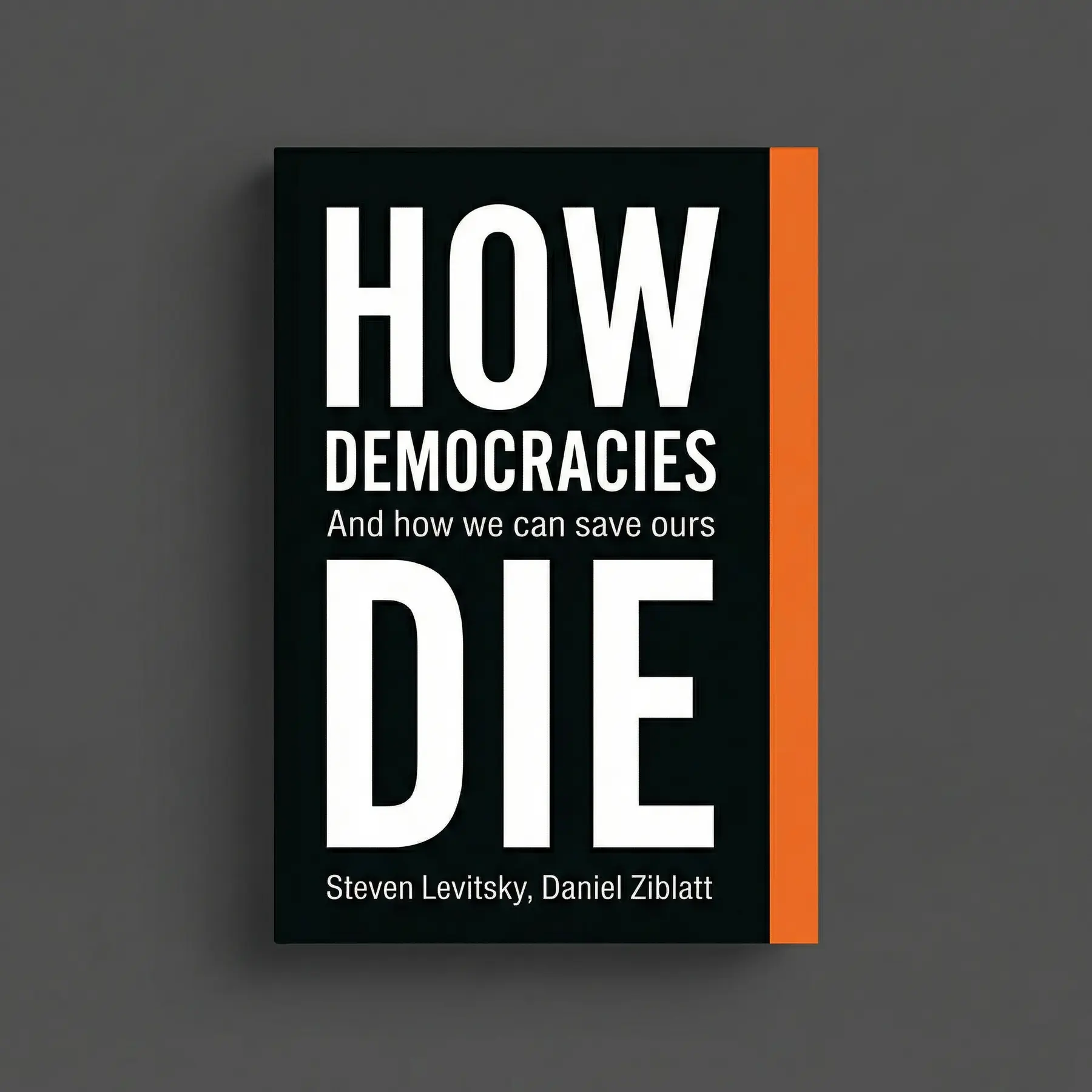
EnglishไทยHow Democracies Die
Shows how elected leaders dismantle democracies step by step, which warning signs give them away, and why party gatekeeping and unwritten rules of restraint, more than written laws, decide whether a democracy survives.
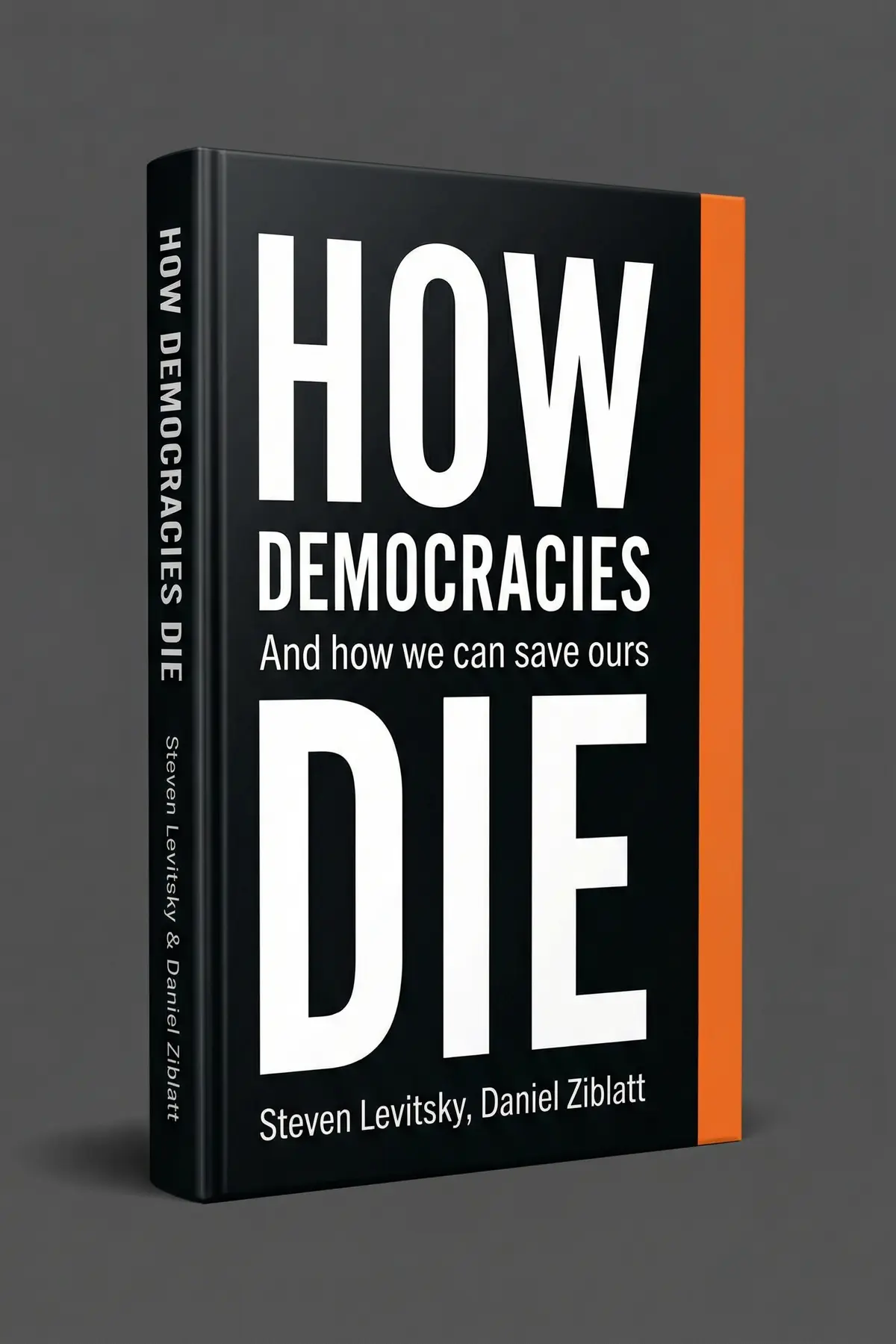
Table of Content
1. Introduction
58 sec
If the political news leaves you unsure whether you are watching ordinary hardball or the start of something worse, this book offers a way to tell. In How Democracies Die, Harvard political scientists Steven Levitsky and Daniel Ziblatt argue that modern democracies rarely end with tanks in the streets. They are hollowed out from inside by elected leaders, often helped by the established politicians who should have stopped them.
Using breakdowns in Germany, Venezuela, Peru and Chile, the authors trace a repeating pattern and read the rise of Donald Trump against it. Their claim is that a democracy survives on two defenses: parties that keep extremists out, and rivals who respect unwritten rules of restraint. When those fade, laws alone cannot save the system.
The payoff is a set of tests for spotting an autocrat early, and a clear sense of which kinds of resistance work and which backfire.
2. Spot a would-be autocrat by four warning signs
1 min 44 sec
Today’s would-be strongmen rarely arrive with soldiers. They arrive with invitations from politicians who think they can control them. Four habits of speech and behavior give them away long before they hold any real power.
3. Keep extremists out before they look respectable
1 min 53 sec
A Venezuelan candidate won an election by showing sympathy for a jailed coup plotter, and his country paid dearly. A Swedish party took the opposite path, giving up votes to keep something worse out.
4. Learn how American party gatekeepers held, then lost control
2 min 09 sec
For generations, party bosses in back rooms kept men like Henry Ford off the ballot. A reform meant to give voters more say later created an opening that nobody had planned for.
5. Recognize the three moves that dismantle a democracy
1 min 59 sec
A Peruvian reformer became a dictator within two years of taking office. His path follows a sequence that repeats from Peru to Hungary to the American South, and none of its steps needs to look illegal.
6. The unwritten rules that actually restrain power
1 min 57 sec
Nothing in the US Constitution forced George Washington to step down. The habit that made him leave, and the speed at which such habits vanished in Chile, explain what really keeps leaders in check.
7. Understand the rise of enemy-style politics in America
2 min 13 sec
Congressmen once brought pistols and canes to work. Peace between the parties later returned, at a price that would split them again a century on, along lines of race and religion.
8. Resist an autocrat without becoming one
1 min 47 sec
When an opponent breaks the rules, matching him feels like the only honest answer. Venezuela’s opposition tried exactly that. The authors explain what happened next, and what they would do instead.
9. Conclusion
1 min 14 sec
What makes this account unsettling is how ordinary the road to dictatorship looks up close. Nobody in it planned the ending. German conservatives thought they could manage Hitler, Caldera thought sympathy for Chávez was clever politics, and Fujimori started as a reformer fighting a stubborn Congress. Every step seemed defensible at the time.
The constitution was never the real barrier. The barrier was a set of habits: parties refusing to share a stage with extremists, leaders treating rivals as legitimate, officeholders leaving some legal powers unused, the way Washington walked away after two terms.
Habits can be watched, and that is where the book turns practical. Hold any politician to the four warning signs, including the ones your own side favors. Keep an eye on who controls the referees: the courts, the statistics office, the police. And when the other side plays dirty, resist answering in kind, because Venezuela’s opposition showed how that hands a strongman his excuse.
Democracies seldom fall overnight. They fall when enough people decide, one convenient moment at a time, that the unwritten rules no longer apply to them.
About this book
What is this book about?
Democracies rarely end in a dramatic coup anymore. More often they wear away under elected leaders who bend the courts, intimidate critics and rewrite election rules, while established politicians who could have stopped them look on or even help. Harvard political scientists Steven Levitsky and Daniel Ziblatt study how this happened in Germany in the 1930s, in Venezuela under Hugo Chávez, in Fujimori's Peru and in Chile before Pinochet, and they compare the pattern with the rise of Donald Trump. Their argument rests on two defenses. Political parties must act as gatekeepers, refusing extremists a route into the mainstream. Rivals must keep two unwritten rules: accept each other as legitimate, and hold back from using every legal power available. The authors trace how American parties once kept the gate closed, how primaries opened it, and how decades of division over race and religion wore those rules down. Readers get four warning signs for spotting an autocrat early, a three-step model of how democracies are taken apart, and the authors' case for resisting through broad coalitions and compromise instead of copying an opponent's tactics.
Book Information
Who it's for
News followers
Readers who follow the news and want a clear test for telling hardball politics from real threats to democracy.
Politics and history students
Students of politics and history looking for one framework linking Germany, Venezuela, Peru, Chile and the United States.
Activists and volunteers
Activists and civic volunteers deciding how to oppose a leader without deepening division.
About the Author
Steven Levitsky
Steven Levitsky is a professor of government at Harvard University, a senior fellow for democracy at the Council on Foreign Relations and a senior fellow at the Kettering Foundation. A specialist in Latin America, he studies political parties, authoritarian rule, democratization and weak institutions, and wrote Competitive Authoritarianism. Daniel Ziblatt holds the Eaton professorship in the Science of Government at Harvard, where he studies state building, democratization and the political history of Europe. Ziblatt also co-wrote Tyranny of the Minority, published in 2023.
Ratings & Reviews
Ratings at a glance
What people think
Listeners view this book as indispensable, filled with historical precedents and thoroughly researched observations on the political climate. The prose is expert and coherent, making it a high-quality guide for people troubled by the fate of democracy. While listeners respect the core message, they share conflicting views on the political stance, with some observing a degree of modern political bias. Reactions to how frightening the book is are split, with listeners describing the material as both terrifying and somewhat scary.
Top reviews
Tak
Levitsky and Ziblatt offer a chillingly lucid map of how modern republics dissolve from within. The core of their argument focuses on two unwritten rules: mutual toleration and institutional forbearance. Without these guardrails, they argue, the formal Constitution is just a piece of paper that cannot stop a determined demagogue. I was particularly impressed by the breadth of their research, which draws on historical examples from Venezuela, Hungary, and even 1930s Europe. To be fair, the book is incredibly sobering and often feels like a horror story for political junkies. The authors don't just rant; they provide a scholarly framework of four key indicators of authoritarianism that feel uncomfortably relevant today. It is a dense but necessary read for anyone who cares about the health of our institutions. The writing style is remarkably accessible despite the Harvard pedigree of the writers.
Show moreHenry
It’s rare that a dense academic study manages to be this terrifying, yet I found myself reading late into the night with a growing sense of dread. The authors illustrate how easily 'referees' like the judiciary and intelligence agencies can be turned into partisan weapons. This isn't just about one president; it's about a decades-long erosion of the way politicians treat each other. In my experience, most political books are just gossip, but this is a serious historical autopsy. They explain that when we start viewing our opponents as existential threats rather than just rivals, the system begins to collapse. The comparisons to the fall of democracy in Chile and Turkey are particularly haunting. You won't walk away from this book feeling optimistic, but you will definitely be better informed. It’s essential reading for the 21st century.
Show moreBook
This is the definitive guide for anyone trying to decipher the current erosion of our democratic guardrails. Levitsky and Ziblatt are genuine scholars who bring a global perspective to American problems. They show that we aren't as 'exceptional' as we think we are. Other countries have followed this exact path before us, and the results are never pretty. The way they break down the four signals of an autocrat is brilliant in its simplicity. I appreciated that they didn't just focus on the U.S., but spent time looking at the structural failures in places like Peru and Poland. It’s a fast read for a political science book, but the ideas will stick with you for months. If you only read one book about politics this year, make it this one. It's informative, urgent, and deeply researched.
Show moreFrida
The chapter on 'capturing the referees' changed how I view every headline about judicial appointments and law enforcement investigations. Levitsky and Ziblatt demonstrate that you don't need to break the law to destroy a democracy; you just need to use the law as a bludgeon. Their analysis of how authoritarian leaders gradually sideline key players is masterfully done. I've been reading a lot of these 'end of the world' political books lately, and this one stands out for its lack of hyperbole. It relies on data and historical patterns rather than just outrage. The concept of 'institutional restraint' is something I hadn't thought about before, but it explains so much of our current gridlock. It’s a heavy topic, but the authors keep the pace moving. This is high-quality scholarship that everyone should engage with.
Show moreCaleb
Finally got around to this Harvard-led study on democratic backsliding, and frankly, it lived up to the massive hype. The authors avoid the 'gossip' style of many recent political bestsellers and focus instead on the structural foundations of government. They argue that when politicians treat their rivals as enemies of the state, the democratic game is already lost. I was fascinated by the history of the 'smoke-filled rooms' and how the move toward direct primaries actually removed a vital filter against demagogues. It’s a counterintuitive argument that makes a lot of sense once you see the evidence they present. The book is terrifying in its implications, but the clarity of the writing makes it easy to digest. This is a brilliant, essential piece of work that helps define the current era. Highly recommended for anyone concerned about the future.
Show moreFelix
Picked this up last week and couldn't stop thinking about the four warning signs of authoritarian behavior mentioned early on. The book does a fantastic job explaining that democracies usually don't end with a bang or a military coup anymore. Instead, they die slowly when elected leaders 'capture the referees' and rewrite the rules to favor themselves. While the historical comparisons to Latin American regimes were fascinating, the latter half of the book feels slightly more partisan than the first. Look, it’s hard to stay neutral when discussing current events, but some readers might find the focus on one specific party a bit heavy-handed. Still, the analysis of how political parties used to act as gatekeepers to keep extremists out was enlightening. It changed how I view the primary system entirely. Definitely worth your time if you want to understand the current political climate.
Show moreGrace
Ever wonder why the American political system feels like it's spinning off its hinges? This book provides a very logical, research-backed answer that goes beyond simple name-calling. The authors argue that our formal checks and balances only work because of unwritten agreements to show restraint. When those norms of 'forbearance' disappear, the whole structure becomes vulnerable to a takeover. I found the section on how 'gatekeepers' have failed in recent years to be the most compelling part of the narrative. My only minor gripe is that the solutions offered at the end feel a bit thin compared to the massive problems described. Truth is, diagnosing the disease is much easier than curing it. Nevertheless, the historical context provided here is invaluable for anyone trying to look past the daily news cycle. It’s a smart, well-qualified look at a very scary subject.
Show moreFilm
After hearing several friends rave about this, I finally dove into the comparisons between the US and countries like Hungary or Venezuela. The authors make a compelling case that our democracy is more fragile than we care to admit. The writing is incredibly polished, and they do a great job of distilling complex political theories into something a casual reader can understand. I found the section on 'mutual toleration' particularly convicting in our current era of extreme polarization. Not gonna lie, some parts of this were genuinely painful to read because they hit so close to home. The authors are clearly worried, and their concern is contagious. My only issue is that it feels a bit repetitive toward the end. Still, it’s a vital resource for understanding the unique threats we face today. A solid four-star read for sure.
Show moreKaen
Does the framework of 'mutual toleration' and 'forbearance' really explain everything, or is it just nostalgia for a specific era of consensus? I found the historical sections of this book to be top-notch, especially the analysis of European regimes. However, when the authors pivot to the modern United States, the tone shifts from academic to somewhat alarmist. To be fair, they make some very strong points about the collapse of norms in the Senate. But they often seem to downplay the ways in which the 'gatekeeping' they praise was actually quite exclusionary for many Americans. It’s a well-organized book and the writing is smooth, but I think the reality is a bit more complicated than their four-point checklist suggests. It's a good starting point for a discussion, but it shouldn't be the final word. A bit too one-sided for a perfect score.
Show moreSomsri
While the prose is certainly crisp and the historical anecdotes are engaging, I couldn't shake the feeling that the authors have a massive blind spot regarding their own partisanship. They talk extensively about 'norms' and 'gatekeeping' as if these were neutral concepts, but they seem to define democracy as whatever the liberal establishment prefers. Frankly, the book feels more like a sophisticated intellectual justification for why certain voters should be ignored than a true historical analysis. They focus on the 'violence' of the right while almost entirely ignoring the radical tactics used by the left to delegitimize their opponents. The research is there, but the lens is skewed. If you're looking for an objective look at political instability, you might find this frustrating. It’s well-written, but it lacks the self-awareness to admit its own ideological leanings. I expected more from Harvard professors.
Show moreQuestions about this book
What is the main idea of How Democracies Die?
Steven Levitsky and Daniel Ziblatt argue that modern democracies usually die slowly, at the hands of elected leaders. Established politicians often let a populist outsider in, hoping to use his appeal, as German conservatives did with Hitler in 1933. Once in power, such leaders capture the referees, sideline opponents and change the rules. What protects a democracy, the authors argue, is parties that block extremists and rivals who follow unwritten rules of toleration and restraint.
What are the four warning signs of an autocrat in How Democracies Die?
The authors list four. A would-be autocrat rejects democratic rules, for example by calling elections invalid. He denies his rivals’ legitimacy, branding them criminals or enemies of the state without evidence. He tolerates or encourages violence. And he shows a willingness to restrict civil liberties, including those of the press. In their reading, Donald Trump’s 2016 campaign raised all four, through rigged-election claims, calls to jail Hillary Clinton, encouragement of violence at rallies and threats to journalists.
What are mutual toleration and institutional forbearance?
They are the two unwritten rules the authors see as democracy’s real guardrails. Mutual toleration means accepting rivals as legitimate competitors with an equal right to power. Institutional forbearance means not using powers in ways that betray democracy’s spirit, even when they are legal. George Washington showed forbearance by stepping down after two terms when no law required it. In Chile, the collapse of both rules ended in a 1973 coup and 17 years of dictatorship.
How do Levitsky and Ziblatt say democracy should be defended?
Their first rule is not to fight fire with fire. When Venezuela’s opposition answered Hugo Chávez with a failed coup, a general strike and a legislative boycott, he escalated and purged the police, courts and military. The authors favor compromise and broad coalitions instead. They suggest Republicans firmly oppose white nationalism, Democrats favor a higher minimum wage and broad health insurance over means-tested benefits, and protesters unite across faiths, races and incomes.
Readers also enjoyed

Abolish Rent: How Tenants Can End the Housing Crisis
Tracy Rosenthal

Abortion: Our Bodies, Their Lies, and the Truths We Use to
Jessica Valenti

Adults in The Room: My Battle With Europe’s Deep Establishment
Yanis Varoufakis

21 Lessons for the 21st Century
Yuval Noah Harari
A Different Kind of Power: A Memoir
Jacinda Ardern

Age of Anger: A History of the Present
Pankaj Mishra
A Higher Loyalty: Truth, Lies and Leadership
James Comey

Age of Propaganda: The Everyday Use and Abuse of Persuasion
Anthony Pratkanis
AUDIO SUMMARY AVAILABLE
Listen to How Democracies Die in 15 minutes
Get the key ideas from How Democracies Die by Steven Levitsky, plus 5,000+ more nonfiction titles.
- 5,000+ titles
- Listen as much as you want
- 7-day free trial
- Cancel anytime









