

A Long Way Gone: Memoirs of a Boy Soldier
Ishmael Beah
 English
 ไทย
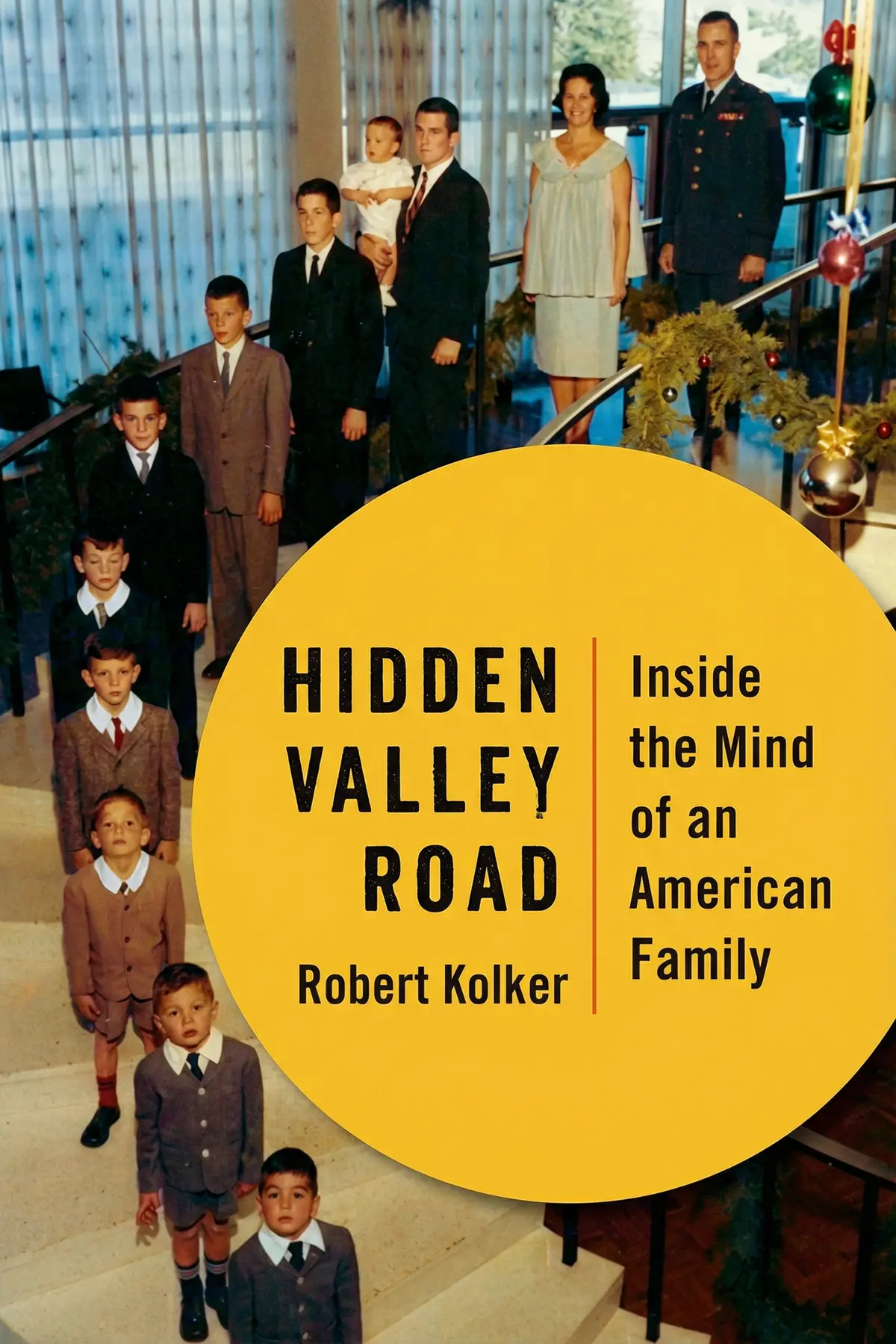
Follows the Galvin family, six of whose twelve children developed schizophrenia, from a home ruled by shame and secrecy to the labs where their DNA helped reveal the illness's biology and the limits of its treatment.
58 sec
If you have watched someone you love change in ways no one could explain, the Galvins will feel familiar. By 1982, six of Mimi and Don Galvin’s twelve children had been diagnosed with schizophrenia, and in Hidden Valley Road, journalist Robert Kolker shows how that private disaster became a central source of evidence about the illness. The family lived in an era that blamed mothers, so they hid what was happening, and the youngest children paid for it.
Yet the same family later gave researchers the blood and DNA that pointed toward biology. That is the thread running through Kolker’s account: the Galvins helped move schizophrenia from a story of blame to one of genes and brain development, while treatment lagged far behind. Expect to see how warning signs get explained away, how stress and inherited vulnerability may combine, and why a drug that quieted voices never reached patients.
1 min 42 sec
Ten broken dishes, a cat bite, a leap into a bonfire. Each incident in a young man’s life had a ready excuse, and that is exactly why his parents missed what was happening.
1 min 47 sec
Doctors in the 1960s could not agree on what schizophrenia even was, yet one theory about its cause was everywhere. For a mother of twelve, that theory made asking for help feel like a confession.
1 min 35 sec
Keeping a sick son out of the state hospital looked like an act of love. Inside the house, the danger did not disappear. It simply landed on the people least able to defend themselves.
1 min 47 sec
By the mid-1970s, Galvin brothers were turning up as patients in the same hospital. Then a friend called, a mother who had rarely spoken about it outside the family finally shared her worries, and the friend offered to take in her daughter.
1 min 48 sec
For a researcher hunting the causes of schizophrenia, a household full of sick and healthy siblings was close to ideal. What she found complicated the search for a single culprit.
1 min 40 sec
Most people barely notice the second of two quick clicks. The Galvin brothers heard it as loudly as the first, and that small difference led a researcher to a single receptor and a single gene.
1 min 33 sec
In early tests, a compound made patients calmer and silenced some of their voices. It still ended up on a shelf, for reasons that had nothing to do with whether it worked.
1 min 53 sec
Decades after the first blood draws, new technology finally pointed to a mutation the sick brothers shared, and a cheap nutrient showed early promise. The most striking development, though, came from inside the family.
1 min 10 sec
Hidden Valley Road is two stories that needed each other. In one, shame, a theory that blamed mothers and a feared state hospital kept six illnesses behind closed doors while the youngest children paid for the silence. In the other, researchers like DeLisi and Freedman saw in that same house a chance to find causes no amount of blame could explain. DeLisi’s wider data confirmed enlarged ventricles, while the Galvins’ samples helped trace faulty sensory gating to the alpha-7 receptor and revealed a shared SHANK2 mutation. Their losses showed how slowly such knowledge becomes medicine.
The book supports a few habits of mind. Treat a run of strange episodes as a pattern worth naming. Distrust any account of mental illness that begins by finding someone to blame. And when a family is struggling, make a concrete offer, the way Nancy Gary did.
Some Galvins remain bitter, others hopeful. The image that stays is Kate, a pre-med student working among her family’s samples, possibly a few steps from her grandfather’s brain, studying the illness her family gave so much to understand.
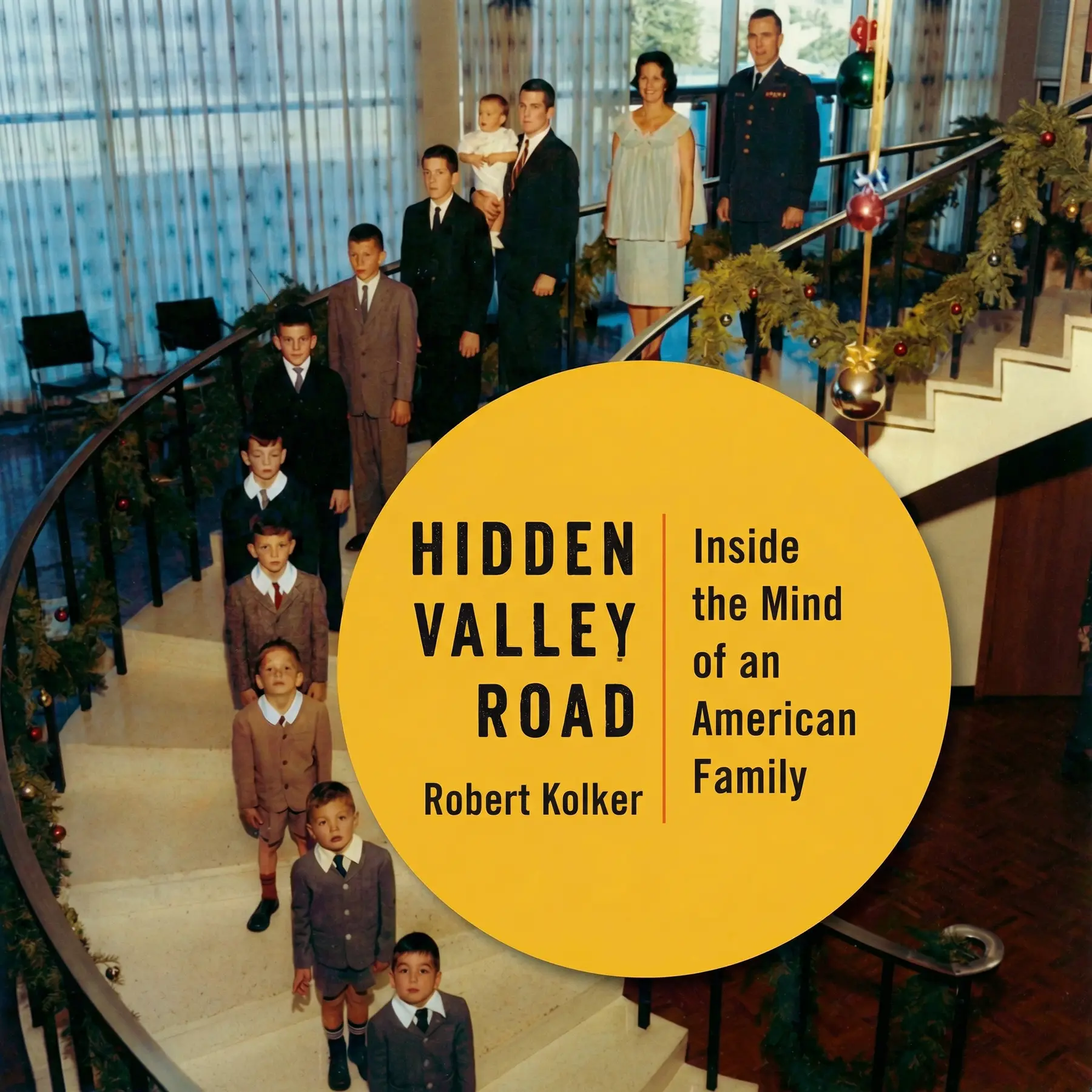
In the 1960s and 1970s, Mimi and Don Galvin raised twelve children in a house outside Colorado Springs. One by one, six of their ten sons were diagnosed with schizophrenia. At the time, a popular theory blamed the illness on mothers, and the nearest state hospital had been exposed for brutal treatment, so the family kept its troubles private. The cost of that silence fell hardest on the youngest children. Journalist Robert Kolker tells the family's story alongside the science it made possible. Researchers such as psychiatrist Lynn DeLisi and Robert Freedman of the University of Colorado saw in the Galvins a rare chance to compare sick and healthy siblings. Their samples helped confirm brain differences in people with schizophrenia, locate a weak sensory filter in the brain and identify a mutation all the ill brothers shared. Readers come to understand how warning signs get explained away, how inherited vulnerability and stress may combine, and why a promising drug stalled for business reasons while older medicines carried deadly side effects. The book closes on a family still divided between bitterness and hope.
Readers with a relative or friend living with schizophrenia who want to understand its biology and history.
Students of psychology, medicine or genetics looking for a human story behind the research.
True story readers drawn to family dramas about secrecy, survival and resilience.
Robert Kolker is a journalist who contributes to The New York Times Magazine. He was previously a contributing editor at New York Magazine and an investigations reporter at Bloomberg, and he has been a finalist for the National Magazine Award. Hidden Valley Road, published in 2020, reached number one on the New York Times best-seller list. His earlier true crime book, Lost Girls, published in 2013, was also a New York Times best seller.
Listeners find this account both absorbing and expertly crafted, presenting a gripping narrative about the intersection of family struggles and psychiatric conditions. The scientific exploration is captivating, and listeners value how the family’s willingness to be transparent offers a deep look into their personal history. The text provides extraordinary perspective on mental health issues, making it a necessary pick for those focused on the field. Even though listeners label the story as heart wrenching, some find it to be disturbing.
What a staggering achievement of narrative non-fiction. Kolker manages to weave the tragic, intimate history of the Galvin family with the broader, often cold clinical history of schizophrenia research. It is almost inconceivable that six out of twelve children in one family could be diagnosed with the same devastating illness. The book doesn't shy away from the horrific reality of life in that Colorado home, from the violence to the internal family dynamics that bordered on chaotic. I found the sections on Lynn DeLisi and the hunt for genetic markers absolutely riveting. It’s a heavy read, certainly not for the faint of heart given the depictions of abuse, but the openness of the surviving siblings is a gift to the medical community. To be fair, it’s a lot of information to process, yet the author’s prose kept me anchored even during the dense scientific explanations. This is an essential look at how we've failed and eventually begun to understand mental health.
Show moreIt’s rare to find a non-fiction book that pulses with the urgency of a thriller, but this story is just that. The Galvins' lives were a sequence of mounting tragedies that felt like something out of a gothic novel, yet it was all terrifyingly real. I was particularly struck by the resilience of the two sisters, Lindsay and Margaret. Growing up in a house where your older brothers are essentially ticking time bombs is a trauma I can't even fathom. Kolker writes with a lot of empathy, never turning the brothers into monsters, even when their actions were monstrous. Truth is, this book changed how I view the 'nature vs nurture' debate entirely. The way the family's DNA eventually helped unlock secrets about the human brain is a silver lining that gives the book a sense of purpose beyond just tragedy. An absolute must-read for anyone interested in the mysteries of the mind.
Show morePick this up only if you’re prepared to have your heart broken. This family's experience is so extreme it feels like a statistical impossibility, yet Kolker’s reporting makes it all feel grounded and human. I was fascinated by the contrast between the public-facing 'perfect' family and the private nightmare they were living. The chapters on the development of Thorazine and the evolution of the DSM were surprisingly engaging—I usually find medical history dry, but here it felt personal because you saw the drugs' effects on the Galvin boys. It’s a masterclass in research. The way the family eventually opened their lives to science to prevent others from suffering is a powerful testament to their strength. It is a thick book, but I flew through it because I had to know what happened to each brother. A truly phenomenal piece of journalism.
Show moreEver wonder how much one family can actually endure before they completely shatter? The Galvins are the answer to that question. This is one of the most gripping non-fiction books I’ve ever read. Kolker doesn't just list facts; he builds a world. You feel the tension in the kitchen and the fear in the hallways. I appreciated that he gave so much space to the researchers like Lynn DeLisi, who fought against the psychiatric establishment to prove that schizophrenia had a genetic component. It’s a story of incredible suffering but also of incredible scientific breakthroughs. Personally, I found the openness of the family members to be the most moving part. They didn't have to share these painful, often shameful memories, but they did. It’s a heavy, unputdownable read that stays with you long after the final page.
Show moreKolker manages to humanize a condition that is so often sensationalized or stigmatized in popular media. By focusing on one family, he makes the abstract statistics of schizophrenia—one in a hundred people—feel personal and urgent. I was moved by the way the siblings tried to care for one another, even as their own lives were being upended by their brothers' conditions. The book is a perfect blend of a domestic drama and a scientific mystery. It’s a long journey, and yes, it’s often disturbing, but the writing is so clear and the pacing is so deliberate that I never felt overwhelmed. Gotta say, it’s rare for a book to be this informative while also being a total page-turner. If you want to understand the history of mental health in America, this is the book to read. Five stars, no question.
Show moreFinally got around to this after seeing it on so many 'best of' lists, and I have complicated feelings. On one hand, the storytelling is top-tier; Kolker makes you feel the claustrophobia of that house on Hidden Valley Road. You can almost see Mimi Galvin trying to maintain a veneer of perfection while her world literally imploded. On the other hand, the descriptions of neglect were incredibly difficult to stomach. Looking back, it’s easy to judge the parents for their 'magical thinking,' but the book does a good job showing how few resources they actually had in the 60s and 70s. I did notice a few spots where the editing felt a little loose, and some of the tangents about falconry felt like they belonged in a different book. Still, the insight into how Big Pharma halted certain research for profit was eye-opening. It’s a compelling, haunting, and deeply disturbing family portrait that I won't forget anytime soon.
Show moreAs a healthcare professional, I found the timeline of psychiatric treatment presented here absolutely haunting. We've come so far from the days of blaming 'schizophrenogenic mothers,' yet this book reminds us how much damage those theories did to families like the Galvins. Mimi Galvin was a woman under siege, and while her denial was frustrating, the lack of support she received was the real crime. Kolker does a brilliant job balancing the science with the human element. My only minor gripe is that the ending felt a bit rushed compared to the painstaking detail of the early chapters. However, the exploration of how the brothers' illnesses manifested differently—some violent, some catatonic—was handled with great nuance. It’s a profound view of a family’s disintegration and their eventual, partial healing. Deeply informative and deeply sad.
Show moreThe chapter on falconry was such an odd, specific detail that somehow grounded the whole story in its 1960s Colorado setting. It’s those little details that make the Galvins feel like real people rather than just case studies. This book offers incredible insight into the burden of being a 'healthy' sibling in a household dominated by illness. I felt so much for Donald, the eldest, whose descent into madness set the tone for the entire family's future. My only real criticism is that the author sometimes gets lost in the weeds with the side-stories of various researchers, which slowed the momentum down. But overall, it’s a well-written, compelling story about family dysfunction and the desperate search for answers. It’s heart-wrenching, but it’s an important contribution to the conversation about the stigma of mental illness.
Show moreTo be fair, the subject matter is incredibly important, but the execution felt uneven at times. The author is clearly talented, but the book is quite long and meanders into historical tangents that took me out of the Galvins' personal story. I struggled with the parents' choices—letting the older, ill sons remain in the home with small children was an unforgivable lapse in judgment, regardless of the era. The writing also had some frustrating technical errors, like confusing different lobes of the brain, which makes me question how rigorous the fact-checking was for the scientific portions. It’s a fascinating case study, and I understand why it was an Oprah’s Book Club pick, but it felt like a missed opportunity to provide a tighter, more cohesive narrative. It’s informative, yes, but also incredibly draining and sometimes a bit muddled in its conclusions.
Show moreI’m probably in the minority here, but this was just too bleak for me to enjoy or even appreciate. The level of detail regarding the sexual abuse and the domestic violence within the home felt voyeuristic after a certain point. I picked this up hoping for a scientific exploration of schizophrenia, but it felt more like a long-form exposé on a dysfunctional family that happened to have a lot of mental illness. Frankly, I found the parents to be incredibly negligent, and the book didn't hold them accountable enough for the trauma the younger children endured. The writing is fine, but the pacing is sluggish in the middle sections. If you’re looking for a clinical or uplifting look at mental health, this isn't it. It’s just one tragedy after another without much light at the end of the tunnel. It was more disturbing than it was enlightening.
Show moreRobert Kolker tells the story of the Galvin family of Colorado, where six of twelve children were diagnosed with schizophrenia between the 1960s and 1982. He follows the family’s attempts to hide the illness in an era that blamed mothers, the harm that secrecy caused, and the way their blood and DNA later helped researchers study the biology of schizophrenia.
Because the family had many sick and healthy siblings, researchers could compare their DNA. Psychiatrist Lynn DeLisi gathered their samples, which supported findings on enlarged brain ventricles and, years later with Amgen’s McDonough, revealed a SHANK2 mutation shared by every ill brother. Robert Freedman used their tests and tissue to link poor sensory filtering to the alpha-7 receptor and a gene called CHRNA7.
A popular theory at the time held that cold or overly affectionate mothers caused schizophrenia, so admitting the illness risked public shame. The parents also feared Colorado State Hospital in Pueblo, which a 1959 exposé, The Caretakers, had described as a place of repeated shock treatment, restraints and heavy sedation. Keeping quiet left the youngest daughters exposed to serious harm at home.
Kolker shows that understanding has advanced faster than treatment. A drug called DMXBA calmed patients and silenced some voices in 2004 tests, but companies passed on it because its patent was expiring and it required several daily doses. Meanwhile, Jim and Joe Galvin both died at 53 of heart failure linked to their medications. Early research on prenatal choline offers some hope.
The book encourages readers to see a series of odd incidents as a possible pattern, to reject explanations of mental illness built on blaming parents, and to understand that stress may trigger an illness rooted in inherited vulnerability. It also shows how one practical offer of help, like family friend Nancy Gary taking in Margaret, can change a child’s life.
Ishmael Beah

James Herriot


Barack Obama


Masaji Ishikawa

Ben Macintyre

Steven C. Hayes


AUDIO SUMMARY AVAILABLE
Get the key ideas from Hidden Valley Road by Robert Kolker, plus 5,000+ more nonfiction titles.









