
13 min 21 sec
Available in: English
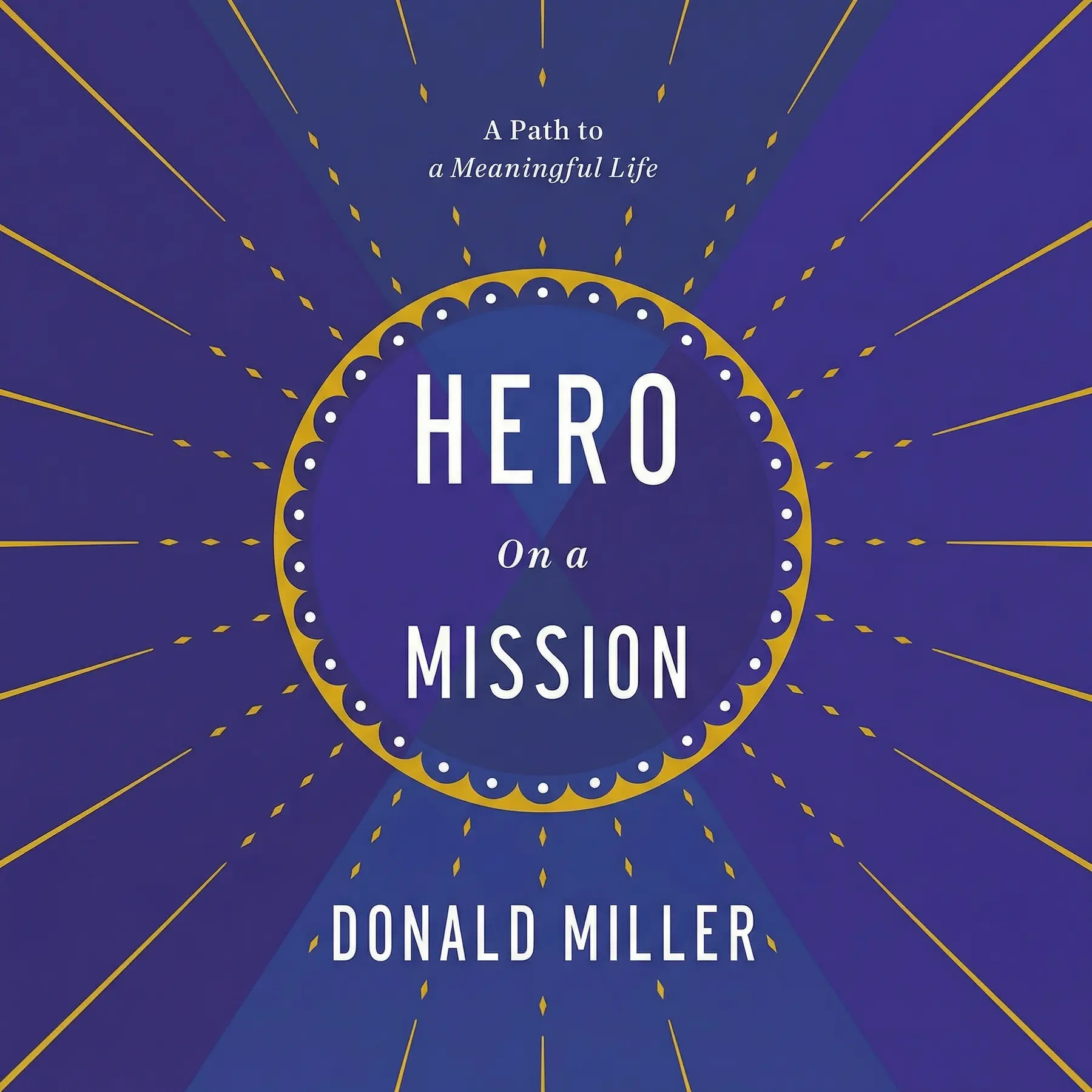
Hero on a Mission: A Path to a Meaningful Life
Shows how to stop waiting for life to change and start shaping it. Choose the hero's role, find meaning in hardship, and turn a eulogy you write yourself into one, five and ten year plans.
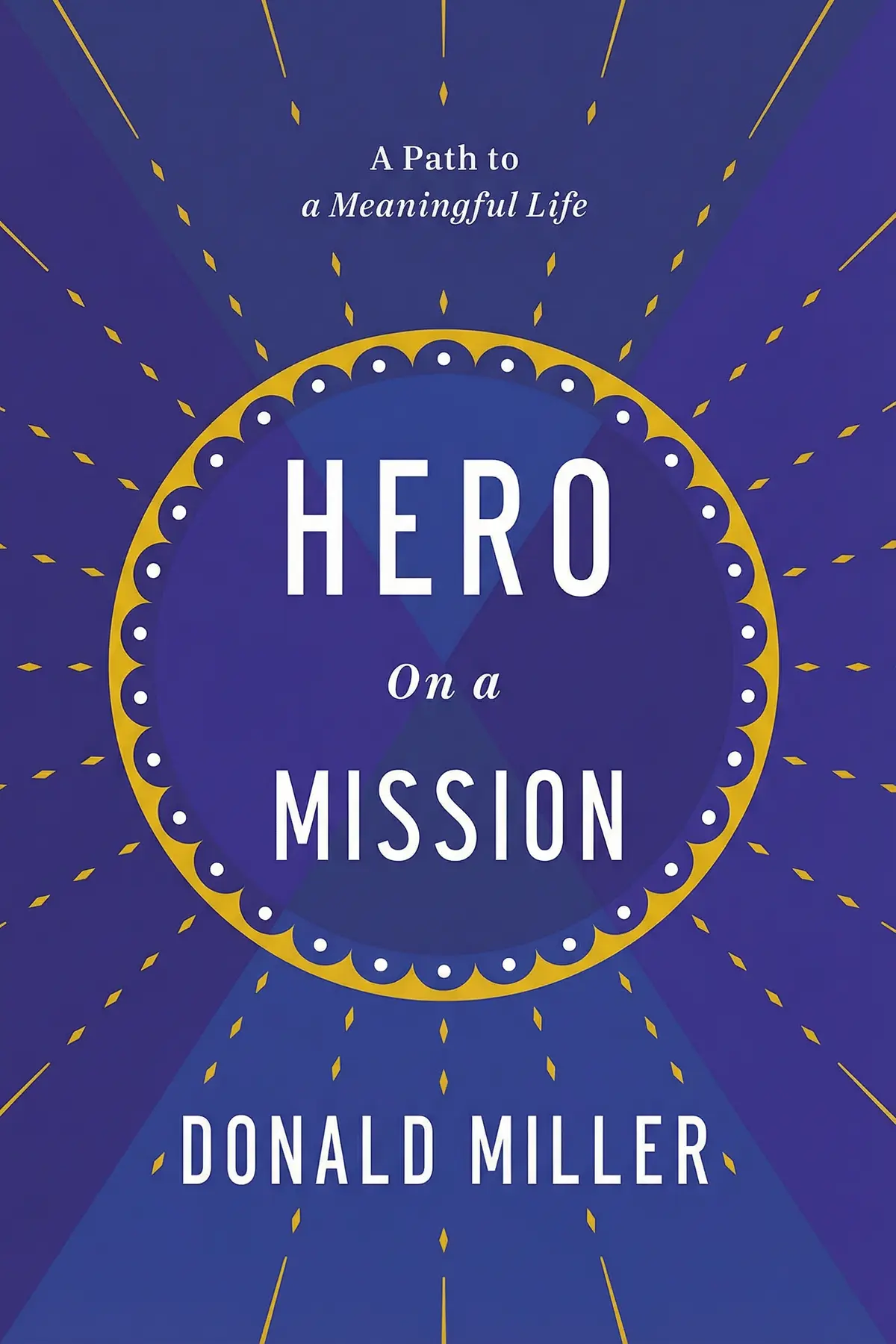
Table of Content
1. Introduction
1 min 06 sec
Plenty of people spend years thinking about what to do with their lives and very little time doing it. In Hero on a Mission, writer and entrepreneur Donald Miller offers a way out: treat your life as a story, notice which character you are playing, and switch roles. He names four characters you meet in your life story, namely the guide, the hero, the villain and the victim, and argues that the hero, the victim and the villain can face the same hardships. What separates the hero is the response. The victim waits to be rescued and the villain makes others feel small, while the hero uses pain to grow.
The rest of the book builds on that claim. You become the hero of your life by believing you control your own actions, choosing difficult missions that give your struggles meaning, and planning from the end of your story backward. Miller’s own life supplies the evidence, from a dingy rented room to a bike ride across the United States. He also hands over a practical kit: a eulogy you write yourself, and three plans you read every morning.
2. Choose the hero's role in your own story
2 min 01 sec
Victims, villains and heroes often start with the same wounds and face the same hardships. One small difference decides which of them ends up as the main character, and Miller once played two of the wrong roles at once.
3. Own your results instead of waiting for luck
1 min 51 sec
A young writer once refused to work unless one particular coffee shop chair was free. His habit sounds silly, yet the belief behind it shapes how anxious people feel and even how much they earn.
4. Turn painful challenges into a source of meaning
1 min 53 sec
An overweight beginner pedaled across a continent, and a psychiatrist in a death camp told fellow prisoners their suffering mattered. Miller sees the same choice at work in both, and it is open to anyone.
5. Pick a goal and let the struggle shape you
1 min 54 sec
Many people stall for years trying to find the one goal that will make them happy. Miller thinks they are asking the wrong question, and a painful investment loss taught him what the right one is.
6. Write your eulogy to map a meaningful life
1 min 49 sec
It sounds morbid to imagine your own funeral. Miller argues it is the clearest way to see which missions your life still needs, and why a ticking clock makes any story worth following.
7. Make your life plan a morning habit
1 min 41 sec
Most people write a big plan once and never look at it again. Miller reads his eulogy every morning, and he suggests giving each of the three plans a movie title and keeping all four pages together.
8. Conclusion
1 min 06 sec
Hero on a Mission rests on a simple trade. You cannot choose most of what happens to you, Miller argues, but you can choose the role you play when it does. The victim waits, the villain lashes out, and the hero takes the same pain and turns it into growth. Everything else in the book, from the locus of control to the eulogy, is a way of making that choice every day instead of once.
Miller’s own life is the proof he offers. The young man staring at a stained carpet and mocking his housemates became the writer who rode from Los Angeles to Delaware, and who now gives away each year what he once lost in a few days.
The tools are modest. Notice when you are waiting for a lucky chair, the right mood or someone to rescue you, and do a small piece of the work anyway. Choose one hard, specific mission and expect it to hurt. Write the eulogy you want, keep it with your plans, and read them each morning.
The clock is already running in your story. For Miller, that is exactly what makes it worth writing.
About this book
What is this book about?
Many people spend years thinking about what to do with their lives and little time doing any of it. Donald Miller knows that pattern well. As a young man he sat in a small rented room, hoping inspiration would rescue him, and took his frustration out on his housemates. In Hero on a Mission, Miller sees a life as a story featuring four recurring characters: the guide, the hero, the villain and the victim. The hero, the victim and the villain can face the same hardships. What sets the hero apart is attitude: the belief that you control your own actions, and the habit of using pain to grow instead of giving in to it or passing it on. Miller draws on his own setbacks, a seven-week bike ride across the United States and the example of Viktor Frankl in Auschwitz to show how hard missions give suffering meaning. The book then turns practical. Readers write the eulogy they would want read at their funeral, use it as a blueprint for the missions ahead, and break it into ten, five and one year plans with goals and actions for each area of life. Miller suggests reading all four documents every morning.
Book Information
Who it's for
Thinking more than doing
People who keep thinking about what to do with their lives but rarely act on it.
Professionals in a rut
Professionals in a stalled stretch who want a way to plan the next one, five and ten years.
Facing a hard season
Anyone going through a hard season who wants to find meaning in it.
About the Author
Donald Miller
Donald Miller is an American writer, speaker and entrepreneur, born in Houston, Texas, in 1971, and CEO of StoryBrand, which helps businesses communicate more clearly. His first New York Times bestseller, Blue Like Jazz, belonged to an early body of reflective work on faith and self-discovery that also includes A Million Miles in a Thousand Years. He later wrote the bestsellers Building a StoryBrand, Marketing Made Simple and How to Grow Your Small Business, and he founded The Mentoring Project, which supports fatherless youth.
Ratings & Reviews
Ratings at a glance
What people think
Listeners find the work insightful and useful, assisting them in discovering life's purpose while offering effective tools for personal planning. They value how it helps craft a superior life story and is simple to read. The prose style draws varied opinions, with some listeners finding the experience agonizing to read.
Top reviews
Rapee
Wow, what an incredibly timely book for where I am right now. I’ve read a lot of productivity and mindset books, but none of them hit quite like this one. Miller manages to take complex psychological concepts and turn them into a simple, actionable plan for living. The idea that we are actively writing our own story every single day is so empowering. I especially loved the focus on the 'Victim' versus the 'Hero.' It made me see my daily complaints in a completely different light. Not gonna lie, I was a bit skeptical about the worksheet aspect, but they actually helped me clarify my goals for the next ten years. This isn't just a book you read; it's a book you do. If you feel like your life has lost its plot, this is the guide you need to find it again.
Show moreYulia
As someone who loves the power of narrative, this book was a total game-changer. Miller’s writing is accessible and deeply personal, which makes the advice feel much more authentic than your standard business-guru fare. The structure of the book—moving from the theory of meaning to the practice of planning—is brilliant. I found the four characters framework to be the most helpful mental model I’ve encountered in years. It’s easy to recognize the villain or the victim in others, but seeing them in yourself is where the real growth happens. I’ve already recommended this to several friends who feel stuck in their careers. It’s a short, punchy read that packs a massive punch if you actually do the work. Truly a five-star experience that I’ll be revisiting every year.
Show moreEthan
Donald Miller has a way of making you feel like he’s sitting across the table having a beer with you. His storytelling is top-tier, and he uses it to drive home some really tough truths about personal responsibility. I’ve been a fan since 'A Million Miles in a Thousand Years,' and this feels like the practical manual for that earlier philosophy. The focus on Logotherapy and finding meaning through action is exactly what I needed to hear. Frankly, it’s refreshing to read a 'success' book that focuses more on character and contribution than just making money. The daily planner section has completely changed how I approach my mornings. It’s not just about getting things done; it’s about becoming the kind of person who lives a story worth telling. Essential reading for anyone who wants more out of life.
Show moreEli
A masterpiece of practical wisdom. I wasn't sure what to expect, but this book blew me away with its clarity and heart. The way it tackles the 'why' of our existence without getting bogged down in dense academic jargon is impressive. I loved the connection between our lives and the hero's journey. It makes the mundane parts of life feel like they actually matter in the grand scheme of things. Look, if you want a book that tells you exactly how to structure your days to maximize meaning, this is it. It’s easy to read, incredibly motivating, and provides a clear path forward. I feel like I finally have a mission for my life instead of just a to-do list. Highly recommend to anyone feeling the itch for something more.
Show moreFelix
This book serves as a wake-up call for anyone drifting through their days without intention. Miller’s transition from memoirist to business coach is very evident here, but it works surprisingly well for personal planning. I loved the practical nature of the 'Hero on a Mission' plan, particularly the focus on daily rituals and long-term vision. Writing out my own story helped me realize where I was letting other people hold the pen. The truth is, we often wait for life to happen to us instead of taking the lead. While some parts felt a bit redundant, the overall impact was quite motivating for me. I’ve started implementing the morning pages and the focus on my 'heroic' goals. It isn’t perfect—some of the transitions between personal anecdotes and theory are clunky—but it’s a very useful tool for life design.
Show morePete
Finally got around to reading this, and it actually lived up to the hype for me. As someone who grew up reading Miller’s more philosophical books, seeing him apply narrative structures to personal growth was fascinating. The concept of the 'Guide' is something I hadn’t really considered in my own life story before. It’s not just about being the hero; it’s about who we help along the way. I gave it four stars because it can be a bit wordy in places, and some of the repetition felt unnecessary. Regardless, the core tools for mapping out a meaningful life are worth the price of admission. It’s a quick read, but the exercises require some deep thought and emotional honesty. If you’re at a crossroads in your career or personal life, this provides a clear framework to move forward.
Show moreKamol
Picked this up during a bit of a mid-life slump and found it quite grounding. The way Miller breaks down the human experience into character roles is genius. I realized I’ve been playing the victim for far too long, waiting for someone to rescue me from my own choices. The book isn't a magic wand, but it provides a very logical script to follow if you want to change your trajectory. I will say, the constant references to Viktor Frankl were interesting, but at times I wished Miller would lean more into his own unique voice. Sometimes the tone felt a little too 'self-help 101,' yet I can’t deny that the eulogy exercise shifted my perspective. It's a practical, no-nonsense approach to finding purpose when the old scripts of school and marriage no longer provide the map.
Show moreRatchada
Ever wonder why your life feels like it’s lacking a clear plot? Donald Miller takes the principles of logotherapy and translates them into a storytelling format that is fairly easy to digest. I appreciated the emphasis on moving from a victim mindset to becoming the hero of your own journey. That said, the spiritual aspect felt a little disjointed to me, almost as if it was trying to be too many things at once. Some of the worksheet elements are helpful for planning, but they can also feel a bit rigid if you aren't the 'planner' type. I found the sections on writing your own eulogy to be the most profound, even if it felt a bit macabre at first. It’s a solid book for anyone feeling stuck, though it can get a bit repetitive with its core analogies.
Show moreJin
After hearing so much buzz, I finally dove into Miller's latest work. There are some genuinely brilliant nuggets of wisdom here regarding how we choose to show up in the world. The distinction between the four character types really resonated with me, especially identifying when I'm slipping into a 'victim' role. However, the writing style occasionally felt a bit like a corporate seminar disguised as a personal development book. Look, the message is important, but the delivery can be a bit 'business-heavy' for a topic as soul-searching as the meaning of life. I also struggled with the lack of measurable goals in the provided exercises; it felt more like a brainstorming session than a concrete plan. It's a decent bridge between Viktor Frankl’s heavy philosophy and modern life-planning, but it might not be for everyone.
Show moreHazel
Not what I expected from the author of Blue Like Jazz. The core premise about viewing your life as a story is captivating, but the execution felt incredibly thin. I found myself skimming through chapters that seemed to repeat the same basic idea without adding new depth. To be fair, the concept of the four characters—victim, villain, hero, and guide—is a useful framework for self-reflection. However, the book felt stretched, almost like a long-form article that was padded out to meet a publisher's word count requirement. Frankly, after the first fifty pages, I felt like I had already grasped the entire message. It's not a terrible read, but it didn't provide the actionable substance I was looking for in a self-help guide. It lacks the punch of his earlier memoir-style work.
Show moreQuestions about this book
What is the main idea of Hero on a Mission by Donald Miller?
Miller argues that a life works like a story, and you choose which character you play. Victims wait to be rescued, villains make others feel small, and heroes use their pain to grow. Heroes believe they control their own actions, take on difficult missions that give suffering meaning, and plan their lives deliberately, starting from the eulogy they would want read at their funeral.
What are the four characters in Hero on a Mission?
Miller lays out four characters: the victim, then the villain, then the hero, and finally the guide. The victim is passive and hopes to be saved. The villain belittles others, often because of unhealed childhood pain. The hero faces the same hardships but uses them to change. The guide is someone older and wiser who has already been through a transformation and helps the hero along, as Hemingway’s and Steinbeck’s books helped Miller.
How do you write the eulogy exercise from Hero on a Mission?
Imagine your loved ones at your funeral and write what you would want them to say about you, such as your work, your parenting, your marriage or your love of art. Each line points to a mission. Some will already be underway and others not yet started. Miller then turns the eulogy into ten, five and one year plans and reads all of them every morning.
What does locus of control mean in Hero on a Mission?
It comes down to the degree of control you believe you hold over your own life. An internal locus means you think you shape your outcomes; an external one means you think outside forces decide them. Miller once wrote only in one lucky coffee shop chair, while Stephen King writes like it is a regular job. Miller cites research linking an internal locus to less anxiety and depression and higher earnings.
Who should read Hero on a Mission?
It suits people who feel stuck or passive about their direction, those facing a hard period who want it to mean something, and anyone who wants a simple planning system for life. The tools are concrete: a self-written eulogy, ten, five and one year plans with movie titles, goals and actions for areas like career, family, friends and community, and a daily morning review.
Readers also enjoyed

59 Seconds: Change Your Life in Under a Minute
Richard Wiseman





A Guide to the Good Life: The Ancient Art of Stoic Joy
William B. Irvine


A High-Performing Mind: Strengthen Your Mind and Live Your Best Life
Andrew D. Thompson


Abundance: The Inner Path to Wealth
Deepak Chopra
AUDIO SUMMARY AVAILABLE
Listen to Hero on a Mission in 15 minutes
Get the key ideas from Hero on a Mission by Donald Miller, plus 5,000+ more nonfiction titles.
- 5,000+ titles
- Listen as much as you want
- 7-day free trial
- Cancel anytime









