

14 min 49 sec
Available in: English
Hear Yourself: How to Find Peace in a Noisy World
By Prem Rawat
Prem Rawat shows how to reach the calm already inside you by clearing away distraction, outside opinions and rigid expectations, and by choosing presence, gratitude and self-acceptance, even when circumstances are hard.
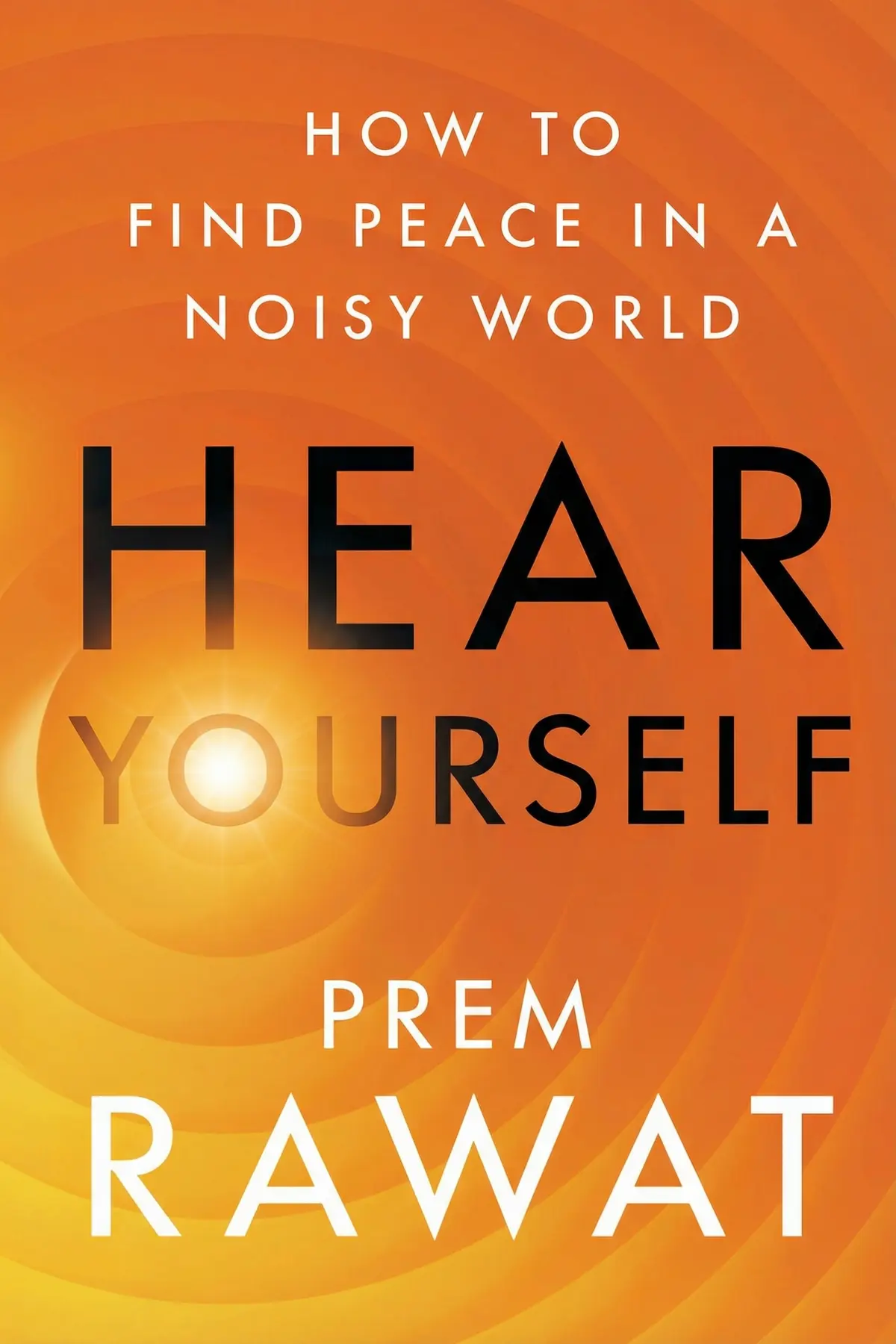
Table of Content
1. Introduction
1 min 01 sec
If your mind starts racing the moment you wake, Prem Rawat offers some unexpected comfort: the calm you are looking for was never missing. In Hear Yourself, Rawat, a teacher who has spoken at United Nations meetings and in high-security prisons, argues that peace already lives inside every person, buried under noise. You do not build it, and you do not fly to an island to find it. You uncover it, the way washing a shirt removes dirt instead of adding cleanliness.
Everything that follows supports one claim. Peace returns when you clear away the noise and keep choosing what deserves your attention. Rawat follows that claim through phones and ambition, other people’s opinions, rigid expectations, the present moment and the simple act of breathing. His most striking evidence comes from inmates who felt free behind bars. What you gain is a few questions to ask on a frantic day, and a way to check whether your small part of the world is making the larger picture better.
2. Calm starts by turning down the noise
1 min 34 sec
Long vacations and remote mountain retreats promise relief, yet the stress is often still waiting when you get home. Rawat traces the clamor to two sources, and only one of them lives in your pocket.
3. Clean away the trivial and keep what matters
1 min 33 sec
A shirt with spaghetti stains on it holds the key to Rawat’s whole method. It also explains why trying to stamp out a bad feeling can backfire and leave you worse off than before.
4. Find everything you need in this moment
1 min 41 sec
A boy sitting under two magnolia trees in India stumbled on a feeling most busy adults have lost. Two short questions can bring it back in the middle of a rushed afternoon.
5. Stop asking others to fill the empty space
1 min 35 sec
A prisoner in Pune, close to release, feared one thing above all else. Countless people who have never seen a cell share his worry, and Rawat answers it with three questions.
6. Bend your expectations to fit real life
1 min 32 sec
A salt shaker, a stubborn traveler and a bird in a storm show where much of our everyday anger and sadness comes from, and why the map usually gets the blame.
7. Feel grateful for the breath you are taking
1 min 31 sec
Trees seem to have something like a pulse, and they grow where nothing should. Rawat uses them to explain a kind of gratitude most people save for weddings and emergencies, and why waiting that long costs you.
8. Find the choice no wall can take away
1 min 35 sec
Behind bars, where guards control everything including time, Rawat met inmates full of calm. What they found is open to anyone who feels boxed in by a job, a family or a difficult past.
9. Build a better world one pixel at a time
1 min 37 sec
Zoom far enough into a photo of Earth and you reach three tiny dots of color. Rawat finds in them a question each of us should ask about the society we help create.
10. Conclusion
1 min 10 sec
Hear Yourself turns out to be a book about subtraction. Rawat never asks for a new self, a new address or a bigger set of goals. He asks you to remove what covers something you already have, and then to keep choosing where your attention goes. He compares the inner life to ground that can look bare and unplanted while holding rich, fertile potential underneath.
Forgiveness is one more act of removal he recommends. Some people hurt us so badly that forgiving them feels out of reach, yet the longer we resist, the longer healing waits. Rawat suggests seeing forgiveness as cutting a harmful link to the past so you can begin again, instead of as surrender or a win for the other side.
The practice can start small. When the morning races, ask whether this moment matters to you, since it is the only one you can live. When someone’s opinion keeps you awake, ask whether you approve of yourself. Before sleep, feel one breath doing its work.
The calm was never on a distant island. It was underneath all along, Rawat says, waiting for you to let it bloom.
About this book
What is this book about?
Most people know their days are too loud: phones, deadlines, ambitions and the steady pressure of other people's opinions. The usual response is to escape with a long vacation or a mountain retreat, only to find the noise still there on return. Prem Rawat argues that peace was never somewhere else. It has been inside each person since birth, covered over by what does not matter. His method works by subtraction. Finding peace is like washing a shirt: you remove the dirt and add nothing new. Rawat shows how to strengthen the positive instead of fighting the negative, how to live in what he calls a timeless today, how to stop seeking approval to fill an inner emptiness, how to loosen expectations that ignore reality and how to feel gratitude for each breath. His strongest stories come from prisons, where inmates who saw they still had a choice found a freedom the bars could not take. Readers get simple questions to ask in a frantic moment, a fresh way to think about forgiveness and a picture of each person as one pixel in the larger image of society.
Book Information
Who it's for
Professionals with racing minds
Professionals whose mornings start with a racing mind and a full inbox.
Worried what others think
People who lie awake worrying about what colleagues, friends or family think of them.
Wanting calm amid hardship
Anyone in hard circumstances, from a draining job to a painful past, who wants calm without leaving their life behind.
About the Author
Prem Rawat
Prem Rawat was born in India in 1957. He began teaching at the age of eight, when he took over his late father's role. At 13 he traveled to the West and settled in the United States. In 2001 he founded The Prem Rawat Foundation, which runs Food for People. Its Peace Education Program is used by correctional facilities and service organizations around the world. Hear Yourself is a New York Times best seller. He is also a photographer, composer and pilot.
Ratings & Reviews
Ratings at a glance
What people think
Listeners find this title to be an essential listen that is composed with simplicity yet profound depth, with wisdom present on every page. The work is brimming with inspiration and the potential to permanently transform a life while offering a method for discovering internal peace. Listeners value the engaging nature of the material, with one noting how the stories make them laugh as they learn, and its clear-cut delivery makes it simple to track.
Top reviews
A
Peace isn't something you find in a destination, but a state you cultivate within. Rawat’s writing feels like a deep breath in a room full of smoke. I appreciated how he breaks down complex spiritual hurdles into stories that actually make sense in a 21st-century context. Instead of just telling you to be quiet, he explains how to turn down the internal volume of our daily anxieties. Some might find it a bit simplistic, but that’s precisely why it resonates so well. The book doesn’t demand you change your religion or lifestyle; it just asks you to acknowledge the life you already have. It's a gentle reminder that we already possess the tools for serenity.
Show moreTen
Finally got around to reading this after seeing it on the bestseller lists, and I totally get the hype. The tone is incredibly friendly and conversational, making it feel more like a chat with a wise friend than a lecture. Truth is, we all spend too much time worrying about what others think of us. Rawat’s advice to stop seeking approval to fill an empty hole is a massive game-changer for my mental health. I particularly enjoyed the section on forgiveness as a way to liberate yourself from the past. It’s a very quick read, but the ideas stay with you long after you put the book down. Highly recommended for a perspective shift.
Show moreDarawan
After years of living in high-stress environments, this book felt like a much-needed reset button. Rawat emphasizes that we shouldn't focus on what we lack, but rather on the 'fertile potential' already inside us. I love the concept that peace is a choice we make every day. The way he describes his travels and the Peace Education Program shows a real commitment to his message. Some parts are a bit repetitive, and the structure is a little fragmented with all the small sections, but the underlying wisdom is profound. It’s about learning to appreciate the ground beneath your feet. Truly an uplifting and perspective-altering experience that I've shared with several friends.
Show moreJiraporn
The chapter on discovering your inner rhythm was easily the highlight for me. It’s rare to find a spiritual book that doesn't get bogged down in dense philosophy or dogmatic beliefs. Rawat keeps things grounded in the 'now.' Look, I know some people want more technical exercises, but there’s something to be said for a book that just reminds you to be grateful. The advice on reducing digital distractions and 'noise' is particularly relevant today. It’s a simple message, but as the author points out, simple isn't always easy. This is a refreshing take on finding a quiet place inside and it left me with a genuine smile.
Show moreChanon
This is a must-read for anyone feeling overwhelmed by the constant chatter of the modern world. Rawat’s authentic voice shines through every page, offering a vision of peace that feels attainable rather than some distant, impossible dream. I found myself laughing at some of the humorous anecdotes while pausing to reflect on the deeper insights seconds later. It’s been a long time since a book made me feel this genuinely happy just to be alive. The focus on 'knowing' versus 'believing' is a distinction that more people need to understand. If you're looking for a gift for a stressed-out friend or family member, this is the one.
Show moreThitima
Rawat’s latest offering is surprisingly accessible compared to other heavy-handed self-help titles. The metal dealer story really stuck with me as a metaphor for finding value in the unexpected parts of our lives. I appreciated the focus on inner rhythm, though I'll admit the recurring mentions of death felt slightly jarring amidst the otherwise peaceful vibes. Still, the core message about prioritizing self-approval over external validation is something I desperately needed to hear this month. The chapters are short enough to read during a commute, which is perfect for a hectic schedule. It’s a very pleasant companion for a quiet afternoon.
Show moreSara
The stories are charming, though I'll admit the book lacks a certain 'meatiness' that some hardcore seekers might be looking for. I listened to a summary on an app beforehand and felt I had the gist, but the full text adds a layer of warmth that the summary missed. Rawat repeats themes of inner peace and listening to yourself, which some might find repetitive, but for me, it hammered the point home. While the prison stories are moving, a few more tactical 'how-to' steps would have been great. Regardless, the writing style is beautiful and it makes for a very calming evening read that doesn't stress the brain too much.
Show morePim
Seeking a step-by-step manual for enlightenment? This isn't exactly that, but it offers something more poetic and reflective instead. Some chapters are broken into tiny chunks, which felt a bit choppy at first, but it actually makes the book easy to digest in small bites during a busy day. In my experience, there were several nuggets of wisdom regarding forgiveness and self-reliance that really hit home for me. While it’s not a technical guide to meditation, the anecdotes provide a roadmap for changing your inner narrative. If you go into it expecting a formal textbook, you’ll be disappointed, but if you want genuine inspiration, it delivers.
Show moreClaire
To be fair, I wasn't expecting much from a 'peace' book, but I was pleasantly surprised by how grounded this was. It’s not about escaping reality, but about being 'centered in you' while facing the world. The questions he poses about whether we actually like spending time with ourselves were quite convicting. While I agree with other reviewers that it can be a bit non-specific at times, the emotional resonance is undeniable. It’s a gentle, easy-to-follow guide that helps you tune out the world's judgment and tune into your own heart. A very solid 4-star read for anyone needing a bit of clarity in a loud world.
Show morePrasarn
Don't be fooled by the high ratings or the polished marketing. Anyone who knows the history of 'Guru Maharaj Ji' and the Divine Light Mission will see this for what it is—a rebranding effort. The book is filled with generic, non-specific advice that you could find on any inspirational social media page. There is absolutely nothing practical here. He tells you to find peace but gives zero instructions on how to actually meditate or achieve it. It feels more like a long advertisement for his foundation than a legitimate self-help book. Read 'Without the Guru' instead if you want a more honest look at the man behind these insights.
Show moreQuestions about this book
What is the main idea of Hear Yourself by Prem Rawat?
Rawat argues that peace is already inside every person and has been since birth, but it gets buried under noise: technology, constant ambition, other people’s opinions and rigid expectations. You do not create peace or find it on a vacation. You uncover it by letting the unimportant fall away, the way washing a shirt removes dirt, and by choosing to focus on what is present and good.
How does Prem Rawat suggest living in the present moment?
In busy moments he recommends pausing to ask two questions. What is time worth if you do not value each breath? And if now does not matter to you, how could yesterday or tomorrow matter? He also contrasts clock time, which divides life into limited units, with the inner sense of a timeless today, the only moment anyone can actually live in.
What does Hear Yourself say about worrying what others think?
Rawat sees approval-seeking as an attempt to fill an inner emptiness that no one else can fill. Instead of worrying about how others judge him, he proposes asking three things: Do I approve of myself? Do I enjoy my own company? Do I understand and value myself? He calls this being centered in yourself, which he distinguishes from being self-centered.
What lessons about freedom does Rawat draw from prisons?
Speaking in prisons, Rawat met inmates with surprising positive energy. The happiest of them saw that the institution might control their time and movement, but they were still free to reach for the peace, love and self-respect within themselves. He also saw that real change began when a prisoner stopped blaming others and looked at himself, because he could change himself even though he could not change the justice system.
Who should read Hear Yourself?
It suits people who feel overwhelmed by distraction, worn down by striving or kept awake by others’ opinions, and who want calm without quitting their job or leaving their life. Its tools are simple: questions to ask in a rushed moment, a daily practice of feeling grateful for each breath, and a gentler way to think about forgiveness.
Readers also enjoyed

A Force for Good: The Dalai Lama's Vision for Our World
Daniel Goleman

A Return to Love: Reflections on the Principles of a Course in Miracles
Marianne Williamson

Abundance: The Inner Path to Wealth
Deepak Chopra

Alcoholics Anonymous
Alcoholics Anonymous World Services

A New Earth: Awakening to Your Life’s Purpose
Eckhart Tolle


Aflame: Learning from Silence
Pico Iyer
AUDIO SUMMARY AVAILABLE
Listen to Hear Yourself in 15 minutes
Get the key ideas from Hear Yourself by Prem Rawat, plus 5,000+ more nonfiction titles.
- 5,000+ titles
- Listen as much as you want
- 7-day free trial
- Cancel anytime









