

13 min 03 sec
Available in: English
Hate the Game: Economic Cheat Codes for Life, Love, and Work
Economist Daryl Fairweather uses game theory and behavioral economics to show that negotiations, marriage, career bets and money trouble follow readable rules, and how to pick better games, learn what matters and decide without overthinking.
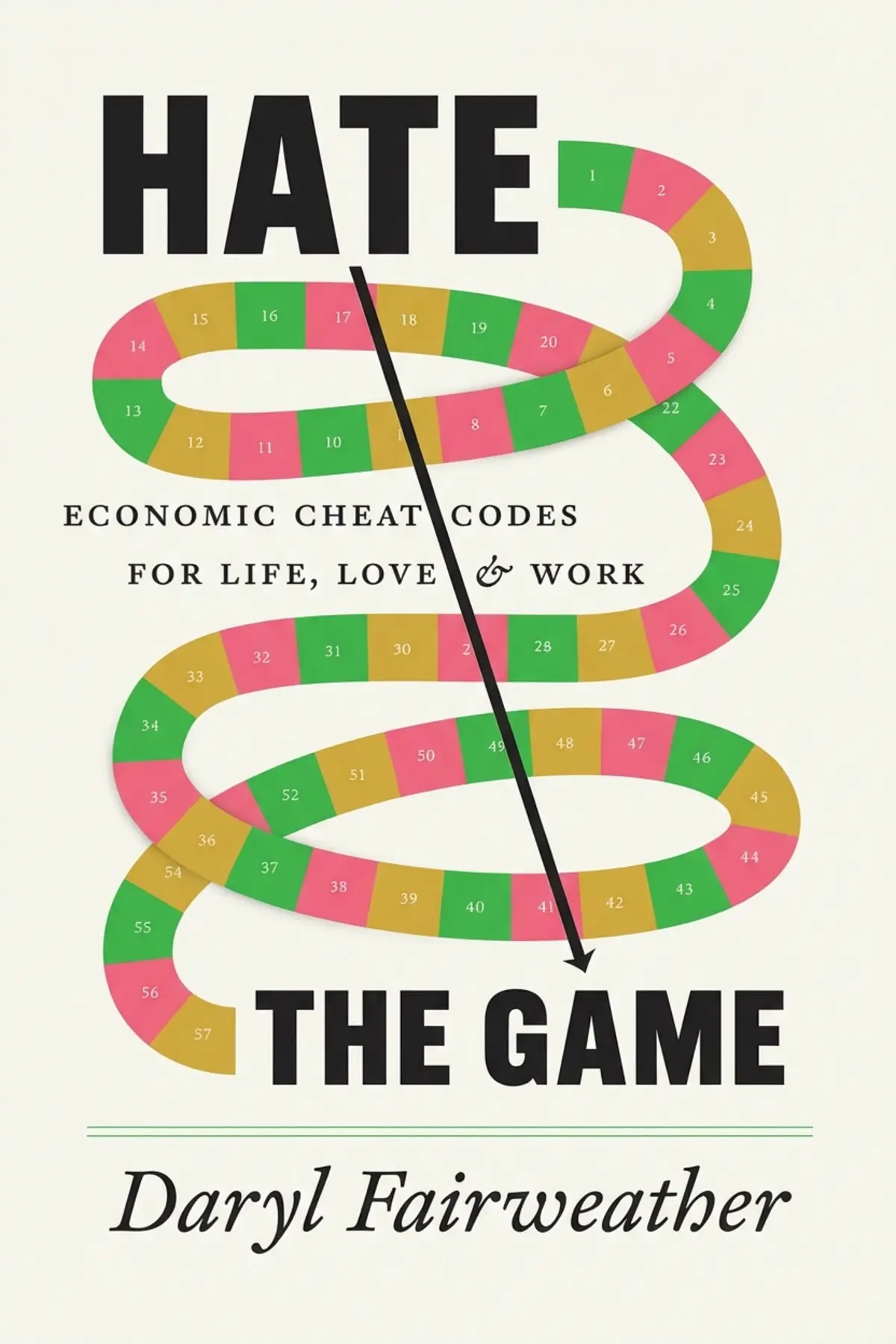
Table of Content
1. Introduction
1 min 08 sec
If job offers, rent and family decisions feel like a game rigged against you, economist Daryl Fairweather has a reply: the rules can be learned. In Hate the Game, Daryl Fairweather, who has served as chief economist at Redfin, uses game theory and behavioral economics to show that a negotiation, a marriage or a tight budget follows patterns you can read. Her first move is simple. Before trying to win, work out what kind of game you are in, because some pay only a prize, some pay in pleasure, and some make you better every time you play.
The argument running through the book is that you play smarter when you understand a game’s structure, learn what the other players want, stop thinking once an answer is good enough, and act on the options you actually hold. Along the way come a hawk sizing up its dinner, a guessing contest that punishes overthinkers, and the ultimatum that cost two singers their place in Destiny’s Child. What you gain is the ability to spot a weak hand before you play it, including your own.
2. Choose games that make you a better player
2 min 04 sec
A hawk deciding what to hunt faces a simple sum. Your choices about jobs, projects and friendships rarely are, and the hidden payoff in some of them changes which ones deserve your evenings and your next few years.
3. Win negotiations by knowing what the other side holds
2 min 11 sec
Two members of a chart-topping group made a bold demand of their manager and were sure he would give way. They had misread a single fact about him, and it decided everything that followed.
4. Know when to stop thinking and decide
2 min 06 sec
In one classic contest, the players who reasoned hardest did no better than those who barely tried. The trap behind that result shows up in stock markets, job choices and any decision where you keep researching.
5. Plan your marriage for the person you'll become
2 min 12 sec
Couples promise to feel the same in twenty years, and almost nobody can know that. Seeing marriage as two games played at once reveals where partnerships crack, and what keeps a tired couple on the same side.
6. Build your earning power first when money is tight
2 min 05 sec
The standard advice to save first can do real harm to people living close to the edge. An economist’s idea about forced, all-or-nothing choices explains why, and what order of steps works better.
7. Conclusion
1 min 17 sec
What the book adds up to is a shift from feeling played to seeing the board. The hawk, the girl group, the number contest, the 3 a.m. argument and the broken-down car all follow rules, and those rules favor whoever notices them. Fairweather’s subtitle calls them cheat codes, and each one asks for honesty about three things: what you want, what the other side wants, and which options are truly on the table.
The practice can start small. Take one commitment that eats your time and decide whether it pays you in prize, in pleasure or in skill, and whether that is enough. Before your next negotiation, find out what the other side could do without you. When a decision has already swallowed an evening of research, make the call with what you know. If you are planning a life with someone, talk through the worst case as well as the best. And if money is tight, put your effort into earning more before blaming yourself for not saving.
Two singers lost their place in Destiny’s Child because they misjudged one fact about the man across the table. Reading that fact correctly is most of the game.
About this book
What is this book about?
Job offers, rent, family duties and big life choices can feel rigged, as if everyone else got the rulebook first. Daryl Fairweather, an economist who has served as chief economist at Redfin, argues that these situations follow patterns, and that seeing them gives you back a measure of control. Her tools come from game theory, which studies choices made against other people, and from behavioral economics, which shows how emotion, habit and pressure bend those choices. She applies them to work, love and money. A girl group's breakup shows why information beats bargaining power. A number-guessing contest shows why overthinking loses. Marriage appears as a negotiation and a long bet on your future self, and money advice changes once you see how scarcity traps people in all-or-nothing choices. Readers come out able to judge which games deserve their time, read the other side before making demands, settle for a good-enough decision, plan a marriage for change, and put earning ahead of saving when money is short.
Book Information
Who it's for
Heading into salary talks
Early-career professionals heading into salary talks who suspect the other side knows more than they do.
Stuck researching every choice
Chronic overthinkers who research every decision until the chance to act has passed.
Wanting clear next steps
Couples weighing marriage, and people stretched thin by money, who want a clear order of steps.
About the Author
Daryl Fairweather
Daryl Fairweather is an economist who has served as chief economist at Redfin, where her research covers US housing markets and consumer behavior. She has also sat on an advisory council at the Federal Reserve Bank of Dallas. She writes regularly for Forbes, and her work has been featured by 60 Minutes, Today, the New York Times and Bloomberg.
Ratings & Reviews
Ratings at a glance

What people think
Listeners find this work highly educational, especially appreciating the way it simplifies complex game theory ideas. Beyond that, the material is enjoyable to consume, and one listener considers it a vital resource for those studying economics. They also value the writer's professional authority, as one review points out her PhD background in economics.
Top reviews
Suda
Ever wonder why you keep making the same mistakes in relationships or at work? Daryl Fairweather explains that it’s usually because you don’t understand the rules of the game you’re actually playing. The marriage section was a standout for me, specifically the discussion on 'brinkmanship' and how it erodes trust in long-term partnerships. I’ve never seen a prenuptial agreement described as a form of strategic foresight rather than a lack of romance, and it totally changed my perspective. The book is effortless to read and uses great pop culture references, like the Destiny's Child manager situation, to illustrate its points. It makes economics feel human and accessible for once.
Show moreAom
Economics isn't just for Wall Street guys, and Fairweather proves it with this insightful guide to life’s 'games.' As someone who actually studied econ in college, I still found plenty of value here because she applies the math to messy, real-world emotions. Her explanation of the 'beauty contest' game in financial markets was the best I’ve ever read. The book teaches you when to play and, more importantly, when to walk away from a rigged system. It’s a must-read for anyone who feels like they’re constantly playing catch-up in a world that wasn't designed for them. Truly a practical toolkit for making braver decisions.
Show moreJonathan
If you're an econ major looking for real-world utility, or just someone tired of typical self-help fluff, this is for you. Fairweather uses her PhD background to explain why we feel so powerless in certain systems and how to flip the script. The idea that we play different games for different reasons—pleasure, rewards, or learning—was a massive 'aha' moment for me. I’ve already started applying the 'inside/outside option' framework to my current job search and it’s helped my confidence immensely. It’s rare to find a book that is this intellectually stimulating while remaining so grounded in the practicalities of paying bills and managing a family.
Show moreOat
Fairweather’s PhD shines through in how she deconstructs complex game theory concepts without making them feel like a dry textbook. I particularly appreciated the breakdown of 'utility functions' and how our internal values dictate the games we choose to play. To be fair, some of the personal anecdotes felt a bit detached from the average reader’s reality, especially the parts about her high-level career trajectory. However, the 'Game Recaps' at the end of each chapter are incredibly practical for anyone trying to navigate workplace politics. She reframes negotiation as an information game, which is a total game-changer for anyone who feels they lack traditional power. It's a solid bridge between academic theory and actual life advice.
Show morePrae
After hearing Daryl on the radio, I was excited to see how she applied her economic expertise to everyday life. The concept of 'strategic returns' vs. short-term wins in your career is something every young professional needs to hear. Sometimes a low-paying job is the best move if it builds your human capital for the next level. I did find some of the advice on overthinking a bit contradictory—it’s hard to 'stop digging' when you're an overanalyzer by nature. Still, her advice on treating negotiation as an information game rather than a power struggle is worth the price of the book alone. It’s a smart, modern take on life strategy.
Show moreCooper
Finally got around to finishing this and I'm glad I did, even if I didn't agree with every single point. The focus on empathy over ego in negotiations was a refreshing take that you don't usually see in business books. I loved the breakdown of how scarcity narrows your focus and makes long-term thinking almost impossible. It's a compassionate look at why people struggle. My only gripe is that the tone sometimes shifted abruptly between very casual pop culture talk and serious economic data. It made the reading experience a little jarring at times, but the core messages are strong enough to carry it through. Worth checking out.
Show moreTaweesak
The section on 'corner solutions' was eye-opening because it explains why people in poverty make choices that seem irrational to outsiders. It’s not about lack of intelligence; it’s about a lack of options and the mental burden of scarcity. While I found those insights brilliant, the rest of the book felt a bit inconsistent in its pacing. Some chapters were dense with strategic advice, while others veered too far into personal storytelling that didn't quite land for me. Look, it’s a decent read for someone looking for a fresh perspective on self-help, but it might not satisfy those looking for a rigorous economic analysis. It's somewhere in the middle.
Show moreSamroeng
Truth is, the book tries to bridge too many gaps at once—memoir, self-help, and academic theory—and doesn't always succeed. Some of the animal anecdotes felt a bit like filler, though I did enjoy the track athlete example regarding motherhood and workplace inequality. The advice on making 'good enough' decisions to avoid paralysis is something I’ll definitely try to implement, as I’m a chronic overthinker. However, I felt the book lacked a cohesive thread beyond 'life is a game.' It’s a collection of interesting thoughts and economic concepts, but it didn’t quite come together as a unified guide for me. A light, 'meh' read overall.
Show moreZanya
This felt more like a personal diary with a few economic terms sprinkled on top to justify the title. I came into this expecting deep dives into game theory and strategic decision-making, but instead, I got a lot of stories about her personal life that didn't always translate to my own experiences. Frankly, if you've taken even a basic 101 course in economics, most of the concepts like 'sunk cost fallacy' or 'incentives' will feel incredibly elementary. The writing is engaging and she’s clearly very smart, but the 'cheat codes' promised felt like common sense dressed up in fancy jargon. I wanted more strategy and less memoir.
Show moreChon
Not what I expected based on the title or the hype on social media. I found it very difficult to connect with the author’s 'lived experiences' because they felt so specific to a high-earning, elite professional world. The advice felt like stuff I could have found in a long-form LinkedIn post or a basic blog about productivity. Where was the actual game theory? Most of it was just anecdotal evidence supported by survivorship bias. It's disappointing because the premise of 'economic cheat codes' is so strong, but the execution felt thin and lacked the depth I wanted from a PhD-level economist. I finished it feeling like I hadn't learned anything new.
Show moreQuestions about this book
What is the main idea of Hate the Game by Daryl Fairweather?
Fairweather argues that work, love and money follow strategic patterns that game theory and behavioral economics can explain. Once you know what kind of game you are in, what the other players want and which options you truly have, situations that felt rigged become readable. She applies this to negotiations, overthinking, marriage and financial hardship, aiming to help readers move from feeling powerless to playing smarter.
What does the Destiny's Child story teach about negotiation?
In 1999, LaTavia and LeToya told manager Mathew Knowles that either he left or they did. They believed the group needed them, but Knowles had already chosen to build around Beyoncé and saw them as replaceable, so he dismissed them. Fairweather’s lesson is that information decides negotiations: learn the other side’s goals, limits and outside options before issuing any ultimatum.
Why does Fairweather say overthinking leads to worse decisions?
Each extra hour of analysis adds less value than the last, and in games where you must predict what others predict, reasoning can loop forever. In Rosemarie Nagel’s guessing game, where the winner came closest to two-thirds of the average, both underthinkers and overthinkers did poorly. Fairweather advises making a careful, good-enough decision, then stopping, since perfect information rarely exists.
Should you save money or focus on earning first?
Fairweather argues that if you are barely covering basics, you should first reduce stress and raise your earning power, because scarcity creates tunnel vision and forces all-or-nothing choices. Once your finances are steady, build an emergency fund in cash, then invest for long-term goals in diversified options such as index funds. She also suggests cutting status spending and reconsidering where you live.
How does game theory apply to marriage in Hate the Game?
Fairweather sees marriage as a negotiation, where each partner must feel the deal beats their alternatives, and a commitment game, a bet on future selves vulnerable to projection bias. She suggests imagining several futures, considering a prenuptial agreement where legal protection is thin, avoiding chicken-style standoffs that erode trust, and choosing empathy over ego in exhausting moments.
Readers also enjoyed

59 Seconds: Change Your Life in Under a Minute
Richard Wiseman

A Splendid Exchange: How Trade Shaped the World
William J. Bernstein






AUDIO SUMMARY AVAILABLE
Listen to Hate the Game in 15 minutes
Get the key ideas from Hate the Game by Daryl Fairweather, plus 5,000+ more nonfiction titles.
- 5,000+ titles
- Listen as much as you want
- 7-day free trial
- Cancel anytime









