

15 min 08 sec
Available in: English
 ไทย
EnglishไทยHatching Twitter: A True Story of Money, Power, Friendship, and Betrayal
By Nick Bilton
A behind-the-scenes account of how Twitter grew from a failing podcast startup into a $31 billion company, and how fights over credit, money and control pushed out one founder after another.
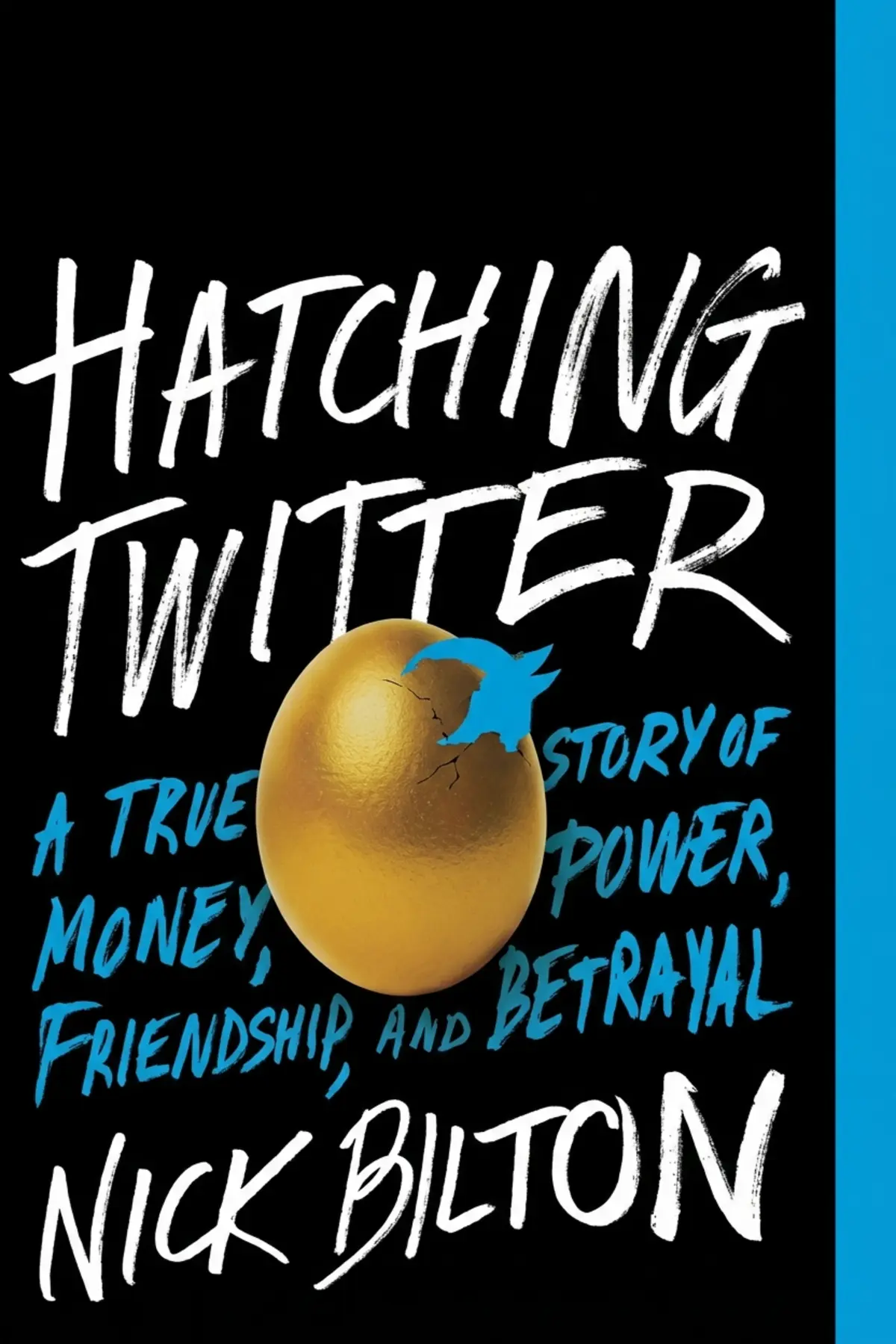
Table of Content
1. Introduction
55 sec
If you build things with friends, raise money or answer to a board, the early years of Twitter read like a warning with real names attached. In Hatching Twitter, journalist Nick Bilton shows that the service had no single inventor, whatever Jack Dorsey later told reporters. It grew out of a failing podcast startup, a lonely co-founder’s hours with a dictionary and a running feud among men who began as friends.
Bilton follows Evan Williams, Noah Glass, Jack Dorsey and Biz Stone as each rises and most are pushed aside. His throughline is plain: in a fast-growing company, power goes to whoever controls the story and the votes, and friendship rarely survives the money. Expect the inside account of how one man’s Blogger money became a $31 billion company, along with a sharper eye for the moment trust inside a team starts to turn.
2. Read a founding team's fault lines early
1 min 55 sec
A teenager selling the internet on videotape, a neighbor who recognized him from a magazine and a startup run out of a messy apartment. The first cracks in Twitter appeared before Twitter even existed.
3. A dying startup finds its real product
1 min 58 sec
Apple’s announcement left Odeo with no future, and the team scrambled for something to save it. The idea that worked came from a small feature on another site and one man’s loneliness.
4. Let real-world moments sell your product
1 min 55 sec
The official launch party drew fewer than a hundred sign-ups. A few months later, crowds were flooding bars because of tweets, and even the site’s constant crashes somehow helped it grow.
5. Learn how an unchallenged story becomes a weapon
1 min 46 sec
Fired as CEO and handed a seat with no vote, Jack Dorsey could have faded away. Instead he kept talking to reporters, and the company’s own generosity gave his version of events room to grow.
6. Expect influence to pull your product into politics
1 min 42 sec
An actor outpaced a news network, a governor held a meeting in the office, and then protesters in Iran needed the site during a planned outage. Staying neutral suddenly got very difficult.
7. Notice a coup before the vote is called
2 min 03 sec
Ev’s coach said he was doing well. His newest hire was his friend. Neither fact protected him when he walked into what he thought was an ordinary meeting.
8. Turn a creative mess into a grown-up company
1 min 50 sec
Jack returned as a star while two founders drifted out. The person who finally made Twitter reliable also pushed for a more mature culture, fuming over an impromptu party in the cafeteria and leaving a cherished sign behind.
9. Conclusion
1 min 04 sec
Twitter began with a knock on a neighbor’s door and a slice of Blogger money, and nearly every turn after that ran through friendship. Ev funded Noah, then shut him out. He made Jack CEO, removed him, and left him the chair that later ended Ev’s own run. He ignored his coach, hired a friend, and the friend took his job. Through it all the site kept growing, even as it crashed again and again under the weight of new users.
Bilton draws two plain lessons. Be wary of mixing business with friendship, because when large sums are involved people can stop valuing the friendship before they notice. And avoid turning rivals into enemies, since in a small industry you will meet them again, sometimes across a board table with your job at stake. The story supports one more: when someone spreads a version of events you know is wrong, correct it while it is still a story and not yet a vote.
Keep the image of Jack raising his hand in that boardroom. The seat handed out as a consolation was the one that counted.
About this book
What is this book about?
Twitter looks like the work of one visionary. Nick Bilton's reporting tells a messier story. The service grew out of Odeo, a struggling podcast startup funded with money Evan Williams made selling Blogger to Google. It took shape through several people's ideas: Jack Dorsey's status updates, Noah Glass's name and time stamps, and the stream of posts that Ev and Biz Stone pushed for. What followed was a run of ousters. Noah was fired months after the first tweet. Jack lost the CEO job in 2008, then spent years presenting himself as Twitter's founder and gathering allies on the board. Later a board vote, decided by Jack's own seat, removed Ev, and Dick Costolo, the friend Ev had hired, took over. Readers get the inside account of how a site that crashed constantly became a $31 billion stock market listing, and how money, credit and friendship collided along the way. Bilton's lessons on mixing business with friendship and on the cost of making enemies apply far beyond one company.
Book Information
Who it's for
Building startups with friends
Founders and early employees building a company with friends who want to see where that can go wrong.
Answering to the top
Professionals who answer to boards or senior leaders and want to spot office politics before it is too late.
Curious how Twitter began
Readers curious how Twitter really began and who deserves the credit.
About the Author
Nick Bilton
Nick Bilton is a British-American journalist, author and filmmaker. At The New York Times he wrote the Bits Blog and worked as a columnist, and he later became a special correspondent at Vanity Fair. He has also contributed to CNBC, and in May 2026 he was named executive producer of 60 Minutes. Hatching Twitter, his account of the turmoil inside the company as it grew into a multi-billion-dollar business, was a New York Times bestseller.
Ratings & Reviews
Ratings at a glance
What people think
Listeners find this book to be an absorbing experience that flows like a novel, offering an engaging tale that weaves together corporate aspects. Furthermore, the work delivers excellent perspective on the history of Twitter, with one listener describing it as the most thorough examination of the interaction of brilliant minds. The prose is also skillfully written, and listeners value the intriguing personalities and interpersonal drama found throughout the account. The tempo remains fast, and one listener emphasizes the in-depth exploration of Twitter’s development.
Top reviews
Lek
Picked this up expecting a dry business manual, but what I got was a Shakespearean tragedy set in Silicon Valley. Bilton paints a vivid picture of the messy, backstabbing world of early Twitter that feels more like a binge-worthy TV show than a biography. It is incredible how much of the platform's success was basically a happy accident amidst constant internal warfare. I couldn't put it down because the human drama—the ego, the betrayals, and the pure luck—was so well-paced. While the technical side is a bit light, the character sketches of Ev, Jack, and the forgotten Noah Glass are deeply compelling. It’s the ultimate 'don't do business with your friends' manifesto that everyone should read before starting a company.
Show moreNitaya
Wow. I had no idea the 'friendly' bird app had such a cutthroat, toxic beginning that nearly tanked the whole operation. Bilton’s reporting is masterful, providing a comprehensive look at the interaction of these four very different, very flawed minds. The pacing is incredibly quick, making a 300-page book feel like a short story you can finish in a single afternoon. You really feel for the guys who got left behind as the valuation skyrocketed. It’s a gritty, unvarnished look at the tech world that pulls no punches. Whether you love or hate Twitter, understanding the chaos that birthed it is absolutely fascinating. This is easily the most comprehensive look at the interaction of great minds I've read in years.
Show moreKet
Bilton has a knack for finding the human pulse inside a massive corporate entity, making the founders feel like real, breathing people. The story of Twitter isn't just about code and servers; it’s about betrayal, friendship, and the corrosive nature of extreme wealth. I loved how the book didn't just focus on the 'winners' but looked at the collateral damage left in the wake of the company's success. The writing is elegant and descriptive, painting scenes that stayed with me long after I closed the cover. It’s a captivating read that blends business elements with a narrative that reads like a high-end novel. Most books about tech are boring, but this one is pure fire.
Show moreValentina
Ever wonder why billion-dollar companies always seem to start with a group of friends who eventually end up suing each other? This book answers that question by diving into the volatile relationships between the four men who 'hatched' Twitter. It’s a fascinating look at how Jack Dorsey’s public image was meticulously crafted, often at the expense of others. The writing is snappy and keeps you engaged even if you aren't a frequent user of the platform. My only gripe is that it feels a bit dated now, but as a historical snapshot of a tech titan's birth, it’s top-tier. Bilton manages to turn corporate boardrooms into battlefields, making the 'status update' feel like the most dangerous idea on earth.
Show moreKenji
As someone who avoids most tech-sector news, I was surprised by how much I enjoyed this exploration of power and ego. Bilton uses the theme that history is written by the victors, but he manages to give a voice to the losers, specifically Noah Glass. The narrative flows like a thriller, moving from one boardroom coup to the next with breathless intensity. You see the transition of these founders from idealistic 'hacktivists' to ruthless corporate players in real-time. It’s a cautionary tale about what happens when money and fame outpace maturity. The book is well-crafted and provides great insight into how Twitter's history was forged through conflict rather than a unified vision. Highly recommended for fans of character-driven non-fiction.
Show morePornthip
After hearing so much about the legendary 'war' for Twitter's soul, I finally dove into Bilton's account and wasn't disappointed. The conflict over the mobile vision is particularly striking, highlighting the divide between those who saw the future and those who just got lucky. Jack Dorsey comes across as a complex, often unlikeable figure, but you can't deny his impact on the final product. The book does a great job explaining the messy transition from a side project at Odeo to a global powerhouse. It’s a detailed look into the creation of Twitter that exposes the lies told to the press. Bilton’s style makes the corporate maneuvering feel as high-stakes as a political thriller.
Show moreSirirat
It is rare for a non-fiction book to be this unputdownable, but Bilton has managed to turn corporate history into a gripping saga. The way he details the ousting of Noah Glass is heartbreaking and serves as the emotional anchor for the entire book. You get a real sense of the 'wild west' atmosphere of San Francisco's startup scene in the mid-2000s. While some of the conclusions about Jack's motivations feel a bit speculative, the sheer volume of research is evident on every page. This is essential reading for anyone interested in how our modern digital world was actually built. The human drama is the star here, proving that billion-dollar ideas are often born from the messiest of friendships.
Show moreAurora
The chapter on Noah Glass was the highlight for me, as it finally sheds light on the founder who was essentially airbrushed out of history. However, I found Bilton's bias against Jack Dorsey to be incredibly distracting throughout the entire narrative. To be fair, the reporting is deep, but the author clearly has favorites, presenting Ev Williams as a saintly figure while painting Jack as a scheming villain. It’s hard to trust a 'true story' when the hero-villain archetypes are so heavy-handed and one-sided. I wanted more about the actual engineering and less about who was crying in which San Francisco coffee shop. It's a decent read for the gossip, but take the characterizations with a grain of salt.
Show moreOlivia
Frankly, the narrative structure is great, but I struggled with how the author treated the technical challenges as mere footnotes. Twitter's 'Fail Whale' era was a massive engineering hurdle, yet the book focuses almost entirely on who was mad at whom. While the drama is certainly riveting, it leaves a gap for readers who actually want to understand the product's evolution. It’s a good read for people who like celebrity gossip and boardroom politics, but it’s definitely not a traditional business case study. The characters are fascinating, but they almost feel like caricatures at certain points. I enjoyed it, but I left wanting to know more about the actual 'how' rather than just the 'who'.
Show moreYothaka
This book reads like a prolonged, sensationalist blog post from the old Gawker era, which might be exactly what some people want. Personally, I found the lack of objectivity exhausting because the author seems to have a personal vendetta against Jack Dorsey. He completely glosses over the fact that Jack was right about mobile while Ev was stuck in a desktop mindset. That isn't just a minor detail; it’s a fundamental business reality that saved the company from certain death. If you want a balanced business analysis, look elsewhere, because this is pure soap opera fodder masquerading as journalism. The facts are there, but the presentation is so slanted it almost ruins the credibility of the reporting.
Show moreQuestions about this book
What is Hatching Twitter about?
Nick Bilton tells the inside story of how Twitter grew from a side idea at Odeo, a failing podcast startup, into a company valued at $31 billion when it entered the stock market in 2013. Along the way he follows the fights among its founders, Evan Williams, Noah Glass, Jack Dorsey and Biz Stone, over credit, money and control, and the board moves that pushed most of them out.
Who really founded Twitter according to Nick Bilton?
Bilton argues there was no single founder. Jack Dorsey proposed the status idea and sent the first tweet, but Noah Glass found the name and added time stamps, Evan Williams and Biz Stone pushed for a stream of updates, and Williams paid for the company with money from selling Blogger. Dorsey later told the press he was the founder, a story Bilton says grew too big to correct.
How was Evan Williams pushed out as CEO of Twitter?
Williams thought he was attending a normal session with his coach, Bill Campbell, who instead told him he would be replaced by Dick Costolo, the friend Williams had hired as chief operating officer. Three board members voted to remove him. Williams, Jason Goldman and Costolo voted to keep him, and the deciding vote came from Jack Dorsey, whom Williams himself had made a silent chairman years earlier.
What lessons does Hatching Twitter teach?
Bilton draws two lessons. Be careful about mixing business and friendship, since large sums of money can make people lose sight of what the friendship is worth. And avoid making enemies, because you never know when you will meet them again. The story also shows how a version of events left uncorrected, like Dorsey’s claim to be the sole founder, can turn into real power.
Readers also enjoyed



Alibaba: The House That Jack Ma Built
Duncan Clark



7 Powers: The Foundations of Business Strategy
Hamilton Helmer
Bad Blood: Secrets and Lies in a Silicon Valley Startup
John Carreyrou
AUDIO SUMMARY AVAILABLE
Listen to Hatching Twitter in 15 minutes
Get the key ideas from Hatching Twitter by Nick Bilton, plus 5,000+ more nonfiction titles.
- 5,000+ titles
- Listen as much as you want
- 7-day free trial
- Cancel anytime









