

A Biography of Loneliness: The History of an Emotion
Fay Bound Alberti
 English
Shows why diets keep failing, how weight stigma does more harm to health than weight itself, and how to stop putting life on hold until your body shrinks.
1 min 07 sec
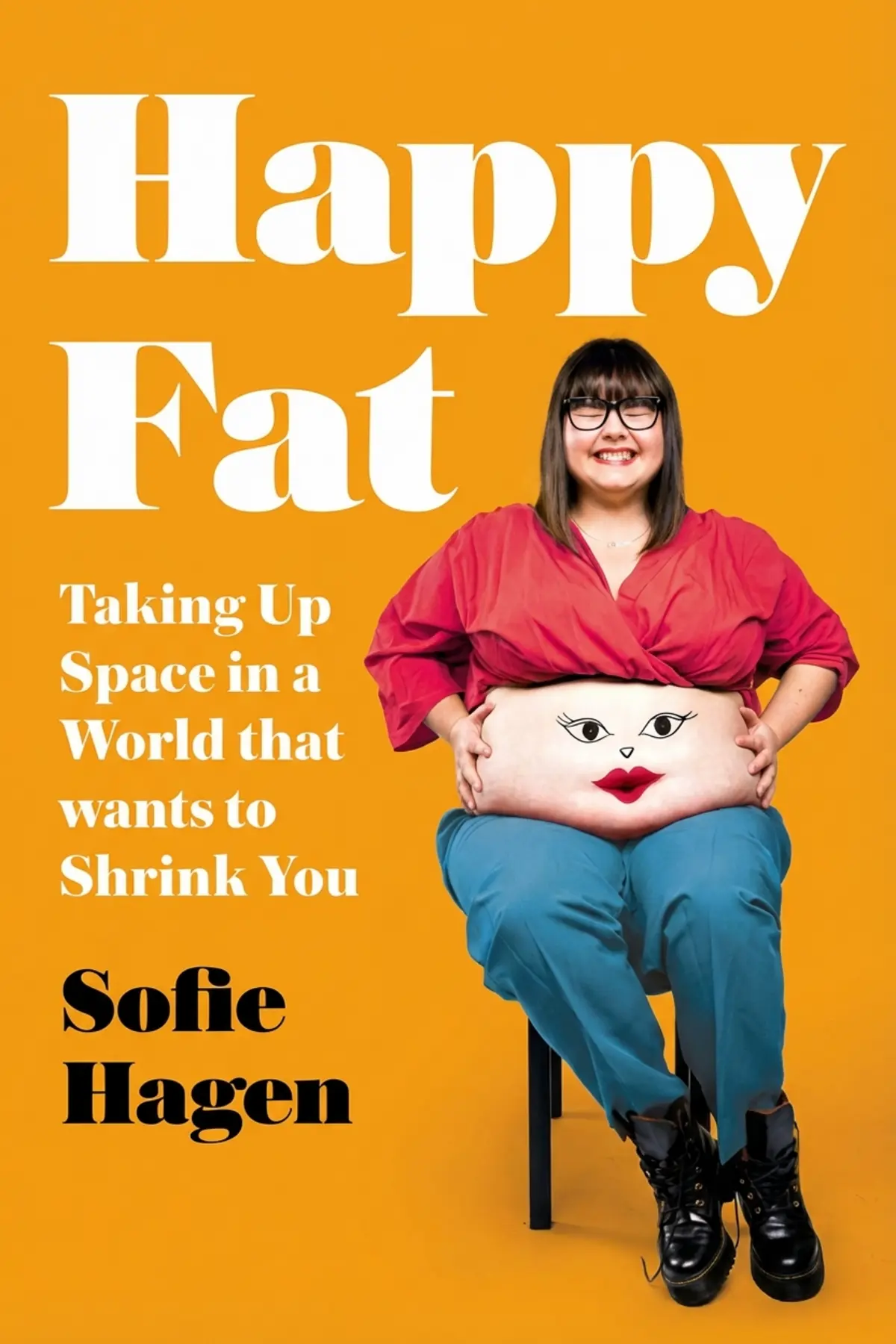
If you have spent years waiting to like your body until it gets smaller, Sofie Hagen’s Happy Fat argues that the waiting itself is the problem. The Danish comedian and campaigner says fat is simply a description. Dodging the word with soft phrases like full figure only confirms the fear behind it. That fear is fatphobia, and Hagen finds it in comedy, sitcoms, the diet industry and the doctor’s office.
Her central claim is that fatness is not what hurts fat people. What hurts them is a prejudice they learned and others profit from, one that keeps people dieting against their own biology, damages health through shame and keeps people from living now. She tells this through her own life, from a diet at age five to throwing away her scales at 23, and supports it with research on causes of death, fitness, discrimination and weight dissatisfaction. By the end you will know why the weight-loss promise keeps breaking, how to stand up for fat friends and how to start living in your body today.
1 min 34 sec
A five-year-old was told her body was dangerous, and no one ran a single test. What followed shaped two decades of her life, and it may sound uncomfortably close to how your own feelings about food began.
1 min 48 sec
A friend at college asked Hagen a question she had never thought to ask about her own self-hatred. The answer turned every diet ad she rode past into something very different from a promise.
1 min 36 sec
Think of a fat character from a film or sitcom you love. Hagen bets you know exactly what role they play, and she explains why a cartoon joke can shape how real people see themselves.
1 min 48 sec
Six years after one season of a famous weight-loss show finished filming, its contestants told a very different story. Almost all had regained the weight. Hagen explains what the body does under a diet, and why failure keeps the business healthy.
1 min 52 sec
A famous 1993 study is often quoted as proof that fat kills. Hagen says it found something different, and that the comments made out of concern for fat people’s health may be the bigger danger.
1 min 42 sec
Most people would never call themselves bullies, yet Hagen argues that silence in a group of laughing friends counts as taking part. Her advice for allies is concrete, and it begins with something thin people rarely notice.
1 min 42 sec
Being told to love yourself can feel like one more test you are failing. Hagen offers a gentler route, and it involves a silver bikini, a few new friends and looking at bodies the media hides.
1 min 18 sec
Hagen’s book returns, in the end, to a single word. The world has been arranged to hide fatness so thoroughly that many people cannot say the word out loud. Her answer is to reclaim fat as a plain, factual description with no shame built in. You can be fat and clever, fat and sexy, fat and worthy. The fight she proposes is against the prejudice that keeps people dieting for an industry’s profit and turns concern into harm.
In practice, that starts with language. Hagen suggests dropping words that sort food into good, bad or naughty, since they imply that eating itself can be wrong. Food is fuel you eat when you need it. It continues with attention: noticing who earns from your shame, what the fat characters on screen are allowed to be, and whether a doctor is examining your symptoms or only your size. And it takes some courage, whether that means speaking up when the joke starts or letting yourself be seen in something bright.
Thin Sofie never arrived. The real Sofie stopped waiting for her, threw away the scales and got on with her life.
Many people treat their real life as something that starts after the weight comes off. Sofie Hagen spent her childhood and teens that way. She was put on a diet at five and later went through shakes, exercise regimes and bulimia. She also kept dreaming of a thin future self who would finally be happy. In Happy Fat, the Danish comedian and campaigner argues that fat is a neutral description and that fatphobia is the real problem. In her view, it is a prejudice taught by films and sitcoms, sold by a weight-loss industry worth billions, and repeated by doctors and strangers in the name of concern. She draws on her own story, on the record of The Biggest Loser and on research about dieting, medical bias and the health effects of discrimination. Readers get a clear account of why restrictive diets tend to rebound and why misread studies made fat sound like a death sentence. Hagen also gives practical advice for both sides of the problem: how allies can speak up and make room for fat friends, and how fat people can begin living in their bodies now, even on days when self-love feels out of reach.
People who have dieted for years and feel their life is on hold until they lose weight.
Friends, parents and team leads who want to stop fat jokes and make space for fat people.
Anyone curious why weight-loss promises keep failing despite so much effort.
Sofie Hagen is a Danish comedian, writer and podcaster, born in 1988, who campaigns for fat acceptance. She won the Edinburgh Fringe's Best Newcomer Award in 2015 and has since sold out tours across the UK and Europe. Her writing has appeared in the Guardian, Stylist and Metro, and she has appeared on BBC, ITV, Comedy Central and Dave. She also presented a documentary about fatness for Danish channel DR2. Her talks target fatphobia and the body positivity movement.
Listeners find the book funny and value the extensive research and informative nature of the material.
Listening to the audiobook was an absolute delight because Hagen's Danish accent adds such a charming, personal layer to the heavy subject matter. She narrates with a blend of vulnerability and comedic timing that you just don't get from the printed page alone. It's half-manifesto and half-memoir, tackling everything from the 'healthism' movement to the basic human right of existing in a large body without apology. Frankly, I think every 'straight-sized' person should listen to this to understand the daily obstacles they never have to think about. It’s eye-opening, funny, and deeply necessary for anyone who wants to be a better ally. I left this experience feeling more educated and significantly more compassionate toward myself and others.
Show moreFinally got around to reading this manifesto, and it’s far more radical than I anticipated. Hagen doesn’t just want you to feel 'body positive'; she wants a total dismantling of the structures that marginalize fat bodies. I loved her critique of the HAES movement, specifically her point that your worth shouldn't be tied to your health status anyway. That's a perspective we rarely see in mainstream media. It’s a bold, unapologetic book that refuses to play nice with polite society. If you're looking for a gentle self-help book, this isn't it—it’s a call to arms for fat liberation. It is brilliant, angry, and deeply researched.
Show moreWow, I am genuinely floored by how much I needed to hear these specific words right now. As someone who has spent years hiding in the back of clothing stores or avoiding cameras, reading Sofie's journey felt like someone was finally holding up a mirror to my own life. The humor is dark and sharp, exactly what you'd expect from a stand-up comedian. She doesn't sugarcoat the abuse she’s faced from online trolls or the way society treats anyone who doesn't fit the 'norm.' It’s a liberating, emotional experience that left me feeling far more confident in my own skin. Please, do yourself a favor and buy this book immediately.
Show morePicked this up on a whim and found myself laughing out loud at the dark humor while simultaneously fuming at the medical neglect stories. Hagen is an excellent writer who knows how to balance heavy statistics with personal anecdotes that make the data feel real. I especially appreciated the research into how fatphobia intersects with other forms of discrimination. It's an informative, well-reasoned piece of work that challenges you to look at your own biases. Truthfully, I think the world would be a lot kinder if this was required reading in schools. It’s not just about weight; it’s about basic human dignity and the right to exist without being a punchline.
Show moreLook, if you think this is just another 'love your curves' fluffy self-help guide, you are mistaken. This is a pointed, political, and fiercely intelligent look at how society treats bodies that don't conform. Sofie Hagen is hilarious, but she’s also clearly done her homework, citing evidence that dismantles the usual 'concern trolling' we see online. The tone is aggressive in the best way possible because it demands respect rather than asking for it. I finished this feeling empowered and ready to stop apologizing for the space I take up in the world. Fat people, unite—this is the book we’ve been waiting for! It is life-changing stuff.
Show moreEver wonder why the world feels so small for anyone over a size 16? Hagen dives deep into the claustrophobic reality of fashion and medical spaces, and it is both heartbreaking and wildly informative. I appreciated how she dismantled the 'health concern' trolling that we see so often on social media. Her research is thorough, yet she maintains that signature comedic edge throughout the book. My only real gripe is that some of the jokes felt a bit dated, specifically the references to certain celebrities. Regardless, the core message of fat liberation is something everyone needs to sit with and process. It's a vital read for anyone tired of the toxic fitness culture shoved down our throats.
Show moreAfter hearing Sofie on a podcast, I knew her writing would be sharp, but I wasn't prepared for the depth of research regarding systemic anti-fat bias. She goes beyond the typical body positivity tropes to explain the history and politics of fatness. It’s a dense read at times, but her conversational tone keeps it accessible. I particularly liked the sections on 'healthism' and how we devalue people based on their perceived health. It made me reconsider my own language and how I view my body and others'. It’s a brave book that doesn't shy away from being uncomfortable, which is exactly why it works. I would recommend this to anyone interested in social justice.
Show moreTo be fair, while the message of self-acceptance is vital, the middle section felt slightly repetitive and could have benefited from tighter editing. Hagen spends a lot of time telling the reader to 'love yourself' and 'give yourself a hug,' which is lovely but gets a bit thin after the tenth time. I did enjoy the interviews with other activists, as they provided different perspectives on the size 24+ experience that I hadn't considered as a size 16. It’s an interesting read with some very valid points about fashion industry exclusion. However, it felt a bit vague when it came to the mental health aspects of eating habits. I wanted a bit more nuance there.
Show moreThe interviews scattered throughout the chapters provided some of the most insightful moments, though I found the repetitive calls for self-love a bit saccharine for my taste. It felt like I was reading the same chapter multiple times in the middle. I also wish she had addressed the nuance of mental health a bit more directly instead of just saying to eat whatever you want. That said, her points about the toxicity of the fashion industry are spot on. Watching thin models showcase lingerie for 'larger' women is a joke, and Hagen calls it out perfectly. A solid 3 stars for the information, even if the pacing was off and the tone was a bit scattered.
Show moreThis book unfortunately missed the mark for me, as it felt more like a 300-page venting session than the inspiring memoir I was promised. While I understand the anger, the constant ranting about every inconvenience became exhausting to read after the first few chapters. Some of the attempts at humor, like the anecdote about being interrupted during a party encounter, felt awkward and totally missed the mark. I was hoping for something more along the lines of a James Corden response to fat-shamers, something witty and sharp, but this was just heavy. It’s a shame because the topic is so important, but the execution felt way too aggressive for my taste. I just couldn't finish it.
Show moreHappy Fat argues that fat is a neutral description and that the real harm comes from fatphobia, the prejudice against fat bodies. Hagen traces it through her own life, from a diet at age five to bulimia and finally throwing out her scales at 23. She shows how films, sitcoms, the weight-loss industry and doctors spread that prejudice, and she offers ways for fat people and their allies to resist it.
Hagen explains that cutting calories makes the body act as if it were starving. It extracts more energy from food, slows the metabolism and raises fat-storage enzymes, so weight tends to return. She points to The Biggest Loser: six years after season eight finished filming, 13 of 14 contestants were back at their starting weight and four were heavier. Dieters blame themselves, try again, and the industry profits.
No. Hagen says fat people are not always healthy, but that size alone does not prove bad health. She argues a 1993 study on causes of death was misreported as blaming obesity, and cites a 2014 paper finding fit fat people have similar risks to fit thin people. She also points to research suggesting that discrimination and weight dissatisfaction damage health in their own right.
Hagen suggests starting by recognizing the everyday advantages thin people have, such as never worrying whether a seat will fit. Choose places where fat friends will be comfortable. Speak up when someone tells a fat joke, because she counts silence as complicity. Challenge abusive posts online, share the work of fat activists, and pay attention to people who also face racism, homophobia or ableism.
Hagen says you do not have to love yourself all the time, and that forcing self-love can become another way to feel like a failure. She recommends spending time with fat people who enjoy their bodies, wearing clothes that let you be seen, looking at yourself naked in the mirror, seeking out images of naked fat bodies, and describing food as fuel instead of good or bad.
Fay Bound Alberti

Daniel Goleman


Richard Wiseman

Virginia Woolf


Tracy Rosenthal


Jessica Valenti

AUDIO SUMMARY AVAILABLE
Get the key ideas from Happy Fat by Sofie Hagen, plus 5,000+ more nonfiction titles.









