

14 min 36 sec
Available in: English
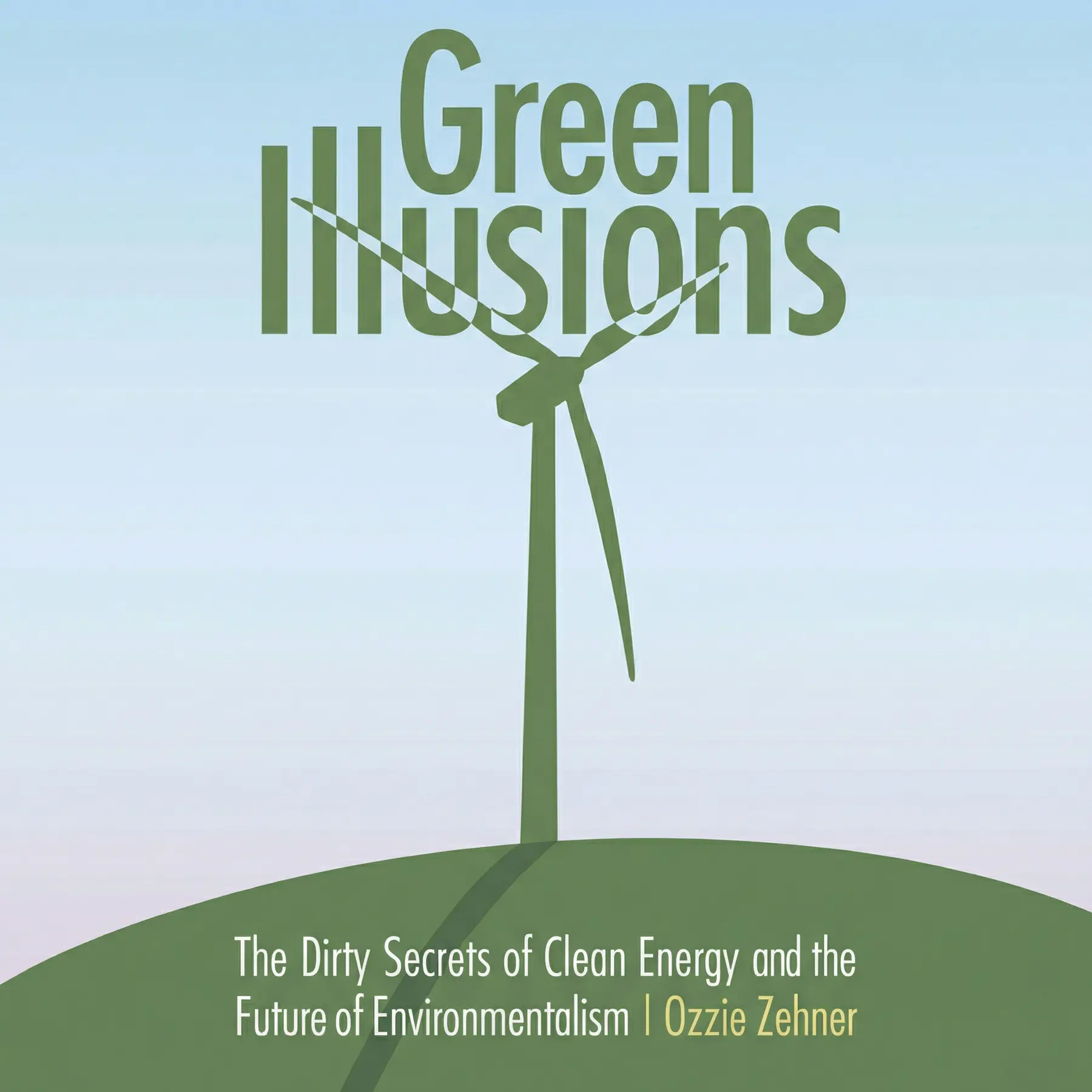
Green Illusions: The Dirty Secrets of Clean Energy and the Future of Environmentalism
By Ozzie Zehner
Zehner shows why solar panels, wind turbines, biofuels and hydrogen cars carry hidden environmental costs. He argues that the real fix for the energy crisis is using less, made appealing through tangible benefits, smart rules and walkable cities.
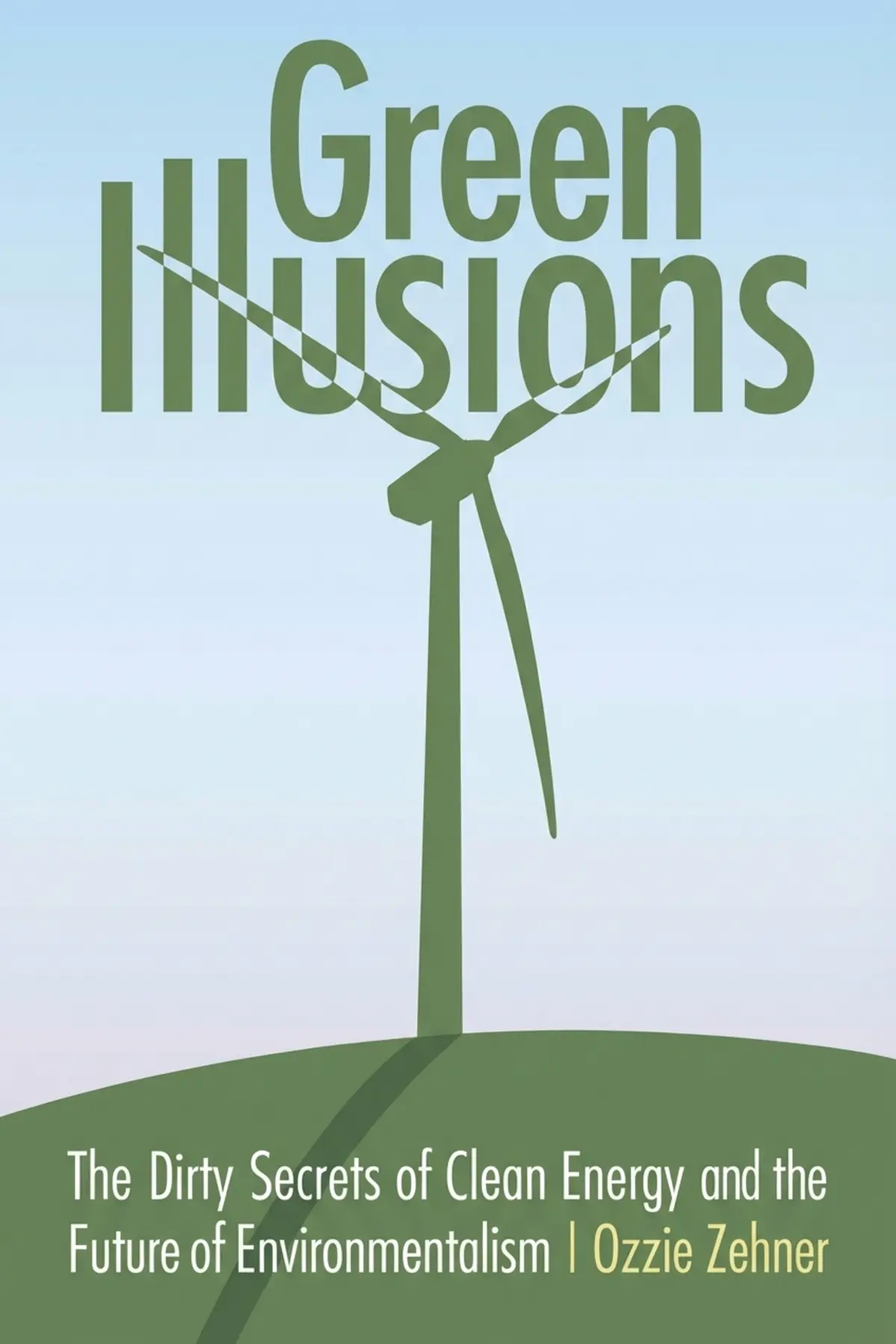
Table of Content
1. Introduction
55 sec
If you care about the planet, it is comforting to think that sun and wind will one day power everything while life goes on as before. In Green Illusions, engineer and science and technology scholar Ozzie Zehner argues that this comfort is the problem. Every alternative source he examines carries serious costs of its own, and making solar cells releases a gas thousands of times stronger than carbon dioxide.
His case is that the energy crisis comes from how much we consume, and that faith in clean technology mostly lets us avoid that fact. Real progress, he says, means using less, and making that choice feel like a gain. Expect a sharper eye for green claims, a reason to distrust efficiency on its own, and changes that save money, time and energy together.
2. See the real price of every power source
1 min 51 sec
Coal, uranium and crops grown for fuel each promise to keep the lights on. Look closer at what happens before and after the burning, and even the plant-based option starts to look risky.
3. Clean power still depends on dirty factories
1 min 58 sec
The sunshine is free and the wind never runs out. So why does a British study expect most turbines in one city to add carbon, and why does a hydrogen car start in deficit?
4. Spot the comfortable story behind green hype
1 min 43 sec
Politicians, reporters and companies all praise alternative energy, and most of us are glad to hear it. Zehner traces that agreement to two pressures, one inside our heads and one inside newsrooms.
5. Efficiency can raise energy demand, so learn the catch
1 min 40 sec
Making machines waste less energy sounds like an obvious win. A nineteenth-century economist watching coal and steam engines found something that should make every efficiency plan more cautious.
6. Make using less pay off right now
1 min 30 sec
Warnings about a hotter future rarely change what anyone does tomorrow. An anti-smoking campaign found a better appeal, and it points to why working and buying less might feel like a reward.
7. Rules that make frugal living the easy default
2 min 06 sec
One state held its energy use steady while the national average doubled, and its residents stayed among the happiest. Zehner’s policy ideas reach from mailboxes to letters written to Santa.
8. Living in a city shrinks your energy footprint
1 min 45 sec
A house in the countryside looks like the green ideal, and a crowded city looks like the opposite. Zehner’s numbers on commuting and cycling turn that picture upside down.
9. Conclusion
1 min 08 sec
Green Illusions asks for an uncomfortable trade. The hope that sun, wind and hydrogen will let everyone keep living as they do now is, in Zehner’s reading, the illusion of the title, and it survives because it is pleasant to believe and easy to sell. Each clean technology he examines moves the damage somewhere else: into a solar factory, a cleared rainforest, a river running dry downstream. Efficiency by itself invites more use. What remains is the one solution nobody can patent, which is consuming less.
His version of using less turns out to be surprisingly pleasant: more time off, fewer snacks, an empty mailbox, a park where a parking garage used to stand. So the next time a product is sold as green, ask what it cost to make and who funded the claim behind it. Look for the cut in your own life that also pays you back in time, money or health. And if your commute is a short drive through traffic, try the bike for a week.
The cleanest energy, by Zehner’s account, is the energy you decide you do not need.
About this book
What is this book about?
Many people who care about the environment pin their hopes on a simple swap: replace coal and uranium with sun, wind and plants, and carry on living as before. Ozzie Zehner argues that this hope hides more than it solves. Each alternative he examines comes with its own damage, from greenhouse gases released in solar cell factories to rainforest cleared in Brazil, wind turbines that add carbon and dams that set nations against each other. His deeper claim is that energy problems are rooted in culture more than in technology. A green conscience, hopeful politicians and stretched newsrooms keep the debate fixed on producing more clean power, while the Jevons Paradox shows that even efficiency can raise total demand. The real crisis, he argues, is the amount we consume. The second half of the book turns to remedies that cost little and pay back quickly: framing frugality around time, money and health, taxing consumption, cutting packaging and junk mail, empowering women, shielding children from ads, and building cities where walking and cycling are the easy choice. Readers come away with a sharper test for green claims and practical ways to use less.
Book Information
Who it's for
Believers in clean energy
Environmentally minded readers who trust solar, wind and electric dreams and want the full picture.
Professionals weighing green claims
Professionals in energy, policy or media who need a sharper test for green claims.
Looking for everyday savings
Commuters and households looking for changes that save money, time and energy together.
About the Author
Ozzie Zehner
Ozzie Zehner grew up in Kalamazoo, Michigan, studied engineering at Kettering University and then science and technology studies at the University of Amsterdam. He wrote Green Illusions and co-produced the 2019 documentary Planet of the Humans. His writing has appeared in the Christian Science Monitor, The American Scholar, The Humanist and The Futurist, and he has discussed energy and the environment on CNN, MSNBC and PBS. His central argument is that energy problems are rooted more in culture than in technology.
Ratings & Reviews
Ratings at a glance
What people think
Listeners find this book highly worth reading, with one noting it introduces fresh perspectives to the environmental landscape. The quality of information receives positive feedback, as one listener highlights its deep scientific basis. Furthermore, the content is thought-provoking, pushing people to question their daily routines, and listeners laud the pacing as a superb achievement. They appreciate the focus on energy usage, particularly the emphasis on lowering consumption, and one listener identifies the book as an eye-opener.
Top reviews
Ratree
Zehner’s work is a total paradigm shift that shattered my naive optimism regarding the 'green' energy movement. For years, I assumed solar panels and electric cars were the ultimate fix, but this book exposes the dirty manufacturing processes and toxic gases like nitrogen trifluoride that often go unmentioned. The author’s central argument—that we must prioritize energy reduction over mere production—is a hard pill to swallow but feels fundamentally necessary. Frankly, the way he links environmentalism to women’s reproductive rights and urban walkability was a revelation. It transforms 'saving the planet' from a shopping list of gadgets into a profound cultural shift. While the pacing is impressively fast for a non-fiction book, some of the metaphors feel a bit reaching. Regardless, it is an eye-opener that encourages you to question every 'eco-friendly' product you see. This is an essential read for anyone tired of corporate greenwashing.
Show moreNiramai
The connection between women’s rights, military spending, and carbon emissions was something I never saw coming in an environmental book. Zehner argues that we can't solve the energy crisis without addressing population growth and consumer culture. It’s a bold take. I loved how he exposed the LEED certification as more of a PR gimmick than a real sustainability standard. The chapter on the 'Architecture of Community' really hit home for me. It made me realize how much of our energy use is dictated by poor city zoning and sprawl. We’ve paved over our best soil for parking lots and highways. The truth is, technology won't save us if we don't change our habits. It’s a dense read but the information quality is top-tier. I’ve been recommending this to everyone in my local sustainability group because it moves the conversation past the usual solar-vs-coal talking points.
Show moreGame
Not what I expected from an environmental book, but maybe that's the point. Instead of boring graphs, Zehner gives us a searing critique of the 'holy cows' of the green movement. He exposes how Big Oil has co-opted the alternative energy industry as a PR shield. It's fascinating. I was particularly struck by the facts regarding radioactive contamination from nuclear sites and the inefficiency of hydrogen cells. The book is an outstanding effort in terms of pacing and information quality. It’s rare to find a book that connects military arms production to your personal energy bill so effectively. The truth is, we are addicted to consumption, and Zehner is the only one brave enough to say the cure isn't more tech—it's less of everything. This book should be required reading in every high school. It changed the way I look at my commute and my kitchen appliances.
Show morePrayoon
After hearing so much buzz about this 'post-environmentalist' bible, I had to see if it lived up to the hype. It does. Zehner’s analysis of the hidden costs of solar cells—like the emission of sulphur hexafluoride—is a masterclass in scientific literacy. He doesn't let anyone off the hook, from the LEED board to the manufacturers of 'eco-friendly' gadgets. The book is devastatingly honest about the challenges we face. I especially appreciated the section on how our ancestors thought petroleum would save the whales; it puts our current 'green' obsession into a brilliant historical context. While some might find his focus on social issues like income inequality to be a reach, I think it’s the most original part of the debate. This book doesn't just give you facts; it gives you a new lens to view the world. Truly a classic in the making for environmental literature.
Show moreThitiwan
Ever wonder why our supposed 'clean' energy solutions never seem to actually lower our total carbon footprint? Green Illusions dives head-first into Jevon’s paradox, explaining how efficiency gains often just lead to more consumption. The first half is a brutal, data-driven takedown of wind, solar, and biofuels that left me reeling. To be fair, I found the second half a bit more wandering as it veered into child advertising and teenage acne. I appreciate the holistic approach, but it felt a little less grounded than the technical critiques. The writing style is engaging and accessible, avoiding the dry tone of most academic environmental texts. Zehner is clearly a brilliant thinker, even if his vision of a 'Department of Efficiency' feels like a political pipe dream in today’s climate. It’s a provocative, important book that forces you to re-evaluate your lifestyle and the systems we take for granted.
Show moreDivya
Finally got around to reading this, and it’s easily the most thought-provoking book on my shelf. Zehner doesn't just scratch the surface; he digs into the 'dirty little secrets' of the green movement. I found the analysis of the life cycle of wind turbines particularly eye-opening—those things aren't as carbon-neutral as they look. The author's focus on reduction rather than production is a refreshing change of pace. I did find some of his solutions, like campaign finance reform, to be a bit optimistic given our current political gridlock. Also, the section on child advertising was interesting but felt slightly tangential to the core energy theme. Despite these minor gripes, the book is incredibly readable. It challenges the status quo of 'clean energy' in a way that is both devastating and hopeful. If you're ready to have your assumptions challenged, buy this book.
Show moreHunter
As someone who has always been a diehard believer in solar power, this book was a much-needed reality check. Zehner shows that many alternative-energy technologies are only as durable as the subsidies that support them. He isn't saying we should stick with coal; he's saying we're asking the wrong questions. The writing is surprisingly funny in places, which helps balance out the somewhat bleak data. I appreciated the deep dive into the 'Green Revolution' and how it actually led to a massive increase in energy inputs for agriculture. Some parts are a bit repetitive, and the author definitely has a bias toward high-density urban living. However, the core message about curbing rampant consumerism is undeniable. It’s a capital-I Important book that reframes environmentalism for a new generation. We need more of this kind of 'post-environmentalist' thinking.
Show moreSuvannee
I want to divide this book into two distinct sections: the first is an awesome, five-star critique of alternative energy. Zehner masterfully explains why wind and solar aren't the panaceas they are marketed to be, highlighting the huge energy inputs required for their production. However, my enthusiasm waned in the second half. He starts blaming energy use for everything from obesity to sexuality, which felt like a massive stretch. The constant comparisons to European 'energy paradises' got old quickly. We are Americans, and we need solutions that fit our specific cultural landscape, not just a lecture on why we should live like Danes. It’s a good book with some very sharp insights, but it loses its way when it tries to be a catch-all solution for every social ill. Read it for the tech critique, but take the sociology with a grain of salt.
Show moreYaowaluk
Truth is, I have mixed feelings about this one. On one hand, Zehner is right to point out that 'clean energy' isn't really clean when you factor in the toxic greenhouse gases used in manufacturing. The critique of hybrid cars as a PR ruse for the auto industry was particularly sharp. On the other hand, the book feels incredibly polemical at times. The author dismisses almost every technological advancement as a distraction, which feels a bit disingenuous. Is he really suggesting we can just 'vote' our way out of a climate cataclysm? His solutions often feel like pipe dreams that ignore the reality of entrenched corporate power. I liked the focus on walkable communities, but the 'Architecture of Community' section dragged on far too long. It’s a solid 3-star read: great for deconstructing myths, but less successful at building a realistic path forward.
Show moreGoy
Picked this up at the library hoping for a rigorous critique of green tech but I was sorely disappointed by the blatant errors. As someone with a background in electrical engineering, I found the claim that solar photovoltaics would cost $44 trillion to manufacture completely absurd. It’s an order of magnitude off. The author seems less interested in science and more interested in a biased crusade against any technology that isn't a bicycle or a bus. The prose is filled with fear-mongering anecdotes and an annoying 'Europe does it better' attitude that ignores our unique socio-economic context in America. The book is repetitive, especially toward the end, and the section on bicycle insurance was just bizarre. If you want a serious economic analysis of energy, look elsewhere. This felt more like a manifesto for living in a dense urban commune than a balanced scientific study.
Show moreQuestions about this book
What is the main argument of Green Illusions by Ozzie Zehner?
Zehner argues that the energy crisis comes from how much we consume, not from a lack of clean technology. Solar, wind, biofuels, hydrogen and even hydropower all carry hidden costs, from factory emissions to food prices and conflicts over rivers. Believing technology will save us lets people avoid cutting back. The real solution, he says, is using less, made attractive through immediate benefits, smart policy and livable cities.
Why does Zehner say solar and wind power are not truly clean?
The sunlight and wind are renewable, but the equipment is not. Making solar cells releases gases such as nitrogen trifluoride, which Zehner reports is 17,000 times more potent than carbon dioxide. Lifecycle accounting shows wind turbines use a lot of conventionally made energy, and a British study found two-thirds of turbines built in Manchester will cause a net increase in carbon.
What is the Jevons Paradox in Green Illusions?
In 1865, economist William Stanley Jevons studied coal use after James Watt’s more efficient steam engine. Each engine used less coal, but the engines became cheaper and more popular, so total coal use rose. Zehner applies this to modern devices: greater efficiency makes energy cheaper, which raises demand and brings us back to high consumption.
How can I apply the ideas in Green Illusions?
Zehner suggests framing cuts around benefits you feel now, such as saved time, money or health, the way one anti-smoking campaign warned about bad breath on a date. Eat fewer sweets and soft drinks, refuse junk mail, question who funded a green claim, and try cycling to work, which in heavy traffic can be as fast as driving.
Who should read Green Illusions?
It suits environmentally minded readers who place their hopes in clean technology, and people working in energy, policy or journalism who want to test green claims more critically. It also helps anyone curious how personal habits, city design and policy ideas, such as taxing consumption or banning ads aimed at children, could cut energy use while improving daily life.
Readers also enjoyed

Beyond Words: What Animals Think and Feel
Carl Safina

Cod: A Biography of the Fish That Changed the World
Mark Kurlansky

Comfortably Unaware: What We Choose to Eat is Killing Us and Our
Richard A. Oppenlander
Cradle to Cradle: Remaking the Way We Make Things
William McDonough

Drinking Water: A History
James Salzman
AUDIO SUMMARY AVAILABLE
Listen to Green Illusions in 15 minutes
Get the key ideas from Green Illusions by Ozzie Zehner, plus 5,000+ more nonfiction titles.
- 5,000+ titles
- Listen as much as you want
- 7-day free trial
- Cancel anytime









