

15 min 09 sec
Available in: English
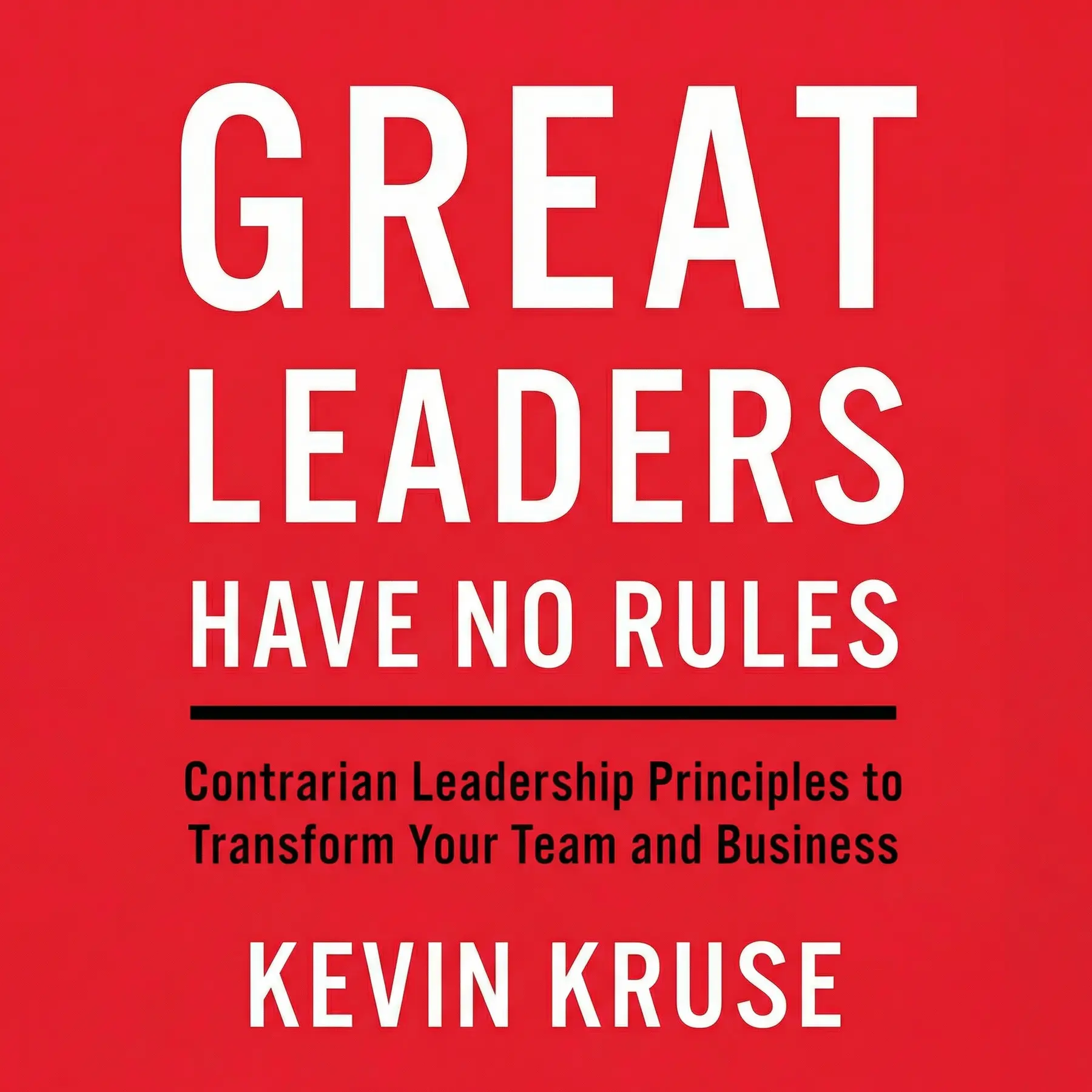
Great Leaders Have No Rules: Contrarian Leadership Principles to Transform Your Team and Business
By Kevin Kruse
Kevin Kruse argues that rules, open doors, to-do lists and the wish to be liked weaken teams. He shows how trust, care, fairness and openness get better results from the people you lead.
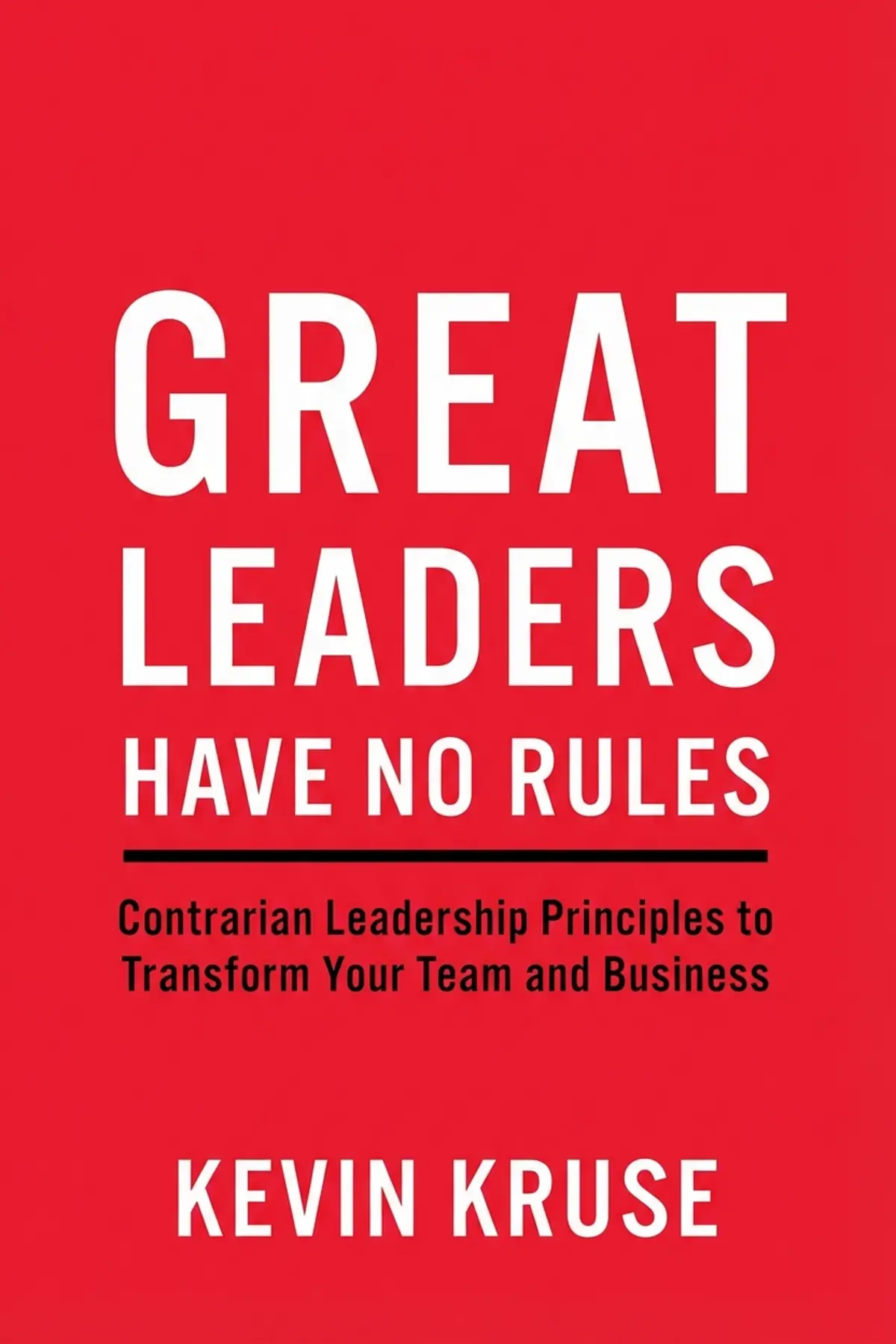
Table of Content
1. Introduction
57 sec
If you lead a team, the habits that make you look approachable and in control may be the ones holding everyone back. In Great Leaders Have No Rules, entrepreneur Kevin Kruse starts with the most popular of them, the open door, which he says teaches people to depend on you while half of them still feel too uneasy to speak up.
Kruse, who built and sold several technology companies, works through a run of habits that feel safe and backfire: rules, constant availability, to-do lists, the wish to be liked, equal treatment and guarded information. His argument is that leaders get more from people by trusting them, caring for them and being honest with them than by trying to control them.
Each swap is small enough to start on Monday. By the end, you will know when to be available, how to fill a calendar, whom to give your hours to and what to share that most managers keep locked away.
2. Replace rules with standards your team owns
1 min 53 sec
A business traveler who follows policy to the letter ends up paying $250 to avoid spending $10. Kruse uses the story to expose what rulebooks really cost a company, and what he would put in their place.
3. Close your door so your team decides more
1 min 42 sec
Steve Harvey’s memo about his dressing-room door outraged his staff. Kruse sided with Harvey, and his reasons reveal two hidden costs of being always available, one of them affecting the people who never walk in at all.
4. Trade your to-do list for time blocks
1 min 56 sec
When Kruse talked to more than 280 top performers, almost none of them worked the way most managers do. Their method changes when the hardest work happens and how much time meetings are allowed to swallow.
5. Earn respect by leading from your values
1 min 48 sec
Yahoo’s cofounder wanted every employee happy, and the company paid for it. Kruse explains why a leader’s need for approval does damage that a team member’s never would, and what should guide hard decisions instead.
6. A simple good morning helps you keep people
1 min 49 sec
Machiavelli advised rulers to be feared. A survey of 25 million employees points the other way, and one of the most common complaints workers have about their bosses takes about two seconds to fix.
7. Treat people fairly by treating them differently
1 min 54 sec
A former Super Bowl champion’s advice to new managers sounds like favoritism at first. Kruse turns it into a way to handle mistakes, hand out trust and decide which employees deserve most of your hours.
8. Share numbers and failures to build trust
2 min 10 sec
An employee told Ray Dalio his performance at a meeting was unacceptable, and Dalio was delighted. Kruse explains why opening the books, and admitting your own failures, can make a team stronger instead of nervous.
9. Conclusion
1 min 00 sec
What ties these swaps together is a different idea of what a leader is for. The old model, which Kruse traces to the Industrial Revolution, controls people with fear, rules and distance. Its friendly opposite, always available and endlessly supportive, fails as well. Both leave the manager busy and the team dependent. Kruse’s leader trusts adults to meet standards, cares about them as people and tells them the truth, about the numbers and about her own mistakes.
None of this needs a reorganization. Turn one rule into a standard your team owns. Give your door set hours and spend your sharpest hours, soon after waking, on your hardest work. Say good morning to each person, and on Monday ask about the weekend they mentioned on Friday.
Steve Harvey’s staff took a closed door as an insult. Kruse reads it as respect, both for the work only a leader can do and for the decisions a team can make without asking.
About this book
What is this book about?
Many managers lean on habits they were taught as good practice: an open door, a thick policy manual, a to-do list, equal treatment for everyone and a careful distance from bad news. Kevin Kruse, an entrepreneur who built and sold several technology companies, argues that these habits slow teams down. Rules erode trust, constant availability breeds dependence, and the wish to be liked leads to weak decisions. In their place he offers a set of contrarian principles. Set standards your team owns. Keep fixed hours for drop-ins and block your calendar around what matters. Lead by your values, show care through small daily gestures, adjust your response to each person's record, and share both the company's numbers and your own failures. Kruse illustrates each idea with concrete cases, from Steve Harvey's viral memo and Yahoo's unresolved identity to Ray Dalio's radical transparency at Bridgewater and research on wasted meeting hours at Microsoft. Readers get practical moves they can try within a single week, aimed at a team that decides more on its own and trusts its leader more.
Book Information
Who it's for
Managers wanting independent teams
Managers buried in interruptions and policies who want a team that decides more on its own.
New team leads
New team leads unsure how close to get to the people they now manage.
Top leaders weighing transparency
Founders and executives weighing whether to open the books and talk about their own failures.
About the Author
Kevin Kruse
Kevin Kruse is an entrepreneur whose technology companies, several of them worth millions, won Inc 500 and Best Place to Work awards before he sold them. His first venture failed when he was 22, and he kept starting others. His books include one on time management that reveals fifteen habits of successful people, and 800-CEO-Read named his book We among the best leadership titles of 2011. He contributes to Forbes.com, has published more than 100 articles about leadership, engagement and entrepreneurship, and gives keynote talks to audiences around the world.
Ratings & Reviews
Ratings at a glance
What people think
Listeners find the book highly practical and full of sound wisdom, admiring the straightforward writing and overall utility. They also value its take on leading, noting that it applies to more than just corporate executives and helps foster mutual trust within a company. Furthermore, the text receives praise for its readability, use of stories, and actionable advice.
Top reviews
Luke
Finally got around to reading this after seeing so many colleagues recommend it on social media recently. Kevin Kruse has a knack for taking traditional leadership tropes and flipping them on their head in a way that feels incredibly practical for everyday use. The chapter on 'Playing Favorites' was a total lightbulb moment for me because it explains how treating everyone the same is actually a form of unfairness. Each chapter ends with specific application tips for managers and even parents, which makes the advice feel much more grounded than your typical leadership manifesto. The writing is conversational and lacks the stuffy academic jargon that usually makes these types of books a chore to get through. If you are struggling with engagement or feel like your team is stuck in a rut of bureaucracy, this is exactly the kind of kick you need.
Show moreSoontorn
Ever wonder why some teams seem to thrive while others are bogged down by endless red tape and policy manuals? Kevin Kruse dives into this head-first by suggesting that the best leaders actually focus on outcomes rather than enforcing a strict set of rules. I loved the 'Be Likeable, Not Liked' chapter because it addresses the common trap of wanting to be everyone's friend at the expense of performance. The book is exceptionally well-organized, making it easy to flip through and find the specific advice you need for a given situation. Not gonna lie, some of the ideas made me feel a bit uncomfortable at first, but that’s usually a sign that a book is actually challenging your status quo. It’s an easy, engaging read that provides a wealth of insights for high achievers who want to reduce stress.
Show moreCaleb
Wow, what a refreshing take on what it actually means to lead a team in the 21st century! Kevin Kruse delivers a masterclass in modern management by throwing out the old playbook and focusing on what actually drives employee engagement and productivity. The 'Lead with Love' chapter might make some traditionalists cringe, but it is a powerful reminder that great teams are built on more than just spreadsheets. I found the book to be a page-turner, which is not something I usually say about business books, but the storytelling is just that engaging. It gave me the confidence to close my door and focus on high-impact work without feeling like I was failing my team. If you are a student of leadership or just someone trying to survive the daily grind, this book is a treasure trove of ideas.
Show moreFilm
As someone who transitioned into a management role from a technical background, I found the 'Lead with Love' and 'Show Weakness' sections incredibly grounding and helpful. In my experience, most leadership books are written for CEOs who have the power to change company structures, but Kruse writes for those of us on the ground floor. The book is structured so you can jump around to the chapters that interest you most, which I really appreciated. While I didn't agree with every single point—especially regarding some of the scheduling advice—it still forced me to rethink my daily habits. The 'Takeaways' at the end of each chapter are perfect for quick reference when you need a refresher on a specific concept. It’s an easy read that manages to provide a very nice overview of effective management practices without being overwhelming.
Show moreSom
The chapter on closing your open-door policy was worth the price of the book alone for me. Frankly, I had always felt guilty about needing focused time, but Kruse explains why being 'always available' actually hurts your team’s ability to solve problems independently. The author uses a great mix of personal failures and research-backed evidence to show how transparency and vulnerability can build deep trust. I liked that the chapters are short and punchy, allowing me to finish the whole thing over a long flight without getting bored. Some of the 'No Rules' stuff feels a bit idealistic, but the core message about treating employees like responsible adults is solid. It’s a practical guide that focuses on real-world outcomes rather than just management theory. Definitely worth keeping on your shelf for those days when you feel overwhelmed by drama.
Show morePun
Look, this book is a breath of fresh air compared to the usual leadership books that feel like they were written by robots for robots. Kruse’s writing style is free-flowing and humorous, which makes the contrarian advice about playing favorites or revealing everything much easier to digest. I particularly enjoyed the section on showing weakness because it humanizes the role of the boss in a way that builds genuine connections. While I wasn't entirely sold on the calendar-crowding advice—I still prefer a bit of white space in my day—the logic behind it was quite compelling. To be fair, the book doesn't go extremely deep into any single topic, but it serves as a fantastic overview of modern management practices. It is the kind of book you can read in a couple of days and start implementing the changes immediately.
Show moreAroha
Picked this up because I’ve been a fan of the author’s work for a while and wanted to see his philosophy in one volume. The 'Reveal Everything' chapter really resonated with me, especially the point about how only sharing good news is a fast way to lose trust. Kruse manages to bridge the gap between being a supportive boss and a high-performing leader without making it feel like a compromise. I do think a few of the chapters could have been rearranged for better flow, but that is a minor quibble. The inclusion of 'How would you apply this if...' sections for different roles like parents or salespeople is a stroke of genius. It makes the leadership principles feel universal rather than just restricted to a corporate boardroom. It’s a solid read that offers a lot of value for anyone looking to improve their influence.
Show moreTaw
After hearing about the 'No Rules' approach, I was skeptical about how it would work in a real-world environment where accountability is key. Personally, I think Kruse clarifies that it’s about hiring mature people and coaching them toward good choices rather than creating a vacuum of leadership. The book is filled with 'aha' moments that made me reflect on my own weaknesses, particularly my need to be liked by everyone. The author’s willingness to share his own mistakes makes the advice feel much more authentic and less like he is preaching from a mountaintop. It’s an easy read that hits on themes of transparency, time management, and building mutual trust. While I think some of the research could have been more robust, the practical takeaways at the end are incredibly useful. It’s a great introduction to leadership for the modern era.
Show moreBenjamin
Not what I expected from the title, but Kruse makes some interesting points about why strict regulations can actually hinder a team’s performance. To be fair, I felt the 'No Rules' concept was a bit of a stretch for industries that are highly regulated or have high safety risks. While the writing is punchy and moves fast, some of the advice felt a bit like it was geared toward tech startups rather than traditional corporate environments. I did appreciate the 'Close Your Open-Door Policy' chapter because it offered a refreshing take on why constant accessibility is a trap. It is definitely a thought-provoking read, but I would suggest taking the more extreme principles with a grain of salt. It’s a decent enough book for a weekend read if you want to challenge your current management style.
Show moreMattanee
Truth is, I found this book to be a bit too light on actual substance for my personal taste and professional needs. While the title promises something revolutionary, a lot of the 'contrarian' advice felt like common sense repackaged with edgy titles to grab attention. I struggled specifically with the chapter 'Leadership Is Not A Choice,' which felt somewhat poorly written compared to the rest of the book and lacked a cohesive argument. The storytelling is decent, but if you have read a lot of management literature already, you might find yourself skipping through the more repetitive sections. It's a very fast read, which is a plus, but I was hoping for more deep-dive research rather than just anecdotes. It might be a good starting point for a brand-new supervisor, but for veteran leaders, there just isn't enough meat here.
Show moreQuestions about this book
What is the main idea of Great Leaders Have No Rules?
Kevin Kruse argues that many habits managers learn as good practice, such as open-door policies, detailed rules, to-do lists, equal treatment and the wish to be liked, actually slow teams down. He replaces them with deliberate scheduling, standards the team owns, leadership by values, visible care, fairness that adjusts to the person, and openness about finances and failures. The common thread is trust: people perform better when they are trusted, cared for and told the truth.
Why does Kevin Kruse oppose open-door policies?
Kruse sees two problems. Statistics he cites suggest about half of a team will not raise issues no matter how open the door is, fearing they will be dismissed or seen as troublemakers. The rest interrupt constantly, which hurts the manager’s own work and teaches people to seek approval instead of deciding for themselves. He recommends set availability, such as one full day a week or an hour each morning.
What does Kruse recommend instead of to-do lists?
He recommends time blocking. Give each task a date, a start time and a length in your calendar, booking what you value first, such as coaching, exercise and family. Do the hardest work soon after waking, when he says the mind is sharpest, plan in 15-minute units, and insist on agendas and short invite lists for meetings. He cites research finding that 41 percent of to-do items never get done.
What does treating employees fairly but not equally mean?
The idea comes from former Super Bowl champion Gary Brackett. A rule such as arriving on time applies to everyone, but the response to breaking it should depend on context: a usually punctual employee with car trouble differs from someone who is late every day. Kruse also suggests giving proven employees more leeway and spending most of your time on your best performers, since low performers can create an extra 80 hours of work a year.
Who should read Great Leaders Have No Rules?
It suits managers at any level who feel stretched by interruptions, policies and endless meetings, and who want their team to take more ownership. New leads unsure about friendships at work will find guidance on leading by values. Founders weighing open-book management or sharing their failures will find Kruse’s case for transparency, illustrated by Ray Dalio’s Bridgewater Associates.
Readers also enjoyed

Acting with Power: Why We Are More Powerful Than We Believe
Deborah Gruenfeld

All In: How Great Leaders Build Unstoppable Teams
Mike Michalowicz



7 Powers: The Foundations of Business Strategy
Hamilton Helmer


A Bigger Prize: How We Can Do Better Than the Competition
Margaret Heffernan



AUDIO SUMMARY AVAILABLE
Listen to Great Leaders Have No Rules in 15 minutes
Get the key ideas from Great Leaders Have No Rules by Kevin Kruse, plus 5,000+ more nonfiction titles.
- 5,000+ titles
- Listen as much as you want
- 7-day free trial
- Cancel anytime









