
13 min 58 sec
Available in: English
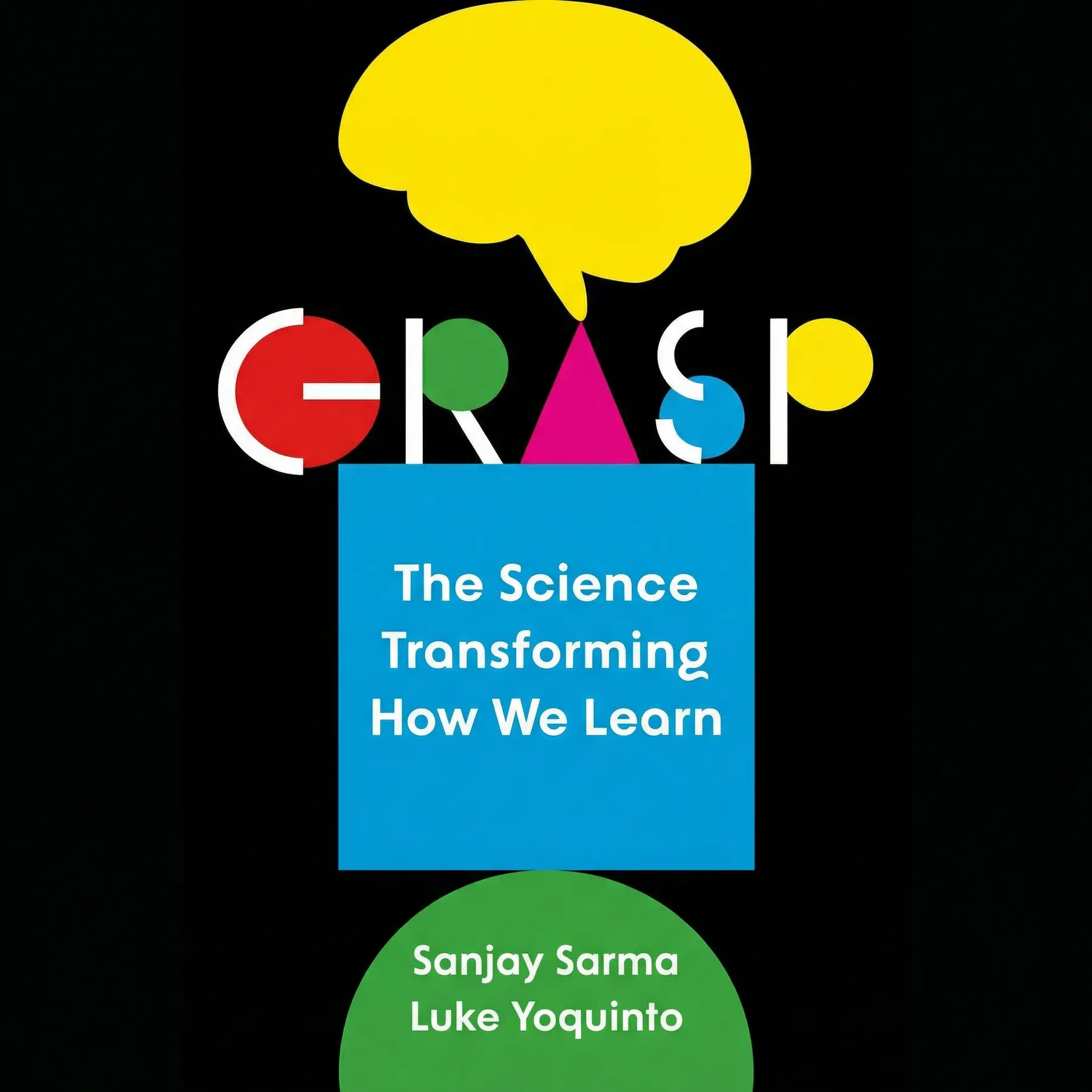
Grasp: The Science Transforming How We Learn
Shows why cramming, ranking and high-stakes exams work against the brain, and how spacing, curiosity and well-designed instruction help students learn deeply enough to use what they know.
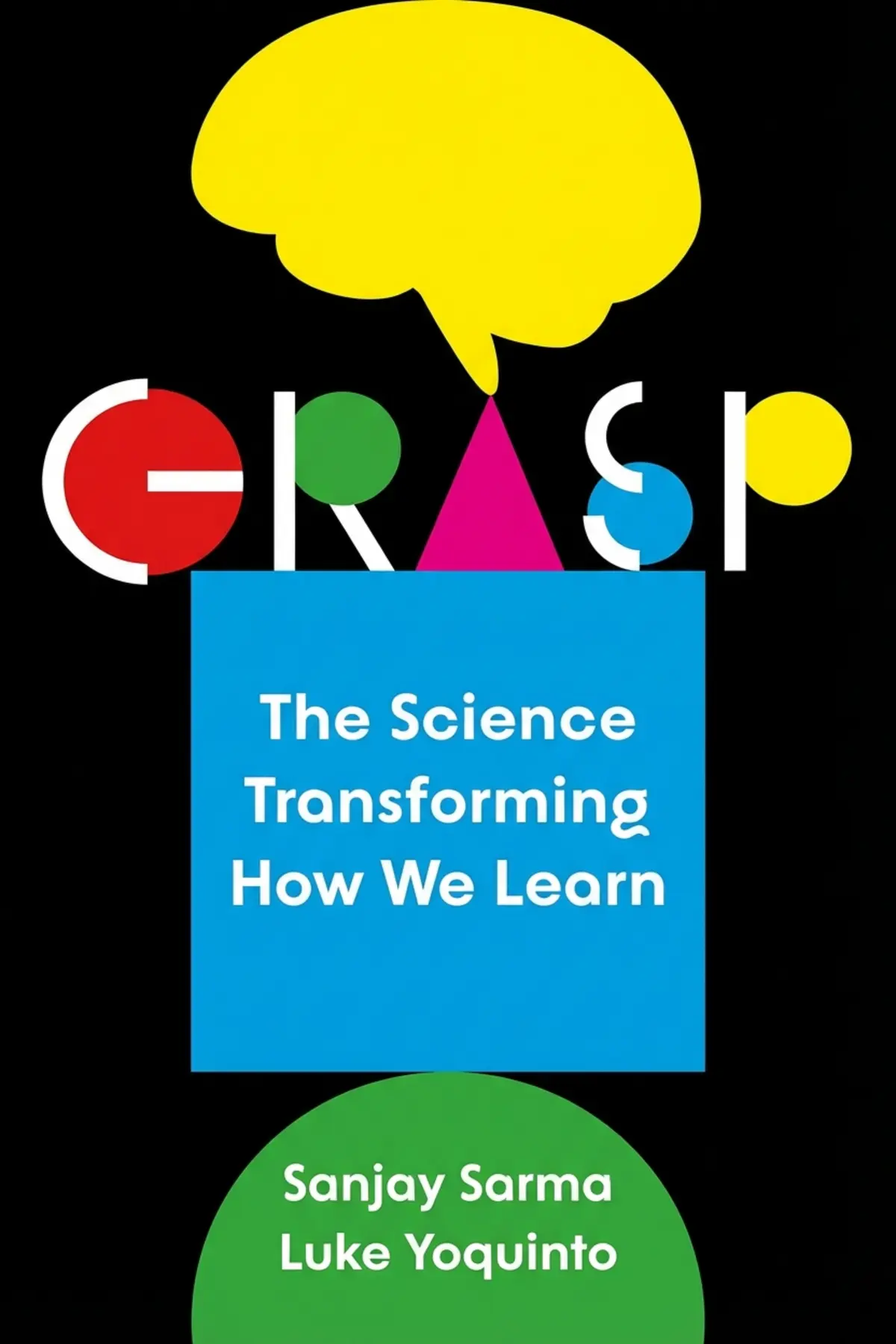
Table of Content
1. Introduction
59 sec
If you crammed for an exam, passed it and forgot almost everything a week later, the fault may lie less with you than with the system that taught you. In Grasp, MIT engineering professor Sanjay Sarma and science writer Luke Yoquinto argue that schools often ignore how the brain actually learns. One simple change, spreading study out over time, beats the all-night session by a wide margin.
Their case runs through a child playing on a beach, a robot contest at MIT and a coding school in Paris with very few teachers. The throughline is this: people learn deeply when study is spaced, when curiosity drives it and when instruction ties what they discover to real use, and schools built to rank people get all three wrong.
Along the way you’ll pick up a memory trick for names, a test for spotting shallow learning, and a clear sense of what better teaching looks like.
2. Spot the sorting machine hidden in your exams
1 min 56 sec
A student can ace every exam on pipe pressure and still watch a pipe burst on the job. The authors trace that failure to a purpose of schooling that few people ever talk about.
3. Learning sticks better when it feels like play
1 min 52 sec
A child at the seashore learns faster than most classrooms allow, with no grades at all. An MIT engineering course shows what happens when a final exam gives way to something far more demanding.
4. Space your study and let yourself forget
1 min 54 sec
The all-night study session passes tests and fails memory. The fix involves practice tests, golf clubs and, strangely, letting a new acquaintance’s name slip from your mind on purpose.
5. Let curiosity pull you into deeper learning
2 min 02 sec
A flash in a tide pool explains why some lessons stay with us for life. Educators from Dewey to Montessori built schools around that pull, and the authors explain exactly where it stops working.
6. Pair free discovery with teaching that connects it
2 min 08 sec
Discovery can leave a child believing gnomes shaped the sand. A coding school with very few teachers and an MIT classroom show how instruction and exploration can work as partners instead of rivals.
7. Make technology serve teachers and their students
2 min 01 sec
Technology promises MIT-quality teaching for everyone, yet it can also replace teachers and log every pen stroke. The authors weigh what the tools can do against what they might cost the students using them.
8. Conclusion
1 min 06 sec
Grasp makes a case that sounds modest and turns out to be sweeping. The habits most of us remember from school, the all-nighter, the ranking, the exam that decides who counts, were built for sorting people, and the brain pays for it. Memory grows through spacing and recall. Curiosity makes it grow faster. Good teaching gives the whole thing shape and purpose. The robots leaping across an MIT arena are what that looks like when it works.
You can apply the same design in a small way this week. Spread your study over several days and mix topics within a session, the way a golfer changes clubs. When a name or fact matters, let it go for a while and then pull it back. And whenever you learn something new, from a software tool to a client’s industry, judge yourself by whether you could use it under pressure, the way the engineer on the oil rig must.
The child on the beach was already a good learner. The job of school, and of anyone who teaches, is to keep her one.
About this book
What is this book about?
Most people remember school as a place of cramming, ranking and exams, and most remember little of what they crammed. Sanjay Sarma and Luke Yoquinto argue that this is a design flaw. Many education systems were built partly to sort students into worthy and unworthy, using tests and IQ scores that, in the authors' view, measure ability poorly and push people toward inefficient study. Drawing on cognitive science, they lay out what the brain responds to instead. Learning spread over time strengthens memory through a process called long-term potentiation. Practice tests, mixing subjects and even a little forgetting improve retention. Curiosity speeds the process, a point that educators such as John Dewey, the Montessori schools and Jean Piaget grasped long ago. Discovery alone, though, is hard to scale and needs instruction to give it shape. The book visits MIT's robot-building Course 2.007, its TEAL classrooms and the coding school 42 to show structure and exploration working together. It also warns that technology can replace teachers or monitor students as easily as it can help them. Readers get study techniques they can use right away and a clear picture of what better teaching looks like.
Book Information
Who it's for
Wanting lasting study habits
Students and professionals who cram, pass and forget, and want study habits that actually last.
Educators redesigning courses
Teachers, trainers and learning leads redesigning courses around how memory and curiosity work.
Weighing schools and testing
Parents and policy watchers weighing discovery schools, online learning and standardized testing.
About the Author
Sanjay Sarma
Sanjay Sarma is a professor of mechanical engineering at MIT who has led its Open Learning efforts. His research has covered energy, transportation, computational geometry and computer-aided design, and he helped pioneer RFID technology. He studied at IIT Kanpur and earned advanced degrees at Carnegie Mellon and the University of California, Berkeley. Luke Yoquinto is a researcher at the MIT AgeLab who writes about learning, education, aging and demographic change. He studied science journalism at Boston University, and his articles have appeared in The Washington Post, The Atlantic and BBC Future, among others.
Ratings & Reviews
Ratings at a glance
What people think
Listeners find the work accessible and mentally stimulating, especially valuing its strong concentration on the science of learning. They believe it is a practical tool.
Top reviews
Ford
Ever wonder why you can remember a random commercial from twenty years ago but forget a lecture ten minutes after it ends? This book answers that question by weaving together cognitive science and the history of the classroom. I loved the emphasis on spaced repetition and the 'flipped classroom' model, where students engage with material before class so they can use the time for actual problem-solving. The narrative style makes complex neurological concepts feel accessible, even when discussing the intricacies of synaptic pruning. It’s rare to find a book that balances historical context—like the work of Maria Montessori—with cutting-edge technology like MOOCs and digital courseware. Frankly, this should be required reading for every school administrator. It challenges the traditional 'sink or swim' mentality of schooling and proposes a model based on mastery and genuine curiosity. It’s a visionary look at how we can stop treating students like widgets in a factory and start treating them like thinkers.
Show moreBua
Wow. This is exactly the kind of book we need right now as we rethink what education looks like in a post-pandemic world. The authors move seamlessly from Pavlov and Skinner to the latest in machine-learning-guided courseware. I was particularly moved by the stories of students who found success through non-traditional paths, like the 'Ad Astra' school or the open-admissions intro work. It’s a powerful reminder that the 'winnowing' system we’ve built is often just a way to filter for privilege rather than talent. The book is beautifully written and managed to keep me hooked even during the more technical neurological explanations. I’ve already started applying the 'forget something and try to remember it later' technique in my own studies, and the difference is noticeable. This isn't just a book about MIT; it's a book about the incredible capacity of the human mind to grow when given the right environment. Highly recommended for anyone who cares about the future.
Show moreZoey
Finally got around to reading this, and it’s a deep dive into the mechanics of how our brains actually acquire and retain information. Sarma explores the science of learning with real depth, moving far beyond the simple 'study harder' advice we all received in school. I found the sections on neuroimaging and how we can identify reading struggles before a child even picks up a book to be absolutely mind-blowing. The book argues persuasively that our current education system is fundamentally out of sync with biological reality. While the prose occasionally wanders into dense academic history, the core message about curiosity and spaced repetition is vital. It’s a thought-provoking read for any educator or lifelong learner looking to understand the 'why' behind effective pedagogy. To be fair, you have to be prepared for some heavy science, but the payoff is a much clearer vision of what future classrooms could look like if we actually listened to the data.
Show moreUraiwan
Picked this up because I’ve been fascinated by the rise of online learning platforms. Sarma provides a unique 'behind the curtain' look at how MITx was developed and the philosophy that drives it. The book is particularly strong when discussing the 'forgetting curve' and why struggle is actually a necessary part of the learning process. I appreciated the deep dive into the Montessori method and the reminder that curiosity is a muscle that needs exercise. While some chapters felt a bit long-winded, the overall narrative is compelling. It’s not just a dry textbook; it’s a call to action for a more equitable and effective educational system. The discussion on how neuroimaging can help identify students who need reading assistance was a standout highlight for me. Even if you aren't an educator, there is a lot of value here in understanding how your own brain handles new information. It’s a solid, well-researched, and ultimately optimistic book about the future of human potential.
Show moreSara
The neurobiology sections in this book are actually its strongest point, despite what some other reviewers might say. Sarma and Yoquinto do an excellent job explaining how synapses strengthen through retrieval practice. I've read a lot on this topic, but the way they link the biology of the brain to the history of school design was fresh and engaging. They tackle the myth of 'learning styles' head-on, which is a conversation that is long overdue in most teacher lounges. My only real gripe is that the book leans a bit too heavily into the 'MIT is the center of the universe' vibe. Not every breakthrough in education happened in Cambridge, Massachusetts. Regardless, the practical takeaways regarding spaced repetition and intercalating subjects are gold. It’s a readable, intellectually stimulating book that makes a strong case for why we need to blow up the traditional lecture format. If you can ignore the occasional institutional ego, there's a wealth of knowledge to be found here.
Show moreSun
After hearing a lot of buzz about this title, I was glad to find that it actually lives up to the hype for the most part. The core thesis—that we need to move from a model of 'instruction' to a model of 'learning'—is argued with great passion and scientific backing. I especially enjoyed the discussion on Bloom’s taxonomy and why it’s so difficult to teach high-level synthesis and basic knowledge at the same time. The authors provide a great service by synthesizing so many different threads of research into one cohesive narrative. Yes, there is a lot of MIT name-dropping, and yes, some of the interview transcriptions are a little messy, but the ideas are what matter here. It made me rethink my own time in school and how much more I could have learned if my teachers had understood these principles. It’s a very useful, highly readable text that bridges the gap between lab research and classroom reality effectively.
Show moreRungtip
To be fair, the title 'Grasp' feels a bit misleading if you're coming for a simple 'how-to' study guide. I was hoping for actionable strategies to improve my own learning, but I mostly got a collection of biographies of education researchers and long-winded descriptions of MIT's various buildings. The writing can be quite clunky; at one point, the authors include transcribed dialogue that is nearly impossible to follow because of the constant interjections. It’s also incredibly MIT-centric, bordering on hagiographic. I get it, the author works there, but do we really need to know the exact distance between a preschool and the Cambridge Public Library? That said, the sections on the 'winnowing' effect in higher education were insightful. It’s a decent history of modern education and technology, but it’s buried under a lot of fluff that I found myself skimming through just to get to the actual science.
Show moreRoydao
As someone who has spent a lot of time in academia, I had high hopes for this one. The book focuses heavily on the idea that students should explain new concepts to others to solidify their own understanding—a point I definitely agree with. However, much of the 'new' information felt like common sense dressed up in fancy terminology. We know that cramming doesn't work and that hands-on classes like MIT’s 2.007 are effective. Look, the anecdotes about various students are fine, but they don't always support the data-driven arguments the authors try to make. I also found the constant name-dropping of Harvard and MIT to be a bit exhausting. Is the location of a preschool relative to a specific library branch really relevant to the science of learning? Probably not. It’s a readable book, but it lacks the punchy, practical application I was looking for. It's more of a history lesson than a roadmap for self-improvement.
Show moreSupachai
Frankly, if you've ever used Duolingo or heard of a 'flipped classroom,' you already know about half of what this book is trying to sell you. It’s a lot of pages for a very small amount of actual advice. I found the 'storytelling' approach to be a bit hit-or-miss. Sometimes the profiles of researchers were interesting, but often they felt like filler that distracted from the actual findings. The authors spend a lot of time describing the physical appearance of buildings and researchers, which didn't add anything to my understanding of the material. I did find the bit about Cambridge spending $29k per pupil compared to the state average quite interesting, but that’s more about local economics than the 'science of learning.' It’s a fine book for a rainy afternoon, but it didn’t really change my perspective on education as much as I hoped it would. It’s more of a surface-level summary than a deep dive into new territory.
Show moreGin
The writing style here is what ultimately killed the experience for me. It is incredibly disjointed, jumping from metaphors to dry descriptions of what an interviewee was wearing or the type of coffee cup they were holding. Why does that matter? I wanted to learn about the science of memory, not the interior design of a diner in Cambridge. Furthermore, the book contradicts itself regarding the concept of 'winnowing.' The author decries the way colleges weed people out, then brags about an online course where 150,000 people signed up and only 7,000 finished. Isn't that the definition of winnowing? To be honest, if you want to understand the science of learning, you are better off reading 'Make It Stick.' This felt like a disorganized brag-sheet for MIT’s Open Learning program. The neurology parts were a total slog, and I finished it feeling like I had learned very little that wasn't already common knowledge in the education field.
Show moreQuestions about this book
What is the main idea of Grasp?
Sarma and Yoquinto argue that schools are often built to rank students as much as to teach them, and that this runs against how the brain learns. Drawing on cognitive science, they show that spaced study, curiosity and instruction that connects knowledge to real use produce deeper learning. Their examples include MIT’s robot-building engineering course, the coding school 42 and MIT’s TEAL classrooms.
What study techniques does Grasp recommend?
The authors highlight spacing, which strengthens memory through long-term potentiation. Practice tests before the real exam make you recall information several times, and interleaving mixes subjects within a session, like a golfer switching clubs. They also suggest letting yourself forget something briefly and then recalling it, for example a new acquaintance’s name, since that later retrieval fixes it more firmly in memory.
What is winnowing in Grasp?
Winnowing is the authors’ word for the way education systems separate students judged worthy from those judged unworthy. IQ scores, standardized tests and high-pressure exams serve this role, they argue, although evidence shows these measures fail to capture intelligence fully. The cost is inefficient learning and lost talent, including potential Einsteins held back by geography, gender or class.
Does Grasp favor discovery learning or traditional teaching?
It argues for both. The authors credit discovery approaches such as Montessori schools, whose graduates outperformed standard-school peers in some studies, but note that they are hard to scale and need instruction to shape curiosity. The coding school 42 and MIT’s TEAL classrooms show structured teaching and exploration combined, and the authors call the choice between them a false one.
Who should read Grasp?
It suits teachers, trainers and anyone who designs courses, as well as students and professionals who want study habits grounded in cognitive science. Parents and others following education debates will find a clear view of standardized testing, discovery schools and the promise and risks of classroom technology, including its use to replace teachers or monitor students.
Readers also enjoyed

AUDIO SUMMARY AVAILABLE
Listen to Grasp in 15 minutes
Get the key ideas from Grasp by Sanjay Sarma, plus 5,000+ more nonfiction titles.
- 5,000+ titles
- Listen as much as you want
- 7-day free trial
- Cancel anytime









