
11 min 52 sec
Available in: English
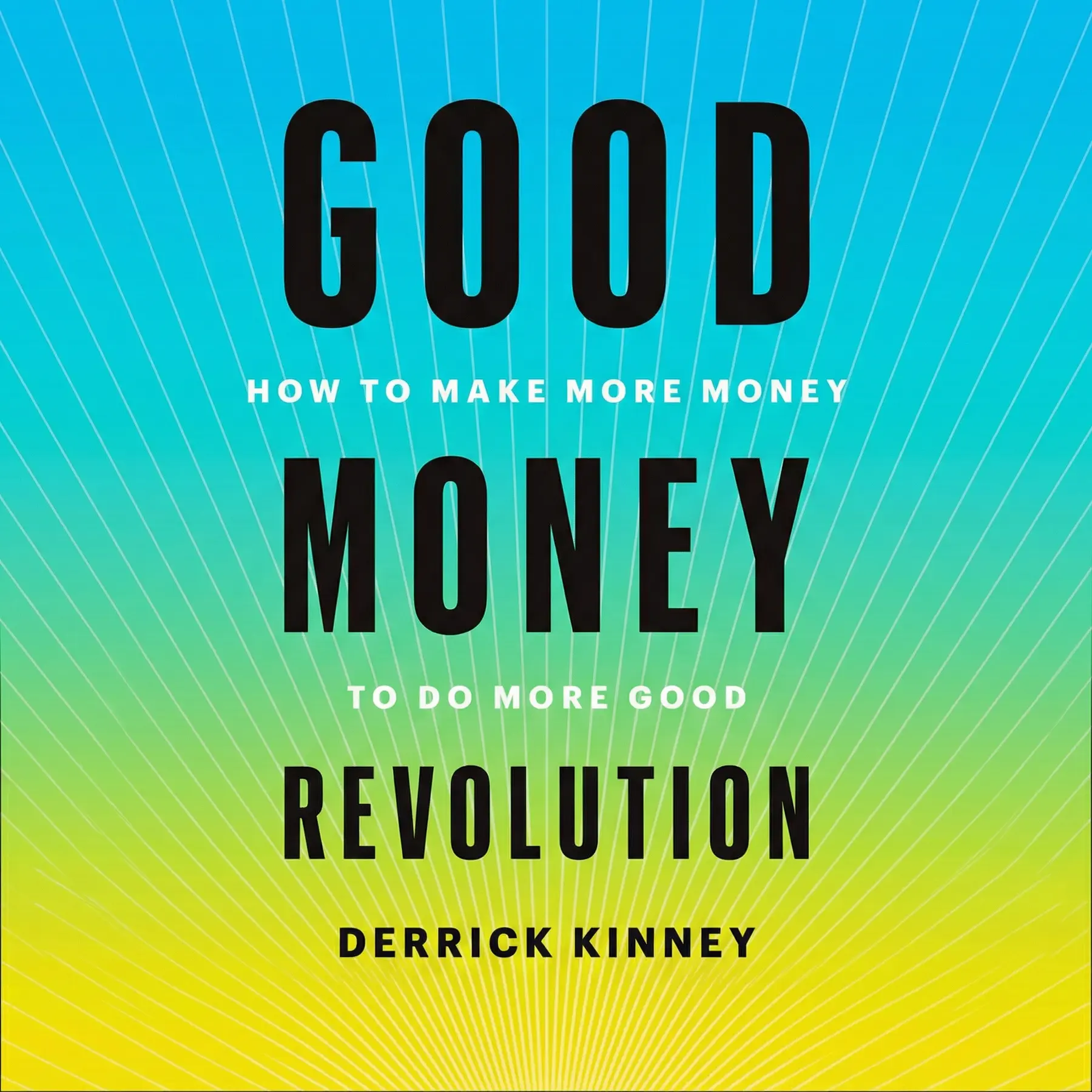
Good Money Revolution: How to Make More Money to Do More Good
Shows how to put your own finances in order, raise your income and give more away by organizing your money around a cause you care about, so that generosity repays you in happiness and motivation.
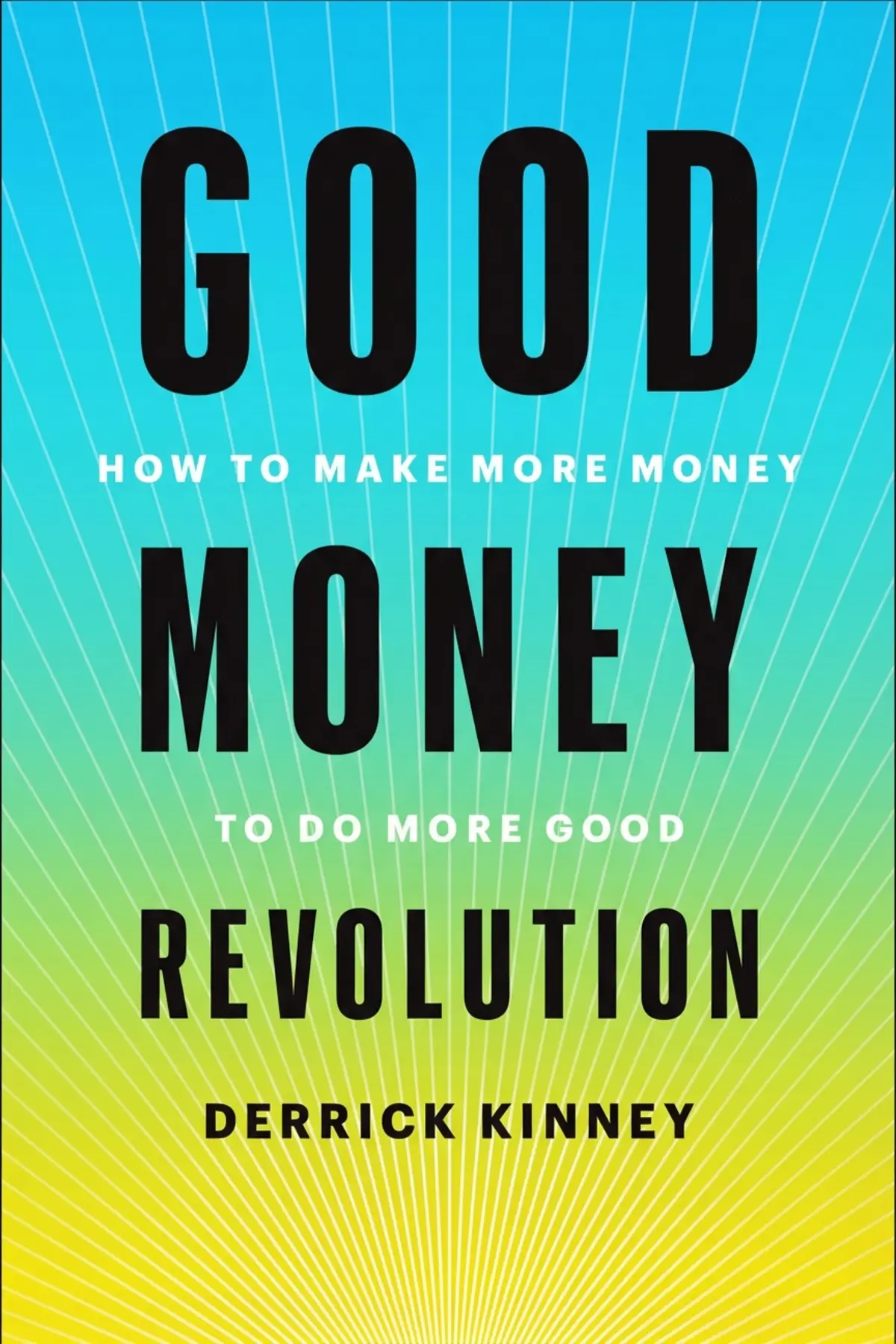
Table of Content
1. Introduction
58 sec
If money feels like the thing standing between you and a calmer life, Derrick Kinney wants to change what you think it is for. In Good Money Revolution, the former financial advisor points to a simple finding: students at the University of British Columbia who spent a small gift on someone else ended the day happier than those who spent it on themselves. Kinney builds a whole financial plan on that result.
His argument runs like this. Money is not evil; it is a tool, and its best use is helping a cause you care about. Choose that cause first, and it gives you the reason to save, clear debt, ask for more and start giving now, even in small amounts. The giving then pays you back.
What follows is the method itself: how to find your own cause, the seven steps Kinney uses to organize a household’s money, practical ways to raise your income, and the beliefs about money that keep many people stuck.
2. Get more happiness from money by giving some away
1 min 41 sec
Researchers handed students free money and gave half of them an odd instruction. The group that seemed to lose out ended the day ahead, and the reason changes what extra income is for.
3. Name a cause and get your drive back
1 min 32 sec
A business owner with rising sales had lost all interest in his work. One question about a poor village he had once passed through turned his motivation, and his numbers, around almost overnight.
4. A seven-step plan that puts your cause first
1 min 42 sec
Most budgets start with expenses. Kinney’s seven-step method starts somewhere else entirely, and one of its steps asks a question about income that nearly everyone answers wrongly at first.
5. Earn more by thinking like a business owner
1 min 37 sec
You do not need to quit your job to earn like an entrepreneur. The shift starts with two unglamorous habits and a different set of questions about the work you already do every day.
6. Rewrite the money beliefs you inherited as a child
1 min 33 sec
Bills that swallow every paycheck and savings that never seem to grow can leave a lasting story about money. Kinney names four such stories, and he singles out one as the most mistaken.
7. Small gifts repay you in health and business
1 min 42 sec
A grieving widow took a ballpark job and gave every paycheck away. What happened to her health next, and why a store selling kitchen pans should care, makes the case for starting small.
8. Conclusion
1 min 07 sec
Kinney’s book turns an old saying upside down. Money, in his view, only looks like the root of evil when it is scarce and aimless. Give it a job you believe in, a school in a village Dave once saw or a church food bank Richard once served, and the same paycheck that felt like a burden becomes a way to matter to someone. The cause supplies the energy, the framework supplies the order, and the giving pays you back.
You do not have to rebuild your finances to test this. Kinney’s suggestion is to do one generous thing soon: a shift at a soup kitchen, money or old clothes for a shelter, help for a friend or relative facing a real need. Afterward, pay attention to how you feel and how the other person feels, and ask whether that was money well spent.
If the answer is yes, write down the cause behind it and the monthly income that would let you feel comfortable. Those two lines are the start of the plan.
Mary began by taking tickets at a ballpark. A small job, given away, gave her back her health.
About this book
What is this book about?
Plenty of people think of money as the enemy. The bills never stop, the savings never grow, and charity seems like something only the rich can afford. Derrick Kinney, a former financial advisor, argues the reverse. Money is good when it does good, so earning more of it is good too, as long as part of it goes to a cause you care about. His method, the seven-step Good Money Framework, starts with what he calls a Generosity Purpose. It then moves through financial goals, a target income, ways to earn more, a plan for saving and giving, the giving itself and a quarterly review. Along the way he covers automatic saving and paying down debt, the habit of thinking like an entrepreneur in any job, and the inherited beliefs about money that hold people back. Kinney supports his case with a University of British Columbia experiment on giving and happiness and with stories from his clients, including a business owner who set out to fund a village school and a widow whose part-time job revived her health. Readers get a practical order of operations for their money and a reason to follow it.
Book Information
Who it's for
Salaried professionals
Salaried professionals who feel money only arrives to leave again and want a clear order for saving, debt and giving.
Owners questioning their growth
Business owners whose growth has stopped feeling meaningful.
Wanting to give
People who want to give but assume charity is only for the wealthy.
About the Author
Derrick Kinney
Derrick Kinney spent years as a financial advisor, applying his principles with thousands of clients, before selling his multimillion-dollar business to focus on Good Money Framework, where he is CEO. He holds that money is not bad and that good people should have more of it. On his Good Money podcast he talks with business and thought leaders about earning more and putting it to good use, and he has been interviewed on CNBC, CNN and PBS, among other outlets.
Ratings & Reviews
Ratings at a glance
What people think
Listeners describe this book as an uncomplicated listen filled with clear anecdotes, while one listener mentions it offers easy-to-follow techniques for growing wealth. Additionally, they value the uplifting themes, characterizing them as both moving and life-changing, and they also highlight the useful methods for financial gain. The work further earns praise for its clear prose, the high standard of its information, and its engaging narrative tone.
Top reviews
Giulia
Wow, what a paradigm shift for someone who previously viewed budgeting as a restrictive chore. Kinney’s 'Good Money Framework' isn't about cutting out your morning latte to save pennies; it's about expanding your horizons to fund things that actually matter. The story of Mary finding purpose through her Texas Rangers job and then donating the proceeds to a food bank was incredibly moving. It proves that generosity isn't just for the billionaire class. My favorite takeaway was the entrepreneurial mindset—treating your current job as a platform for value creation rather than just a place to collect a paycheck. This book is transformative if you actually do the exercises. I’m already rethinking my monthly tithing and savings goals. It’s practical, inspiring, and very well-written for a general audience.
Show moreJom
The chapter on Mary and the Texas Rangers genuinely brought a tear to my eye and changed how I look at my 'extra' work hours. It’s so easy to get caught up in the scarcity mindset, thinking we never have enough to share. Kinney flips that on its head. He shows that by focusing on our 'Generosity Purpose' first, we actually find the drive to earn more than we ever thought possible. The book is incredibly easy to digest, which I appreciate because I usually find finance books boring. It’s more of a life-design book than a dry accounting manual. Earning money with a clear, moral mission just feels different. I'm starting my first side hustle this month specifically to fund a scholarship at my old high school.
Show moreThida
Finally got around to reading this, and the 'Good Money Framework' is remarkably easy to implement even if you aren't a math person. I’ve always been a 'stingy' saver because I was afraid of running out, but this book helped me see that hoarding pennies isn't the same as building a legacy. The 50/30/20 budget rule mention was helpful, though I liked Kinney’s specific emphasis on the giving percentage. The writing is warm and feels like a conversation with a mentor rather than a lecture from a banker. It’s a powerful reminder that our financial success can be a win for everyone, not just ourselves. Truly an inspiring read for the modern age where everything feels so self-centered.
Show moreVarinee
Picked this up because I’ve always felt a bit of a tug-of-war between wanting to be successful and wanting to be a good person. Kinney really nails the psychological aspect of that conflict with his 'Generosity Purpose' idea. The writing is incredibly accessible, moving quickly through stories like Dave’s school project that illustrate why we should aim for more. I appreciated the 7-step framework, though some parts felt a little light on specific investment strategies. It's more of a mindset manual than a technical guide. If you’re stuck in a rut and need a push to increase your income without feeling like a corporate drone, this is perfect. It makes the idea of a side hustle feel less like a chore and more like a mission. The tone is very encouraging, which I needed this month.
Show moreHassan
After hearing about the 'Generosity Purpose' on a podcast, I decided to give this a shot to see if it could fix my stagnant career. The idea of connecting your cash to a cause is actually a brilliant motivator. I found myself looking at my spreadsheet with new eyes, not just seeing numbers, but seeing the potential to help a local animal shelter. Kinney’s writing style is punchy and direct, which makes the complex parts of the 7-step plan feel manageable. I did think the 'act like an entrepreneur' section was a bit idealistic for certain corporate environments where raises are strictly capped, but the sentiment remains solid. It’s a great read if you want to feel better about your financial goals. I’ve already recommended it to a few friends.
Show moreDuang
As someone who has struggled with the 'money is evil' mindset, this book provided the exact mental reframe I needed to move forward. Kinney argues that money is just a tool, and if you're a good person, you're the best person to be holding that tool. The 7-step plan is straightforward and serves as a great roadmap for anyone who feels lost in their finances. I particularly liked the focus on 'income satiation'—knowing when you have enough for yourself so you can start focusing on others. My only minor gripe is that some of the case studies felt a bit too 'perfectly resolved,' but they serve their purpose as illustrations. It’s a very positive, life-affirming book that makes you want to be more productive.
Show moreChanon
Ever wonder if the constant grind is actually serving a higher goal? Derrick Kinney attempts to answer that by linking our bank accounts to our values. The book is an easy read, filled with motivational anecdotes that keep you turning the pages. I particularly liked the section on identifying your 'desired income' number rather than just chasing 'more' indefinitely. However, I have to say that a lot of the actual financial tips—like paying off debt and starting a 401k—are things you've likely heard a dozen times before. It lacks a bit of 'how-to' when it comes to vetting the charities he suggests we support. Still, the core message about 'Good Money' being a tool for impact is a refreshing change from the typical 'get rich quick' greed.
Show moreKan
To be fair, the motivational tone is infectious, but I found the middle section on side hustles a bit repetitive. Kinney is clearly a gifted communicator, and he makes a compelling case for why good people should have more money. I enjoyed the stats on how giving actually improves your physical health and blood pressure—that was a neat scientific angle I hadn't considered. However, I would have liked more detail on the 'tracking' phase of his framework. It feels like he breezes through the actual management of wealth to get back to the inspiring stories. It’s a solid 3-star read: good for a weekend boost of energy, but maybe not the definitive financial bible some are claiming it to be.
Show morePrae
Frankly, the concept of 'Good Money' is something that should be taught in every high school. I picked this up hoping for a few tips on saving, but I walked away with a completely different outlook on my career. The author explains that when you have a 'why' (like Dave building his school), the 'how' of making money becomes much easier. It’s a quick, engaging read that doesn't get bogged down in technical jargon. While I think some of the debt management advice is a little oversimplified, the emotional core of the book is its strongest asset. If you feel unmotivated at work, this might be the spark you need. It’s about more than just wealth; it’s about significance.
Show morePear
Not what I expected, as the financial advice felt a bit too elementary for anyone who has read more than one personal finance book in their life. The central premise—that you should make more money so you can give it away—is noble, but the execution feels like a long pep talk. I was looking for more nuanced discussions on wealth building, but instead, I got very basic suggestions like 'start a side hustle.' While Kinney’s tone is empathetic and the stories are heartwarming, the book repeats its main point far too often. It’s probably a great starter for someone who has a negative relationship with money, but for those of us already budgeting and investing, there isn't much new ground here. I felt like the 'revolution' was more of a light nudge.
Show moreQuestions about this book
What is the main idea of Good Money Revolution?
Derrick Kinney argues that money is not evil but a tool that can do great good, so earning more of it is good as long as part of it supports a cause you care about. He cites a University of British Columbia experiment in which students who spent free money on others felt happier than those who spent it on themselves, and builds a financial plan around giving with purpose.
What are the seven steps of the Good Money Framework?
Kinney’s framework starts with finding your Generosity Purpose. Next you review your finances and pick three financial goals, then set the monthly income that would make you truly comfortable. After that you find ways to earn more, plan what share of your money to save, invest and give, start giving, and review the whole plan every quarter, adjusting as needed.
What is a Generosity Purpose?
It is the specific cause you care most about supporting, and Kinney makes it the first step of his method. It can be local, like a park or a struggling family nearby, or far away, like a school for a poor village. His client Dave chose that school, expanded his business to fund it and saw his motivation and sales rise immediately.
How does Derrick Kinney suggest earning more money?
First, save automatically and pay down your heaviest debt faster than the minimum. Then act like an entrepreneur, even as an employee: look for ways to raise sales, improve productivity and add value you can measure in money, and ask for a raise once you can show it. A side income, such as flipping couches or private teaching during school breaks, is another route.
How can I start applying Good Money Revolution today?
Kinney suggests a small experiment before any big financial overhaul. Do something generous soon, such as a shift at a soup kitchen, giving money or clothes to a shelter, or helping a friend with an important need. Then notice how it made you and the other person feel, and ask whether it was money well spent and how it would feel to do more.
Readers also enjoyed




AUDIO SUMMARY AVAILABLE
Listen to Good Money Revolution in 15 minutes
Get the key ideas from Good Money Revolution by Derrick Kinney, plus 5,000+ more nonfiction titles.
- 5,000+ titles
- Listen as much as you want
- 7-day free trial
- Cancel anytime









