
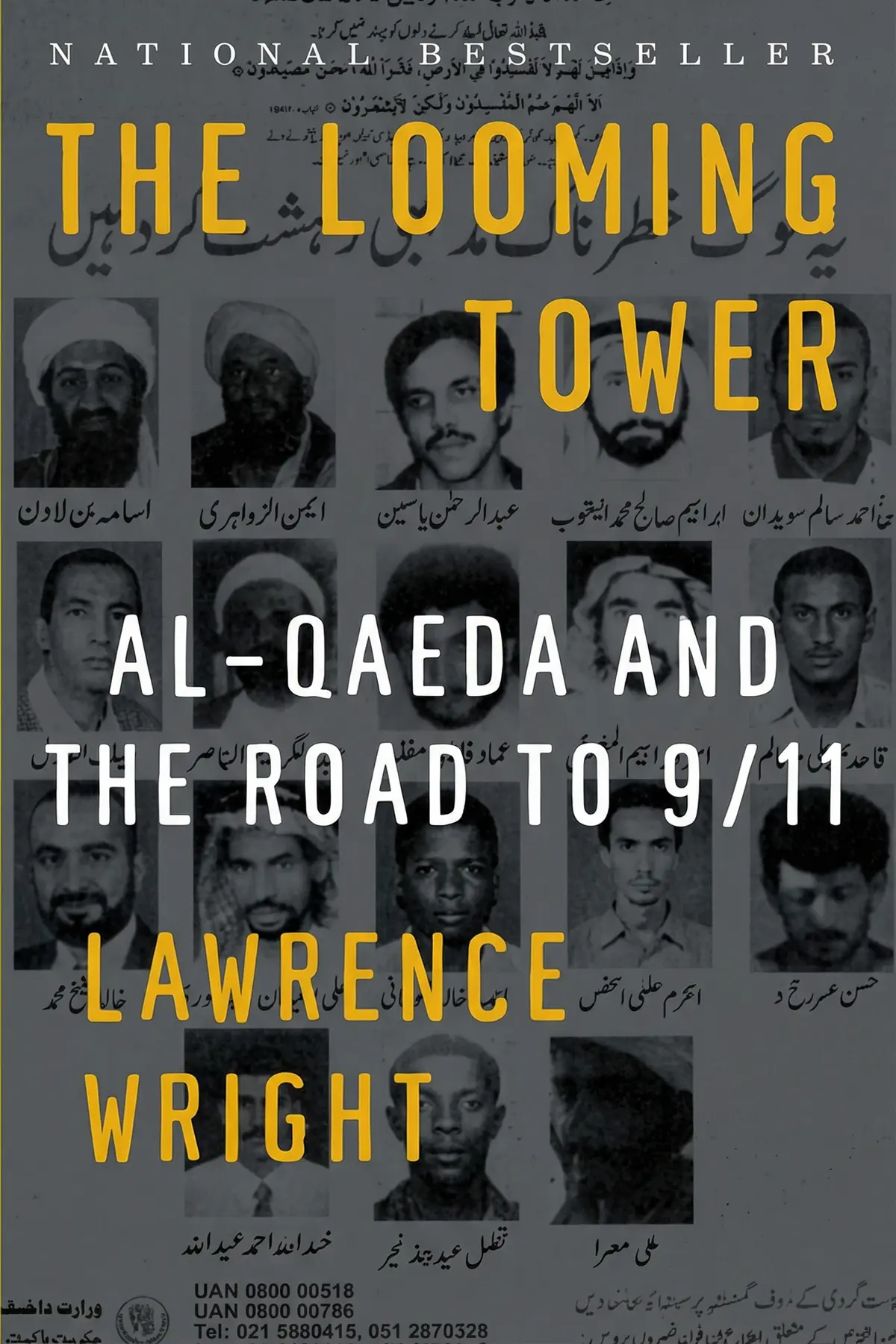
The Looming Tower: Al-Qaeda and the Road to 9/11
Lawrence Wright
 English
 ไทย
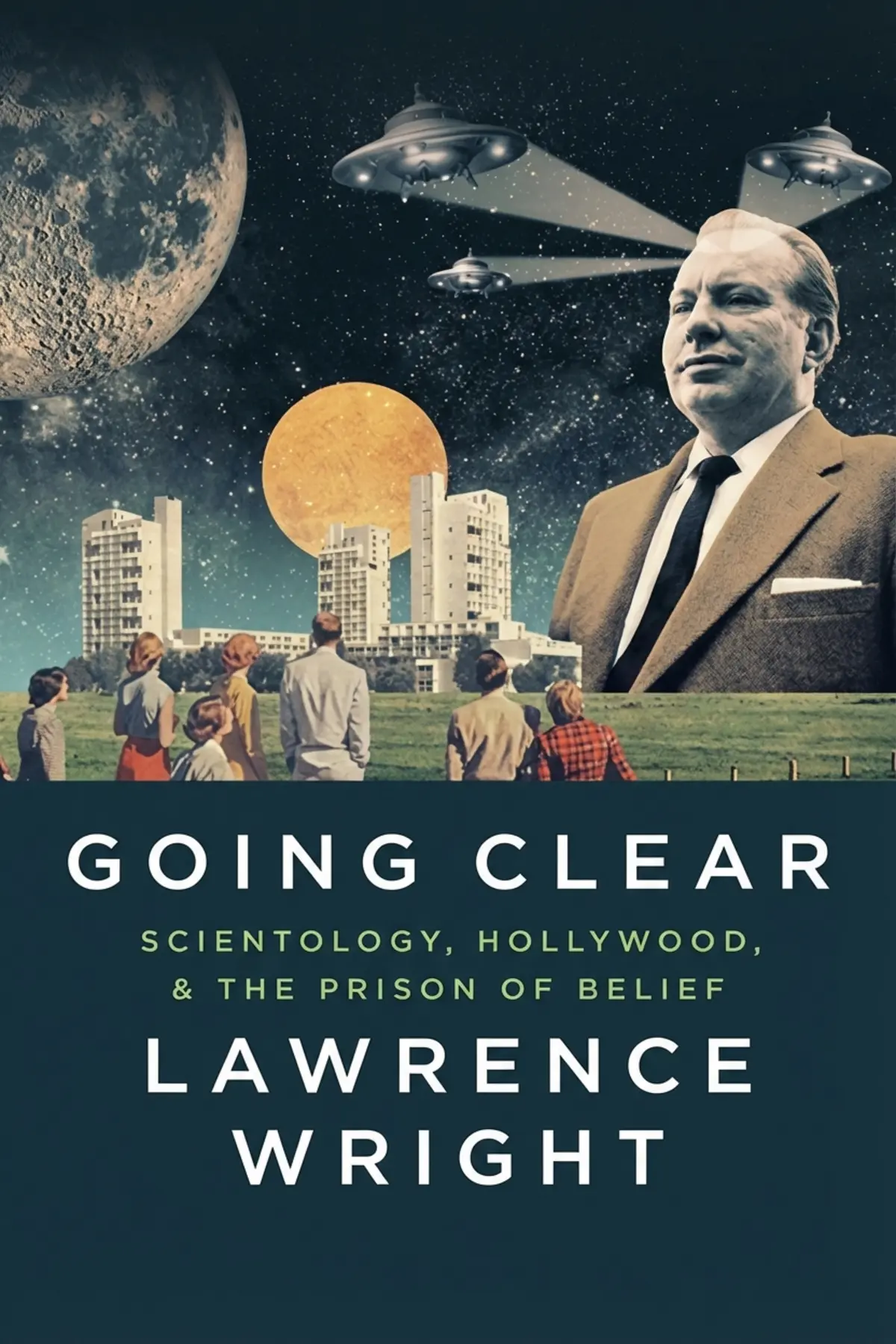
A clear account of how Scientology grew from L. Ron Hubbard's homemade therapy into a church that recruits by script, courts celebrities and, according to many accounts, pursues critics and punishes its own members.
58 sec
Most people know Scientology only in fragments: a science fiction author, a movie star, rumors of abuse. In Going Clear, journalist Lawrence Wright assembles those fragments into a history, and the first surprise is its origin. The movement began as one troubled writer’s attempt to treat himself after he refused to see a psychiatrist.
From that private cure, Wright follows a best-selling therapy that became a church, and a church that went on to infiltrate governments. The thread running through it is retention: a belief system with no finish line, recruiters trained to find each stranger’s weak spot, celebrities to add glamour, and fierce pressure on critics and on members who fall out of line.
Follow that thread and the long fight over whether Scientology is a religion starts to make sense. So does a skill that is useful anywhere: telling when a group that offers to fix your problems is working to keep you.
2 min 11 sec
Before there was a church, there was a remarkably fast writer in crisis after the war, refusing the one kind of help his doctor recommended. What he built instead still shapes the movement’s deepest suspicions.
1 min 30 sec
Dianetics sold tens of thousands of copies, yet within two years its foundations were broke. The fix Hubbard found turned a weakness of his therapy into a reason followers would never be finished.
1 min 53 sec
A dental operation, a galactic tyrant and a prison planet sit at the center of what advanced members learn. The story’s choice of villains, and the way it is revealed, say a lot about the organization.
1 min 45 sec
For decades, the US government could not decide whether Scientology was a faith or a business, and the church itself insists it is also a science. Even counting its members turns out to be hard.
1 min 33 sec
A renowned screenwriter believed he had simply met a like-minded stranger. The conversation followed a script with four moves, and knowing them makes the same pattern easy to spot in sales and in groups.
1 min 42 sec
From a 1955 wish list naming Walt Disney to a birthday at sea for Tom Cruise, the church has pursued fame deliberately. What stars receive, and what they give back, explains the strategy.
1 min 51 sec
Thousands of members slipped into government offices on several continents, and one journalist became the target of a plan with a chilling name. The operations show how the church tends to treat anyone who pushes back.
1 min 36 sec
Federal agents opening a dark hospital basement found something no official brochure describes. Former members’ accounts, and the church’s response to them, raise hard questions about what happens to those who fall from favor.
1 min 05 sec
Wright’s picture resists a single word. In his account, Scientology is part religion, part secret society, part prison camp and part celebrity mixer, a blend of religious ideas and racketeering. What ties those parts together is the move Hubbard made in 1954: turning a cure that could end into a commitment that never does, then defending it at almost any cost, against governments, journalists and its own people.
The book leaves a few things worth carrying into ordinary life. When a friendly stranger answers your doubts with the exact reassurance you needed, asks about your troubles and then offers a course as the fix, recognize the four-step script. When any group, program or coach asks for your time and money, ask whether it is built to let you finish. And when famous faces vouch for something, remember that the faces may be part of the product.
Hubbard told himself he would live 200 years. What has outlived him is a church with no finish line.
Scientology is famous and hard to see clearly at the same time. Most people know a few fragments: a science fiction founder, Tom Cruise, stories of lawsuits and abuse. Journalist Lawrence Wright assembles those fragments into a history that begins with one man's breakdown after the Second World War. L. Ron Hubbard, a pulp writer who distrusted psychiatry, built a method called Dianetics to treat himself and turned it into a best-selling book in 1950. When interest faded and his foundations went bankrupt, he relaunched his ideas as a church in 1954. Wright shows why that move mattered: a therapy ends when you are cured, while a religion that offers salvation keeps its followers. He then follows the church's cosmology of immortal thetans and the tyrant Xenu, its long fights over religious and tax status, its scripted recruitment, its pursuit of stars, its infiltration of government agencies and its treatment of critics and members. Readers get a clear picture of how the organization attracts people and holds them, and a sharper eye for the same tactics in any group that promises to fix their lives.
Curious readers who know Scientology only through celebrity headlines and want the real history.
People who have felt pulled into a group, course or program and want to recognize scripted recruitment.
Readers interested in belief, religion and how organizations fight legal, political and public battles.
Lawrence Wright, born in Oklahoma City in 1947, is a staff writer for The New Yorker and holds a fellowship at New York University School of Law's Center for Law and Security. His book The Looming Tower won the Pulitzer Prize for General Nonfiction and was adapted by Hulu as a series in 2018. Going Clear, published in 2013, was a New York Times bestseller, and he worked with director Alex Gibney to turn it into an HBO documentary. He also writes novels and plays.
Lawrence Wright

Listeners find this book a gripping read that provides a thoroughly researched chronicle of Scientology’s background and intricate details. The prose is notably transparent and immersive, with one listener likening it to Under the Banner of Heaven, and they value the perspective gained on the religion's doctrines. Feedback on the pacing is varied, with some suggesting the start is sluggish while others describe it as a disjointed mishmash. Perspectives on the fear factor also diverge, with listeners characterizing the account as terrifying.
Wow. I thought I knew the basics of Scientology from pop culture, but Wright’s investigative depth is staggering. He manages to peel back layers of secrecy that have protected this organization for decades. Much like his work in 'Under the Banner of Heaven,' the writing here is exceptionally clear and pulsates with a quiet intensity. The transformation of L. Ron Hubbard from a prolific but struggling pulp fiction writer into a self-styled deity is a narrative arc that feels too wild for fiction. Wright doesn't just list facts; he builds a psychological profile of a movement fueled by both genuine searching and profound abuse. Some parts are genuinely hard to stomach, especially the descriptions of 'The Hole' and the physical punishments under David Miscavige’s regime. It’s a terrifying look at what happens when tax-exempt status meets total, unchecked authority. Truly a monumental piece of journalism.
Show moreTerrifying doesn't even begin to cover the feeling this book leaves you with. Lawrence Wright has crafted an incredible, chilling account of how a modern cult operates behind gilded walls. Look, the sheer scale of the intimidation tactics used against journalists and former members like Marty Rathbun or Paulette Cooper is mind-blowing. I was particularly struck by the stories of the Sea Org boat; the image of people being held against their will for years on the high seas is haunting. Wright’s prose is sharp and fast-paced, making even the complex legal battles over tax status feel like a high-stakes thriller. It’s an essential look at the dark side of the American dream and the lengths people will go to for a sense of belonging. If you want to understand how power corrupts, start here. This is non-fiction at its most gripping and essential.
Show moreEver wonder how a failed science fiction writer manages to create a global movement that intimidates the IRS? Wright answers that question with chilling clarity. This book is a visceral experience. The contrast between the 'total freedom' promised to members and the 'prison of belief' they actually inhabit is heartbreaking. I was gripped by the accounts of Hubbard writing novels on butcher paper while high on rum and pills—it explains so much about the internal logic of the church. The shift to the Miscavige era is where the book turns from a character study into a horror story. The physical abuse and the 'SP' (Suppressed Person) labels used to destroy families are revolting. Wright’s writing is exceptionally engaging, turning a complex history into a page-turner. It’s a landmark book that exposes the mechanics of manipulation with surgical precision.
Show moreEach page of this book feels like a revelation. Having read Wright's other work, I expected high-quality research, but the level of detail regarding the 'Wall of Denial' is simply incredible. He manages to capture the tragic irony of Scientology: a movement dedicated to clearing the mind that ends up trapping its followers in a cycle of paranoia and debt. The stories of the 'renegades' who finally escaped are the emotional core of the book. Seeing the psychological toll of their 'dissociation' makes you realize how powerful these indoctrination techniques really are. While the celebrity anecdotes are flashy, the real substance is in the reporting on the labor camps and the systemic abuse of the rank-and-file members. It is a bleak, infuriating, and brilliant piece of work. Wright has done a massive service to the public by shining a light into this very dark corner of society.
Show moreAs someone who finds cult psychology fascinating, Wright delivers a masterclass in investigative journalism. He explores the 'prison of belief' with a level of even-handedness that is almost painful given the atrocities described. We see the transition from Hubbard’s chaotic, narcissistic leadership to Miscavige’s cold, sociopathic efficiency. The accounts of Sea Org life—the forced abortions, the billion-year contracts, and the heartbreaking stories of families being torn apart—are what stick with you. I appreciated the focus on Paul Haggis as a gateway into the narrative, even if he comes off as a bit self-serving in his late-blooming realization. The book effectively highlights the bizarre blend of science fiction, business, and intimidation that keeps members trapped. It’s a sobering reminder of how easily the human mind can rationalize the irrational. A must-read, though definitely not a light one.
Show moreThe chapter on L. Ron Hubbard’s early life as a pulp writer is worth the admission price alone. It’s fascinating and disturbing to see how his wild imagination and pathological lying laid the groundwork for a multi-billion dollar empire. Wright is excellent at showing the transition of power to Miscavige, who seems to have traded Hubbard’s erratic whims for a more systematic, violent form of control. The descriptions of 're-education' and the culture of spying among members are truly Orwellian. I did find the pacing a little slow at the start, and the heavy focus on Paul Haggis felt a bit lopsided, but the overall impact is undeniable. It’s a thorough investigation into a phenomenon that is as much a business as it is a religion. Wright's ability to remain objective while reporting on such vile behavior is a testament to his skill.
Show morePicked this up on a whim and couldn't put it down, despite the occasionally dense prose. There is something profoundly creepy about the way Scientology uses the legal system to silence its critics. Wright lays it all out: the smear campaigns, the men in black, and the absolute wall of denial. I was especially interested in the sections regarding the church's influence in Hollywood. Seeing how someone as powerful as Tom Cruise becomes a mouthpiece for such an abusive system is both baffling and sad. The book can be quite repetitive—there are only so many times you can read about someone being punched in the face before you get the point—but the accumulation of detail is what makes it so convincing. It’s a powerful, scary, and deeply necessary piece of writing that everyone should read before considering an auditing session.
Show moreFinally got around to this one after seeing the HBO documentary, and truth be told, it’s a bit of a slog in the middle. Don't get me wrong, the research is top-notch and Wright is clearly a master of his craft, but the pacing feels disjointed at times. I found myself growing weary of the endless accounts of celebrity pampering. Does the reader really need ten pages on Tom Cruise’s custom motorcycles or his hangar at the airport? To be fair, these details illustrate the 'celebrity worship' culture of the church, but it often felt like a distraction from the more serious human rights allegations. The footnotes, while informative, create a 'rain-on-the-roof' effect that becomes distracting after the twentieth time you read a church denial. It’s a valuable historical record, but expect to skim a few chapters if you aren't obsessed with Hollywood gossip.
Show moreIn my experience, Lawrence Wright is usually a five-star author, but I found myself zoning out during the heavy legal sections of this one. To be fair, the history of how they attained religious status is important, but it makes for dry reading compared to the 'mad scientist' vibes of Hubbard's early years. I appreciated the insight into the religion's actual beliefs—the Xenu stuff is just as weird as the internet says—but the human cost is the real story here. The accounts of the Sea Org children and the neglect of people like Lisa McPherson are devastating. I just wish the book had more of those personal stories and a little less focus on the internal politics of celebrity management. It's a good book that could have been a great one with some tighter editing and less dwelling on the psyche of rich, privileged men.
Show moreNot what I expected given the hype, to be perfectly frank. While I respect the massive amount of research involved, the book felt like a disjointed mishmash of old New Yorker articles and tabloid rumors. The structure is all over the place. We jump from Hubbard's weird nautical adventures to Tom Cruise's dating life, and then back to legal filings from the eighties. I found the focus on celebrities like John Travolta to be ultimately shallow—who really cares about his private life when there are allegations of slave labor happening in the same organization? The writing is clear enough, but the narrative lacks a cohesive heart. It felt more like an encyclopedia of grievances than a compelling story. I think the documentary actually did a better job of distilling the core horrors without getting lost in the weeds of every single fountain pen LRH ever owned.
Show moreGoing Clear is a history of Scientology, from L. Ron Hubbard’s personal crisis after the Second World War to the modern church. Wright explains how Hubbard’s self-help method, Dianetics, became a church in 1954, what members are taught about immortal thetans and the tyrant Xenu, how recruiters and Celebrity Centers bring people in, and how the church has treated governments, critics and members who displeased it.
According to Wright, Hubbard first created Dianetics to treat himself during a postwar breakdown, after refusing to see a psychiatrist. His 1950 book sold well, but a therapy ends once a person is cured, and by 1952 his training foundations were bankrupt. In 1954 he founded the Church of Scientology, which offered beliefs, community and salvation that never run out. Wright argues money and fame were among his motives.
Wright describes a four-step method: make contact, disarm the person, find their problem and persuade them Scientology can solve it. When screenwriter Paul Haggis said he was an atheist, he was assured nobody could force beliefs on him. Once he shared his troubled relationship with his girlfriend, the recruiter suggested a course for the couple. The church also draws people through psychological tests, management seminars and the Narconon drug program.
Hubbard believed that famous, captivating people were the best way to present Scientology as a path to enlightenment. As early as 1955 members received a list of target stars, including Walt Disney, with a reward for success. Celebrity Centers, opened from 1969, attract stars and aspiring actors. Famous members get special treatment, such as Cruise’s direct access to leader David Miscavige, and in return they lend the church glamour at its events.
The book shows that the answer has shifted. The US government recognized it as a religion in 1957, then the IRS ruled a decade later that it was a business enriching Hubbard. An appeal backed by scholar Frank Flinn failed, and only in 1993 did the church regain tax exemption as a charity. Scientology also calls itself a science, a claim psychiatry has strongly opposed.

Pico Iyer

Alcoholics Anonymous World Services


Daniel Goleman


Eckhart Tolle

Marianne Williamson

Deepak Chopra

Beth Moore
Paramahansa Yogananda
AUDIO SUMMARY AVAILABLE
Get the key ideas from Going Clear by Lawrence Wright, plus 5,000+ more nonfiction titles.









