
Going Clear: Scientology, Hollywood and the Prison of Belief
Lawrence Wright
 English
 ไทย
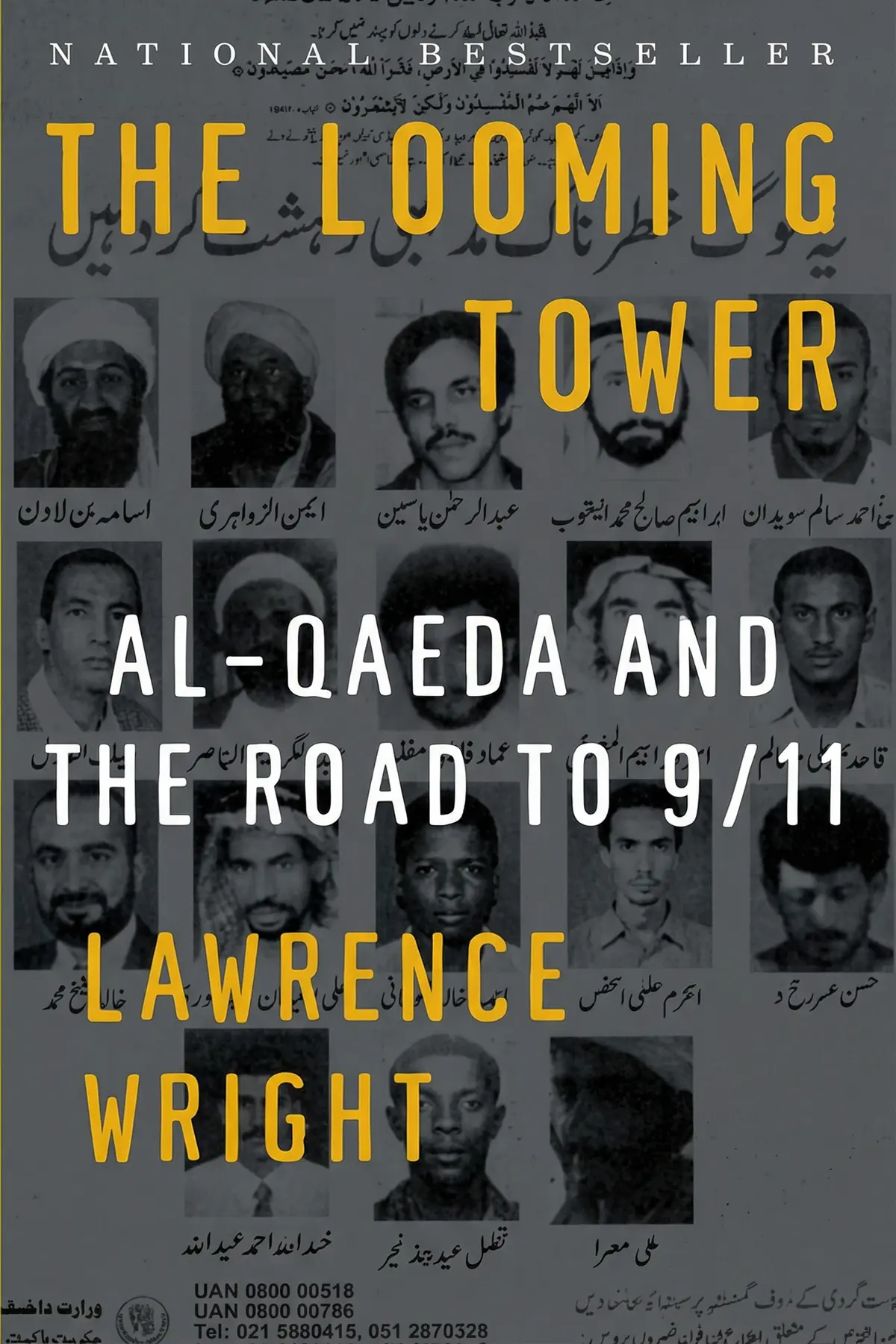
Traces the roots of al-Qaeda and the September 11 attacks back half a century, through three men whose ideas, violence and strategy turned long-held resentment of the West into a deliberate assault on America.
1 min 07 sec
Most people can say where they were on September 11, 2001, but few can say where the attack really began. In The Looming Tower, New Yorker staff writer Lawrence Wright finds its roots more than fifty years earlier, in a poor, occupied Egypt and in the mind of a teacher who came home from America full of contempt.
Al-Qaeda, Wright shows, grew from three lives that overlapped: the thinker Sayyid Qutb, the doctor Ayman al-Zawahiri and the Saudi heir Osama bin Laden. Their movement fed on a sense of being humiliated by the West, in politics, in culture and in daily life, and the attacks on New York and Washington were its climax, not its opening move.
Follow their story and the headlines of the past two decades start to connect. You will see why Egypt came first, how killing fellow Muslims was argued into acceptance, and why the strike on America was designed as bait. It is the background a news report rarely has time to give.
1 min 48 sec
On a single morning 2,996 people died, yet the men behind it had argued for years about whom to fight. Their quarrel reveals a movement far older and less united than it looked from outside.
1 min 57 sec
A king with 200 red cars and a young critic who adored Hollywood films seem unlikely sources of a global movement. A war in 1948 changed what that critic felt about America.
2 min 10 sec
A stay in Washington and Colorado sent an Egyptian teacher home with a doctrine. Its most dangerous claim was about ordinary believers, and in the end it cost its author his life.
1 min 53 sec
A bookish boy from Cairo joined his first underground Islamic cell at 15. What happened to him later inside an Egyptian jail explains why the state’s harshness kept backfiring on it.
1 min 52 sec
Islam forbids suicide and protects fellow Muslims. A doctor found arguments around both limits, and a court he invented in Sudan showed how far those arguments could reach.
1 min 54 sec
Nintendo, Schwarzenegger films and prize sunflowers fill the early story of the world’s most wanted man. There were years when he seemed ready to walk away from his own organization.
1 min 55 sec
Embassies in Africa and a navy ship were attacked first, but neither strike drew the American retaliation bin Laden wanted. The plan behind those earlier strikes explains why the next one had to be so much larger.
1 min 15 sec
Wright’s account replaces a single date with a long chain of causes. A king’s red cars and a foreign occupation fed a mass movement. A teacher’s disgust with American life became a doctrine that made obedience itself a sin. Torture in Egyptian cells produced a doctor who argued that bystanders could be sacrificed. And a shy heir who once grew prize sunflowers ended up designing an attack to drag a superpower into Afghanistan. Running through every link is the feeling the book keeps returning to: humiliation by the West, felt in politics, culture and society, and by rulers seen as its partners.
None of this excuses the killing of 2,996 people. It does make the event easier to understand. When the next attack fills the news, look past the day itself to the grievances being used, the ideas that license the violence and the response the attackers want. Remember too that al-Qaeda’s first targets were Egypt’s own governments, and that America came later, by choice and by design.
A tower that falls in a morning can take more than fifty years to undermine.
For many people in the West, the story of radical Islamist terrorism begins on September 11, 2001, when planes struck the World Trade Center and the Pentagon and 2,996 people died. Lawrence Wright argues that the day was a conclusion rather than a beginning, the culmination of a lengthy clash pitting Islam against the West. He follows three men. Sayyid Qutb, an Egyptian writer repelled by a stay in America, built the intellectual case for war on the non-Islamic world. Ayman al-Zawahiri, a Cairo doctor hardened by torture in prison, made suicide bombing and the killing of bystanders acceptable to his followers. Osama bin Laden, a shy Saudi heir who once thought about quitting to become a farmer, turned their ideas against the United States. Readers get a clear account of how poverty and occupation in 1940s Egypt, American policy in the Middle East and a deep sense of humiliation fed a movement, and why its leaders saw 9/11 as a way to draw America into Afghanistan.
Readers who know 9/11 as a date and want the half century of history behind it.
Students of politics, religion or security looking for a clear account of how al-Qaeda formed.
Professionals who follow Middle East news and want the background that headlines skip.
Lawrence Wright, born in Oklahoma City in 1947, is an American journalist, writer and screenwriter and a staff writer at The New Yorker. He holds a fellowship at the Center for Law and Security at New York University School of Law. The Looming Tower, published in 2006, won the Pulitzer Prize for General Nonfiction and was adapted by Hulu as a series in 2018. His other work includes Going Clear, a New York Times bestseller made into an HBO documentary with director Alex Gibney, the novel The End of October and the one-man play My Trip to Al-Qaeda.
Lawrence Wright
Listeners find this title to be a phenomenal experience that mirrors a spy thriller, bolstered by masterful research and elegant prose. Beyond that, it serves as a top-tier historical chronicle of the Jihadist movement, mainly exploring the foundations of fundamentalist terror while keeping listeners engaged with an utterly captivating plot. In addition, listeners admire the book's momentum, with one review mentioning how it precisely illustrates the social ties connecting various factions.
Few works of non-fiction manage to grip you like a high-stakes thriller, but Lawrence Wright pulls it off with ease. This isn't just a dry timeline of events; it’s a deeply researched saga that traces the ideological roots of Al-Qaeda from Sayyid Qutb’s time in Colorado to the tragic morning of 9/11. I was stunned by how clearly the author connects the dots between individuals like Zawahiri and bin Laden, making the "road to 9/11" feel less like a series of accidents and more like a deliberate, tragic progression. The pacing is relentless. Even though we already know the ending, the bureaucratic failures between the FBI and CIA create a palpable sense of dread. It's informative, disturbing, and absolutely essential reading for anyone trying to understand the modern political landscape.
Show moreWow. The Looming Tower is a masterpiece of investigative journalism that feels more relevant now than ever. Lawrence Wright’s ability to weave together the disparate lives of Islamic theorists and FBI agents into one cohesive narrative is nothing short of brilliant. The way he maps out the social connections between radical groups in Egypt and the eventual formation of Al-Qaeda in Afghanistan is eye-opening. Frankly, it’s one of the most gripping stories I’ve ever read, non-fiction or otherwise. It manages to be both intellectually rigorous and emotionally gut-wrenching as it heads toward the inevitable conclusion we all know too well.
Show morePicked this up because I wanted a better understanding of the history behind the headlines, and I got so much more. Wright’s research is simply incredible, offering a window into the private lives and motivations of the players involved in Al-Qaeda’s construction. The short biographies, especially of bin Laden and Prince Turki al-Faisal, add a layer of humanity to a story often told in broad, impersonal strokes. I found the depiction of the "Wedding" planning to be particularly fascinating and horrifying. The writing style is clear and compelling, making complex religious and political shifts easy to digest for a layperson. Not gonna lie, seeing the missed opportunities to stop the attacks was rage-inducing, but that speaks to how well Wright tells the story.
Show moreThe chapter on Sayyid Qutb's time in America alone makes this book worth the price of admission. It sets the stage perfectly for the ideological divide that fueled decades of conflict. Lawrence Wright’s research is brilliant, uncovering details about the internal struggles of Al-Qaeda that I hadn’t seen anywhere else. Personally, I was most impressed by how he handled the complexity of Saudi culture and the specific events in Peshawar. The narrative is thoroughly gripping, never losing its thread despite the massive scope of the subject matter. It’s a definitive account that deserves every award it has received.
Show moreFinally got around to reading this after seeing the Hulu series, and the book is even more detailed and haunting. Lawrence Wright offers a comprehensive history of the Jihadist movement that feels authoritative yet accessible. The way he describes Mohammad bin Laden’s early construction empire and how that wealth eventually fueled his son’s ambitions is fascinating. I was particularly struck by the clarity of the storytelling; he manages to humanize even the most radical figures without ever excusing their actions. The social connections and webs of influence are laid out so clearly that you can see the disaster coming from miles away. It’s a masterful piece of research that highlights the tragic consequences of willful blindness and bureaucratic ego. This is easily one of the best non-fiction books I've encountered, providing a historical context that is absolutely vital for understanding the world we live in now.
Show moreAfter hearing so much praise for this Pulitzer winner, I finally dove in and found the detail level staggering. Wright provides an incredibly thorough historical account of the Jihadist movement, humanizing figures like John O’Neill while exposing the systemic flaws in American intelligence. To be fair, some of the middle sections regarding the specific construction projects of the bin Laden family felt a bit dense, slowing the momentum. However, the sheer volume of interviews and primary sources backstopping this narrative is impressive. It reads more like a spy novel than a history book, which kept me engaged through the more complex geopolitical explanations. A solid four stars for the clarity and depth.
Show moreAs someone who usually sticks to fiction, I was surprised by how much this book captivated my attention. It captures the origins of fundamentalist terrorism with a narrative flair that rivals any espionage thriller. The chapters on Ayman al-Zawahiri were particularly chilling, showing the radicalization process in a way that feels disturbingly logical from his perspective. Truth is, the book does come down quite hard on the FBI and CIA turf wars, and while the criticism seems earned, it occasionally felt a bit repetitive. Still, the social mapping and historical context provided are top-notch. It’s a dense read but the pacing keeps it from ever feeling like a chore.
Show moreEver wonder how a few fringe radicals managed to change the course of the 21st century? This book provides the answers in vivid, sometimes terrifying detail. Wright masterfully illustrates the social connections that bridged the gap between different extremist factions. My only picayune quibble is that the focus on the American side occasionally overshadowed the geopolitical nuances of the Middle Eastern countries involved. However, the breakdown of the institutional barriers that prevented the sharing of information was eye-opening. In my experience, non-fiction rarely achieves this level of narrative flow while maintaining such a high standard of historical accuracy. It’s a compelling look at a tragic era that still defines our world today.
Show moreNot what I expected from a historical text, but in the best way possible. The Looming Tower reads with the intensity of an espionage novel, yet the facts are cold and hard. Wright does an excellent job detailing the rise of Ayman al-Zawahiri and his influence on the movement's radicalization. Gotta say, the level of detail regarding the "turf wars" between agencies was the most frustrating part—not because of the writing, but because of the reality it described. Highly informative and well worth the time.
Show moreIs this a well-researched book? Undoubtedly. But I found myself struggling with the tone at times. While the historical account of the Jihadist movement is exhaustive, it felt like Wright was trying a bit too hard to make it read like a thriller. The portrayal of John O’Neill felt somewhat lionized, bordering on a caricature of the "maverick agent" that didn't always sit right with me. Look, the connections between the groups are laid out clearly, and the work put into this is obvious, but the sheer volume of names and locations eventually became a blur. It’s a significant piece of work, but I think the "spy novel" comparisons are a bit overstated. If you want a deep dive into every single social connection of the 1990s terror cells, this is for you, but it wasn't the page-turner for me that it was for others.
Show moreIt traces the long road to the September 11 attacks. Wright argues that 9/11 was the climax of a conflict between Islam and the West that began decades earlier, in a poor, British-occupied Egypt. He follows three men, Sayyid Qutb, Ayman al-Zawahiri and Osama bin Laden, and shows how a sense of humiliation by the West was turned into ideology, then violence, then a deliberate strategy against the United States.
Sayyid Qutb was an Egyptian writer whose book Milestones called for war on the non-Islamic world; he was hanged in 1966. Ayman al-Zawahiri, a Cairo doctor whose uncle had been Qutb’s lawyer, justified suicide bombing and the killing of bystanders and later led the group. Osama bin Laden, a Saudi heir, founded al-Qaeda in 1988 and turned it against America.
In bin Laden’s eyes, US support for Israel and the American military presence in Saudi Arabia and Iraq in the First Gulf War amounted to an assault on God and on Muslims. In 1998 he issued a fatwa telling Muslims to kill Americans. He wanted to lure US troops into Afghanistan and bleed them there. When the 1998 embassy bombings and the 2000 attack on the Cole failed to provoke that, he chose 9/11.
No. In the book’s account, the movement’s early anger was aimed at Egypt’s rulers, from King Farouk to Nasser, Sadat and Mubarak. Zawahiri imagined Egypt caught in a spiral of terror and repression, whereas Abdullah Azzam sought to reclaim territories that Islamic peoples had once ruled. Al-Qaeda even drew on mujahideen who had fought the Soviet Union, America’s rival. Only later did the United States become the main enemy.
It suits readers who remember 9/11 but never learned how it came about, students of politics, religion or security, and anyone who follows news from the Middle East. Its lessons go beyond one group: harsh punishment without legitimacy can recruit militants, extremists build their own justifications for violence, and terror attacks are often designed to provoke a particular response.



Barack Obama


Masaji Ishikawa

William J. Bernstein

John Rawls

Ben Macintyre


AUDIO SUMMARY AVAILABLE
Get the key ideas from The Looming Tower by Lawrence Wright, plus 5,000+ more nonfiction titles.









