

A Liberated Mind: How to Pivot Toward What Matters
Steven C. Hayes
 English
A practical guide to getting through a breakup without chasing your ex or numbing the pain: cut contact, grieve, find your relationship patterns, set firm boundaries and become independent before dating again.
58 sec
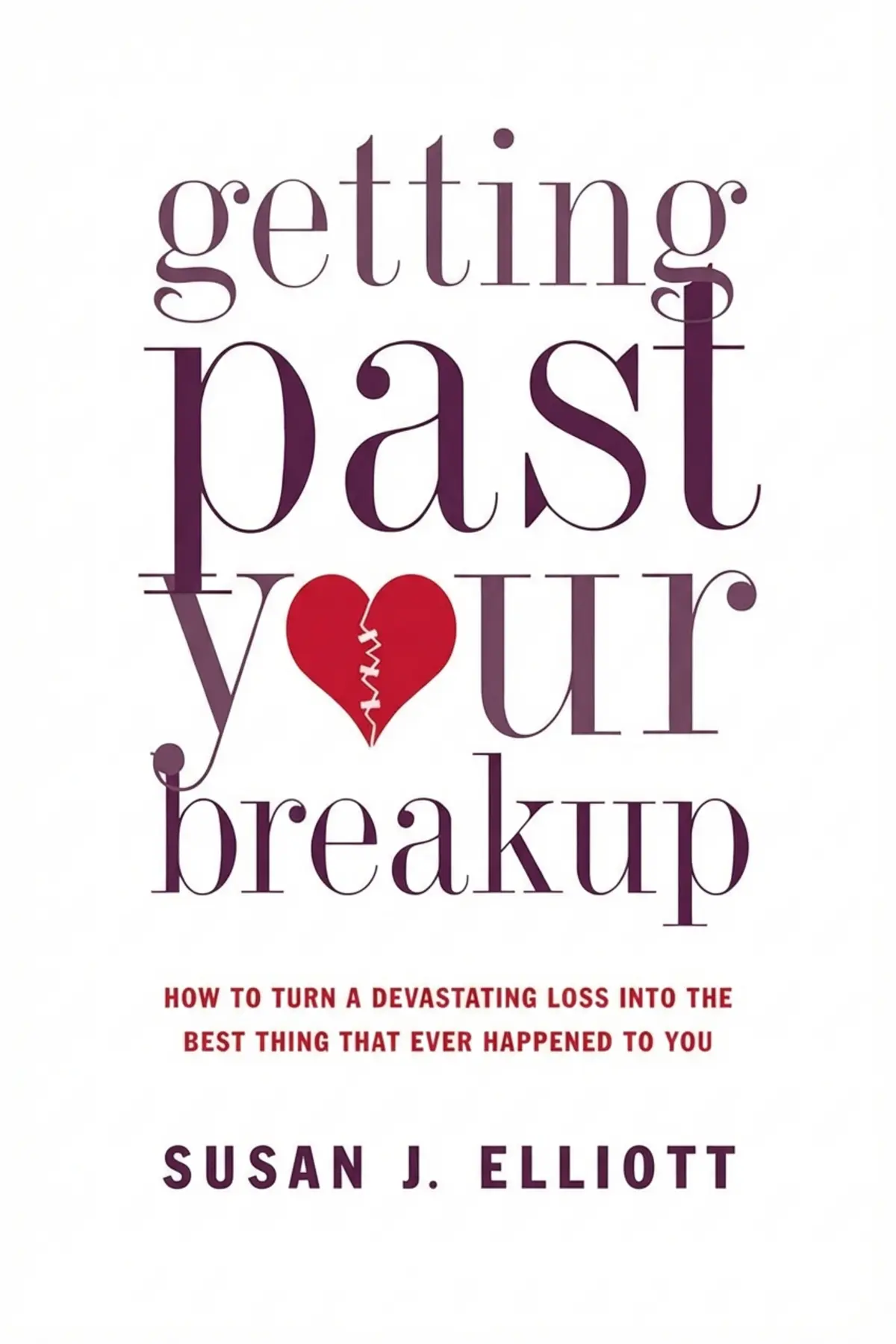
Right after a breakup, most people do one of two things: they chase the ex, or they act as if nothing happened. In Getting Past Your Breakup, grief counselor and lawyer Susan J. Elliott argues that both keep you stuck. A third path, slower and harder, is the one that turns the loss into growth.
That path means stepping back to grieve the relationship properly and to look honestly at your own life. Elliott’s claim is that a breakup faced with care, instead of avoided or numbed, can leave you stronger and more independent than you were inside the relationship.
Her method is concrete. It starts with cutting contact, moves through grief and self-care, and ends with a clear look at the patterns that drew you to the wrong person. Along the way come ways to talk to children about a split, a written inventory of your relationships, and boundaries that other people actually respect.
1 min 30 sec
There are three common ways to react when a relationship ends. Two of them feel easier in the moment, and Elliott explains why that easy feeling is exactly what keeps people from recovering.
1 min 28 sec
One of Elliott’s clients felt she could not breathe without her partner. What changed in just two days says a lot about why the urge to check, message and stay friends is so misleading.
1 min 31 sec
Being strong after a breakup usually means hiding the pain. Elliott argues this backfires, and she describes what grieving a relationship really feels like, including the obsessive questions most people try to shut down.
1 min 30 sec
Thinking about the past is part of healing, but it can easily take over. Elliott offers a few simple tools for pulling your attention forward, including one that involves going on dates alone.
1 min 22 sec
A divorce can be devastating for children, and they may not always know how to show what they feel. Elliott’s advice covers what to tell them, what to leave out, and how routine can rebuild their sense of security.
1 min 32 sec
The trait that first attracted you to a partner can turn out to be the one that hurt you most. A written inventory, Elliott argues, shows where that pull really comes from, sometimes as far back as childhood.
1 min 34 sec
Telling someone their behavior is not acceptable often changes nothing. Elliott explains what turns a stated limit into one people respect, using an everyday case of a friend who is always late.
1 min 27 sec
The right moment to return to dating is not when the loneliness becomes unbearable. Elliott’s test sounds backwards, and she has equally firm views on what to protect once a new romance begins.
1 min 07 sec
Elliott’s book treats a breakup less as a wound to cover and more as a door. The pain is real, and she never asks anyone to skip it. What she asks is that you stop feeding it with messages, scrolling or a quick replacement, and let it run its course while you rebuild. The relationship that ended becomes material: evidence of what you were drawn to, where those habits began and what you allowed others to do.
The practical start is small. Go without contact for two days and notice whether, like Elliott’s client, you breathe a little easier. Keep a journal and answer each harsh thought about yourself with a specific, kind one. Write an inventory of the relationship, your own mistakes included, and look for the person from your past it echoes. Then pick one boundary that keeps being crossed and attach a consequence you will actually carry out.
None of this promises a quick new love. It aims at something better: becoming a person who would be fine without one, and who chooses well because of it.
After a breakup, most people either try to win the ex back or carry on as if nothing happened. Susan J. Elliott, a grief counselor and lawyer who coaches people through divorce, argues that both choices keep you stuck. The path she recommends is harder: stop, reflect on the relationship and on your life, and work through the feelings until they heal. Her method is concrete. It starts with ending all contact, including the online kind, and moves through the shock and waves of grief that follow. It adds self-care tools such as journaling, affirmations and date nights with yourself, and gives parents advice for helping children through a split. Then it turns to the deeper work. A written relationship inventory exposes the patterns that drew you to the wrong partner, and boundaries backed by real consequences stop old habits from repeating. The promise is that a painful loss, handled this way, leaves you stronger and more independent. You also become ready to choose a partner from a position of strength rather than need.
People in the first raw weeks after a breakup who keep checking their ex's profile.
Separating parents who need to explain the split to their children calmly.
Anyone who keeps choosing the same kind of painful partner and wants to understand why.
Susan J. Elliott is a writer, lawyer and grief counselor born in New York City in 1956. She coaches clients through divorce and breakups, runs online breakup bootcamps, gives motivational talks and works as a media commentator and podcaster. She hosts the Mean Lady Talking Podcast. She studied English at Mount Holyoke College, earned a Master of Education at Cambridge College and took her law degree at the University of California, Berkeley, School of Law.
Listeners find this guide both pragmatic and enlightening, offering straightforward direction and useful suggestions throughout. It proves especially powerful for individuals navigating the end of a relationship, aiding them in working through emotions and progressing with their lives. Listeners value the sense of emotional solace it provides, with one listener highlighting how affirmations helped rebuild their self-esteem, and many view it as a transformative tool that is truly worth the investment.
If you are currently drowning in the aftermath of a split, this book is the life jacket you didn't know you needed. Elliott’s approach to the 'No Contact' rule isn't just a suggestion; it’s a rigorous framework for reclaiming your sanity. I found the Relationship Inventories particularly eye-opening, forcing me to confront why I keep choosing the same type of person over and over again. To be fair, some of the psychological deep dives into childhood feel heavy when you're already grieving, but the clarity they provide is worth the effort. My self-worth was in the gutter before I started the affirmations, and now I finally feel like a person again. It’s practical, no-nonsense, and incredibly comforting during the darkest hours. If you follow the plan, you will heal.
Show moreThe section on digital boundaries alone makes this worth every penny. In the age of Instagram and Facebook, it is so easy to stalk an ex and stay miserable, but this book gives you the permission you need to just stop. I love how the author explains 'splitting' and how we only remember the good times while ignoring the fights or the day someone threw a drink in a rage. It's a reality check. Truth is, I had been romanticizing a relationship that was actually quite toxic. Using the Relationship Inventories helped me see the patterns clearly for the first time in my life. I feel more empowered and confident in my own skin now. This is a life-changing resource for anyone ready to do the hard work of healing.
Show moreI wish I had found this years ago. I’ve read plenty of self-help books, but this is the only one that didn't feel like it was just patting me on the head. It’s a tough-love approach that focuses on your own behavior rather than what your ex did or didn't do. The chapter on closure was particularly powerful for me because I was obsessed with getting 'answers' that were never coming. I finally realized that I am the only one who can close this chapter. Not gonna lie, I cried through most of the exercises, but the sense of self-worth I’ve gained is priceless. This book is a mandatory read for anyone going through a horrific breakup. It saved me.
Show moreThis isn't just a breakup book; it's a total life overhaul. Susan J. Elliott provides a roadmap that is both stern and incredibly supportive, guiding you through the messy process of 'No Contact' without ever feeling judgmental. I spent years trying to win the approval of people who were never going to give it, but the inventories helped me see that pattern for what it was. Personally, I think the advice on boundaries is something everyone should read, regardless of their relationship status. Not gonna lie, the work is hard. You have to be willing to look at your past and your parents, but the resulting self-analysis is transformative. I feel more aware of my own needs than I ever was before. Essential reading.
Show moreSusan J. Elliott doesn't sugarcoat the reality of moving on, which is exactly what I needed after my long-term relationship imploded. The advice on social media was a total wake-up call for me. I was constantly checking his page, interpreting every song lyric or photo as a secret message, but this book helped me realize how unhealthy that 'haircut at the barber shop' behavior really is. Frankly, some of the writing on boundaries felt a bit repetitive, and I didn't always agree with the sections on 'brokenness' seeking its own level. However, the emotional comfort I gained from the 'closure comes from inside' chapter was worth the price of admission. It's a solid, tactical guide for anyone who feels stuck in a loop of mourning. It really works if you do the exercises.
Show moreAfter my marriage ended, I was looking for a roadmap, and this book provided a very clear one. The concept that 'water seeks its own level' was a tough pill to swallow but ultimately very necessary for my growth. It forced me to realize that my partner’s flaws were mirrored by my own lack of boundaries. I appreciated the practical tips on dealing with the domestic and legal chaos while trying to keep your head above water. My only gripe is that it can feel a bit formulaic at times, as if every breakup follows the exact same path. Still, the emotional comfort provided by Elliott’s stories of her own journey was immense. It’s a very grounding read when your world is spinning.
Show moreI was definitely guilty of 'splitting' my ex—remembering only the sunny vacations and forgetting the constant bickering. This book forced me to look at the relationship as it actually was, not how I wanted it to be. The writing style is direct and clear, making it easy to digest even when you're in a fog of grief. I found the 'No Contact' rule incredibly difficult to implement, but the author’s explanation of why it’s necessary kept me on track. My experience was that the book is best read in small chunks because the emotional weight of the Inventories can be overwhelming. It’s a great tool for self-discovery, even if some of the 'fitter and stronger' rhetoric feels a bit cliché. Definitely worth the investment.
Show moreThere is some gold in here, but you have to dig through a lot of fluff to find it. The advice on 'No Contact' is solid and definitely helped me get through the first few weeks without texting my ex. However, I found the dating advice at the end to be completely contradictory to the rest of the book. One minute the author says 'be yourself,' and the next she’s telling you to act differently on dates to change the dynamic. It felt a bit 'hokey' in parts, especially the affirmations. I stayed with it for the Inventories, which were helpful for spotting red flags, but I’m still in two minds about the overall philosophy. It's okay, but there are better books out there for specific situations.
Show moreI really wanted to love this, but I ended up DNFing at about 50%. The problem wasn't the quality of the advice, but rather that reading it made me think about my ex constantly. I found myself obsessing over the Inventories and rehashing old arguments just to fill out the charts. Instead of moving on, I felt like I was dwelling on the past more than I would have otherwise. Gotta say, the shredded letter exercise was the most helpful part for me! If you are in the very early stages, this might be perfect, but for me, it felt like it was keeping the wound open. It's a good book, just be careful about your own timing. I'm choosing to leave the past behind now.
Show moreMaybe I'm just not in the right headspace for this, but I found the constant self-analysis exhausting rather than helpful. Look, I understand the need to reflect, but suggesting that my current divorce is a result of my relationship with my parents thirty years ago feels like a reach. The tone is very clinical, which I suppose some might like, but it lacked the warmth I was looking for. I am also not a fan of the advice to stop drinking or change my hobbies while my life is literally falling apart. I don't have the energy to pick up a new sport right now! To be honest, I felt like the book was blaming me for my partner's decision to leave. It just wasn't the right fit for my grieving process.
Show moreSusan J. Elliott argues that a breakup can become a chance for personal growth if you handle it the right way. Instead of trying to win the ex back or pretending nothing happened, she recommends ending contact, grieving the relationship fully, caring for yourself and studying your relationship patterns. The goal is to become happy and independent on your own before starting a new romance.
Not for a while. Elliott advises cutting all contact after a breakup and saying a clear no if an ex suggests staying friends. If both people gave the relationship their best and it still failed, she sees time apart as the best way to start fresh. She also counts following an ex on social media as contact, even when no messages are exchanged.
It is a written review of a relationship that lists the good and bad sides of both partners, the traits that attracted you and later hurt you, early warning signs, and your own mistakes. Elliott then suggests a life inventory covering all major relationships. Her example: a critical partner may echo a critical mother whose approval you chased as a child.
Elliott argues that words alone are often ignored, so a boundary needs a consequence. If a friend is always late, tell them you will no longer wait, and the next time they miss the agreed time for driving to a party together, go without them. The action shows that your interests matter and must be respected.
According to Elliott, you are ready when you enjoy your own company and no longer feel you need someone else to make you happy. People who feel strong and independent tend to attract better partners, while those who need a relationship to feel valued often settle for less. Even in a new relationship, she advises keeping your friends, hobbies and time alone.
Steven C. Hayes


Leanne Maskell




bell hooks
AUDIO SUMMARY AVAILABLE
Get the key ideas from Getting Past Your Breakup by Susan J. Elliott, plus 5,000+ more nonfiction titles.









