

12 min 47 sec
Available in: English
Getting It Done When You’re Depressed: 50 Strategies for Keeping Your Life on Track
Practical ways to keep working, connecting and looking after yourself while depressed. The book's central idea is that action comes first and motivation follows, so you can stop waiting to feel ready.
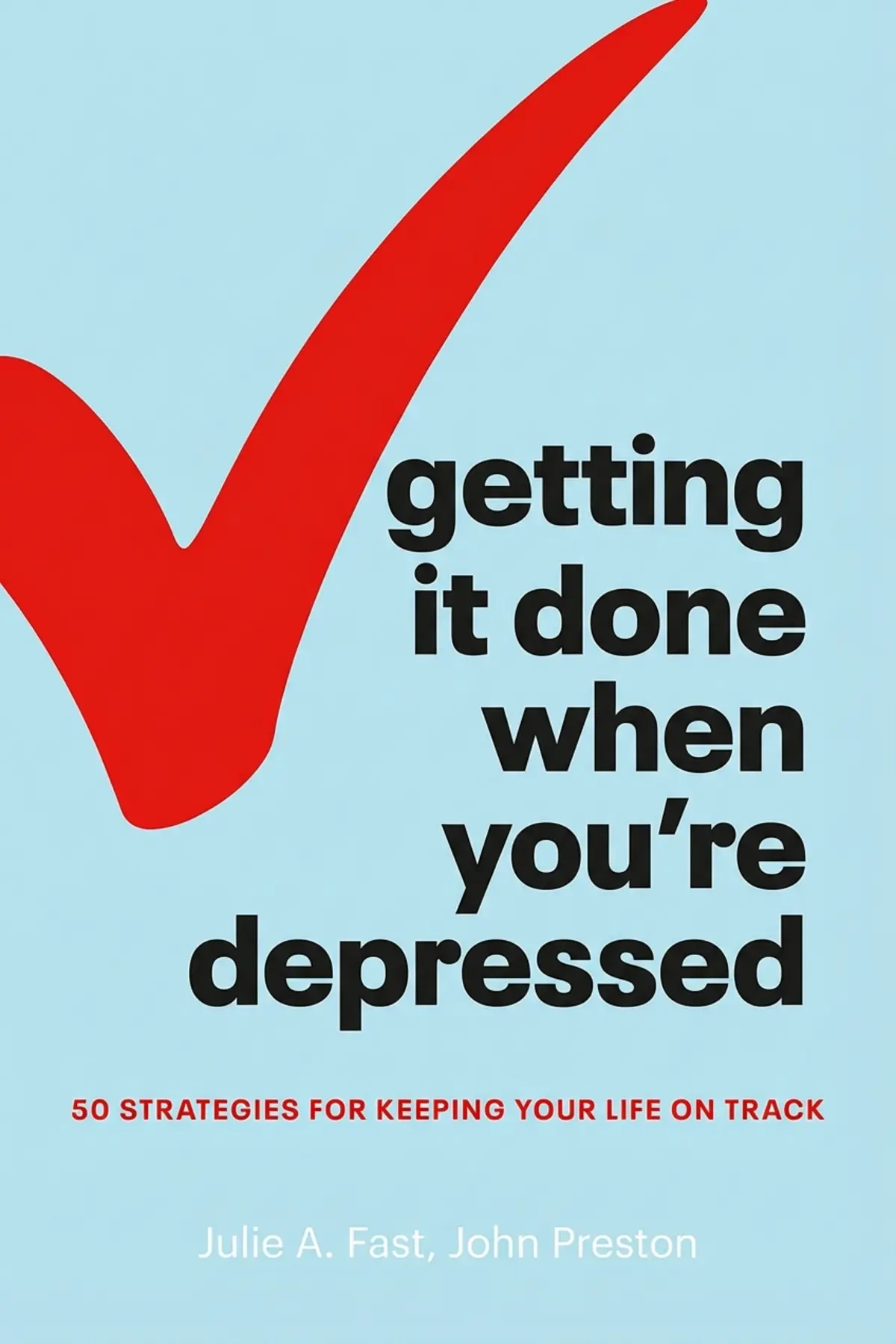
Table of Content
1. Introduction
1 min 04 sec
On a bad day with depression, most people plan to wait until they feel better and then get going. In Getting It Done When You’re Depressed, Julie A. Fast and John D. Preston argue that this order is backward: action comes first, and motivation tends to arrive once you have already started. A painter, a teacher and a man who works alone show how that plays out across the book’s 50 strategies.
The case the authors build is simple to state. Depression drains energy and twists judgment, yet small deliberate actions, backed by structure, other people and a long view, can keep your life moving until your mood catches up. Their tools are modest on purpose: a firm command to yourself in the morning, a work session beside a friend, a short walk, a thought recognized as a symptom.
What follows is a set of moves for the mornings when everything feels too heavy, and a way of measuring progress that depression finds hard to twist.
2. Start first and let motivation catch up
1 min 45 sec
Waiting to feel ready seems sensible when your energy is gone. A painter who kept working through a dark stretch found something in her finished canvases that changes how that waiting looks.
3. Spot the thoughts that are depression talking
1 min 42 sec
Some of the harshest verdicts you hear about yourself sound like plain facts. A nervous presenter and a man trapped among mirrors show how to tell which ones deserve your trust.
4. Give your mornings a drill sergeant and a timetable
1 min 50 sec
Some mornings no gentle encouragement can get you out of bed. Two people found that a much sterner tone worked, and a mother at home found that her empty days needed a shape.
5. Borrow other people's energy on hard days
1 min 51 sec
Pulling away from everyone feels like the only bearable option when you are low. A teacher, a flatmate and two coworkers show what changes when you stay close to people, even in silence.
6. A workspace and body that carry some weight
1 min 50 sec
A windowless cubicle, a bag of candy and an abandoned box of pencils all played a part in someone’s low days. Small physical changes turned each one around in ways that surprised the people involved.
7. Count progress in years and praise small wins
1 min 32 sec
Effort that seems to change nothing is where most people give up. The authors offer two habits for those flat stretches, and one of them involves a sentence that may feel strange to say.
8. Conclusion
1 min 13 sec
Fast and Preston’s book adds up to a new deal with depression. It never promises the illness will vanish if you try hard enough. It says you can keep your life moving while it is still there, by acting before the feeling arrives and by treating its harshest thoughts as symptoms to question. Fenya’s paintings make the case better than any argument: the work she did on the flat days held up beside everything else.
The supports are ordinary on purpose. A firm voice in the morning, a day planned like a child’s routine, a friend across a coffee-shop table, a 20-minute walk, a balanced snack in place of candy. None of them asks for energy you do not have.
If you take one habit into this week, make it a starting move. Choose a small task, begin before you feel ready, and keep your judgment back until it’s done. When the inner critic speaks up, answer it with the book’s sentence, “This is depression, not me.” Tell one person what helps you on a bad day, and notice what you finished.
Depression may set your mood. It does not get to decide your next step.
About this book
What is this book about?
When depression sets in, even small tasks can feel impossible. The natural response is to wait until the mood lifts and then get going again. Julie A. Fast and John D. Preston argue that this order is backward. Starting comes first, and motivation tends to show up once you are already moving. The book offers 50 strategies, many of them told through people living with depression: a painter whose low-mood work turned out as good as her inspired work, a man who barks orders at himself to get out of bed, a teacher who writes lesson plans across a coffee-shop table from a friend. The strategies fall into a few families. You build structure into your days and catch the thoughts that are really symptoms. You lean on other people, adjust your workspace, body and diet, and judge progress over years rather than days. Readers get concrete moves for the hardest mornings, a simple sentence for separating themselves from the illness, and a gentler way to measure progress that keeps them going when change feels slow.
Book Information
Who it's for
Waiting to feel ready
People living with depression who keep waiting to feel ready before they act.
Professionals and students
Professionals and students struggling to keep work, studies and routines going through low periods.
Friends and partners
Friends and partners who want to understand what actually helps someone on a bad day.
About the Author
Julie A. Fast
Julie A. Fast writes about bipolar disorder and related conditions, including depression, anxiety and psychosis. Her own diagnosis of bipolar disorder II in 1995 shaped the treatment approach in her books, which include Loving Someone with Bipolar Disorder and Take Charge of Bipolar Disorder and have sold more than 500,000 copies. She coaches families and partners, writes a column for BP Magazine, trains health care professionals on bipolar disorder and depression, and was the original consultant for the TV series Homeland. She wrote this book with John D. Preston.
Ratings & Reviews
Ratings at a glance
What people think
Listeners find this book beneficial, with one listener noting it offers effective techniques for managing depression. The guide receives high marks for being easy to read, as one listener particularly highlights it as a superb manual for maintaining productivity while depressed. However, the authenticity of the material draws varied responses from listeners.
Top reviews
Thongchai
This manual is exactly what I needed during a period where even standing up felt like a Herculean labor. While some self-help gurus try to fix your brain, Julie Fast focuses on the reality of your hands and feet. The concept that action must come before you feel motivated is a total game-changer for someone stuck in a loop of inertia. Frankly, I appreciated the frankness regarding her own bipolar struggles because it made the advice feel grounded in lived experience rather than academic theory. The bite-sized strategies are easy to digest even when your focus is shot to pieces. I found the sections on social media distractions particularly relevant to my current daily habits. It’s a readable guide that actually respects how hard it is to function.
Show moreTum
Wow, the central premise that action must precede motivation really flipped a switch for me. I spent months waiting for the 'spark' to return so I could start my projects, not realizing that the work itself creates the spark. This book provides a roadmap for moving through the world when your brain is telling you to stay in bed forever. The writing style is incredibly accessible and doesn't use the overly clinical jargon that usually makes my eyes glaze over. I especially liked the 'Helpful Hints' sections at the end of the chapters. It feels like having a compassionate, no-nonsense friend whispering in your ear. It gave me the tools to handle my house and my job without waiting for a miracle.
Show moreArthit
After years of therapists telling me to just 'feel my feelings,' it was refreshing to have a book tell me how to actually wash my dishes. This is the most practical guide I’ve ever found for the day-to-day grind of living with a mood disorder. The strategies are bite-sized, which is crucial because my brain cannot handle complex instructions when I'm in a downward spiral. Not gonna lie, I skipped the social media stuff, but the tips on workspace organization and sleep hygiene were solid. It made me feel less alone to know that someone as successful as Fast still struggles with these basic things. It’s an excellent guide for anyone who needs to keep their job while their brain is on strike.
Show moreKrisada
As someone who has struggled with chronic low moods for a decade, I found the 50 strategies here surprisingly actionable. The book doesn't waste time on 'why' you are sad and instead leans into 'how' you can survive the workday regardless. I really appreciated Dr. John Preston’s scientific interjections because they gave the strategies a layer of clinical legitimacy that kept me engaged. Some might find the tone a bit too 'tough love,' but when you’re drowning in a sea of your own thoughts, a firm hand is sometimes necessary. The layout is excellent for people with low attention spans. You can just flip to a random page and find a tip that helps you get through the next twenty minutes.
Show moreLuckana
Finally picked this up after seeing it recommended in a mental health forum for creatives. It’s an excellent guide for those days when the brain fog is so thick you can’t remember how to prioritize your basic chores. I love the 'do it anyway' philosophy because it removes the pressure of needing to feel happy before being productive. It’s not about being a corporate robot; it’s about reclaiming your sense of self-worth through small, tangible accomplishments. The strategies regarding social media usage and isolation were particularly biting. My only real gripe is that it conforms a bit too much to the idea that our value is tied to our output. Still, it’s a very practical resource for those of us in the trenches.
Show moreFatima
Truth is, I didn't expect much from a self-help book with such a literal title, but the strategies are surprisingly robust. The focus on 'externalizing' the depression—treating it as a lying voice rather than your true self—is a powerful cognitive tool. I particularly enjoyed the inclusion of Dr. Preston’s insights on the biological effects of caffeine and alcohol on a depressed system. While the book can be painfully repetitive at times, that repetition might actually be helpful for someone with the cognitive impairment that often accompanies depression. It isn't a perfect book, and some of the 'do it anyway' advice feels a bit dismissive of severe symptoms. However, as a set of productivity tactics, it really delivers on its promise.
Show moreCee
Why does this book feel like it's repeating the same three ideas fifty different ways? I appreciate the intent, and the author clearly knows the dark places of the mind, but the organization is a mess. It's a hybrid between a workbook and a memoir, and neither side quite wins the battle for the reader's attention. One moment you're getting a great tip about breaking tasks into tiny pieces, and the next you're reading a distracting anecdote about the author's personal life. Personally, I found the scripts for explaining my depression to friends to be the highlight. The rest felt like common sense that has been padded out to meet a page count. It’s a decent guide, but definitely not a revolution.
Show moreNongnuch
Look, this isn't going to cure your clinical depression, and to their credit, the authors never claim it will. It’s strictly a toolkit for getting through the day without your life falling apart around you. I found the anecdotes about the author’s own bipolar disorder to be a double-edged sword; they provide community but sometimes feel like they're veering into a memoir. The advice on 'paying people to do things' is great if you have the money, but feels a bit out of touch for the average reader. Overall, I think it’s a helpful read for people with mild to moderate depression. If you’re in a deep crisis, though, this might feel a bit too simplistic. It’s all about managing the symptoms of the slump.
Show moreFilm
I'm sorry, but some of the advice in here feels like it could push a vulnerable person into a deeper hole of self-loathing. The authors suggest 'fighting' your negative thoughts, which runs counter to almost everything I’ve learned in modern Acceptance and Commitment Therapy. If you try to wage war on your own brain and lose, you just end up feeling like a failure on top of being depressed. Also, the comments about weight and exercise were unnecessarily blunt and felt a bit like fat-shaming under the guise of health. To be fair, the scripts for talking to loved ones are actually quite useful for those of us who lose our words during a crash. However, the repetitive 'just do it' tone became grating after the fifth chapter.
Show moreOmar
The chapter on exercise really rubbed me the wrong way with its reductive comments on weight and mood. Julie Fast writes about her own struggles with a lot of vulnerability, but that doesn't excuse advice that feels outdated or scientifically questionable. Telling a depressed person to just 'stop whining' or to 'fight' their thoughts is a recipe for a breakdown. Truth is, I wanted to love this because the premise is so vital. We need more books on productivity for the mentally ill. But the repetitive nature of the 'strategies' made it a chore to finish. If you can filter out the more harmful suggestions, there are some nuggets of wisdom, but you have to dig through a lot of fluff to find them.
Show moreQuestions about this book
What is the main idea of Getting It Done When You're Depressed?
Julie A. Fast and John D. Preston argue that you do not need to feel motivated before you act. Starting a task, even at your lowest, tends to bring motivation afterward and restores a sense of control. The book backs this with practical strategies built around structure, connection with others, physical and environmental changes, challenging distorted thoughts and a patient, long-term view of progress.
Who should read Getting It Done When You're Depressed?
It suits people living with depression who still need to work, study or run a household, and who find even small tasks overwhelming. It also helps friends and family. The authors encourage people with depression to explain which tasks freeze them, such as paying bills, and how they act when low, so loved ones know where to step in.
How do you stay productive when depressed, according to the book?
The authors suggest starting before you feel ready and judging your work only once it is done. They recommend structuring your day like a child’s routine, giving yourself firm commands in the voice of your healthiest self, working beside a reliable friend, keeping a dedicated workspace, and using social media as a reward after a task rather than a way to avoid it.
What does This is depression, not me mean in the book?
It is a sentence the authors recommend saying when tasks feel enormous or self-blame takes over. Depression distorts reality, so thoughts like you’re not good enough are treated as symptoms instead of facts. Naming the illness this way, they argue, reduces self-blame, calms exhausting mental chatter and makes it easier to act with self-compassion.
How can I keep going when progress with depression feels slow?
Fast and Preston recommend celebrating small wins out loud, for example telling yourself you are proud of what you just did, even if it feels strange at first. They also suggest thinking in years instead of days or weeks, accepting setbacks as part of the process and pairing persistence with compassion, so steady small steps can add up over time.
Readers also enjoyed





Alcoholics Anonymous
Alcoholics Anonymous World Services
168 Hours: You Have More Time Than You Think
Laura Vanderkam

A Liberated Mind: How to Pivot Toward What Matters
Steven C. Hayes

AUDIO SUMMARY AVAILABLE
Listen to Getting It Done When You’re Depressed in 15 minutes
Get the key ideas from Getting It Done When You’re Depressed by Julie A. Fast, plus 5,000+ more nonfiction titles.
- 5,000+ titles
- Listen as much as you want
- 7-day free trial
- Cancel anytime









