

12 min 45 sec
Available in: English
Getting Good with Money: Pay Off Your Debt and Find a Life of Freedom-without Losing Your Mind
By Jessi Fearon
A plain, behavior-first guide to leaving paycheck-to-paycheck living behind: spot your money type, build a quick zero-balanced budget, save six months of costs, pay debt down by snowball or avalanche, and stop borrowing.
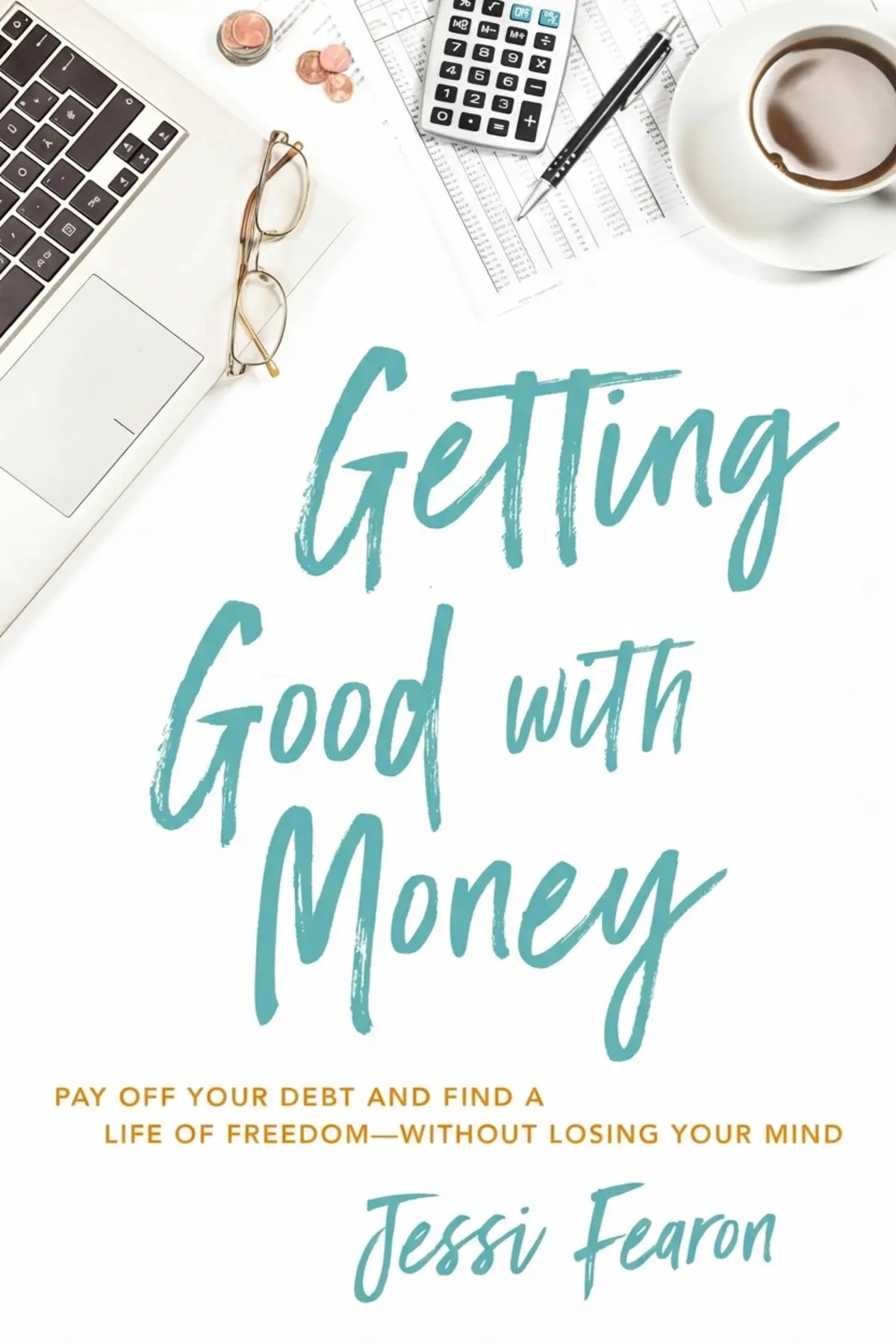
Table of Content
1. Introduction
58 sec
Living paycheck to paycheck can feel like bad weather, something that just happens to you, yet Jessi Fearon argues it is mostly a set of habits you can change. In Getting Good with Money, the certified financial coach puts a number on it: when you handle your finances, 80 percent is behavior and just 20 percent is math. She learned that the hard way. In March 2013, pregnant with her second child, she listed the costs her family faced in the coming months and saw that they were broke. By changing how they lived, she and her husband cleared their debt, built savings and paid off their mortgage, all on a salary of $47,000.
Her throughline is simple: freedom with money comes from small, repeated changes in behavior, starting with knowing which kind of money trouble you have. What follows is a working kit, from a budget you can set up in one sitting to the hidden price of a mortgage.
2. Find your money type before fixing anything
1 min 49 sec
Some people never save, some never stop spending, and some are too tired to look at their finances at all. Fearon argues the right fix depends entirely on which of these patterns describes you.
3. Build a working budget in one sitting
1 min 45 sec
Budgeting sounds like hours of spreadsheets and guilt. Fearon’s beginner method needs just your bank balance, a calendar and a calculator, repeated each payday, and she disagrees with some financial gurus who push saving every single month.
4. A six-month cushion that keeps debt away
1 min 49 sec
Saving money while you still owe money looks like a mistake. Fearon admits it slows you down, then explains why skipping this step is how many people end up right back where they started.
5. Choose a payoff plan that keeps you going
1 min 47 sec
One method attacks your smallest debts first, the other your most expensive ones. Fearon explains both, then adds a single rule about borrowing that runs against almost everything people are taught about money.
6. See the true price of a low-rate mortgage
1 min 51 sec
A 4 percent home loan sounds cheap. Fearon runs the numbers over thirty years and arrives at a total that leads many homeowners to rethink how fast they want to be done with it.
7. Make room in a tight budget from both ends
1 min 42 sec
Cutting back only gets you so far when money is already tight. Fearon looks at both sides of the budget and finds savings in places most people never think to check, including one simple phone call.
8. Conclusion
1 min 04 sec
Fearon’s story begins with a pregnant woman reading a list of coming expenses and realizing her family was broke. It ends with a paid-off house on $47,000 a year. Between those two points there was no hidden formula, only ordinary habits kept up long enough to work. That is her real argument: money trouble feels like a fixed part of life, yet it is mostly behavior, and behavior can change.
The way in is small, because big goals tackled all at once lead to burnout. Name the type of money struggle that fits you right now. Before your next payday, build one quick-start budget, with the bills paid first and every remaining dollar given a section. Set a modest first target for your emergency fund, choose the snowball or the avalanche, and stop adding new debt while you clear the old.
None of these steps needs a finance degree. They need attention, repeated every payday, until watching your money feels as normal as spending it once did.
About this book
What is this book about?
Money trouble can feel like a permanent part of life: the paycheck that is gone before the month ends, the card balance that never shrinks, the retirement question nobody wants to face. Jessi Fearon knows that feeling. In March 2013, pregnant with her second child, she listed her family's coming expenses and realized they were broke. She and her husband went on to clear their debt, build savings and pay off their mortgage on a $47,000 salary. Her central claim is that 80 percent of handling your finances comes down to behavior, and only 20 percent to math. So she begins by sorting money struggles into four types, the Floater, the Daredevil, the Spender and the Avoider, each with its own fix. From there she gives beginners a quick-start budget that needs only a bank balance, a calendar and a calculator, a method for sizing an emergency fund, two ways to repay debt and one strict rule about borrowing. Readers also learn what a low-rate mortgage really costs over 30 years, how an amortization table sets a payoff target, and where to find extra room in a tight budget, from the grocery list to a phone call with the utility company.
Book Information
Who it's for
Paycheck-to-paycheck families
Families living paycheck to paycheck who have never kept a budget for more than a month.
Wanting a payoff plan
People with card or loan debt who want a clear payoff order and a firm rule against new borrowing.
Homeowners weighing mortgage costs
Homeowners who want to know what a low-rate mortgage really costs over 30 years.
About the Author
Jessi Fearon
Jessi Fearon is a writer and certified financial coach. She founded the personal finance blog jessifearon.com, where she writes about her family's everyday life on a budget to help readers handle their own money. Her work has been featured by The Penny Hoarder, Money Saving Mom, Rockstar Finance and Buzzfeed. Getting Good with Money draws on her family's own climb out of debt on a modest salary.
Ratings & Reviews
Ratings at a glance
What people think
Listeners find this financial guide highly practical and packed with useful advice, creating a listening experience that is easy to follow. The content feels sincere and relatable, with one listener highlighting how it breaks everything down for the audience. They value the author's genuine perspective; one listener shared that it transformed their life, while another portrays it as a moving narrative.
Top reviews
Willow
This guide is exactly what I needed to jumpstart my New Year's resolutions! Jessi Fearon has such an authentic voice that makes you feel like you're grabbing coffee with a friend who just happens to be a genius at budgeting. Unlike other finance books that feel dry or judgmental, this one is filled with hope and a very realistic breakdown of how to handle life’s unexpected curveballs. I loved the focus on the 'why' behind our spending habits. It changed my whole perspective on what it means to be wealthy. The steps are so easy to follow, and the emphasis on building a six-month emergency fund before attacking debt gave me a sense of security I never had with other plans. If you want a book that is honest, relatable, and actually works, this is the one. Truly life-changing stuff!
Show moreRosa
Every high school student needs a copy of this book before they enter the real world. Financial literacy is so often ignored in school, and Jessi does a fantastic job of breaking down complex topics into simple, digestible pieces. I bought this for my daughter but ended up reading it myself first! The way she explains mortgages and the importance of avoiding the typical financial traps of early adulthood is brilliant. It’s a very positive, inspiring guide that focuses on lifestyle choices and sacrifices without feeling like you're being punished. The author’s transparency about her own failures and debt makes the success story feel achievable for the rest of us. We need more books like this in our public libraries. Highly recommended for anyone starting their financial journey from scratch.
Show moreHannah
Finally got around to reading this and I have to say, Jessi’s story is incredibly powerful. She doesn’t just preach from a mountaintop; she actually shares the messy details of living on a single income in Georgia and how she and her husband managed to pay off their house in record time. I appreciated the actionable items at the end of each chapter because they forced me to actually sit down and look at my own bank statements instead of just nodding along. The meal planning section was particularly eye-opening for our family. My only real gripe is that some of the math felt a little inconsistent—it’s hard to believe they did all this on $47k alone when side hustles and 401k cash-outs are mentioned later. Still, it’s a very relatable and encouraging read for anyone who feels buried by their credit cards.
Show moreJom
As someone who has followed the big-name financial gurus like Dave Ramsey for years, I found this to be a refreshing, slightly softer take on that proven foundation. Jessi basically gives you a 'Davish' plan but with more heart and a lot more focus on the domestic side of things like meal planning and the actual cost of raising kids. I actually prefer her recommendation of a larger emergency fund cushion before going all-in on debt, especially given how volatile the world has been lately. Truth is, her Georgia roots shine through and make the whole memoir-style approach very cozy. There are some religious themes and mentions of tithing which might turn some people off, but I felt it added to the authenticity of her personal journey. It’s a quick, easy read that provides a solid roadmap for beginners.
Show moreOoi
The chapter on meal planning was a total game-changer for my household budget. It’s so rare to find a finance book that gets into the weeds of grocery shopping and Amazon spending habits, but those are the things that actually drain my bank account every month! Jessi’s approach is very practical and grounded in real-life experience. I liked that she didn't just give advice; she shared the 'money lies' she used to believe. It made the book feel very honest and relatable. I do have to mention that there is a lot of Christian content, which I didn't mind, but I know it might frustrate others. Also, her stance on not using 529 plans for kids' college was an interesting take that I’m still mulling over. Overall, a very solid four-star read with plenty of tips I’ll actually use.
Show moreWorawit
After hearing Jessi’s story on social media, I was excited to see how she put it all into words. The book is written in a very casual, conversational tone that makes it easy to breeze through in a weekend. I think her 'money truths' are something everyone needs to hear, especially the parts about how children are only as expensive as you allow them to be. Personally, I found her honesty about their side hustles and the reality of living on $47,000 a year to be the most compelling part of the book. It’s not a magic wand, but it’s a very clear mirror to hold up to your own spending. Some of the religious advice on tithing felt a bit controversial, but I respect that she's sharing her personal truth. It’s a powerful story of sacrifice and grit.
Show moreA
Ever wonder how a normal family actually pays off a mortgage in just six years? This book breaks it all down without the fancy jargon that usually makes my eyes glaze over. Jessi Fearon has a way of making you feel capable of handling your own money, even if you’ve made huge mistakes in the past. I loved the 'action items' because they turn the reading into a workbook experience. While I’m not a huge fan of the religious content—it felt a bit repetitive at times—the practical tips on emergency funds and avoiding credit card traps are universal. She’s from Georgia, and that local, down-to-earth perspective makes the book feel much more authentic than a lot of the corporate finance books out there. Definitely worth a read if you need a positive nudge to get your budget in order.
Show moreAdam
Not what I expected when I first picked this up based on the cover alone. While Jessi provides some truly practical pointers for digging yourself out of debt, I found the heavy emphasis on US-specific financial vehicles like Roth IRAs and specific mortgage types totally irrelevant for me as a reader in Australia. To be fair, the writing style is very approachable and she seems like a genuinely kind person, but the constant stream of Bible verses in every single chapter felt like an intrusive assumption of faith that wasn't mentioned in the blurb. Frankly, I was looking for a secular guide to budgeting, not a Sunday school lesson on tithing while you're still underwater. If you can look past the religious lens and the Southern US focus, there are a few nuggets of wisdom here, especially regarding grocery habits, but it wasn't the universal finance guide I was hoping for.
Show moreThitima
Picked this up for a quick New Year's reset of my finances. It’s a decent book for beginners, but I didn't find anything particularly groundbreaking if you’ve already read the standard personal finance classics. Jessi is a likable narrator, though I did spot a few contradictions regarding her income and how she actually funded her debt payoff. One minute she says they lived on $47k, the next she’s talking about cashing out retirement accounts and side income. It’s a bit confusing. Also, the religious angle was a surprise. I don't mind faith in books, but it felt a bit heavy-handed here for a 'self-help' title. Still, the action items at the end of the chapters are useful for self-reflection. It’s a fine introductory text, just don’t expect a radical new system.
Show moreTun
Look, I just wanted secular finance advice, not a sermon. I really wanted to like this book because the synopsis sounded so promising and the cover is beautiful, but the intrusive religious viewpoint was just too much for me. It felt like every other page had a Bible verse, and as someone who isn't religious, it made the actual financial tips hard to focus on. To be fair, her advice on decreasing debt is spot-on, but it's buried under a very specific Southern US Christian lens that wasn't mentioned in the description. If you’re looking for a strictly technical or secular guide to money management, you’ll likely find this frustrating. Also, if you live outside the USA, skip this. The long chapters on Roth IRAs and US-specific apps won't help you at all. It’s a very niche book masquerading as a general guide.
Show moreQuestions about this book
What is the main idea of Getting Good with Money by Jessi Fearon?
Fearon argues that when it comes to handling your finances, 80 percent is behavior and only 20 percent is math. She sorts money struggles into four types, the Floater, the Daredevil, the Spender and the Avoider, and pairs each with a fix. Her tools include a quick-start budget, a six-month emergency fund, the snowball or avalanche debt methods and a strict rule to stop borrowing. Her family used this approach to become debt-free on a $47,000 salary.
How does the quick-start budget work?
You need a calculator, a calendar and the balance in your checking account. Subtract every bill due before your next paycheck, including pending charges. Divide what remains among sections such as groceries, gas, entertainment and savings until the balance is zero, which Fearon calls a zero-balanced budget. Each payday, add the new paycheck to what is left and repeat. Fearon puts bills ahead of savings.
Should I build an emergency fund or pay off debt first?
Fearon recommends building the emergency fund even while you repay debt. She admits it may make becoming debt-free take a little longer, but argues it is what keeps you debt-free, because emergencies arrive regardless. The goal is six months of essential expenses, found by multiplying one month’s essentials by six. Start with a smaller milestone and avoid dipping into the fund for ordinary surprise bills.
What is the difference between the snowball and avalanche methods?
The snowball method clears debts in order of size, starting with the smallest balance and ending with the largest, building motivation through quick wins. The avalanche method pays the highest interest rate first and works down to the lowest. For both, Fearon says to prioritize debt in your budget, cut costs and raise income to increase payments, and follow her golden rule: no new borrowing, no new loans and no credit cards.
Who should read Getting Good with Money?
It suits beginners who feel stuck: people living paycheck to paycheck, those without savings who fall into debt for big purchases, overspenders and anyone overwhelmed by student loans or retirement planning. Homeowners also get a clear explanation of total interest percentage and amortization tables, with Fearon’s example of a $300,000 loan at 4 percent costing $515,608 over 30 years.
Readers also enjoyed



AUDIO SUMMARY AVAILABLE
Listen to Getting Good with Money in 15 minutes
Get the key ideas from Getting Good with Money by Jessi Fearon, plus 5,000+ more nonfiction titles.
- 5,000+ titles
- Listen as much as you want
- 7-day free trial
- Cancel anytime









