
14 min 32 sec
Available in: English
 ไทย
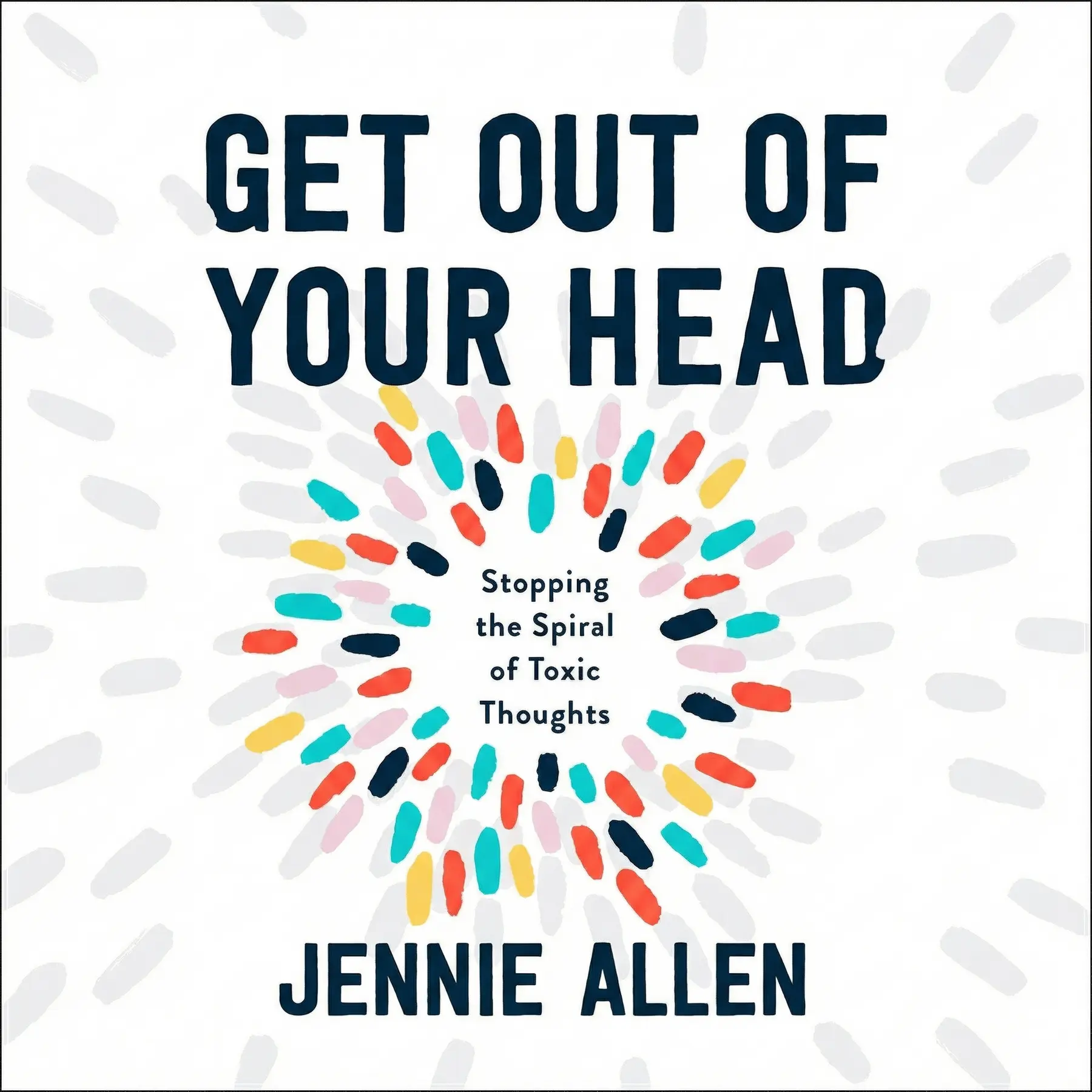
EnglishไทยGet Out of Your Head: Stopping the Spiral of Toxic Thoughts
By Jennie Allen
Shows Christians caught in looping negative thoughts how to interrupt the spiral through faith-based choices: silence with God, honest friendship, testing thoughts against Scripture, gratitude, humility and serving others, starting with a single written-down worry.
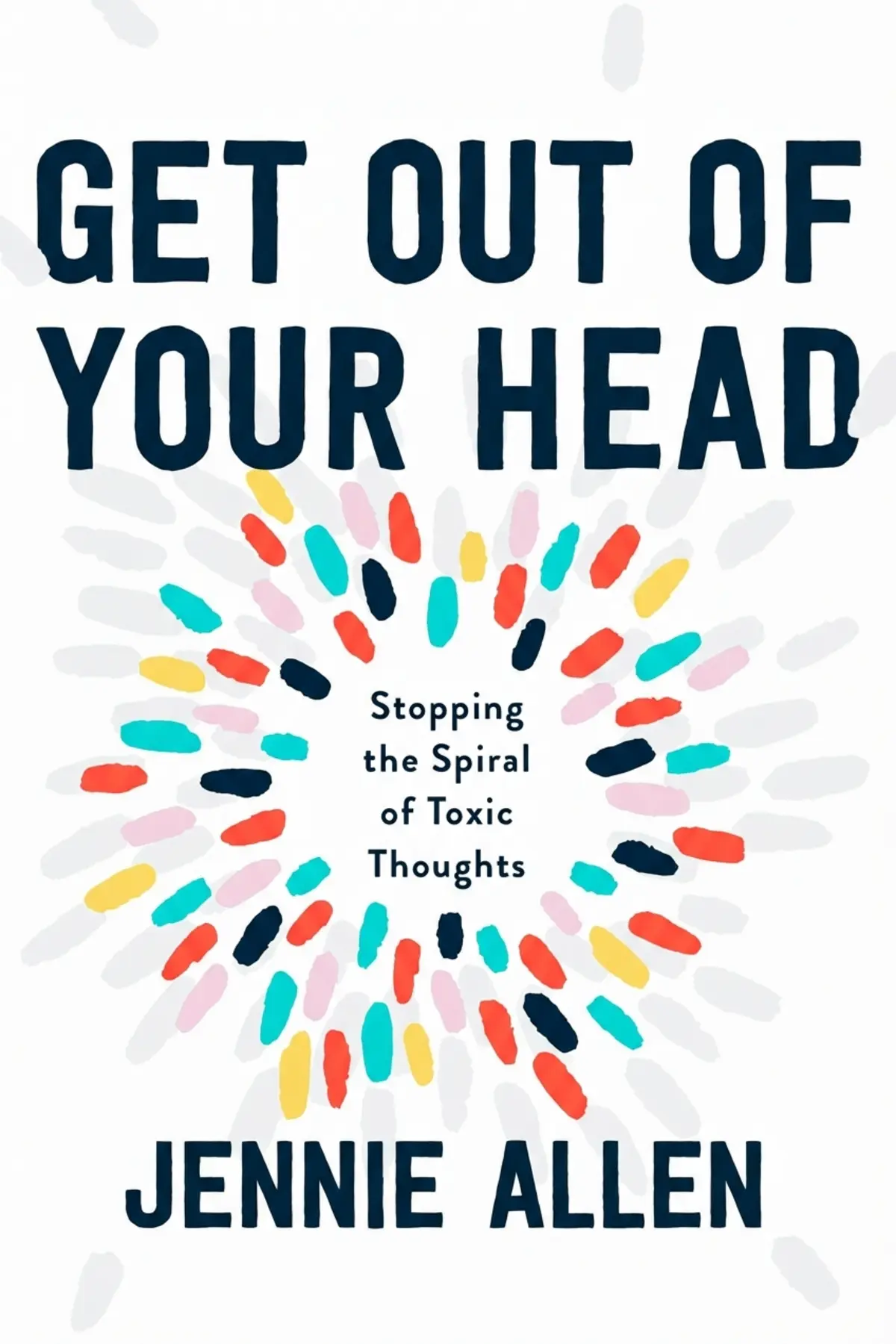
Table of Content
1. Introduction
1 min 00 sec
If your mind keeps sliding from one worry to the next, the way out may begin with something small: noticing that you get to choose the thought that comes after this one. That is the opening claim of Get Out of Your Head, by Bible teacher and author Jennie Allen. She argues that negative thoughts are universal, that each one tends to pull in another, and that the spiral breaks when you interrupt it with a decision. For Allen, that decision is about God.
Her case is that a toxic spiral can be reversed through a handful of repeated choices: sitting in silence with God, letting friends know you fully, testing thoughts against what God says, practicing gratitude and humility, and serving others. Each practice comes from her own year and a half of doubt or from friends who found their way out. What follows is a set of small, specific habits for a believer whose thoughts have started to run the show, and a reason to think change can start today.
2. Catch a spiral before it owns your nights
1 min 51 sec
A strange warning from a stranger and a sudden power cut sent a confident Bible teacher into eighteen months of sleepless fear. The thought that finally interrupted it was almost embarrassingly simple.
3. Use quiet time to hear what you really think
1 min 47 sec
Even healthy-looking habits like extra work and a busy social life can keep you from the one conversation you most need. Allen explains why people avoid it and offers a small sentence rewrite that changes what follows.
4. Tell a friend the part you keep hidden
1 min 48 sec
Most people share their worries with close friends but keep back one final detail, the one that carries the most shame. One woman’s marriage turned on what happened when she stopped holding it back.
5. Put a troubling thought on paper and test it
1 min 47 sec
A phrase from Paul and a leaf pulled from a tree during a college Bible study give Allen two tools for the moments when a thought will not let go and trusting God feels hard.
6. Stay grateful and humble, even in hard seasons
1 min 56 sec
A graduate stuck in a job she found dull and a widow who lost her husband to an incurable disease both faced the same choice. What they did with it was to choose gratitude, and their outlook changed.
7. Serve others and feel your stress ease
1 min 44 sec
Most of what Jesus did would never have made the news. Allen draws a lesson from those ordinary days about the restless feeling that follows an evening on the sofa with your phone.
8. A fresh start is ten minutes away
1 min 35 sec
Allen admits nobody gets rid of negative thoughts for good. Yet she points to something happening inside every nerve cell that suggests starting over takes far less time than a bad month makes it feel.
9. Conclusion
1 min 04 sec
A leaf in a college Bible study, a passage heard on the drive to a shop, a confession made to a friend: Allen’s way out of a spiral is built from small, ordinary moments. Her claim is that the mind does not have to obey whatever arrives at 3 a.m. Thoughts can be heard, spoken, questioned and replaced, and every replacement is a choice that, for her, starts with God. Gratitude, humility and service then keep the new pattern turning outward instead of back toward the self.
Her own suggestion is the simplest place to begin. Take a pen and paper and put down one negative thought currently occupying your mind, all of it, including the part that embarrasses you. Then ask what God thinks of it and decide what you will do next. If there is a friend who has never heard the last detail of a struggle, that conversation can come after.
None of this ends negative thinking forever. It only has to start a new direction, and by Allen’s count, that takes about ten minutes.
About this book
What is this book about?
Everyone has negative thoughts, and the trouble is how quickly one leads to the next. A small doubt about being good enough turns into a larger fear, and soon the mind is caught in a spiral that keeps getting worse. Jennie Allen knows this from the inside. After a frightening encounter at a church in her hometown, she spent a year and a half waking at 3 a.m. with fears about her faith and her life. Allen's answer is that you can choose your next thought, and that for a believer this choice is rooted in Jesus. She builds a set of practices around that idea: making room for silence with God, letting trusted friends see everything, writing a thought down and testing it against the Bible, choosing gratitude and humility in hard seasons, and serving others without needing thanks. Readers get concrete stories from Allen and her friends, a simple sentence rewrite for turning a complaint into a decision, and a hopeful claim about how quickly the brain can begin a new pattern.
Book Information
Who it's for
Christians awake with worry
Christians who wake in the night with worries that keep multiplying.
Believers finding gratitude hard
Believers stuck in a job, illness or season they did not choose and struggling to stay grateful.
Group leaders and friends
Small group leaders and friends looking for faith-based practices to help others break negative thinking.
About the Author
Jennie Allen
Jennie Allen is a Bible teacher, author and speaker who founded IF:Gathering, a discipleship ministry, and hosts the podcast Made For This. Her New York Times bestselling books include Find Your People, Get Out of Your Head and Untangle Your Emotions, and she also wrote Nothing to Prove and Restless. She holds a master's degree in Biblical Studies from Dallas Theological Seminary, lives in Dallas, Texas, and leads the vision for Gather25, a global prayer gathering lasting 25 hours.
Ratings & Reviews
Ratings at a glance
What people think
Listeners find this book accessible and value its life-changing impact, with one individual mentioning how it helps them renew their minds. The work is deeply grounded in Scripture and combines scientific study with biblical truths to deliver practical tips and effective tools. Furthermore, listeners appreciate how the book helps identify spiraling thoughts and reshapes mental patterns, while many praise the author's writing for being both compassionate and powerful.
Top reviews
Henry
Finally got around to reading this after seeing it everywhere on Instagram, and it genuinely shifted something inside me. Jennie Allen has this way of speaking directly to the chaos in your brain without sounding condescending or overly academic. I loved how she paired scientific research about neuroplasticity with deep scriptural truths; it made the concept of "renewing your mind" feel tangible rather than just a nice Sunday school sentiment. Some might find the personal anecdotes about her family a bit much, but to me, they made the "spiral" concept easier to visualize. I finished the last chapter feeling like I actually have the authority to stop my runaway thoughts before they take over my whole day. It’s a fast read, but the implications for your mental health are huge if you’re willing to do the work.
Show moreChan
Wow. I didn’t realize how much I was spiraling until I saw my own thought patterns mapped out on these pages. Jennie is incredibly vulnerable about her own eighteen-month battle with darkness, and that honesty made me feel seen in a way most self-help books don't. The writing style is compassionate and powerful, leaning heavily on the idea that our minds are a battlefield where we can either lose or win through Christ. It’s a life-changing perspective. I especially appreciated the tools for catching a spiral before it reaches the "bottom." Is it a bit repetitive? Maybe. But when you’re trying to rewire years of negative thinking, you probably need to hear the truth more than once to make it stick.
Show moreZanya
Ever wonder why you can't just "stop" a bad thought? This book breaks down the mechanics of our thinking in a way that feels totally manageable. I loved the emphasis on community and how our thoughts don't just affect us, but also the people around us. Jennie’s passion for Jesus is contagious throughout the entire book. It’s not just about "positive thinking" in a secular sense; it’s about aligning our minds with the Truth. I found the sections on binging Netflix and scrolling social media to be convicting but necessary. This isn't just a book you read once; it’s a manual you keep nearby for those days when the noise in your head gets too loud to handle.
Show morePriya
The chapter on the eight sets of thoughts was a total game-changer for my morning routine. I’ve read a lot of books on anxiety, but none of them made the connection between my spiritual life and my cognitive habits as clearly as this one did. Jennie’s writing is punchy and urgent. She doesn't let you stay in your "victim" mindset for long, which is exactly what I needed. The scientific bits about how our brains actually change when we focus on different things were fascinating and gave the spiritual advice a lot more weight. If you feel like you're stuck in a loop of negativity, buy this book. It’s practical, scriptural, and truly life-changing if you actually apply the roadmaps.
Show moreOm
This book actually delivers on its promise to help you identify those toxic patterns we all fall into. I found the "roadmaps" for the eight sets of thoughts to be the most practical part of the whole experience. Frankly, some of the "Christianese" language felt a little thick in the middle sections, and the Enneagram 7 energy is definitely high, which might not resonate with every personality type. However, the core message—that we have a choice in what we think about—is incredibly empowering. It’s not just a "pray it away" approach; she emphasizes that we are active participants in our mental landscapes. If you’re tired of feeling like a victim to your own anxiety, this provides a solid, faith-based framework to start taking your thoughts captive.
Show morePete
As someone who struggles with a loud internal monologue of "not enough," this book was a breath of fresh air. Allen does a great job of explaining how one single thought can lead to a total emotional breakdown if we aren't careful. I liked the graphics of the spirals; they gave me a mental image to use when I feel my heart start to race. Not gonna lie, I did find some of the personal stories a little "fluffy," and the transition between scientific facts and biblical application could have been smoother. But overall, the practical advice on how to interrupt a downward spiral is worth the price of admission alone. It’s a solid resource for any woman feeling overwhelmed by her own head.
Show moreHom
Jennie Allen has a very specific, energetic voice that really shines through in the audio version, though the physical book is great for seeing the diagrams. The focus on taking "every thought captive" is rooted deeply in scripture, which I appreciated. It wasn't just fluff; there were actual steps to follow. I’ll admit that the constant references to her social media following and her "American dream" life made me roll my eyes a few times, but I tried to focus on the "bones" of the message. The roadmaps for choosing humility over pride and connection over isolation were particularly impactful for me. It’s a helpful tool for anyone looking to renew their mind.
Show moreCholada
Picked this up during a particularly heavy week, and it was exactly the compassionate kick in the pants I needed. To be fair, it’s not a clinical textbook on psychology, so don't go in expecting deep academic rigor. Instead, it feels like sitting down for coffee with a mentor who is just a few steps ahead of you in the journey. The way she breaks down "spiraling" into actionable choices makes the overwhelming task of mental health feel doable. I did feel like the book could have been about 50 pages shorter without losing much, as it gets a bit repetitive toward the end. Still, the message of taking control of your thought life is powerful and biblically sound.
Show moreChanikarn
Look, there are some great takeaways here if you can get past the "influencer" tone of the writing. The premise of the book is fantastic, and I think the core idea of choosing our thoughts is something every Christian needs to hear. That said, I felt like the author spent a lot of time talking about herself and her own realizations rather than diving deep into the "how-to" for the reader. It felt a bit like reading someone’s private journal. While I appreciate the vulnerability, I was looking for more concise, expert-level guidance on anxiety. It’s a light, easy read that will likely appeal to a specific demographic of middle-class women, but it lacks the theological meat I was hoping for.
Show moreDek
I really wanted to like this, but the execution felt more like a collection of blog posts than a cohesive guide for mental health. The author relies heavily on her own "American influencer" lifestyle for examples, which makes it hard to relate if you’re going through something truly devastating or if you don't care about Starbucks and social media stats. To be fair, her heart seems to be in the right place, but the way she links scripture to science felt very surface-level and occasionally illogical. At one point, she uses a story about her kids getting stuck in a bathroom to illustrate Jesus’ strength, which just felt cringy and forced. It’s "pop-Christianity" at its peak. If you want something deep and psychologically grounded, you might want to look elsewhere.
Show moreQuestions about this book
What is the main idea of Get Out of Your Head by Jennie Allen?
Allen argues that everyone has negative thoughts and that each one tends to pull in another, creating a spiral. The spiral breaks when you remember you have a choice about your next thought. For Allen, that power comes from believing in Jesus, and she builds practices around it: silence with God, honest friendship, testing thoughts against the Bible, gratitude, humility and serving others.
What does take every thought captive mean in the book?
Allen borrows the phrase from the apostle Paul. In practice, it can be as simple as writing a troubling thought on paper, then asking whether it is true and what God thinks of it, using the Bible and advice from your faith community. Finally you decide whether to keep letting it bother you or to break free, trusting God to replace it with stronger thoughts.
How does Jennie Allen suggest rewriting negative thoughts?
She notices that many thoughts pair a feeling with a reason, such as feeling overwhelmed because of too much work. Instead of dwelling on the reason, she suggests ending the sentence with a positive decision about God, like choosing to thank Him for your opportunities or to think about His kindness when someone has been rude. Each negative thought becomes a prompt for a choice.
Why does the book stress friendship and community?
Allen believes people need to be seen and loved, and she notes that God Himself is a community of Father, Son and Holy Spirit. She urges readers to befriend people who follow Christ and to hold nothing back. One friend confessed an attraction to another man, including that she had started messaging him, and once she said it aloud, the thoughts faded and her marriage survived.
Who should read Get Out of Your Head?
It suits Christian readers caught in recurring worry, self-doubt or cynicism who want practical, faith-based steps. People in disappointing jobs or painful seasons will find stories about choosing gratitude, while those who drift toward screens and comfort will find Allen’s case for serving others. Its starting exercise is simple: write down one negative thought and ask what God thinks of it.
Readers also enjoyed

ADHD an A-Z: Figuring It Out Step by Step
Leanne Maskell






Alcoholics Anonymous
Alcoholics Anonymous World Services


A Force for Good: The Dalai Lama's Vision for Our World
Daniel Goleman

AUDIO SUMMARY AVAILABLE
Listen to Get Out of Your Head in 15 minutes
Get the key ideas from Get Out of Your Head by Jennie Allen, plus 5,000+ more nonfiction titles.
- 5,000+ titles
- Listen as much as you want
- 7-day free trial
- Cancel anytime









