
14 min 24 sec
Available in: English
Get Good with Money: Ten Simple Steps to Becoming Financially Whole
A ten-step plan for getting your whole financial life working together. It covers your money mindset, budgeting, saving, debt and credit, and earning more, then moves on to investing, insurance, net worth and protecting your family.
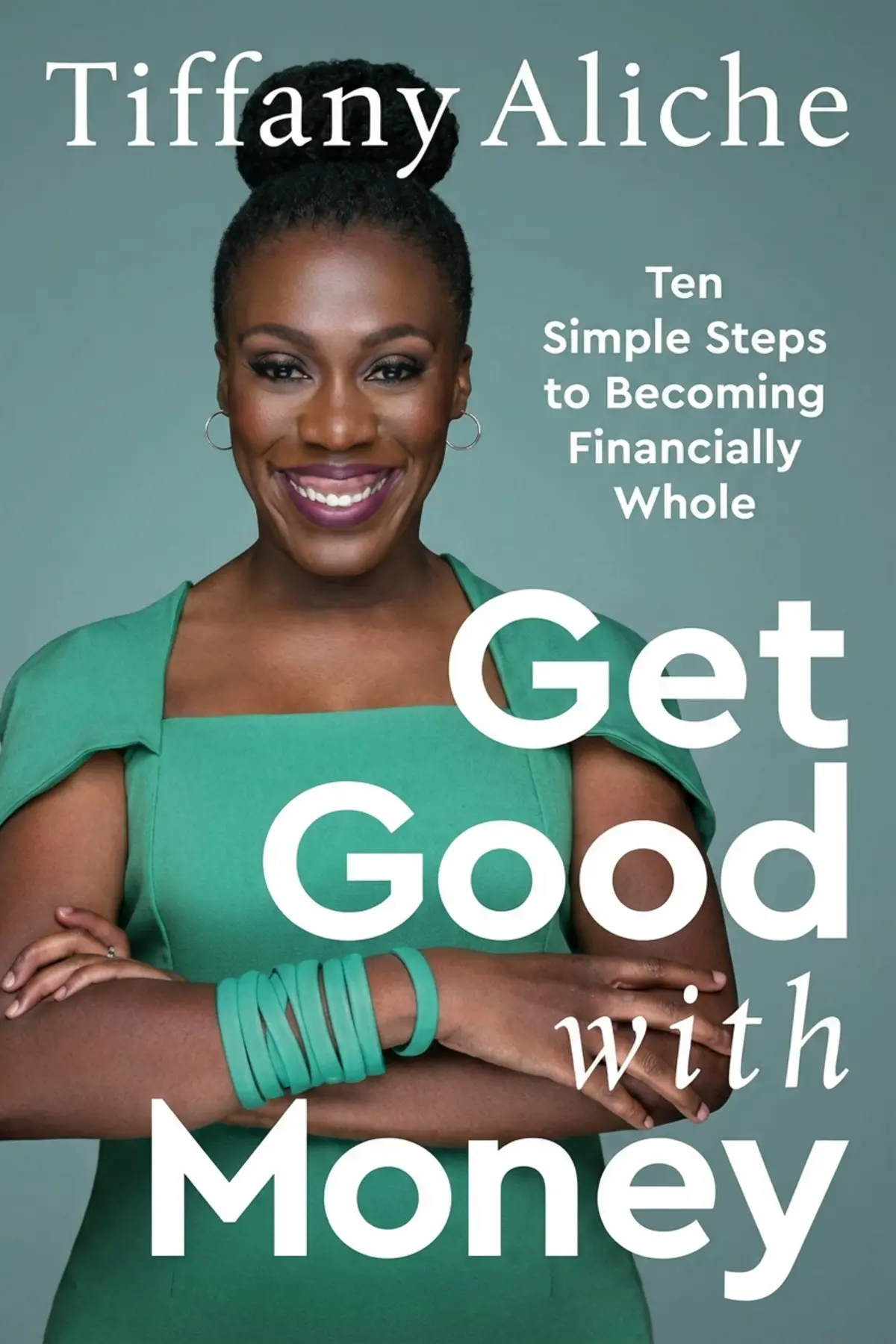
Table of Content
1. Introduction
59 sec
Many people earn a decent living and still feel one bad month away from trouble. In Get Good with Money, Tiffany Aliche describes how she went from that worry to real security. She was a former preschool teacher with good savings until a recession and a financial scammer cost her her job and left her deep in debt. Climbing out, she built a plan around what she calls financial wholeness, a state where every part of your money works in sync for you.
She says her ten steps have since helped over a million women to save money and to clear millions of dollars in debt. The thread running through them is simple. Security comes from ordinary steps taken in order. The early steps make you stable: budget, savings, debt, credit and income. The later steps grow and protect what you have. By the end, you will know how to read your own numbers and which step to start with.
2. Spot the money habits you inherited
1 min 35 sec
Long before you open a spreadsheet, something else is already making your money decisions. Aliche starts with a short writing exercise that brings it into view, and with a change in how you see yourself that alters the choices that follow.
3. A budget that tells you yes
1 min 44 sec
Most people hear the word budget and think of everything they will have to give up. Aliche sees it the opposite way. Three letters on your expense list show whether your real problem is your income or your spending.
4. Build a cushion with a noodle budget
1 min 41 sec
A small animal in the park handles hard times better than most people do. Aliche borrows its method and adds a bare-minimum budget and four questions to ask in order whenever you are about to buy something.
5. Shrink your debt and lift your credit score
1 min 53 sec
Changing a few words in how you talk about debt can make it easier to clear. Aliche pairs that with two ways to pay it down and a credit trick named after a basketball legend.
6. Raise your income on two fronts
1 min 38 sec
Cutting costs only takes you so far before life starts to feel small. Aliche shows how to argue for a raise, when to walk away, and how a favor for friends turned into her whole career.
7. Let small, steady investing grow your future
1 min 49 sec
Many people think investing is only for those who already have money. Aliche disagrees. She offers a simple way to work out your retirement target and describes the very small amount she started with.
8. Protect what you build and plan your legacy
1 min 57 sec
Insurance feels like wasted money until the day you need it. Aliche’s last four steps cover the safety nets, the one number that sums up your progress, the people on your side, and what happens after you are gone.
9. Conclusion
1 min 08 sec
Up close, being good with money looks ordinary in Aliche’s telling. It is a budget spread across four accounts and a squirrel’s store set aside for winter. It is a list of debts with their interest rates, a side job priced at about $16 a day and $5 a month going quietly into an investment. Each piece is small. Together they become what she calls financial wholeness, where a lost job or a surprise bill is a problem you can handle and not a disaster. Her own story is the proof she offers.
The way in is modest. Tonight, write your money-in and money-out lists and work out your beginning monthly savings, without judging the number. Label each expense B, UB or C, and if cash spending wins, skip online shopping for a week. Then put one small bill on a zero-balance card and set it to pay automatically. Your goals will change as life does, and Aliche expects you to come back to the steps at each stage.
Debt, she reminds readers, is not a place. Neither was the low point she started from.
About this book
What is this book about?
Plenty of people earn a living and still feel one lost job away from disaster. Tiffany Aliche learned this the hard way. She was a preschool teacher with healthy savings when a recession and a financial scammer left her out of work and deep in debt. While climbing out, she built a formula around what she calls financial wholeness: a state where every part of your money works together for you. Her plan has ten steps. The first five make you stable: budgeting, saving, clearing debt, raising your credit score and increasing your income. The final five steps help you expand and shield your assets: investing for retirement and wealth, choosing suitable insurance, growing your net worth, assembling a money team and planning your estate. Each step comes with plain tools. Examples include expense labels that show whether you earn too little or spend too much, a bare-minimum noodle budget, four questions to ask before you buy anything, and a credit trick named after Michael Jordan. Aliche says her steps have helped more than a million women save money and pay off millions in debt. Readers get a clear order of work and a way to see which step to take first.
Book Information
Who it's for
Young professionals without savings
Young professionals who earn a salary but have no savings cushion or clear plan.
Hoping for better credit
People with credit card or student debt who want an order of steps and a better credit score.
Avoiding looking at money
Anyone who avoids looking at their money because it brings up anxiety or shame.
About the Author
Tiffany Aliche
Tiffany Aliche, known as The Budgetnista, is an award-winning financial educator. Before that she spent ten years teaching preschool in Newark, New Jersey, and she says those years shaped her focus on education. She cofounded the Live Richer Academy, an online school that helps women reach their money goals. She cohosts the podcast Brown Ambition and appears on the talk show The Real. In 2019 she helped write a New Jersey law that requires middle schools to teach financial education.
Ratings & Reviews
Ratings at a glance

What people think
Listeners find this work highly absorbing and simple to navigate, highlighting its hands-on guidance and grounded method for enhancing financial health. They value the way it empowers people to map out their budgets and resolve management struggles, with one listener mentioning how it makes intimidating themes like estate planning easier to understand. Listeners define the guide as both transformative and uplifting throughout, considering it a vital tool for anyone aiming to get good with money.
Top reviews
Claire
Ever wonder why nobody taught us how to actually handle cash in high school? Tiffany Aliche feels like the big sister I never had, breaking down complex nonsense into what she calls 'financial wholeness.' I’ve always felt overwhelmed by the idea of investing, but the way she explains it makes the goal feel achievable rather than intimidating. The 'Noodle Budget' concept is an absolute game-changer for anyone who has ever worried about an emergency. Most finance books feel like they are written for people who already have six figures in the bank, but this one is different. It’s encouraging, practical, and devoid of the usual shaming tactics you see from other gurus. I actually stayed up late reading the chapter on estate planning because she made it feel so accessible and necessary. This isn't just about getting rich; it's about being 100% whole in every aspect of your life. If you feel like you're behind, this is the book that will catch you up.
Show moreSomchai
The chapter on estate planning alone makes this worth the price of admission. Most finance books ignore what happens to your family after you're gone, but Aliche makes it feel like a standard, manageable part of the journey. In my experience, most authors in this genre are either too academic or too aggressive, but Tiffany strikes a perfect balance. She shares her own story of being both wealthy and broke, which makes her advice feel grounded in reality rather than just theory. I loved the analogy of the credit score being like a GPA—it made so much sense to my brain! The worksheets at the end of the chapters are super helpful for actually implementing what you learn instead of just nodding along. This is the first time I’ve felt like I have a real, common-sense plan for my money. It’s life-changing and I’ve already bought copies for my younger cousins.
Show moreSayan
After hearing so many finance gurus use shame as a weapon, reading this was a relief. It’s an encouraging guide that acknowledges we all make mistakes, whether we're currently broke or doing okay. Tiffany Aliche is vulnerable about her own financial journey, which makes her the perfect 'adult in the room' to explain these systems. The 10 steps are incredibly thorough and cover everything from the basics of saving to the nuances of building a legacy. I particularly appreciated the focus on short-term vs. long-term goals and how to automate your life so you aren't constantly stressed. This isn't just a book you read once; it’s a manual you keep nearby to reference as you move through different stages of life. The tone is funny and relatable, making even the boring parts of money management feel engaging. If you've been feeling overwhelmed by your bank account, start here. You won't regret it.
Show moreUdom
This book is essentially a blueprint for adulthood that should be handed out with every college diploma. The 100% whole methodology is incredibly thorough, covering everything from basic savings to setting up a trust for your kids. I’ve read a lot of personal finance books this year, but this is the only one that actually addresses what to do when you can't pay your bills. That level of awareness for people from all financial backgrounds is rare in this industry. Truth is, most experts talk down to you, but Tiffany talks with you. Her advice on mindful budgeting helped me find 'leaks' in my spending that I didn't even realize were there. The checklists are so satisfying to complete and they really help break down what can feel like an impossible mountain of tasks. It's practical, it's common-sense, and it’s genuinely life-changing for anyone willing to do the work.
Show morePawinee
Not what I expected from a typical dry finance manual! Tiffany is hilarious and her personality shines through on every page, making even the 'boring' topics like deductibles feel interesting. I felt like I was sitting down for coffee with a mentor who actually cared about my success. The 'Noodle Budget' is such a brilliant, simple way to think about your absolute baseline for survival. I also loved the focus on financial wholeness rather than just hitting a specific number in a bank account; it feels much more holistic and healthy. The worksheets in the back are practical rather than just busy work, and they helped me organize my debt repayment plan in a way that finally feels sustainable. I’m 25 and this is the first time I haven’t felt like a total failure when looking at my finances. Thank you, Budgetnista!
Show moreKiattisak
Picked this up after seeing Tiffany on a podcast and her 10-step framework is legit. To be fair, the constant use of 'sis' and 'you go girl' language was a bit much for me personally, as it felt very targeted to a specific demographic that I'm not really a part of. However, the actual meat of the book is incredible for someone who is largely incompetent with money management. It’s basically an introduction to adulthood that covers the things our parents and teachers forgot to mention. I found some of the sections on credit card basics a bit too simple, but the later chapters on setting up a trust and wealth-building were eye-opening. The book transitions from very basic to quite advanced, which can be a little jarring, but it ensures that you have a manual that grows with you as your net worth increases. Definitely a solid recommendation for anyone starting their career.
Show morePierre
Wow. I finally feel like I have a grasp on my student loans without wanting to crawl into a hole and hide. Tiffany’s conversational writing style is a breath of fresh air compared to the dry manuals I’ve tried to read in the past. She treats you like a friend while giving you a very clear, 10-step path toward financial wholeness. Not gonna lie, I was skeptical about the '100% whole' percentage system at first, but it actually helps keep you organized and motivated. Some of the advice on insurance and credit was stuff I’d heard before, but the way she structures the to-do lists makes it all feel much more achievable. It’s a great teaching tool that simplifies the 'limbo-jumbo' of the banking world. I did feel like some chapters dragged on a bit too long, but the practical tips for saving and mindful spending were worth the read. This belongs on every young adult's bookshelf.
Show moreNatnicha
Look, I’ve read my fair share of money guides, but this is the first one that felt truly inclusive. She doesn’t just talk to the 1%, she talks to the person who might be struggling to cover their premiums this month. I really valued the specific breakdown of how to improve your credit score and the simple calculations for early retirement. To be fair, if you are an advanced investor, the first half of the book will be a total skip for you. It’s very much geared toward the foundation, which is great for the general population but maybe less so for the pros. That said, the way she explains insurance and estate planning is the clearest I’ve ever seen. It’s a fantastic gift for a high school or college grad who needs to learn how the real world works. It’s engaging enough that they might actually read the whole thing.
Show moreStella
Aliche has managed to simplify the intimidating world of investing for people who are just trying to get their feet under them. Got to say, the 10-step process is very well organized and makes a massive goal feel like a series of small wins. I appreciated that she didn't just focus on 'grinding' but also on how to live a life you actually enjoy while being responsible. My only gripe is that the book is quite long and some sections feel like they could have been condensed. However, the relatability of her personal story—going from wealthy to broke—is what keeps you turning the pages. It’s a very accessible look at finances for anyone who feels incompetent in this area. It really is like having an older sister guide you through the pitfalls of the financial system. Definitely a must-read for the 20-30s crowd.
Show moreChaiwat
Frankly, this felt a bit repetitive if you’ve already mastered the basics of budgeting and credit scores. While the concept of a 'Noodle Budget' is clever for lean months, I spent a lot of time skimming through sections that felt like common sense for anyone over thirty. The book doesn't seem to quite know who its target audience is at times. One minute it's explaining what a deductible is, and the next it's diving into the complexities of custodial accounts and trusts. It’s a very comprehensive resource, don't get me wrong, but the pacing felt uneven to me. I would highly recommend this for a college graduate or someone just getting back on their feet after a financial disaster, as Tiffany is very compassionate. But if you’re looking for advanced investing strategies, you might find about 60% of this book to be stuff you already know. It’s a good foundation, just not exactly what I needed at this stage.
Show moreQuestions about this book
What is the main idea of Get Good with Money?
Tiffany Aliche argues that you can become financially whole, with every part of your money working together, by following ten steps in order. The first five build stability: budgeting, saving, clearing debt, improving credit and raising income. The last five grow and protect wealth: investing, insurance, raising net worth, building a money team and planning your estate. She built the plan after a recession and a scammer left her jobless and in debt.
How does Tiffany Aliche recommend setting up a budget?
List all your income, then all your spending, and subtract to find your beginning monthly savings. Label each expense B for bills, UB for utility bills or C for cash expenses such as groceries. If C costs the most, you are overspending. If bills dominate, you likely earn too little. Then open two checking accounts and two savings accounts, and automate deposits and payments.
What is the noodle budget in Get Good with Money?
The noodle budget is the smallest amount of money you could survive on each month. Aliche does not expect you to live on it forever. Working it out shows where you can cut back for a while, for example by cooking at home, doing your own hair and choosing free entertainment. The money you free up goes toward an emergency fund that covers at least three months of household expenses, and toward personal goals.
What is the jump like Jordan credit score tip?
Aliche named this tip after Michael Jordan. Choose a small monthly bill, such as Netflix, and charge it to a credit card that has a zero balance. Use that card for nothing else and set it to pay automatically after each statement closing date. Bringing the card’s balance back to zero every month, she says, helps your credit score rise quickly. It sits alongside her advice to keep credit use under 30 percent.
How much does Get Good with Money say you need for retirement?
Aliche’s formula is to multiply your annual expenses by 25. Stick to the 4 percent rule by withdrawing no more than 4 percent in any year, and the money should sustain your lifestyle indefinitely. She suggests investing 20 percent of your income each month through a workplace 401(k) or a Roth IRA, mixing stocks and bonds and automating contributions. She started her own investing with just $5 a month.
Featured in
Readers also enjoyed




AUDIO SUMMARY AVAILABLE
Listen to Get Good with Money in 15 minutes
Get the key ideas from Get Good with Money by Tiffany Aliche, plus 5,000+ more nonfiction titles.
- 5,000+ titles
- Listen as much as you want
- 7-day free trial
- Cancel anytime









