

A Liberated Mind: How to Pivot Toward What Matters
Steven C. Hayes
 English
Shows why anxiety is a useful warning signal and how to tell worry you can act on from worry you should set aside. It also explains how to help children cope and how to turn anxiety toward purpose.
1 min 02 sec
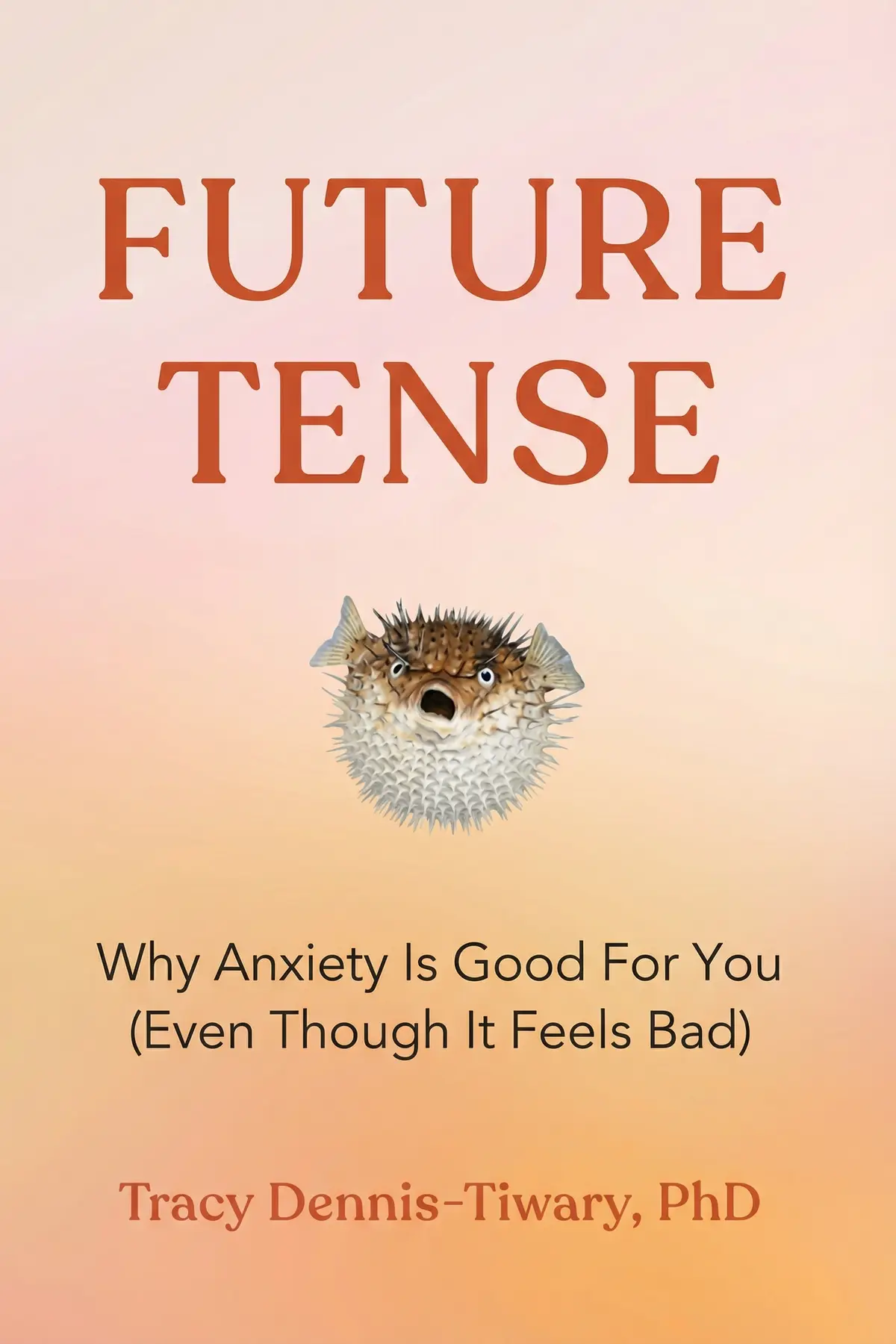
If anxiety feels like proof that something is wrong with you, the research in this book suggests otherwise: the feeling is rarely the problem, and the ways we try to escape it often are. In Future Tense, clinical psychologist Tracy Dennis-Tiwary, who leads the Emotion Regulation Lab at the City University of New York, argues that anxiety behaves more like a blunt friend than an enemy. It warns us about what could go wrong in an uncertain future, and that warning carries information we can use.
Her case is that anxiety becomes useful once we stop fighting it and start reading it: noticing what it points to, acting when we can and setting it aside when we can’t. Along the way come a stress test designed to rattle almost anyone, a study in which trigger warnings backfired, and a short writing exercise from Stanford. What it offers is a different relationship with a feeling nobody fully avoids, and practical ways to turn it into energy.
2 min 17 sec
A shy teenager who dreaded speaking in class ended up with panic attacks and no friends. The surprising part is what actually drove that slide, and many people fall into the same trap of coping with anxiety poorly.
2 min 08 sec
Volunteers faced frowning judges and a brutal counting task built to make them sweat. One short lesson beforehand changed not just how they felt but what their hearts and blood vessels did.
1 min 51 sec
A furry surprise in an attic box shows the difference between fear and anxiety. From there, one simple question separates the worry that helps you from the worry that only holds you hostage.
1 min 50 sec
Waiting for news you cannot change can swallow whole days. Suppressing the worry rarely helps, yet there is another option that research supports, and it starts somewhere far simpler than therapy.
2 min 15 sec
Warnings meant to protect readers from upsetting material turned out to have an unexpected effect. The finding raises an uncomfortable question for any parent who rushes to remove a child’s distress.
2 min 15 sec
The same feeling that drives endless handwashing also helped a scientist build her research lab. The difference lies in where the energy goes, and a simple writing exercise can help you aim it.
1 min 22 sec
Future Tense asks for a new relationship with anxiety rather than a cure for it. The feeling evolved, Dennis-Tiwary argues, to help us plan for an uncertain future, spot possible threats and recognize when our actions are good for us. The suffering in her examples comes mostly from the escapes: Kabir’s skipped meals and lost friends, the warning that raised the very distress it meant to soften, the family that never boarded a plane.
She adds one more caution, about perfectionism, which shares anxiety’s focus on the future and on getting things right. Perfectionism can drive achievement and creativity, yet it also imposes standards no one can reach and makes every failure a reason to attack yourself. Her alternative is what she calls excellencism: keeping high standards without punishing yourself when you fall short, trying new approaches and treating mistakes as lessons.
The practice can start small. The next time anxiety wakes you, ask whether it names something you can do today, and do it. If it doesn’t, take a walk and look closely at the leaves until the worry loosens. Then write about the three values that make you who you are, because that is where your anxiety has been pointing all along.
Almost everyone treats anxiety as something to get rid of: a racing heart to calm, a worry to silence, a child's fear to remove. Clinical psychologist Tracy Dennis-Tiwary argues that this battle is the real source of much suffering. Anxiety, in her view, is a signal that evolved to help us prepare for an uncertain future, and it turns into a disorder mostly when our ways of coping make it worse. Drawing on research such as a Harvard experiment with a deliberately stressful public speaking test and a 2018 study on trigger warnings, she shows that what we believe about anxiety changes how the body responds to it. She explains how to tell useful anxiety, which points to something you can do, from useless anxiety, which only traps you while you wait. Readers get concrete ways to respond: act on worries that carry information, step into the present moment when they don't, support anxious children instead of clearing every obstacle from their path, and use a short writing exercise from Stanford researchers to find the values your anxiety is pointing toward.
Professionals whose racing heart before meetings or presentations feels like a weakness.
Parents unsure whether to shield an anxious child or push them gently forward.
Chronic worriers who want a way to tell which worries deserve action and which deserve a break.
Tracy Dennis-Tiwary is an American clinical psychologist and health technology entrepreneur. She is a professor of psychology and neuroscience at Hunter College and the Graduate Center of The City University of New York, where she leads the Emotion Regulation Lab and the Center for Health Technology. Her research focuses on how people regulate emotion, especially anxiety. She was an early researcher in gamified digital therapeutics, cofounded the company Wise Therapeutics, and has published scientific articles in over a hundred peer-reviewed journals.
Listeners find that while perspectives differ on whether the tips are actionable for individuals with extreme clinical anxiety, many value the author’s perspective that anxiety is a useful signal rather than a condition that needs to be silenced. Furthermore, they note the scientific research offers a strong basis for grasping why humans evolved to experience stress and worry. Listeners also appreciate the emphasis on shifting one’s perspective, with one listener highlighting how the work "puts to rest a huge and socially pervasive myth" that being anxious is naturally harmful. They point to the author’s lucid prose, while another listener felt the explanations regarding the survival advantages of anxiety were especially beneficial.
Finally, a psychologist has the guts to say that we’ve been looking at our internal discomfort all wrong for decades! This book is a masterclass in reframing, showing that the physical sensations we hate—the pounding heart and the racing thoughts—are actually our bodies preparing us for excellence. I loved the concept of 'excellencism' versus perfectionism, as it gave me permission to be ambitious without the soul-crushing self-criticism. Even though some of the scientific descriptions got a bit dense in the middle, the overall message is so vital for our over-medicated, avoidance-heavy culture. It’s not about being fearless; it’s about using that fear as fuel to prepare for what's coming next. Truly a breath of fresh air for anyone who feels like they're constantly failing at being 'calm' in a chaotic world.
Show moreThis research-heavy volume successfully deconstructs the socially pervasive myth that a pounding heart or racing thoughts must be suppressed immediately. As someone who has always felt 'broken' because of my high-strung nature, reading about the survival benefits of vigilance was incredibly validating. Dr. Dennis-Tiwary explains complex neuroscience in a way that is accessible without being patronizing, which is a rare feat in this genre. I appreciated the nuance she brought to the discussion of social anxiety, even if I didn't agree with every single one of her takes on safe spaces. The book is less a manual and more a manifesto for a new way of living with our emotions. It’s about engagement rather than avoidance, and that is a message our current society desperately needs to hear and internalize.
Show moreEver wonder why we evolved to feel so much dread about things that haven't even happened yet? This book answers that question with brilliant clarity, positioning anxiety not as a glitch in our system, but as a feature. I loved the way the author connects anxiety to our capacity for hope and creativity, as both require us to imagine a future that isn't here yet. It’s a dense read at times, but the payoff is a completely new way of existing in the world without being terrified of your own feelings. While it might not be a 'quick fix' book, it offers something much more valuable: a long-term strategy for emotional resilience. If you've ever felt like your anxiety was a cage, this book might just show you that you've had the key all along.
Show moreAfter hearing an interview with the author on the radio, I felt compelled to explore this new perspective on my own nervous habits. Dennis-Tiwary argues convincingly that anxiety is actually a survival tool meant to help us navigate an uncertain future. This mindset shift is incredibly empowering because it moves the focus away from 'fixing' an illness toward listening to what our bodies are trying to tell us. I particularly appreciated the distinction between useful and useless anxiety, which helped me identify when to take action and when to just let go. My only gripe is that the book leans heavily on studies involving children and parents, which didn't always feel applicable to my life as a single professional. Still, the core message about reframing our internal discomfort as vital information is a game-changer for anyone tired of fighting their own brain.
Show moreIn my experience, most self-help books try to 'fix' you, but Dennis-Tiwary argues that the feeling itself isn't the problem at all. She writes with a clear, academic authority that makes the research feel grounded and trustworthy rather than just another influencer’s opinion. I was particularly struck by the idea that anxiety and hope are two sides of the same coin because they both require us to look toward the future. It changed how I view my Sunday night dread; now I see it as my brain trying to help me plan for the week ahead. I did find the chapters a bit repetitive toward the end, and she could have probably made her point in about fifty fewer pages. However, the paradigm shift she proposes is important enough that I’d still recommend it to anyone who feels burdened by their own stress.
Show moreThe core argument of this book is fascinating, yet the execution left me wanting much more in terms of tangible, daily steps. Frankly, the author spends the vast majority of the chapters deconstructing why our current psychiatric models are wrong. While I enjoy a good intellectual challenge to the status quo, I picked this up hoping for a roadmap to manage my stress. Instead, I got a very detailed history of evolutionary biology and some vague advice about taking nature walks or listening to music to break a worry cycle. It feels a bit like being told how an engine works when you actually just need to know how to drive the car. It’s a smart, well-written book for sure, but it is definitely more of a theoretical treatise than a practical self-help guide for those in the thick of a crisis.
Show morePicked this up because the title caught my eye at the bookstore, and while I found the science solid, it felt heavily geared toward a specific demographic. There is a massive amount of content dedicated to parenting and how children develop anxiety, which is great for moms and dads, but less so for the rest of us. The truth is, I enjoyed the parts about the evolutionary purpose of worry, but I found the author’s tone a bit black-and-white regarding modern therapy techniques. She makes it sound like we’re all doing it wrong by trying to cope, when sometimes coping is the only way to get through a workday. It’s a light read that offers some interesting insights into survival instincts, but don't expect it to replace your therapist or provide a step-by-step recovery plan.
Show moreTo be fair, the central argument here is revolutionary, but I expected more practical worksheets or exercises given the author's background. The book is very intellectual, which I appreciated for the first half, but eventually, I started wondering when the 'how-to' part would start. There is a lot of talk about how our current strategies are 'terrible' or 'wrong,' which can feel a bit discouraging if those strategies are what you’re currently using to stay afloat. I also felt the section on medication was a bit one-sided, suggesting that almost all pharmaceutical intervention leads to a numbing of the human experience. It’s an interesting read for people with mild stress who want to rethink their relationship with worry, but it might be a bit too academic and hands-off for those looking for immediate relief.
Show moreAs someone who has relied on medication to manage chronic anxiety for years, the author's tone toward prescriptions felt a bit reductive and biased. She focuses heavily on the dangers of addiction and 'numbing out,' which ignores the reality for many of us who use meds just to reach a functional baseline. That being said, the evolutionary perspective on why we worry was genuinely enlightening and helped me stop judging myself so harshly for being hyper-aware of potential problems. The writing is polished and the stories are engaging, even if the advice to 'let it go' feels a bit simplistic at times. It’s worth a read for the scientific foundation alone, but take the clinical advice with a grain of salt if your situation is more severe than 'everyday' stress.
Show moreLook, if you are struggling with severe clinical panic or a paralyzing disorder, telling you to simply 'listen to the information' your anxiety provides feels almost insulting. The author’s stance on medication comes across as incredibly biased, as she focuses almost entirely on the addictive nature of certain drugs without acknowledging how life-saving they are for some. Not all of us are just 'worried' about a work presentation; some of us have brains that physically cannot regulate these signals without chemical help. The suggestion to just go for a walk in nature to 'let it go' is the kind of advice that makes people with chronic depression roll their eyes. I understand the goal is to reduce the stigma of being anxious, but in doing so, she inadvertently shames those of us who need more than just a mindset shift to survive the day.
Show moreDennis-Tiwary argues that anxiety is a useful signal that evolved to help us prepare for an uncertain future. It turns into a disorder mainly when our ways of coping, such as avoidance and withdrawal, make it worse. Instead of trying to eliminate anxiety, she suggests getting curious about it, acting on what it tells us and setting it aside when it offers nothing we can act on.
Ask whether the anxiety gives you something to act on now or soon. Worry about a presentation, a child’s problem at school or a needed home repair points to a specific issue you can address, so it is useful. Waiting for biopsy results, when no action is possible, is the useless kind. For that, Dennis-Tiwary advises taking a break and immersing yourself in the present, for example with a walk in nature.
In a 2013 Harvard experiment described in the book, socially anxious people were taught before a stressful public speaking and math test that anxious reactions are signs of readiness. Afterward they said they felt less anxious and more confident, with steadier heart rates and blood vessels that were more relaxed. Dennis-Tiwary concludes that changing beliefs about anxiety changes the body’s response too.
Dennis-Tiwary warns against snowplow parenting, removing every obstacle from a child’s path. Like the immune system, children learn to cope by facing challenges. She suggests acknowledging a child’s distress, telling them they can handle it and then going ahead, such as sending a reluctant child to school anyway or building up from short visits with trusted guests to longer ones.
Dennis-Tiwary recommends self-affirmation, a technique from Stanford researchers. From a list of eleven life areas, such as humor, creativity, athletics and relationships with friends and family, choose the three that best define you. Write about each until you run dry, then keep writing. Those values show where to aim your anxiety, which she says then works as courage and momentum.
Steven C. Hayes




Deborah Gruenfeld




Anthony Pratkanis

AUDIO SUMMARY AVAILABLE
Get the key ideas from Future Tense by Tracy Dennis-Tiwary, plus 5,000+ more nonfiction titles.









