

13 min 44 sec
Available in: English
Franchise Your Business: The Guide To Employing The Greatest Growth Strategy Ever
By Mark Siebert
Shows business owners how to judge whether their company can be franchised and how to choose a franchise structure. It also covers how to protect the brand and keep independent franchisees committed as the network grows.
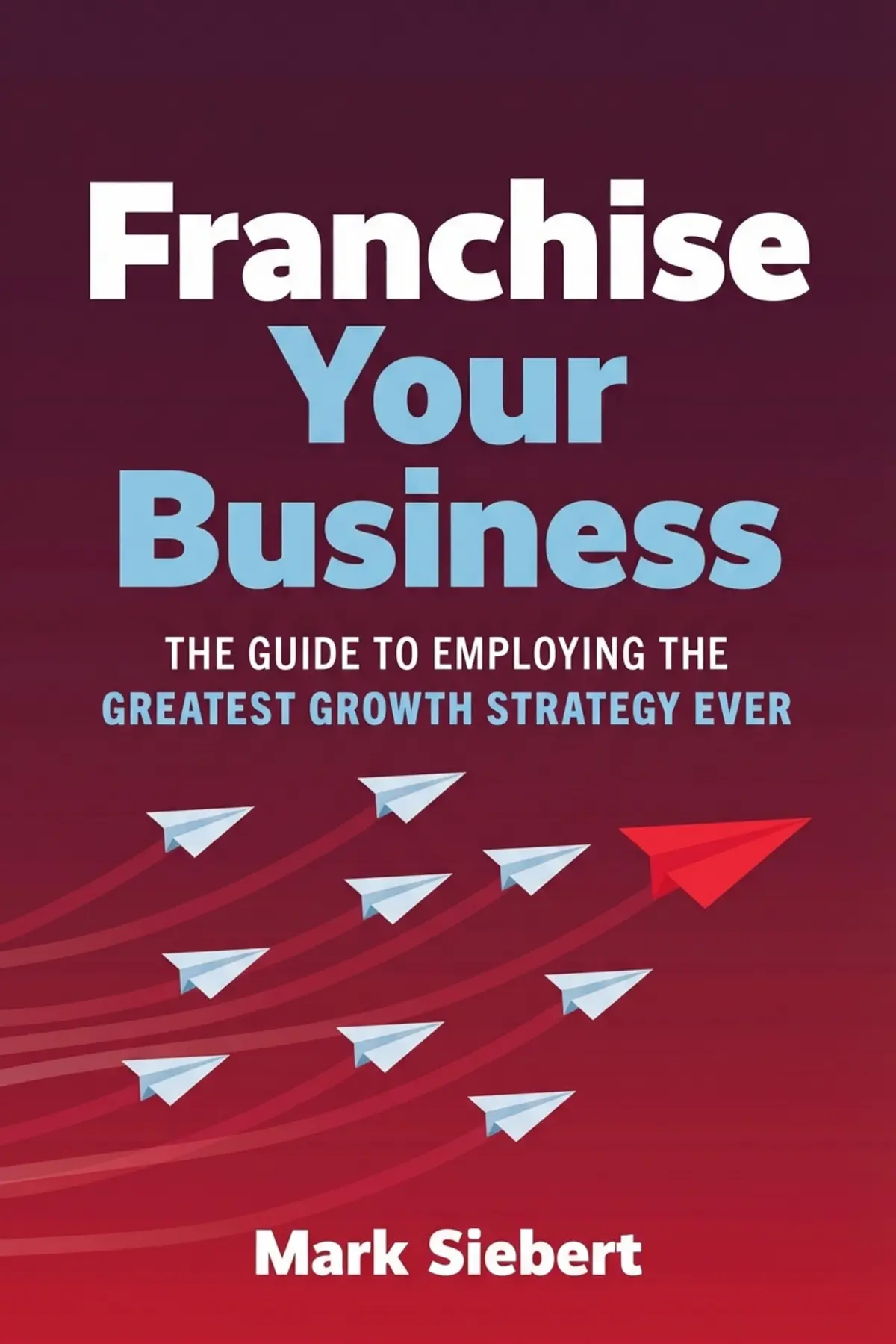
Table of Content
1. Introduction
56 sec
If your business works and you want it in ten more towns, the usual route is to borrow heavily and hire managers who have nothing of their own at stake. In Franchise Your Business, franchise adviser Mark Siebert argues for another route. Let other owners pay to copy your model, run it with their own savings on the line, and grow faster than you could alone.
Siebert, who has advised hundreds of franchise companies, adds a warning: this route fits only some businesses and some founders. His case rests on one idea. Franchising works when both sides gain. The franchisee gets a proven system and support, and you get capital, committed managers and speed, but only if your model can be taught quickly and you are willing to lead people you cannot simply command.
What follows is a way to test your own business against that idea, pick a structure, and keep a growing network loyal and on brand.
2. Understand the deal that makes owners want in
1 min 37 sec
Starting a business from nothing is hard, yet thousands of ambitious people choose to pay someone else for the right to copy theirs. The reasons reveal what you must offer before anyone signs.
3. Grow faster on other owners' money and drive
1 min 35 sec
Opening your own new branches looks like the safe way to expand. Siebert argues it quietly drains your cash, slows you down and puts the wrong kind of person in charge of each location.
4. Check your model can be taught in three months
1 min 44 sec
A business can be profitable, loved by customers and still be a poor franchise. Two plain tests decide it, and a plate of barbecue shows why even a great product may not travel.
5. Make sure franchising fits your plans and temperament
1 min 32 sec
A business can pass every test and still fail as a franchise because of the person at the top. Siebert’s questions about your future and your character are harder to answer than they sound.
6. Pick a structure that matches the support you give
1 min 48 sec
McDonald’s, KFC and international chains grew through very different arrangements. The right one for you depends less on ambition than on a number most founders never calculate before they start.
7. Protect your brand in branches you do not run
1 min 45 sec
You cannot easily fire a franchisee or tell them how to run their day. A customer who slipped on snow outside a fast food restaurant shows what can protect you anyway.
8. Keep franchisees loyal by explaining, answering and listening
1 min 40 sec
The branches that look like they need you least may be the ones you can least afford to ignore. Siebert’s view of franchise relationships turns a common time-saving habit into a mistake.
9. Conclusion
1 min 07 sec
Siebert’s book treats franchising as growth you share. You give other owners a proven system, a known name and continuing help. They give you their capital, their effort and a personal stake in the result. When that exchange is fair and clear, one successful shop can spread far faster than its founder could manage alone. When it is lopsided, or the model cannot be taught, or the founder cannot lead, the same structure becomes an expensive tangle of partners you cannot fire.
The practical path follows from that balance. Before signing anyone, check whether a newcomer could learn your business in about three months, and whether your product would sell where tastes differ. Choose the structure that matches the support you can truly give. Put every responsibility, down to who clears the snow from the parking lot, into a manual tied to each contract. Then keep explaining your decisions and asking for feedback, including from the owners who seem to need you least.
A franchise spreads only as far as the people running its branches believe in it.
About this book
What is this book about?
Many owners with one thriving business want more locations but face the same obstacles: expensive loans, slow expansion and hired managers with little at stake. Mark Siebert presents franchising as a different way to grow. Other owners pay to copy a proven model, put their own money into each branch and take on the daily work of running it. Siebert is clear that the strategy suits only some businesses and some founders. He sets out the tests a company must pass, including a clear edge over competitors and a model simple enough to teach in about three months. He also covers the personal qualities a franchisor needs, such as leadership and salesmanship. From there the book turns practical. Readers learn the three main franchise structures and their trade-offs, illustrated with McDonald's, Pizza Hut and KFC. They see how an operations manual protected Burger King in court, and how training, honest communication and regular feedback keep a network loyal and on brand.
Book Information
Who it's for
Owners wanting more locations
Owners of a profitable business who want more locations without taking on heavy debt.
Founders planning an exit
Founders planning to sell within a few years who want to raise their company's value faster.
Weighing a franchise purchase
Professionals weighing whether to buy into a franchise and wanting to see the deal from both sides.
About the Author
Mark Siebert
Mark Siebert is the founder and CEO of iFranchise Group. He has advised hundreds of franchise companies in more than 30 countries, with clients including McDonald's, Subway and Nestlé, and he speaks often at franchise events around the world. He has also lectured at Northwestern University and the University of Chicago. Franchise Your Business, his guide for owners considering franchising, became a number one bestseller in its small business franchise category.
Ratings & Reviews
Ratings at a glance

What people think
Listeners view this guide as a vital and all-encompassing tool, often referring to it as a "bible" for those seeking to grow their companies through franchising. Furthermore, they appreciate the hands-on, sequential instructions for assessing expansion possibilities and handling the intricacies of franchise management. The author's extensive background in the field is widely praised, with one listener pointing out that the shared wisdom helped them steer clear of expensive blunders related to territory and fees with their first franchise owners. Additionally, the depth of the material creates a professional blueprint for making educated choices regarding the strengths and weaknesses of various growth strategies.
Top reviews
Elias
This book is basically a masterclass in professional expansion. I was looking for a clear roadmap to help scale my boutique fitness studio, and Mark Siebert delivered a guide that feels incredibly buttoned-up and professional. To be fair, it is a lot of information to process at once, but the way he breaks down the pros and cons of different growth models is invaluable. The text explains why certain businesses thrive under a franchise model while others should stick to company-owned stores. I appreciated the deep dive into setting up operations and crafting a marketing strategy that actually works for new partners. It’s a dense read, but every chapter provides actionable steps that keep you from making rookie mistakes. This truly feels like the definitive guide for anyone serious about the industry.
Show moreUbolwan
Wow, Siebert’s advice likely saved me tens of thousands of dollars in future legal headaches and lost revenue. I was right on the verge of offering my first few franchise owners massive territories and waived fees just to get them to sign. After reading the chapter on avoiding costly errors with early adopters, I completely overhauled my strategy. The book serves as a practical manual for protecting your brand while still providing the tools your partners need to succeed. It’s frankly refreshing to see an expert be so honest about the risks involved in this industry. If you want to expand ethically and professionally, you need this on your desk. It’s easily the most comprehensive resource I have found on the subject so far.
Show moreLeo
Ever wonder if your local success story could actually work on a national stage? This book provides the exact framework needed to answer that question with total confidence. Mark Siebert leverages nearly forty years of experience to walk you through every critical step of the franchising process. I found the sections on evaluating a business’s readiness particularly enlightening because they don't just sugarcoat the process. He highlights the best practices of successful brands and contrasts them with common failures in a way that is both analytical and easy to follow. Not gonna lie, I was worried it would be too theoretical, but it’s actually packed with practical insights. It really is the 'bible' of franchising for a reason. Highly recommended for any serious business owner.
Show moreLincoln
Finally sat down with this updated edition and it quickly became clear why Mark Siebert is the top name in this field. The book is an essential resource that covers the entire landscape of scaling a business through third-party investment. I particularly liked the focus on ethical franchising and how to ensure your franchisees stay successful over the long haul. It provides a professional roadmap that feels both high-level and granular at the same time. The distinction between various expansion models was a major eye-opener for me. Instead of just pushing one way of doing things, the author gives you the tools to make the right decision for your specific idiosyncratic ideas. This is a must-read for anyone thinking about their next big move.
Show moreWin
Look, if you are serious about scaling, you cannot afford to skip this comprehensive manual on growth strategies. I’ve read a few other books on the topic, but nothing else comes close to this level of detail and industry expertise. Mark Siebert does a fantastic job of making complex legal and operational topics accessible to the average entrepreneur. The book really helps you go in with both eyes open so you don’t get blindsided by the complexities of franchise law. I found the updated second edition to be especially helpful with its new insights into modern marketing. It feels like having a consultant in your pocket throughout the entire journey. This is the only book on franchising you will ever actually need to buy.
Show moreNoah
In my experience, most business guides gloss over the nitty-gritty details of legalities and operational setup to focus on 'inspiration.' Siebert does the opposite, getting right down to the essentials of what makes a franchise system actually function and scale. He respects the entrepreneur’s vision while providing a rigorous framework to test whether that vision is truly franchisable. The roadmap provided is thorough, actionable, and backed by decades of real-world success. I read it cover to cover and then went back to highlight specific strategies for our upcoming rollout. It’s an inspiring read precisely because it gives you the tools to succeed rather than just vague encouragement. Truly an expert guide that every business owner should have on their shelf.
Show moreSomsri
As someone navigating the early stages of business growth, I found this volume to be incredibly thorough, though perhaps a bit dry in sections. It’s written more like a textbook than a casual business read, which can make it difficult to find quick answers if you are in a rush. However, the depth of expertise is undeniable. Mark Siebert covers everything from evaluating your business potential to the nitty-gritty of legal requirements. Truth is, I had to read several chapters twice just to absorb all the nuances of his advice. It raised questions I hadn’t even thought to ask yet, especially regarding long-term support for franchisees. It’s a solid resource for those who want a professional roadmap and aren't afraid to put in the study time.
Show moreConnor
The section regarding the pros and cons of company-owned versus franchised units was a major revelation for my leadership team. We had been debating these options for months without any clear data or expert guidance to lead the way. Siebert’s book changed that immediately by laying out the financial and operational realities of each path. My only minor gripe is that some of the case studies feel a little dated, but the core advice remains timeless. Got to say, the chapter on setting up royalty structures and territory rights was worth the price of the book alone. It is a buttoned-up guide that treats the reader like a serious professional rather than a beginner. I recommend it to anyone who wants to avoid the typical pitfalls of rapid expansion.
Show moreVilaiporn
Not many books manage to be both a high-level strategic guide and a granular operational manual at the same time. This one pulls it off, providing a comprehensive look at the world of franchising from the perspective of an industry titan. Frankly, the writing is a bit dry, and it requires a significant time commitment to get through the whole thing. But the payoff is a deep understanding of how to protect your brand and support your partners. It helped me realize that our current operations needed more documentation before we were ready for the next step. If you are looking for a quick fix, this isn't it. But if you want a professional, ethical, and successful expansion, this is your primary resource.
Show moreSiriporn
To be fair, the sheer volume of information here can feel overwhelming if you’re just looking for a quick checklist or simple bullets. My business partner wanted something light that he could skim during his commute, but this is much more of a heavy academic text. It is exceptionally thorough, but the layout makes it hard to extract specific answers without committing to the entire chapter. I found the sections on marketing strategies to be useful, but the writing style is very dense and technical. It’s a good book for a library, but maybe not for the entrepreneur who is already stretched thin and needs fast breakdowns. It definitely lives up to the 'comprehensive' label, but it wasn't exactly the easy-to-read guide we were hoping for.
Show moreQuestions about this book
What is Franchise Your Business by Mark Siebert about?
The book explains franchising as a way to grow a successful business by letting other owners copy it under contract. Siebert argues it can need less capital, bring more committed managers and expand faster than opening company-owned branches. He also shows how to judge whether a business suits franchising, how to pick a structure, and how to protect the brand and keep franchisees loyal.
What makes a business suitable for franchising according to Mark Siebert?
Siebert names two conditions. The business must appeal to potential franchisees, usually through unique selling points such as Domino’s focus on delivery, or through strong marketing and support. It must also be easy to reproduce, since a new franchisee has roughly three months to learn the whole operation. He adds that products must suit local tastes, which is why American barbecue rarely franchises well.
What are the three ways to structure a franchise?
Siebert describes single-unit franchising, where each franchisee opens one unit, as McDonald’s did. Area development gives one developer exclusive rights to open a set number of units in a territory, an approach linked to Pizza Hut and KFC. Sub-franchising, common abroad, lets another party act as franchisor in a region for a fee. Single-unit networks need the most support from the founder.
How do franchisors keep quality consistent across branches?
Siebert recommends a quality control system. Choose franchisees with both business skill and a strong work ethic. Write a franchise operations manual and make it part of each contract, which helped Burger King avoid liability when a customer slipped on snow outside a branch. Then keep training going, using online videos, regional meetings and annual conventions, instead of relying on a single course.
How can I apply the ideas in Franchise Your Business?
Start by testing whether a stranger could learn your business in about three months. Ask where you want to be in five years and whether you can lead and persuade independent owners. Match the franchise structure to the support you can offer, set responsibilities in a binding manual, and stay in regular contact, answering quickly and asking for feedback even from your best-performing franchisees.
Readers also enjoyed

Alibaba: The House That Jack Ma Built
Duncan Clark



7 Powers: The Foundations of Business Strategy
Hamilton Helmer


Bad Blood: Secrets and Lies in a Silicon Valley Startup
John Carreyrou
AUDIO SUMMARY AVAILABLE
Listen to Franchise Your Business in 15 minutes
Get the key ideas from Franchise Your Business by Mark Siebert, plus 5,000+ more nonfiction titles.
- 5,000+ titles
- Listen as much as you want
- 7-day free trial
- Cancel anytime









