
12 min 19 sec
Available in: English
Fluent In 3 Months: How Anyone at Any Age Can Learn to Speak Any Language from Anywhere in the World
By Benny Lewis
A plan for adults who want to speak a new language within months. Set a realistic level, start talking on day one with natives near home, and leave grammar until conversation stops improving.
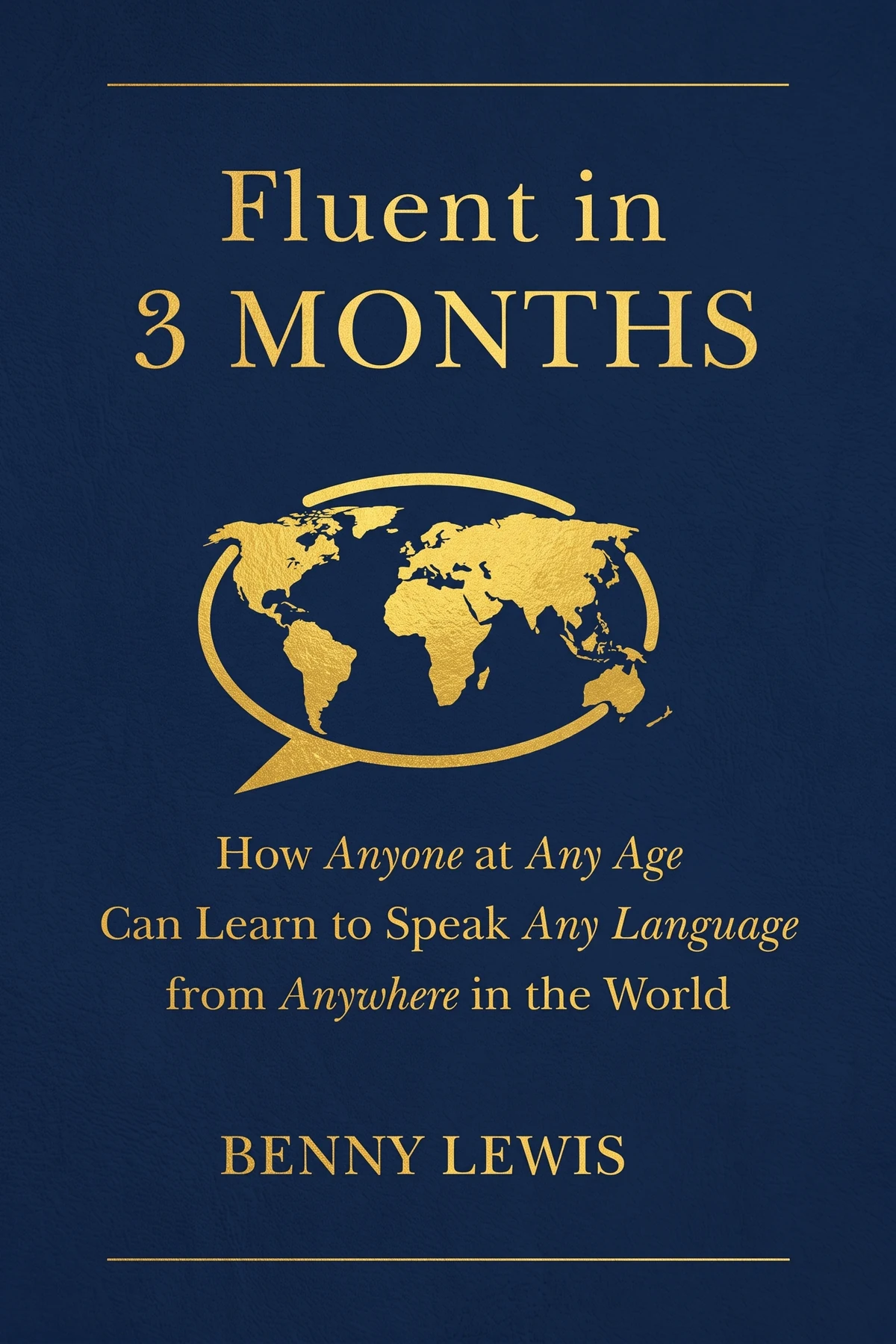
Table of Content
1. Introduction
1 min 05 sec
Most adults who want a second language get stuck in the same place: years of grammar drills, and they still point at the menu when they travel. In Fluent In 3 Months, Benny Lewis argues that the fix is to reverse the usual order. He spoke only English until his early twenties and now speaks more than twelve languages. His advice is to speak from the first day with whatever words and gestures you have, and to leave grammar until you can already hold a conversation.
His case rests on one simple claim. You learn a language by using it, and you can start using one sooner and closer to home than you think. Along the way he takes apart the belief that some people have no talent for languages. He makes a French word stick with the help of a cartoon cat, and he explains why moving abroad can slow you down. What you get is a plan for the next three months: a realistic level to aim for, people to practice with in your own city, and a clear signal for when to open the grammar book.
2. Set a goal you can reach in three months
1 min 43 sec
Most people who quit a language never failed at the language itself. They were beaten by a belief about talent and by a goal so large it gave them nothing to do on a Tuesday evening.
3. Make new words stick with images and flashcards
1 min 42 sec
Saying a word a hundred times feels like hard work, yet half of it is gone within days. A cartoon cat in a business suit offers a far quicker route into memory.
4. Start speaking on day one, even with gestures
1 min 41 sec
A tourist with no words of the local language still got his dinner, and the waiter laughed while serving it. The episode shows what counts as speaking, and why beginners can start sooner than they think.
5. Find native speakers without leaving your city
1 min 47 sec
Moving abroad sounds like the fastest route to a new language, yet many who make the move end up with a circle of friends who all speak their own language. Lewis argues the better classroom is closer to home.
6. Save grammar for after you can chat
1 min 38 sec
Learners of German can spend hours on three small articles and still find them a blur. Lewis says the rules are not the problem. What goes wrong is when they arrive, and he gives a clear signal for the right moment.
7. Keep your languages from blurring together
1 min 37 sec
You reach for a word and your brain hands you the wrong language. A mustache in Egypt and the position of your tongue both turn out to help, along with one firm rule about when to start the next language.
8. Conclusion
1 min 06 sec
Lewis’s whole method is a change of order. Most learners spend years getting ready to speak. He asks them to speak first and prepare as they go. Myths about talent, plans to move abroad and early grammar drills all put off the one thing that builds fluency, which is talking with real people. Remove those delays and three months becomes a reasonable time frame for a useful level.
Getting started costs little. Lewis recommends free courses such as Duolingo, which he rates as good as or better than expensive online programs. He also likes travel phrasebooks from Lonely Planet or Berlitz, whose short grammar overviews are enough for the early weeks. Pick the level you need and give it daily hours. Write a short cheat sheet with a greeting and your name, then find one person nearby who speaks the language and use it, with gestures when the words run out. Grammar can wait until your conversations stop improving.
The waiter who laughed at a tourist doing a chicken impression still brought the right dinner. Being understood, clumsily and early, is where every new language begins.
About this book
What is this book about?
Many adults spend years in language classes and still freeze when they try to order a coffee abroad. Benny Lewis spoke only English until his early twenties, and he argues that the usual method has things in the wrong order. Learners prepare for a long time before they speak, study grammar before they have words, and assume they must move abroad to practice. Lewis reverses that order. He takes apart the myth that some people lack a gift for languages and replaces vague ambitions with a target level and daily hours. He shows two memory techniques that make vocabulary stick quickly, and he argues for speaking from the first day, using gestures and a cheat sheet to fill the gaps. You can find native speakers without leaving your own city. Grammar and exams come in only once you can already hold a conversation. Readers come away with a concrete three-month plan. It covers which level to aim for, how to make words stay, where to find people to talk to, when to open the grammar book, and how to keep one language from blurring into the next.
Book Information
Who it's for
Long-time learners still stuck
Adults who studied a language for years and still cannot hold a conversation.
Needing a language fast
Professionals and students who need a working level for travel, work or a move within months.
Doubting their language talent
People who believe they have no talent for languages and want a realistic place to start.
About the Author
Benny Lewis
Benny Lewis was born in Cavan, Ireland, and spoke only English until his early twenties. After college he moved to Spain, grew frustrated that he could not speak Spanish, and gave up traditional learning methods. He now speaks more than twelve languages, including Mandarin Chinese and American Sign Language. His blog, Fluent in 3 Months, documents his attempts to learn languages in short spans. He also wrote the Language Hacking course series, has spoken at two TEDx conferences, and was named Traveler of the Year by National Geographic in 2013.
Ratings & Reviews
Ratings at a glance

What people think
Listeners find this language acquisition guide remarkably beneficial, offering practical pointers and functional details that conserve time by focusing on primary learning objectives. This well-crafted resource is simple to follow and inspires continued study, as one listener highlights its focus on a conversational technique for starting any language. They value the thoroughness of the material, with one person noting the helpful companion site for current information, and generally view the purchase as a great value.
Top reviews
Koi
Finally got around to reading Benny’s book after following his blog for a bit. The core message of speaking from day one is terrifying but absolutely essential for anyone who feels stuck in the grammar phase. I used to think I needed a massive vocabulary before opening my mouth, but that day never actually arrives. His advice on using Skype and finding native speakers online really bridges the gap for those of us who can't travel. While his definition of fluency is a bit looser than what you’d find in a dictionary, it’s much more practical for real-life communication. Truth is, the book makes you realize that most of our excuses are just mental hurdles. It’s a fast, encouraging read that prioritizes social connection over boring tables of verb conjugations. Highly recommended for beginners.
Show moreSamroeng
Wow, this totally flipped my perspective on what it means to actually speak a language. I used to spend hours on apps like Duolingo without ever feeling like I could hold a conversation. Benny Lewis challenges you to embrace the 'beginning stage' and stop waiting for perfection. His approach to using 'bridge' words and focusing on the most common vocabulary is incredibly efficient. To be fair, the title is a bit clickbaity, but the content inside is genuinely helpful for overcoming social anxiety. I’ve already started using his tips for my Italian studies and the results are night and day. If you want to stop studying and start living the language, get this book. It is worth every penny.
Show moreLayla
Ever wonder why you can spend years in a classroom and still not order a coffee? This book answers that question by exposing the flaws in traditional education methods. Benny Lewis promotes a conversational method that is all about prioritizing your specific goals rather than following a rigid curriculum. Personally, I loved the focus on digital resources like Italki and Anki, which have changed the game for home learners. The writing is incredibly easy to understand and keeps you motivated through the tougher concepts. It’s less about being a 'genius' and more about being brave enough to sound like a toddler for a few weeks. It truly saves time by cutting out the fluff. Best investment I've made this year.
Show moreVarinee
As someone who struggled with high school Spanish for years, this book was a breath of fresh air. It shifts the focus from academic memorization to actual human interaction, which is what language is for. The author's enthusiasm is infectious throughout the chapters, even if he repeats himself occasionally. I particularly appreciated the sections on mnemonics and visualization for memorizing vocabulary quickly. The companion website is also a great touch, providing updated links to resources that are actually useful in the digital age. My only gripe is that it glosses over the harder parts of grammar which you eventually do need to reach higher levels. Still, it’s a fantastic motivator to just start talking.
Show moreTuck
The chapter on language myths alone is worth the price of admission for any adult learner. I’ve always told myself I lacked the 'language gene' or that I was simply too old to start something new. Lewis deconstructs these excuses with a direct, conversational style that feels like getting a pep talk from a friend. To be fair, his method of 'language hacking' is more about psychology than linguistics, but that's exactly what I needed. He provides a wealth of practical information on finding language exchange partners without spending a fortune. I wish there was more technical advice on specific language families, but the general principles are solid. It's a great tool for building the confidence to be imperfect.
Show moreTalia
To be fair, Benny Lewis is a polarizing figure in the polyglot world, but this book is undeniably practical. He doesn't promise a magic pill; he promises a lot of hard work and embarrassment, which is at least honest. I found his tips on 'mini-missions' to be a great way to break down the massive task of learning a language. The book is well-written and serves as a comprehensive guide to the modern landscape of language learning tools. Some parts feel a bit like an advertisement for his own brand, but the core advice is solid. It helped me realize that my memory isn't bad—my methods were just outdated. Definitely worth the investment for a beginner.
Show moreKanchana
I honestly didn't expect to find so much value in the online companion materials mentioned throughout the chapters. The book itself is a quick read, but it serves as a map to a much larger world of resources. Lewis has a very direct way of writing that cuts through the academic nonsense often found in this genre. My next attempt at French will definitely incorporate his 'speak from day one' philosophy. It's scary. While I think he underplays the importance of reading and writing, his focus on verbal communication is a necessary correction for most of us. It’s an empowering read for anyone who has ever felt like a total failure in a high school language class. This works. Seriously.
Show moreCee
Look, this isn't a textbook, so don't go in expecting verb conjugation charts or vocabulary lists. It's more of a self-help guide for people who are scared to make mistakes in public. The central idea—speak from the first day—is a good one, though it’s easier said than done for extreme introverts. While I found the section on 'hidden' immersion very clever, some other parts felt like filler. It’s a bit repetitive, and the writing style can be a little scattered at times. I’ve read a few polyglot books, and this one sits right in the middle for me. It’s useful for a quick kickstart to your motivation, but you’ll need other materials to actually master the language.
Show moreAnucha
Is it worth the hype? Frankly, I’m not so sure. The book feels like a bloated version of his website posts, and the title is clearly a marketing gimmick designed to sell copies to desperate people. You aren't going to be 'fluent' in three months unless your definition of fluency is barely scraping by with a phrasebook. To be fair, he does admit this early on, but the branding still feels a bit dishonest. The tips are fine, but many are just common sense or things you can find for free on any language learning forum. I’m glad some people find it inspirational, but for a serious student, it lacks academic depth. If you want a structured method with scientific backing, you should probably look elsewhere.
Show moreOak
Put this book back on the shelf immediately and go find 'Fluent Forever' instead. This entire book is essentially a collection of recycled blog posts that prioritize speed over quality. The author’s definition of 'fluency' is so watered down that it becomes almost meaningless for a serious student. Not gonna lie, the marketing sleight of hand here is pretty frustrating for anyone who has put in real work. He dismisses grammar and deep study in a way that feels irresponsible for difficult languages like Arabic or Mandarin. It’s all about 'hacks' and shortcuts that won't help you read a newspaper or watch a movie. Save your money and just browse his website for free if you really want his tips. Very disappointed.
Show moreQuestions about this book
What is the main idea of Fluent In 3 Months?
Benny Lewis argues that adults learn languages fastest by using them from the first day. He recommends setting a realistic target level, learning words with memory techniques and speaking with native speakers right away, with gestures and a cheat sheet to fill the gaps. Grammar comes later, once you can hold a conversation. He believes most learners can reach a useful level in about three months.
Do you need to live abroad to learn a language fast?
Lewis says no, and that staying home is often better. Moving abroad adds a new culture and the stress of settling in, and many people end up with friends who speak their own language. At home you can host travelers through hospitality exchange networks, find people from abroad who live nearby, or politely start conversations in their native language, as polyglot Moses McCormick did at a shopping mall.
When should I start learning grammar according to Benny Lewis?
Only after you can hold a simple conversation, at a level such as A2 or B1, and feel your progress slowing. Lewis argues that grammar without vocabulary is useless and frustrating, as German learners can find when they struggle with der, die and das. Once you are conversational, the rules make sense. At that stage he suggests taking an exam one level above your current one.
How does Fluent In 3 Months suggest memorizing vocabulary?
Lewis uses two techniques. The keyword method links a new word to a vivid image, such as remembering the French gare, meaning station, by picturing Garfield in a suit rushing for a train. Spaced repetition uses flashcards: words you remember go to the bottom of the deck and words you forget go to the top, so each day starts with the hardest ones.
Can I learn two languages at once?
Lewis advises against adding a new language before the first is secure. His rule of thumb is to reach level B2 first, since at B1 a language can slip away quickly, sometimes by a whole level. To keep languages apart, he suggests learning how each one sits in the mouth. French is spoken toward the front and Spanish further back, which makes mix-ups less likely.
Readers also enjoyed

AUDIO SUMMARY AVAILABLE
Listen to Fluent In 3 Months in 15 minutes
Get the key ideas from Fluent In 3 Months by Benny Lewis, plus 5,000+ more nonfiction titles.
- 5,000+ titles
- Listen as much as you want
- 7-day free trial
- Cancel anytime









