

A Life Decoded: My Genome: My Life
J. Craig Venter
 English
 ไทย
A child's eyewitness account of the Khmer Rouge years in Cambodia, showing how a regime that preached equality destroyed families, and how one family's lies, silence and sacrifices kept some of its children alive.
1 min 07 sec
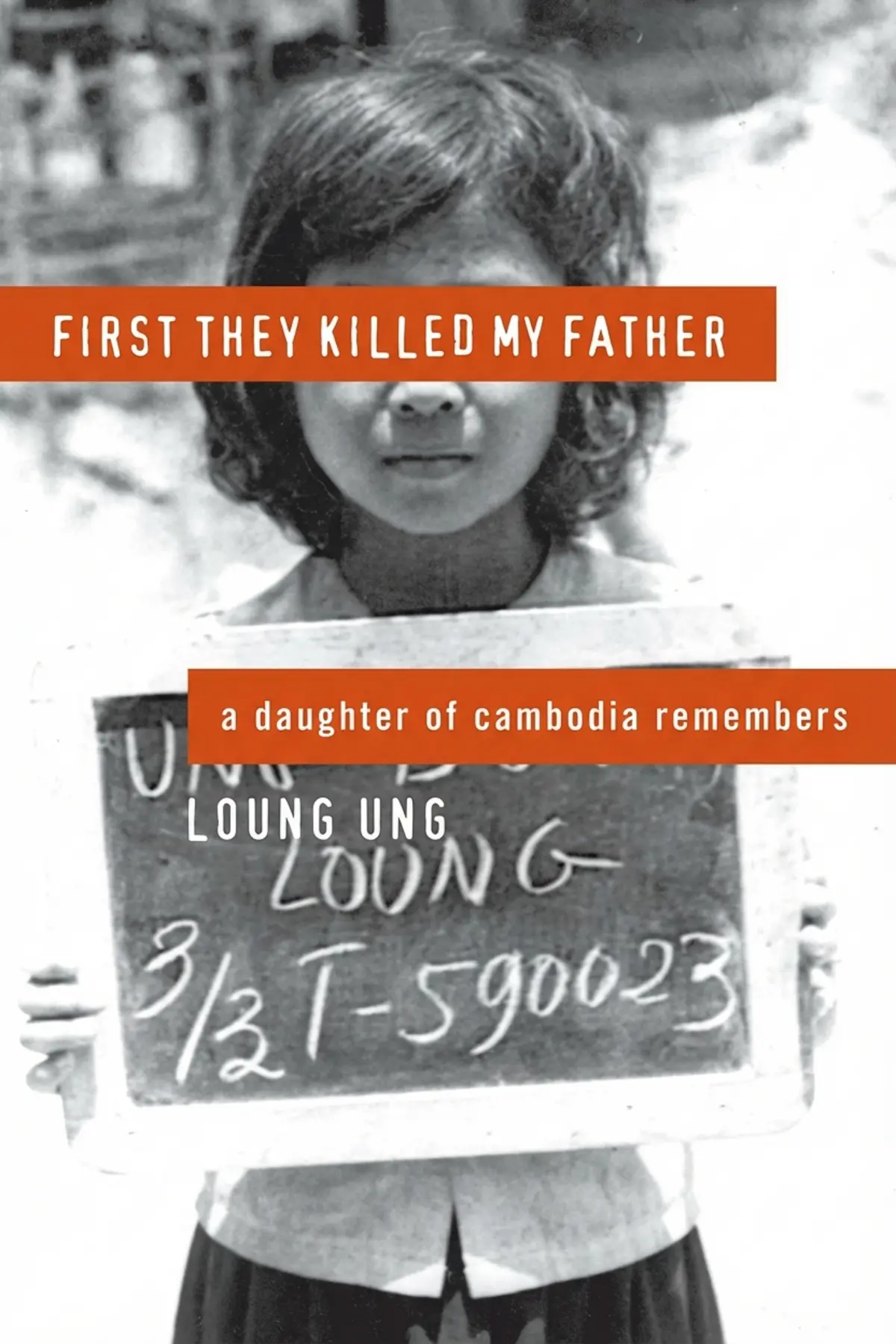
Most people know the Khmer Rouge years in Cambodia only as a death toll, and even that figure is uncertain, because estimates of the victims still vary widely. In First They Killed My Father, Loung Ung replaces the statistic with one family: her own, a household the regime set out to destroy between 1975 and 1979. She was five when it began.
Her memoir shows how a government that preached equality sorted people for death by their jobs, their schooling, their address and their ethnicity. Her parents and siblings answered with lies, silence and sacrifice. The thread through every stage is simple and hard: each Ung child who lived owed it to someone who gave something up.
Follow her from a balcony in the capital to a labor village, an orphan camp and finally a flight to the United States. By the end, a genocide stops being a number, and the cost of one family’s survival becomes something you can name person by person.
1 min 53 sec
A five-year-old plays on a city balcony on an ordinary spring afternoon, in a family with a sports car and a good school. Before nightfall, everything that made them safe has started to put them in danger.
1 min 44 sec
Soldiers at a roadblock asked every family one simple question about their past. Some answers led to a walk from which nobody returned. Ung’s parents had seconds to decide what to say.
1 min 55 sec
The regime promised a country where everyone would be the same simple farmer. Inside one remote village, a very different order appeared, and it decided who would eat and who would starve.
1 min 51 sec
A teenage girl is promised doctors and nurses when she falls ill far from home. What waited behind the word hospital says a great deal about how the whole regime kept its grip.
1 min 46 sec
When the soldiers came for her husband, a mother understood the rest of the family was next. The only plan that could save some of her children meant giving up the one thing she still had.
1 min 46 sec
A child wakes in an orphan camp shaking with a fear she cannot explain and runs home. What she finds, and what one brother decides years later, completes the story of who lived and why.
1 min 11 sec
First They Killed My Father works on two levels at once. It is a record of how a regime that promised a nation of equal farmers instead ranked its people, starved them, faked its hospitals and killed whole families so that no child would grow up seeking revenge. It is also a family story, and the family is the one thing the regime could not finish off. Writing as a refugee who later had room to reflect, Ung keeps returning to the bonds between her and her siblings.
Seen that way, every survival in the book has a giver behind it. Kim took beatings for scraps. Her parents lied at a checkpoint. Her mother sent her children out alone so that some of them might live. Meng spent his savings on the sister most likely to build a future.
The memoir leaves a habit worth keeping. When you hear a death toll that nobody can pin down, picture one household inside it, with a balcony, a car and a little girl at play. And when someone you love gives something up for you, notice it, because Ung’s whole life rests on gifts like that.
Between 1975 and 1979 the Khmer Rouge emptied Cambodia's cities, forced their people into rural labor and killed on a scale so vast that estimates of the dead still vary widely. Numbers like that are hard to feel. Loung Ung, who was five when the soldiers marched into Phnom Penh, tells the story through one household: her own. She follows her family from a comfortable apartment and a father's sports car to a remote village where newcomers worked from dawn to dusk and two-thirds died of starvation or illness within five months. Along the way she shows how the regime sorted people by their past, their schooling and their ethnicity, and how her parents and siblings fought back with the only tools they had: lies at a checkpoint, a brother's endurance, a mother's terrible decision and an older brother's gift of a future. Readers come to understand a genocide from the inside, at the height of a child, and see how family bonds held even as the family itself was torn apart.
Readers who know the Khmer Rouge only as a headline and want to understand it through one family.
Students and teachers of modern history looking for a child's firsthand account of genocide.
Anyone drawn to stories of how families hold together under unbearable pressure.
Loung Ung was born in Phnom Penh in 1970, one of seven children, and lived through the Khmer Rouge regime as a child before leaving Cambodia at age 10 and resettling in the United States as a refugee. Her memoir, published in 2000, became a national bestseller, was honored by the Asian/Pacific American Librarians Association and was adapted into a 2017 film directed by Angelina Jolie, which Ung co-wrote. From 1997 to 2003 she spoke nationally for the Campaign for a Landmine-Free World.
Listeners find this memoir deeply engaging and expertly written, specifically highlighting its perspective through a child's eyes and its rich, detailed imagery. The work offers a powerful look into Cambodian history and life, with listeners describing it as a poignant tale of survival that can become quite harrowing. Listeners also admire the bravery the author demonstrates in sharing her personal journey.
Wow. This is hands down one of the most grueling accounts of survival I have ever encountered. Loung Ung takes us directly into the heart of the Cambodian genocide, beginning with the terrifying day the Khmer Rouge marched into Phnom Penh in April 1975. The descriptions of starvation and the eventual training of a five-year-old as a child soldier are vivid enough to make your stomach churn. It’s hard to talk about 'enjoying' a book this heavy, but the author’s courage in sharing such trauma is remarkable. I found myself racing through the chapters just to ensure she and her siblings survived the labor camps. The writing is simple, yet that simplicity mirrors the confusion and terror of a child who doesn't understand why her world is ending. It’s a necessary, albeit harrowing, read for anyone wanting to understand the human cost of political extremism.
Show moreAs someone who knew very little about the Pol Pot regime, this memoir was an absolute wake-up call to the horrors of the 1970s. The story follows Loung as she is forced from her home, separated from her family, and pushed into a life of unimaginable labor and fear. What struck me most was the sheer randomness of the cruelty; one day you are a child in a happy home, and the next you are being brainwashed to hate your own parents. The prose isn't always elegant, but how do you write about mass murder with elegance? Frankly, the bluntness of the language fits the setting perfectly. This book reminds us why we must pay attention to world events before they spiral into such catastrophic genocides. It’s a difficult journey to take as a reader, but a vital one for understanding our global history.
Show moreThe chapter where Loung’s father is taken away still haunts me days after finishing the final page. There is a specific kind of pain in reading about a child watching her hero walk toward his death while being forced to remain silent and stoic. This book doesn't shy away from the darkest parts of the human experience, including the bitterness and hatred that survival requires. I was particularly moved by the resilience of the Ung family, even as they were scattered across different camps. Not gonna lie, I had to take several breaks because the descriptions of hunger and disease were so visceral. It is a powerful testament to the strength of a girl who refused to be broken by a regime that tried to strip away her humanity. Five stars for the bravery it took to put these memories onto paper.
Show morePicked this up for a book club and was stunned by the sheer resilience displayed by this young girl and her family. We often talk about the 'Killing Fields' in abstract terms, but this memoir puts a face to the statistics. Loung’s transformation into a child soldier is particularly disturbing to read about because it highlights how easily innocence can be weaponized. I found myself constantly questioning how I would have fared in her shoes, only to realize I likely wouldn't have survived a week. The narrative captures the confusion of a child who is told that 'Angkar' is the only family she needs. While the writing style is straightforward and lacks flourish, it serves the purpose of conveying a story that is already dramatic enough on its own. This is a profound, heart-wrenching piece of non-fiction that demands to be heard.
Show moreAfter hearing so much about the movie, I decided the original text was a necessary read to truly understand the depth of the Khmer Rouge atrocities. The book offers so much more internal monologue than a film ever could, especially regarding Loung's internal struggle with her own rage. It’s a harrowing survival story that begins in the bustling streets of Phnom Penh and ends in the quiet suburbs of Vermont. The contrast between her two lives is staggering and makes you appreciate the 'golden blessings' of a safe life. I’ve read a lot of memoirs, but few have managed to capture the specific psychological toll of genocide on a child’s mind quite like this one. It’s an exhausting read, emotionally speaking, but the perspective it provides on the Cambodian experience is invaluable. I cannot recommend this highly enough for those who have the stomach for it.
Show moreFinally got around to reading this after visiting Cambodia, and it truly provides a haunting context to the Killing Fields. Reading about the Khmer Rouge in a history book is one thing, but experiencing it through the eyes of a young girl is a different beast entirely. Ung writes in the present tense, which can be a bit jarring at first, but it eventually creates an intense sense of immediacy that pulls you into the starvation and the fear. Personally, I think the transition from her privileged childhood to the misery of the work camps was handled with such raw detail that you feel every loss alongside her. Some of the dialogue feels a bit too 'adult' for a five-year-old’s memory, yet the emotional truth of the story remains unshakable. It's a gut-wrenching look at how quickly a civilized society can crumble into absolute chaos.
Show moreTo be fair, the prose isn't always polished, but the raw honesty of the narrative more than makes up for any technical shortcomings. This isn't a book you read for the metaphors; you read it to bear witness to the suffering of millions of Cambodians under a regime that thrived on paranoia. Loung’s journey from a high-ranking official's daughter to an orphan fighting for a bowl of rice is narrated with a chilling lack of sentimentality. I appreciated how she didn't try to make herself look like a perfect victim, showing her own anger and the hard choices she had to make. My only minor gripe is that the ending felt a bit rushed compared to the painstaking detail of the middle sections. Regardless, this is an essential read for anyone interested in human rights or Southeast Asian history. It will stay with you long after you close the cover.
Show moreIs it possible for a book to be both beautiful and completely terrifying at the exact same time? Ung’s account of her childhood in Cambodia is a relentless cycle of trauma, yet the love she feels for her family provides a flickering light in the darkness. The way she describes the sensory details—the smell of the dirt, the sound of the soldiers' boots, the taste of stolen food—makes the experience incredibly immersive. I did find some of the timeline a bit confusing in the middle chapters as she moved between different work camps. However, the emotional weight of her story is so heavy that these minor issues barely mattered in the end. It's a sobering reminder of the comforts we take for granted every day. Every student should read this to understand the fragility of peace and the terrifying power of government-sanctioned hate.
Show moreNot what I expected in terms of pacing, yet I couldn't stop reading until I knew Loung had made it to safety. The story is a series of traumatic events that never seems to let up, which I suppose is an accurate reflection of what life was like for Cambodians in the late 70s. In my experience, the most impactful parts were the small moments of stolen humanity—a secret look between siblings or a shared bit of food. To be honest, I think some parts of the story felt a little fictionalized to fill in the gaps of her memory, but it doesn't diminish the overall impact. It’s a brutal, honest, and necessary book that sheds light on a dark chapter of history that often gets overlooked in Western education. While the writing can be clunky in spots, the spirit of the author shines through every page.
Show moreLook, the subject matter is undeniably important, but I struggled with how the author framed her memories. Trying to write from the perspective of a five-to-eight-year-old is a massive challenge, and I often felt that the narrative voice fluctuated too much between a child’s simple observations and a retrospective adult’s analysis. This made the pacing feel uneven, and I occasionally felt lost regarding the broader political picture of Cambodia during the late 70s. Truth is, I expected to be more emotionally devastated, but the writing style kept me at a bit of a distance. While her survival is an incredible testament to the human spirit, the repetition of certain phrases and some clunky sentence structures in the latter half hindered my enjoyment. It's an important historical document, no doubt, but as a literary memoir, it felt slightly unpolished compared to other survivor accounts I’ve explored.
Show moreIt is Loung Ung’s memoir of surviving the Khmer Rouge regime in Cambodia between 1975 and 1979, beginning when she was five. Her family was forced out of Phnom Penh, hid their identities and was sent to labor in a remote village. Over the following years she lost her father, her mother and two sisters. The book traces how sacrifices by family members kept her and some siblings alive.
The family had three marks against them. Her father had been a high-ranking military official under the government the Khmer Rouge overthrew. They had lived in the capital, and the regime persecuted former city dwellers. Her mother was Chinese-Cambodian, and the regime also targeted people who were not ethnically Cambodian. That is why her parents lied about their past at the first checkpoint.
Ung survived through a chain of family sacrifices. Her brother Kim endured daily beatings as a servant in the village chief’s home to bring back food scraps. After her father was taken, her mother sent the children away in different directions to pose as orphans, which spared them when soldiers later took her mother. In 1979 her eldest brother Meng chose her to come with him to the United States.
Both are personal accounts of a child facing a regime that set out to destroy large groups of its own people. Where historical statistics and secondary sources struggle to convey the horror, these books show it through one young person’s daily life and family. Ung’s account is also colored by the vantage point she gained later, living as a refugee in America, which allowed her to reflect on what she had lived through.
It suits readers who want to understand the Cambodian genocide beyond numbers, students of modern history, and anyone interested in resilience and family bonds under extreme pressure. Its child’s-eye view makes the regime’s logic concrete: the class system, the forced labor, the fake hospitals and the rule that families of so-called traitors would be killed too.
J. Craig Venter


William J. Bernstein

Ishmael Beah

James Herriot



Pankaj Mishra

Barack Obama

AUDIO SUMMARY AVAILABLE
Get the key ideas from First They Killed My Father by Loung Ung, plus 5,000+ more nonfiction titles.









