

10 min 54 sec
Available in: English
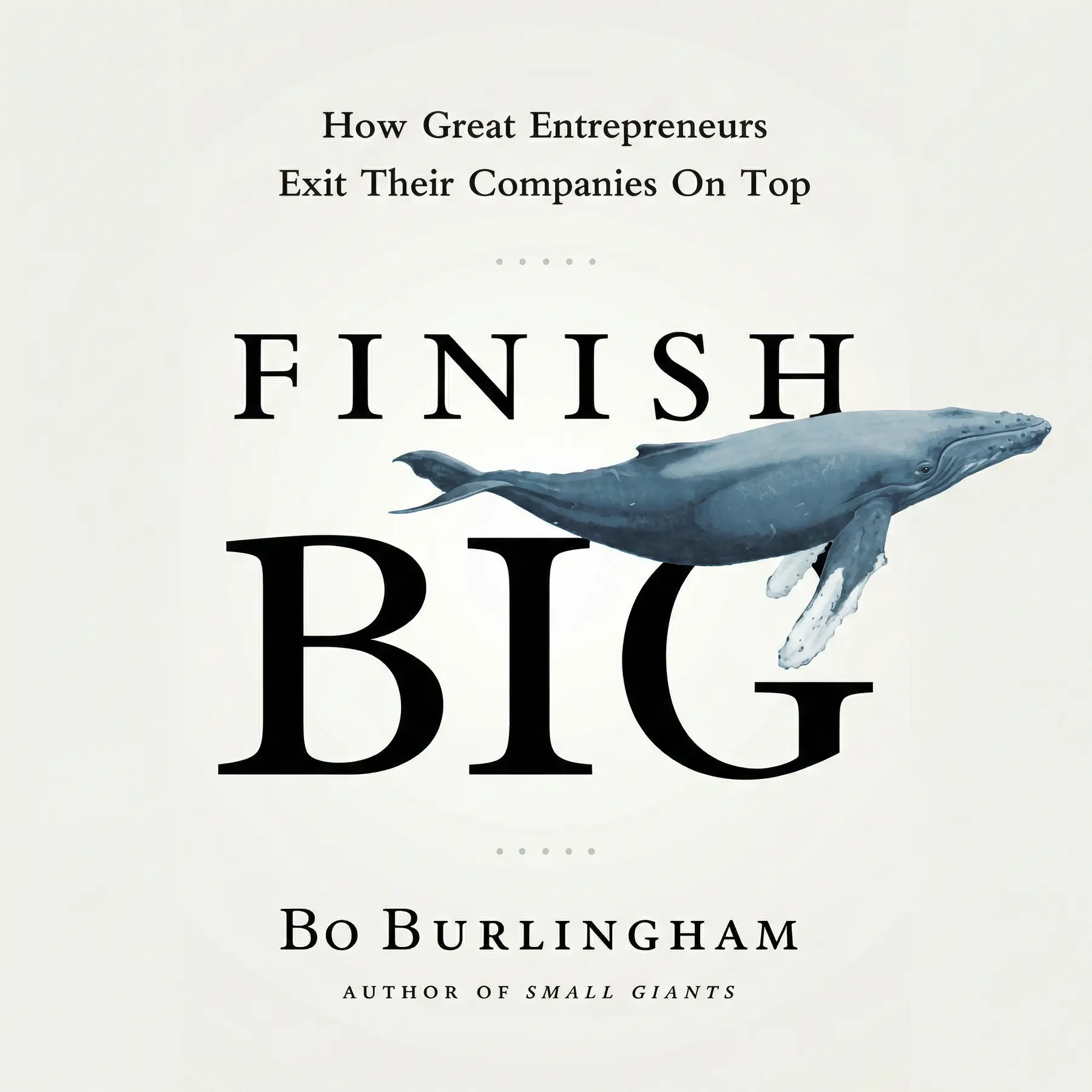
Finish Big: How Great Entrepreneurs Exit Their Companies on Top
Shows business owners how to plan their departure years in advance, from deciding what they want next to making the company run without them and fit the buyer they hope to attract.
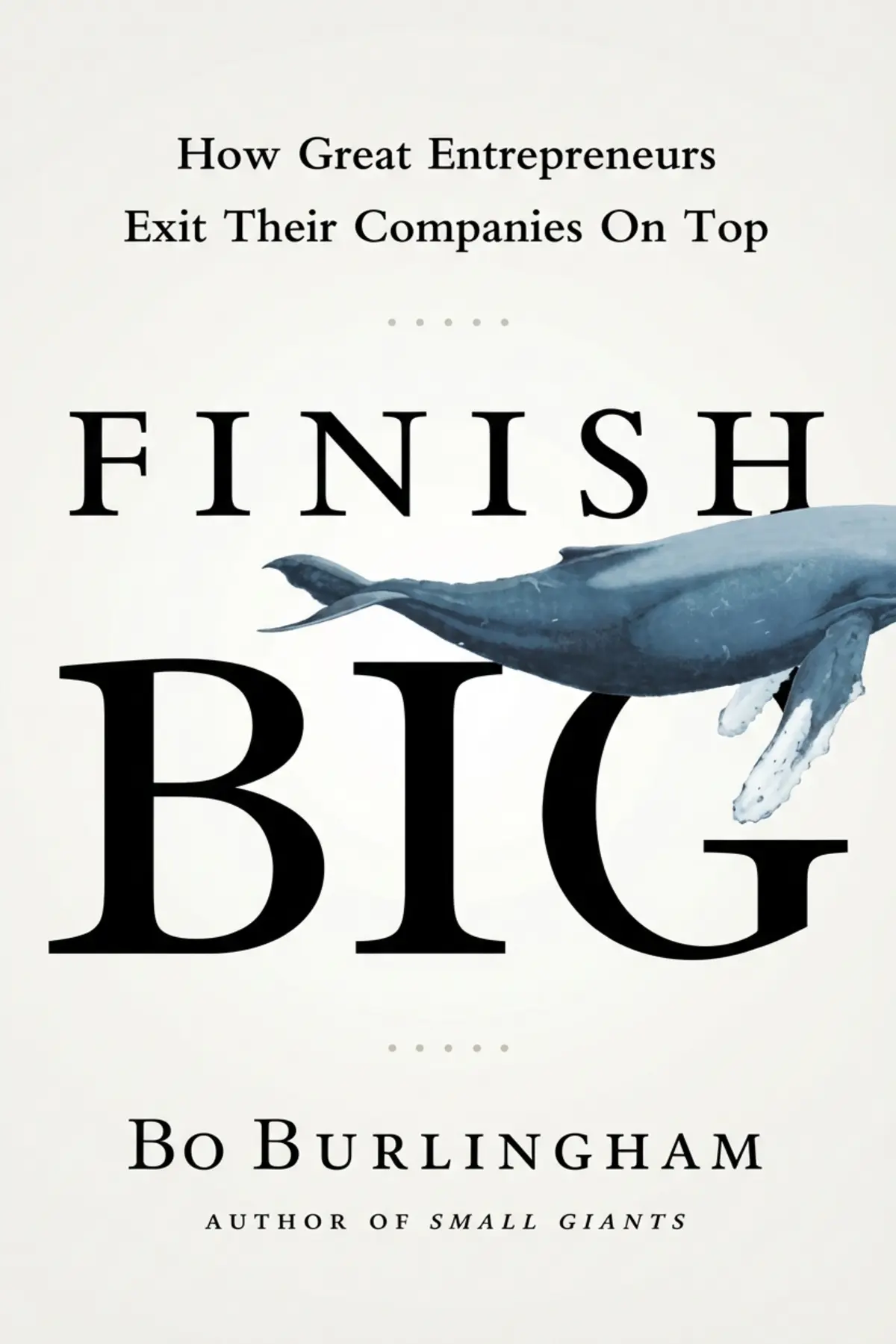
Table of Content
1. Introduction
57 sec
Most owners pour years into building a company and almost no time into leaving it, and a rushed exit can cost far more than money. In Finish Big, Bo Burlingham, who spent 33 years as an editor at Inc. magazine, argues that every owner leaves eventually, so the real choice is whether the exit is planned or forced. One owner who skipped the planning had to sell in a hurry after a cash shortfall he never saw coming, and the damage spread to his marriage and his closest working friendships.
Burlingham’s case is that a good exit is built years ahead, on two tracks at once: the life you want afterward, and a company strong enough to thrive without you. Along the way you will meet a security camera owner who sailed off content, a bakery owner who sold too cheap, and a founder who turned down a buyer to protect her people. What follows is a plan you can begin this year, whatever the size of your business.
2. Decide who you want to be after you leave
1 min 23 sec
A founder hit record revenues and kept hiring, then lost all say in what his company became. The cause was not a rival or a bad market, and it could have been avoided years earlier.
3. Build a company that runs without you
1 min 29 sec
Many owners feel their business is part of who they are. Burlingham suggests that pulling yourself out of it may be the best gift you can give it, and that it can raise the price, too.
4. Map your exit in four clear stages
1 min 37 sec
Handing over the keys feels like a single moment. Burlingham sees something much longer, with distinct steps, and the last one only ends when your head has left the building as well as your body.
5. Weigh selling against liquidating before choosing your exit
1 min 30 sec
Most owners picture a big check from an eager buyer. A national business group’s figures suggest that picture rarely comes true, and a worn-out bakery owner shows what happens when hope replaces a plan.
6. Shape your company around the buyer you want
1 min 34 sec
Raising your company’s value in general helps. A lighting firm went further and remade itself to fit one buyer’s wishes, and the reason it worked applies to anyone hoping to sell someday.
7. Decide which part of your legacy must survive
1 min 25 sec
A generous offer arrives with one catch attached. Roxanne Byrd faced a version of this choice, and her answer forces every owner to ask what they are really willing to trade for a good price.
8. Conclusion
59 sec
Finish Big treats leaving as the last thing an owner builds, and it deserves the same care as the first product or the first hire. The owners who left well, like Ray Pagano on his sailboat or the lighting company that doubled its sales for the right buyer, started years ahead. The ones who left badly, like the bakery owner who sold too cheap or the staffing founder forced out by illness, let the moment decide for them.
The work can start now, long before any buyer calls. Spend an afternoon writing down the life you want after the business, then picture the company running a full year without you. Every gap you find is something to fix, and fixing it raises what the company is worth. Be honest about whether anyone will buy, and if someone might, learn what they need and build toward it. Before any offer arrives, decide what you will not trade away.
Every owner walks out the door eventually. The only difference is whether you designed the way out.
About this book
What is this book about?
Most founders spend years building a business and almost no time thinking about how they will leave it. Bo Burlingham argues that this is a costly blind spot. Every owner exits eventually, and when the exit arrives unplanned, through illness, a cash shortfall or plain exhaustion, the owner, the staff and the company's legacy all pay for it. Burlingham's answer is to treat leaving as a project with its own stages: exploring your options, strengthening the company as a product, closing the deal, and moving fully into whatever comes next. Along the way, owners must face hard questions. Will anyone actually buy? Would closing the business serve them better? What does a particular buyer need to see? And which matters more, the price or what happens to the people and culture afterward? Through owners like Ray Pagano, who sold his security camera business and sailed away content, and Roxanne Byrd, who turned down a buyer to protect her staff, readers get a practical way to start planning an exit that leaves them, and their company, in good shape.
Book Information
Who it's for
New to exit planning
Small business owners who have never thought seriously about how they will leave.
Founders hoping to sell
Founders hoping to sell in the next five to ten years who want a higher price and a smoother handover.
Owners weighing exit options
Owners weighing a sale against closing down or passing the company to family.
About the Author
Bo Burlingham
Bo Burlingham spent 33 years at Inc. magazine as senior editor, executive editor and editor at large, and has also written for Forbes, where he produced the annual Small Giants section. He coauthored The Great Game of Business and A Stake in the Outcome with Jack Stack, and The Knack, later Street Smarts, with Norm Brodsky. His own book Small Giants inspired the Small Giants Community, where business leaders share practices for making their companies great at any size.
Ratings & Reviews
Ratings at a glance
What people think
Listeners find this book an engaging read that provides useful assets and deep questions for entrepreneurs. It is packed with authentic stories, and listeners appreciate that the tips and lessons are simple to implement. They value the emotional depth, with one listener mentioning how it helps them address emotional issues with clarity.
Top reviews
Pranee
Finally finished this deep dive into the exit process, and it really shifts your perspective on what success actually looks like. Burlingham argues that a 'big finish' isn't just about the check you cash, but about how your team and legacy fare after you walk away. I found the four elements of a good exit—specifically the sense of accomplishment and peace with the transition—to be incredibly profound for any founder. Truth is, we spend so much time building the 'baby' that we forget to plan for its adulthood without us. This book provides a necessary framework for thinking about succession years before you think you’re ready to leave. Highly recommended for those who want to preserve their company culture while moving on to their next purpose.
Show moreLucas
I wish I had been given a copy of this a decade ago when my first company was just finding its feet. We often think of exiting as a single event, but Burlingham reframes it as a multi-stage phase involving exploration, strategy, and eventually transition. The focus on treatng employees fairly and ensuring they are taken care of post-sale really resonated with my own values. It’s not just about the money; it’s about the peace of mind that comes from knowing you didn't burn bridges on your way out. Not gonna lie, the sections on recurring revenue and unique value propositions are absolute must-reads for anyone looking to increase their firm's valuation. This is essential reading for the long-term strategist.
Show moreBoy
It's rare to find a business book that focuses on the 'end-up' phase rather than just the startup hustle. Burlingham has collected a fascinating array of stories that serve as both inspiration and a warning for founders. The distinction between a 'happy' exit and one that leaves the owner hollow is clearly drawn through the four stages of exit. I particularly liked the focus on the management team; it’s a reminder that a company’s value is often tied to the people who stay behind. This book isn't just for those about to retire—it's for anyone who wants to build a business that has value beyond their own daily involvement. A true masterpiece on the philosophy of entrepreneurship.
Show moreSawit
Gotta say, the stories about owners losing their sense of purpose after the sale were a massive wake-up call for me. We often focus so much on the financial performance and the growth potential that we ignore the 'fairness' aspect of the deal. Burlingham reminds us that if our employees and investors aren't treated well, the exit will feel like a failure regardless of the price tag. The book is easy to read and the lessons are incredibly easy to apply to any business model. It’s about more than just 'finishing big'; it’s about finishing with your integrity and sanity intact. If you own a business, you need to read this at least five years before you plan to leave. It's that important.
Show moreLook
Bo Burlingham tackles the psychological side of business ownership with a clarity that is rare in most dry financial guides. He highlights how crucial it is to have a vision for your life after the sale, or you risk losing your entire sense of identity once the desk is cleared. In my experience, the 'sellability factors' mentioned—like reducing overdependence on a single customer—are principles every owner should implement today, even if they never plan to sell. The book is less about the technical 'how-to' and more about the 'why' and the 'what then.' Some of the stories dragged on, but the core message about self-knowledge and purpose is worth the cover price for any serious entrepreneur.
Show moreNathan
The chapter on 'how much is enough' really hit home for me as I navigate my own mid-sized company's future. It’s easy to get caught up in the growth trap without realizing that you are becoming tethered to a desk you no longer want to sit at. Burlingham does an excellent job of highlighting the eight characteristics of well-prepared sellers, especially the need for a vision of succession. I appreciated the focus on emotional wellbeing, though I'll admit some of the case studies felt repetitive after a while. Still, the advice on management team strength and cash flow is sound. It’s a great companion to more technical books, filling in the human gaps that spreadsheets usually ignore.
Show moreGin
As a business owner, you spend all your time building something, but very little time thinking about the door. This book is a rare 'end-up' resource that fills a massive gap in the market. The author’s points about the change in the nature of questions an owner faces after a sale were particularly insightful. You go from being the person with all the answers to someone managing assets in a completely different world. To be honest, I found the section on different types of recurring revenue to be one of the most practical parts of the text. It makes you realize that building a sellable company is just good business, regardless of your intent to exit. Solid four stars.
Show moreOn
While the writing style is a bit anecdotal, the lessons on sellability factors are pure gold for anyone looking to scale. Burlingham emphasizes that the CEO should never lead the exit, which is a counterintuitive but vital piece of advice for those of us used to micromanaging everything. Personally, I was struck by the stories of owners who struggled to find purpose after their exit because they hadn't planned for the 'what's next.' It forces you to ask uncomfortable questions about your motivations. My only gripe is that the book can feel a bit disorganized, jumping between different company sizes and industries without a clear thread. However, the emotional clarity it provides regarding the 'baby' metaphor is undeniable.
Show moreTaw
Ever wonder why some founders seem miserable after making millions in a sale? This book explores that paradox through a series of detailed case studies, though the sheer volume of stories felt a bit all over the place at times. While the emotional aspects of post-exit life are touched upon with great care, I felt the 'how' was buried under too much chronological fluff. I missed a more direct, step-by-step roadmap for the actual execution phase. To be fair, the insights on recurring revenue models and management strength are solid, but you have to dig through a lot of anecdotes to find the actionable nuggets. It’s a decent read for the mindset shift, but maybe not the tactical manual I was hoping for.
Show moreKanchana
Look, I wanted a tactical manual on how to structure a deal, but this is basically just a collection of rambling anecdotes. Burlingham spends way too much time on chronological sets of events that don't actually offer a roadmap for the 'how' of exiting. Frankly, the title is a bit declarative given that the content is mostly cautionary tales about people who were unhappy after they sold. If you are looking for specific legal or financial steps, you should probably look elsewhere because this is primarily a book about feelings. It’s okay if you want to reflect on identity, but it’s not the practical business guide I expected. Too much storytelling and not enough data-driven strategy for my taste.
Show moreQuestions about this book
What is the main idea of Finish Big by Bo Burlingham?
Burlingham argues that every business owner leaves eventually, and that a good exit takes years of planning. Owners should decide what they want from life afterward and, at the same time, make the company strong enough to run without them. Exits that are rushed by illness or money trouble tend to hurt the owner, the staff and the company’s legacy, while planned ones leave everyone better off.
What are the four stages of a business exit?
Burlingham describes an exploratory stage, where you set priorities and choose whether to sell or close; a strategic stage, where you treat the company as a product and raise its value; an execution stage, where the deal happens and ownership changes hands; and a transition stage, which lasts until you have fully moved on, both physically and mentally, to retirement or new work.
Should I sell my small business or close it?
Burlingham says selling is only one option and often a hard one: the U.S. Chamber of Commerce figure he cites suggests 65 to 75 percent of owners who want to sell never even reach the market. For a small firm whose likely buyers are family, staff or friends, it can make more sense to keep running it, save, and liquidate when you are ready to move on.
How do I make my business more attractive to buyers?
Buyers look closely at cash flow, customer satisfaction and recurring revenue, so strengthen those first. Burlingham’s further advice is to shape the company for a specific buyer. A lighting company whose buyer wanted a financially sound base to expand on doubled its sales and adjusted its business model, changes that positioned it well and led the buyer to agree to the sale.
Who should read Finish Big?
It suits owners of small and mid-sized businesses at any stage, especially those who have never planned their departure. Founders thinking about a sale in the coming years, owners deciding between selling and closing, and anyone who cares what happens to their employees and culture after they leave will find concrete steps and cautionary cases.
Featured in
Readers also enjoyed



Alibaba: The House That Jack Ma Built
Duncan Clark



7 Powers: The Foundations of Business Strategy
Hamilton Helmer
Bad Blood: Secrets and Lies in a Silicon Valley Startup
John Carreyrou
AUDIO SUMMARY AVAILABLE
Listen to Finish Big in 15 minutes
Get the key ideas from Finish Big by Bo Burlingham, plus 5,000+ more nonfiction titles.
- 5,000+ titles
- Listen as much as you want
- 7-day free trial
- Cancel anytime









