

14 min 49 sec
Available in: English
Finding Focus: Own Your Attention in an Age of Distraction
Shows how to rebuild a scattered attention span through sleep, food, movement, nature, protected work blocks, real breaks, mindful presence, better listening and everyday curiosity, so focus becomes your normal state again.
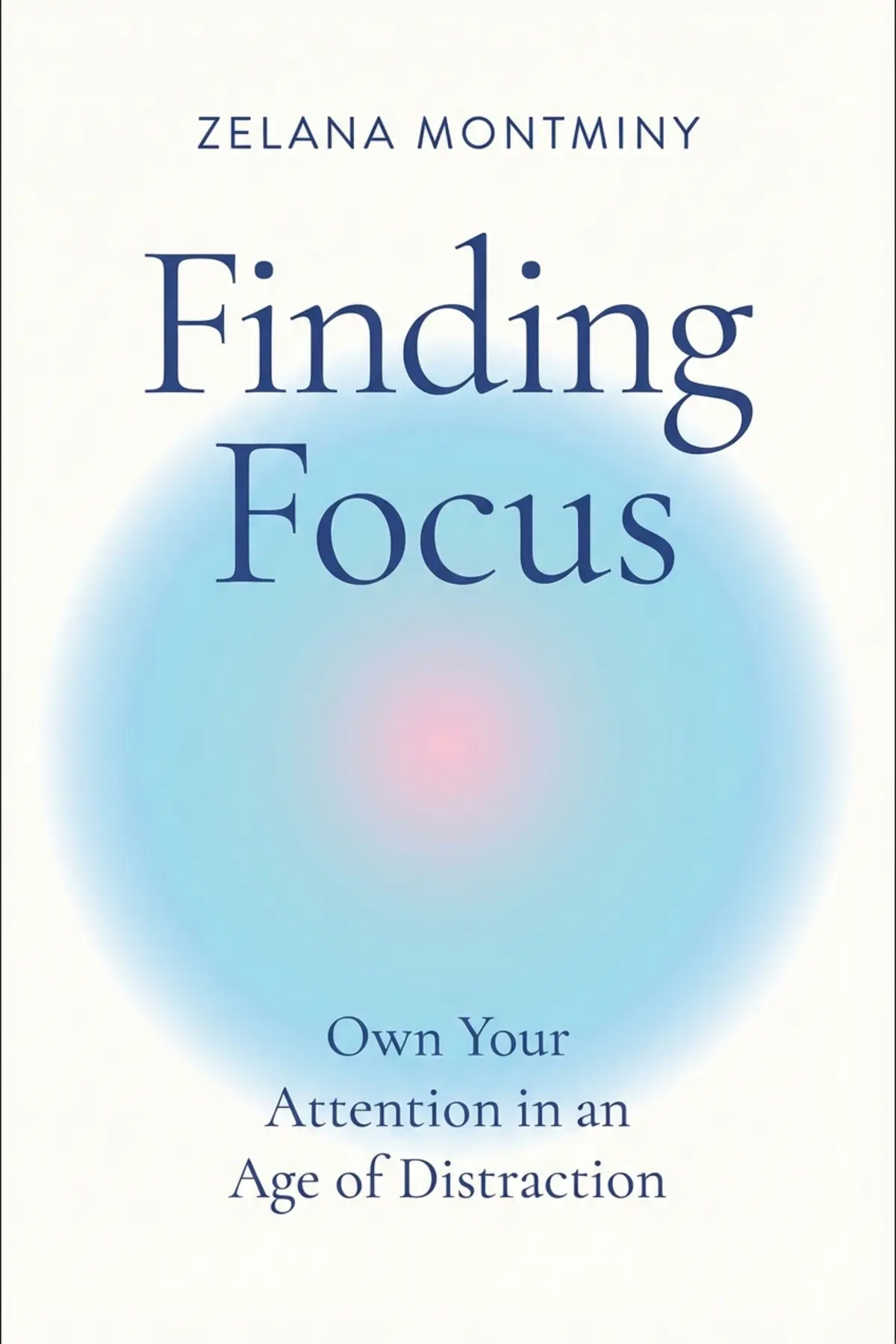
Table of Content
1. Introduction
1 min 04 sec
If your attention breaks apart every few minutes, the usual advice is to try harder. In Finding Focus, psychologist Zelana Montminy argues that focus is something you build rather than force, and the building starts with the body. In one study she cites, people kept awake for 17 to 24 hours ended up with hand-eye coordination comparable to being legally intoxicated.
Montminy, who specializes in positive psychology, saw the pandemic as a pause that let many people notice how frayed their attention had become. Her case is that steady focus comes from a whole way of living, laid down in layers: a body that can sustain attention, days arranged around what matters, a mind trained to stay in the moment, and a habit of turning that attention toward people and questions you care about.
Each layer is small and practical. By the end you will have a set of changes to try this week, from a 50-minute work rhythm to one phone-free conversation, and a clear sense of why each one works.
2. Feed and rest the brain that does your focusing
1 min 27 sec
Most people blame their phone when concentration collapses in the afternoon. A sleep study and the strange link between your stomach and your memory suggest the real cause may have started hours earlier.
3. Move your body and let green spaces restore attention
1 min 34 sec
Sitting still at a screen feels like the most focused way to work. Montminy suggests something closer to the opposite, and the dose she recommends is far smaller than most people would guess.
4. Fill your day with big rocks before the sand
1 min 33 sec
Your to-do list may be the reason your most important work keeps moving to tomorrow. An old image of a jar shows why the order in which you plan matters more than the list itself.
5. Train your concentration like a muscle
1 min 31 sec
If you can barely read a page without reaching for your phone, it is tempting to think your attention is simply broken. Montminy disagrees, and her starting point is almost embarrassingly small.
6. Defend your attention with boundaries and real breaks
1 min 36 sec
Every notification arrives looking urgent, and answering fast feels like good work. Montminy argues the habit costs more than it seems, and she offers a specific rhythm for rest that many people find works.
7. Stay in the moment and rewire your habits
1 min 44 sec
A quiet room does not stop a wandering mind. Montminy finds the cure in an unexpected place, the kitchen, and explains why years of phone checking have trained your brain in the wrong direction.
8. Listen so people feel heard and trust you
1 min 42 sec
Your brain has spare capacity in every conversation, and that is exactly the trouble. Montminy explains what to do with it, and proposes three small experiments that change how a week of conversations feels.
9. Let curiosity and creativity pull your focus forward
1 min 35 sec
Discipline can carry you through a hard afternoon but rarely through a hard year. Montminy names two everyday allies that make attention feel natural, and neither one requires talent or a free weekend.
10. Conclusion
1 min 03 sec
What Montminy offers in the end is a new place to look when attention fails. The instinct is to blame weak willpower or one particular app. Her book points to the whole day surrounding the moment of distraction: the short night behind it, the plan that left no room for big work, the habit of answering every ping, the conversation half-heard while the phone sat face up on the table. Each layer holds up the next, which is why modest changes in several places tend to beat one heroic effort.
A fair place to begin is a single page describing the life you want your attention to serve. Use it to book tomorrow’s big rocks into protected blocks, and step outside for a real break every 90 minutes or so. Then, in your next conversation that matters, put the phone out of sight and reflect back what you heard before you answer.
Montminy’s own summary fits in three words: “Focus is freedom.” The freedom she means is the chance to be completely engaged with the life you are already leading.
About this book
What is this book about?
Pings, feeds and streaming have worn down the ability to stay with one task or one person for long. Psychologist Zelana Montminy argues that the pandemic, by pausing ordinary life, showed many people how frayed their attention had become, and how much time, energy and connection distraction had consumed. Her answer is not a single trick or a burst of discipline. It is a way of living built in layers. First come five foundations: a written vision, good food, enough sleep, regular movement and time in nature. Then come tools for protecting time, such as the Big Rocks approach to planning, sacred work blocks, firm boundaries and breaks every 90 minutes. Then comes inner work: presence, attention to process, and the slow rewiring of habits. Finally, Montminy turns attention outward, toward active listening, face-to-face connection, creativity and curiosity. Readers get a practical, layered plan with small steps to try at once, from a five-minute concentration drill to a phone-free conversation, and a clear sense of why each step helps the mind hold its focus.
Book Information
Who it's for
Interrupted knowledge workers
Knowledge workers whose days dissolve into email, notifications and half-finished tasks.
Distracted students and professionals
Students and professionals who can no longer read or think for long stretches without reaching for a phone.
Feeling scattered and tired
Anyone feeling scattered, tired or disconnected who wants small, practical steps toward calmer, steadier attention.
About the Author
Zelana Montminy
Dr. Zelana Montminy is a clinical psychologist by training, with both a master's and a doctorate, who specializes in health with a focus on positive psychology. She also studied nutrition at Cornell University. She provides health and wellness commentary for broadcast, digital and print media, speaks at conferences and at academic, business and nonprofit organizations, and has helped corporations and universities put research on resilience, attention and well-being to work in everyday settings. She belongs to the American Psychological Association and works as a consultant to the Institute for Applied Positive Research.
Ratings & Reviews
Ratings at a glance

What people think
Listeners describe this work as a functional, evidence-based manual for regaining cognitive focus within a modern world full of interruptions. Although some listeners believe the emphasis on core routines such as diet and rest is too elementary, the majority value the author's accessible prose and her empathetic, professional perspective. Furthermore, they highlight the usefulness of the hands-on activities and thought experiments, with one listener remarking that the text serves as a vital "wake-up call" for identifying and transforming negative habits. Additionally, they respect the scientific structure for developing concentration gradually, finding the organized productivity intervals and realistic advice simple to put into practice.
Top reviews
Brooklyn
Picked this up during a particularly chaotic week when my brain felt like it had fifty tabs open at once. To be fair, a lot of what Dr. Montminy suggests—like prioritizing sleep and getting into nature—isn't revolutionary, but her compassionate tone makes it feel doable rather than like another chore. I specifically appreciated the “big bucket” method for clarifying priorities because it helped me realize I was drowning in small tasks that didn't actually matter. While the nutrition section felt a bit like a detour, the overall framework for building mental resilience is incredibly solid for anyone in survival mode. It’s a gentle yet firm reminder that focus is a resource we have to actively protect against cultural noise. I’m already noticing a difference in how I approach my morning routine and digital boundaries.
Show morePiyanart
Finally, a guide that treats attention as a precious resource rather than just a tool for productivity. Not gonna lie, I’ve struggled with feeling “brain-fried” for years, and this book helped me identify the patterns of behavior that were contributing to that burnout. The author uses scholarly sources to back up her claims, which I appreciated as someone who likes to see the “why” behind the advice. I’m currently taking her focus challenge, and the simple act of setting boundaries with my devices has already lowered my daily anxiety levels. It’s a very accessible read, though some might find the “big bucket” method a bit simplistic for complex professional workloads. Regardless, the focus on self-awareness and joy makes this feel much more human than your average business book.
Show moreVera
This book feels like a warm but necessary intervention for anyone who has lost their ability to engage deeply with the world around them. I was surprised by how much I enjoyed the reflection prompts, which forced me to look at my relationship with social media in a new light. The author explains how cultural noise hijacks our brains, making it nearly impossible to focus on what actually matters without a plan. I’ve started implementing the “big bucket” method for my weekly planning, and it has significantly reduced my feeling of being overwhelmed. While some chapters are more insightful than others, the book succeeds because it offers a clear path forward rather than just pointing out the problem. It’s an essential resource for anyone looking to rebuild their mental fitness.
Show moreSureerat
Dr. Montminy delivers a remarkably clear, research-backed roadmap for anyone feeling scattered by the endless demands of our device-heavy world. Frankly, I was skeptical about another self-help book telling me to eat more omega-3s and go for walks, but the way she connects physical health to attentional bandwidth is very convincing. The structured work cycles she recommends have already helped me stop the constant multitasking that was leaving me exhausted by noon. One minor gripe is that the writing can feel a little too “airport bookstore” at times, leaning on broad anecdotes where I wanted more rigorous data. But for someone looking to rebuild their mental fitness from the ground up, this is an excellent starting point. It's less about rigid discipline and more about creating the right environment for your brain to thrive.
Show morePenelope
As a chronic multitasker with a high-stress job, I found this book to be the precise wake-up call I needed to stop my doom-scrolling habit. Personally, the most impactful part was the discussion on “digital friction” and how our environments are designed to keep us distracted. Montminy doesn’t just shame you for being on your phone; she explains the science behind why it’s so hard to look away and offers practical reflection prompts. I loved the emphasis on nature exposure as a way to reset our attentional bandwidth, which is something I always overlook. Some of the advice on nutrition felt like filler, but the core message about choosing where we place our attention is vital. It’s a steady, structured approach that values consistency over instant transformation.
Show moreCaleb
Managing your attention in a world designed to steal it is the ultimate modern struggle, and Montminy provides a compassionate framework for fighting back. In my experience, most focus books are too focused on “grind culture,” but this one prioritizes resilience and mental well-being instead. I particularly liked the section on “learning loops” and how to reset after you inevitably lose your focus during the day. The book is filled with doable steps that don’t feel overwhelming, even for a busy parent like me who can’t always control my sleep schedule. There were moments where the advice felt a bit basic, particularly the parts about hydration and general nutrition. However, the overall message about reclaiming your mind to live a more intentional life is powerful and timely.
Show moreElena
Before reading this, I thought focus was just about willpower, but Montminy proves it’s actually about biology and environment. The truth is, I was neglecting the basics like hydration and consistent sleep, and seeing the research on how that affects cognitive load was eye-opening. I’ve started using the structured work cycles she suggests, and I’m finding that I get more done in two hours than I used to in four. It’s not just about doing more, though; it’s about having the energy to enjoy your life when the work is done. Some sections felt a little repetitive, especially if you’re already familiar with the benefits of nature and exercise. But as a complete package, it’s an incredibly useful tool for anyone feeling scattered and looking for a way back to clarity.
Show moreFatou
Ever wonder why you’re constantly tired even when you haven’t ‘done’ much? Finding Focus dives into the neuroscience of why our modern digital habits are literally draining our cognitive capacity. Look, if you’ve read Deep Work or any major productivity blog in the last five years, the advice on Pomodoro cycles and turning off notifications will feel very familiar. However, the author’s background in psychology adds a layer of empathy that is often missing from more “hustle-oriented” books. The chapters on how social media hijacks our attention were a bit brief, and I wish she had gone deeper into the long-term effects. Still, it’s a beautifully structured primer that synthesizes a lot of complex research into digestible, actionable steps for the average person.
Show moreJavier
While I appreciated the clean organization and the emphasis on evidence-based habits, this felt more like a well-packaged recap than a groundbreaking discovery. Gotta say, if you’ve already read Cal Newport or Johann Hari, you won’t find many new strategies in these pages. The advice to use the Pomodoro technique or to get 7–9 hours of sleep is common knowledge at this point. That being said, the author’s writing style is very engaging, and she does a great job of making the science feel relatable to everyday life. It’s a solid three-star read because it’s a high-quality summary of existing research, even if it doesn't push the boundaries of the field. Good for beginners, but maybe skip it if you’re already a productivity nerd.
Show moreBird
The truth is, I expected something much more profound given the author's credentials and her insightful social media presence. Instead, this felt like a very seicht—or shallow—compilation of every wellness article I’ve ever read on the internet. Do we really need another book telling us that sleep is good for us or that we should drink more water to stay focused? It’s a polished mid-cult product that quotes the same tired studies seen in every other productivity manual on the shelf. If you are brand new to the concept of self-care, you might find some value here, but seasoned readers will find it redundant. It’s not a poorly written book by any means, but it lacks the original “aha” moments I was hoping for.
Show moreQuestions about this book
What is the main idea of Finding Focus by Zelana Montminy?
Montminy argues that steady focus does not come from one act of willpower but from a whole way of living. It rests on five foundations: a clear vision, good food, enough sleep, regular movement and time in nature. On top of those she adds protected work blocks, boundaries and breaks, then presence and new habits, and finally attention turned outward through listening, face-to-face connection, creativity and curiosity.
What are the five pillars of focus in Finding Focus?
Montminy names vision, fuel, sleep, movement and nature. Vision means writing down the life you want to pay attention to. Fuel covers foods such as antioxidant-rich plants, omega-3s, fiber and probiotics. Sleep means seven to eight hours. Movement means roughly 150 minutes of moderate exercise a week. Nature means about two hours a week in green spaces, which rests directed attention through what she calls soft fascination.
How does Finding Focus suggest protecting your time?
Montminy recommends planning around a few high-impact tasks first, using the Big Rocks or Jar of Life image, then blocking that time as sacred and batching small jobs like email and errands. Leave buffer space for surprises. Treat most notifications as able to wait, set firm limits such as no work calls after a fixed hour, and take a real break at least every 90 minutes, with 50 minutes on and 17 off as one common rhythm.
How can I apply Finding Focus this week?
Start by training concentration with five uninterrupted minutes, then seven, then ten. Try one afternoon on a 50 and 17 work rhythm, spending breaks away from your desk and ideally outdoors. Read a few pages over morning coffee before opening any app. Then run Montminy’s social experiments: one easy meet-up, one conversation with your phone fully out of sight, and one meaningful detail shared beyond small talk.
Who should read Finding Focus?
It suits people who feel their attention has frayed under constant pings and screens: office workers whose days dissolve into email, students who struggle to read for long, and anyone who feels scattered or lonelier since the pandemic. Its advice is practical and layered, covering body, schedule, mind and relationships, so it fits readers who want small changes they can try at once rather than a single dramatic fix.
Readers also enjoyed


AUDIO SUMMARY AVAILABLE
Listen to Finding Focus in 15 minutes
Get the key ideas from Finding Focus by Zelana Montminy, plus 5,000+ more nonfiction titles.
- 5,000+ titles
- Listen as much as you want
- 7-day free trial
- Cancel anytime









