
14 min 24 sec
Available in: English
 ไทย
EnglishไทยFinding Chika: A Little Girl, an Earthquake, and the Making of a Family
By Mitch Albom
Mitch Albom's memoir of the Haitian girl he and his wife raised through her brain cancer, and what she taught them about giving time, noticing small wonders and building a family without blood ties.
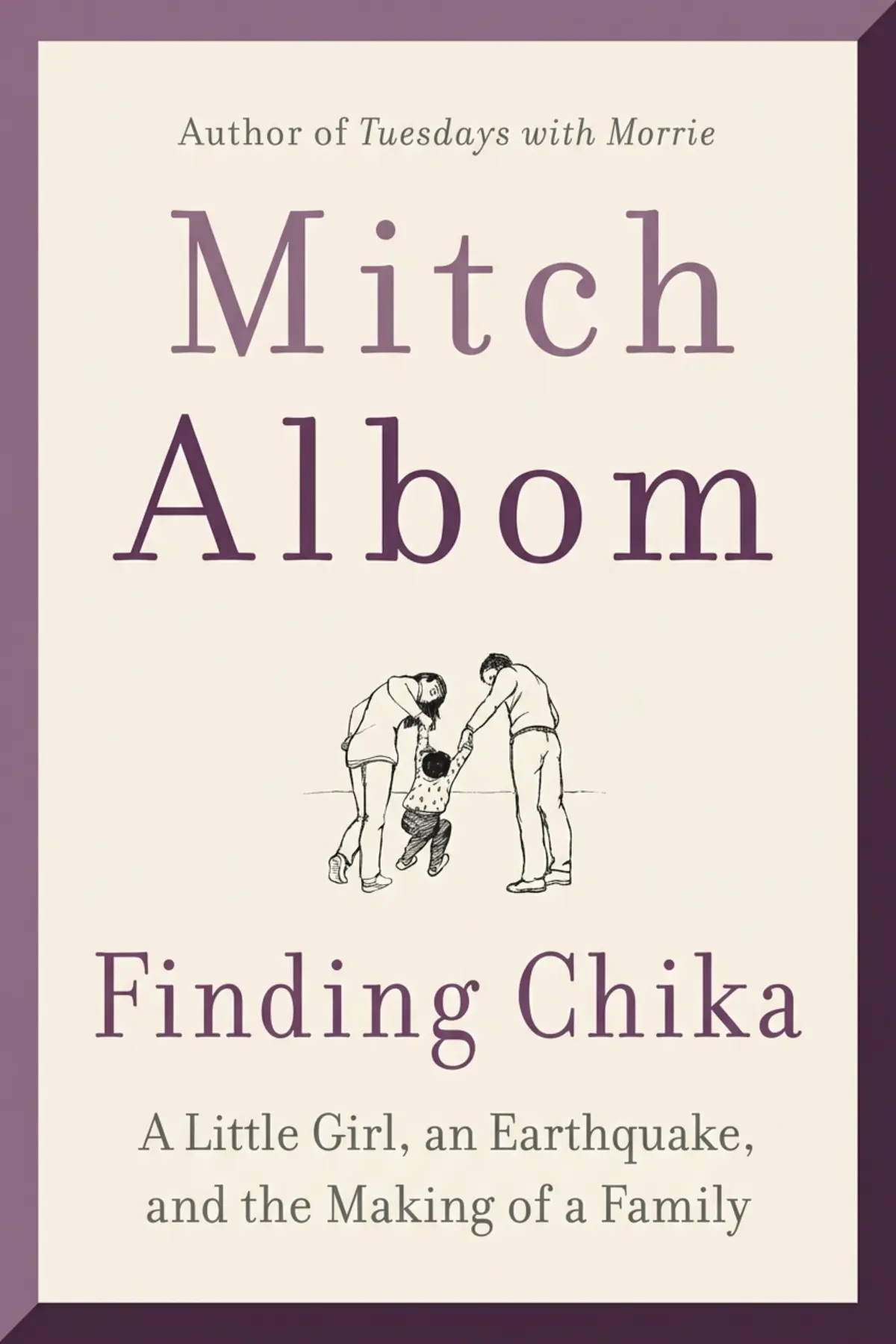
Table of Content
1. Introduction
56 sec
Busy adults learn to walk past ordinary things, and in Finding Chika, Mitch Albom describes the small girl who taught him to see them again. Medjerda Jeune, known as Chika, was born in Haiti in January 2010, three days before an earthquake split her home open. Later, after doctors found a tumor on her brain, she came to live with Albom and his wife Janice, a childless couple in their fifties. She was bossy, slow at breakfast and thrilled by ducks, and in the time she had left she turned two people with fixed routines into a family.
Albom’s memoir makes one case: family is built from care and attention, and a short life that is truly noticed can still be a full one. Her story offers a way to spend time with the people you love, a habit of seeing that middle age wears down, and an honest picture of loving a child you know you will lose.
2. Understand how fast a child's world can collapse
1 min 42 sec
A baby three days old lay on her mother’s chest when the roof came off. What followed in the months after the earthquake left her with almost no one, and explains how she reached an orphanage.
3. Small gestures can turn help into commitment
1 min 45 sec
Albom flew to Haiti with crates of supplies and was mobbed by desperate survivors. The moment that changed his plans was much smaller than the crowd, and it shows how lasting commitments really begin.
4. Say yes before you know the cost
1 min 49 sec
A drooping face, a $750 scan and a first encounter with hot running water. Within days, a short medical visit turned into something the Alboms had never planned for and could not undo.
5. Give your time slowly and it becomes love
1 min 41 sec
An omelette that took an hour wrecked a writer’s morning routine. It also sent him back to a dying professor’s window, and to an idea about what we really give when we give our time.
6. Notice the duck instead of the castle
1 min 45 sec
At Disneyland, surrounded by rides built to dazzle, a sick little girl ignored all of them. What she chased instead changed how a jaded man in his fifties looked at everyday life.
7. Family grows from care more than blood
1 min 58 sec
A frightened boy in a lake, a small hand slipping into a bigger one, and a silent father in Tabarre. Albom tests what makes someone a parent and arrives at a surprising answer.
8. Make the final months count together
1 min 44 sec
Doctors gave her four months. A clinic in Germany offered one last chance, and a cathedral gave her a moment of pure astonishment. The ending is hard, yet it shows what love can still decide.
9. Conclusion
1 min 04 sec
Finding Chika is the story of a girl who arrived with almost nothing and left two adults richer than they had known to want. The earthquake took her home, then her mother, and cancer took the rest of her years. In the space between, she remade the people caring for her. A settled couple in their fifties learned to wait an hour for an omelette, to chase a duck past a castle, and to call themselves parents with no document saying so.
The book’s lessons are modest, which is their strength. Give someone your time without checking the cost, the way Albom gave up his writing mornings. When the people you love, especially small ones, tell you where to look, get down to their level and follow. And if you doubt whether you belong to someone, notice who has been holding whose hand.
A child who once flinched at hot water from a tap ended up beneath a cathedral in Germany, saying she had never seen anything like it. Albom spent her last years learning to say the same about ordinary days.
About this book
What is this book about?
Medjerda Jeune, called Chika, was born in Haiti days before the 2010 earthquake. She lost her mother soon after, ended up in a Port-au-Prince orphanage, and came into the care of Mitch Albom, the writer who had taken over running it. When a brain tumor was found, Albom and his wife Janice, childless and in their fifties, brought her to Michigan for treatment. Albom tells what followed as a story of lessons. Chika ate breakfast at her own slow pace, chased a duck at Disneyland while the rides towered above her, and slid her hand into his on a walk. Through her, the couple relearned how to spend time, how to look closely at the world and what it means to be a parent, even after meeting her distant biological father. Readers get a moving account of the earthquake's aftermath, an honest picture of caring for a terminally ill child, and a clear case that family is made by daily care and attention.
Book Information
Who it's for
Parents, guardians and carers
Parents, guardians and other carers wondering what truly makes a family.
Caring for ill relatives
Caregivers of a seriously ill child or relative who want an honest, tender account of that time.
Busy in midlife
Busy adults in midlife who feel they have stopped noticing everyday life and want to slow down.
About the Author
Mitch Albom
Mitch Albom first made his name as a sports journalist, and the Associated Press Sports Editors named him best sports columnist in America thirteen times. He later turned to inspirational stories, with Tuesdays with Morrie as an early, well-known example, and his books have sold more than 40 million copies worldwide. He has also written a syndicated newspaper column, stage plays, screenplays and a musical. In 2006 he founded SAY Detroit, a nonprofit running health, housing and education programs for people in need, and he operates Have Faith Haiti, a home and school for children in Port-au-Prince.
Ratings & Reviews
Ratings at a glance

What people think
Listeners find this to be an enchanting and poignant listen, with one describing it as a real page-turner. The narrative develops into a memorable account of affection and grief, and listeners value how the author’s sincere prose conveys genuine feelings. They portray it as a lovely work overflowing with devotion, and one listener mentions that it offers significant life wisdom for difficult periods. Listeners convey their deep affection for Chika, the incredible young girl who is the heart of the narrative.
Top reviews
Fah
Wow. This memoir is a gut-punch that somehow leaves you feeling more hopeful about the world than when you started. Mitch Albom has a gift for capturing the fragile beauty of life, and Chika is an absolute force of nature from the very first page. Following her journey from a post-earthquake Haiti orphanage to a suburban home in Michigan was incredibly moving, especially as the couple navigated the terrifying reality of her brain tumor. While the medical battles are harrowing, the book truly shines when exploring how this little girl taught two adults how to be a family. I found myself sobbing during the 'When a Marriage Becomes a Family' chapter because it felt so raw and vulnerable. Albom doesn't shy away from his own past selfishness or his initial hesitation toward parenthood. It’s a gorgeous, albeit devastating, tribute to a life that was far too short but undeniably meaningful. You will definitely need tissues for this one.
Show moreCamila
If you have the choice, you absolutely must listen to the audiobook version of this story. Hearing the actual audio clips of Chika’s voice—her laughter, her singing, her interactions with 'Mr. Mitch'—makes the experience profoundly more intimate and real. Not gonna lie, I was a total skeptic about Albom’s work before this, but the sheer humanity in this account won me over completely. The story moves quickly as they fly back and forth seeking experimental treatments, yet it pauses for these quiet, beautiful moments of domestic life. Seeing Mitch and Janine transform into parents overnight was both inspiring and terrifying. It’s an unforgettable tale of love and loss that highlights the incredible work being done at the Have Faith Haiti Orphanage. Chika wasn't just a patient; she was a teacher who showed everyone around her that hope is the best medicine we have. This book is a rare treasure that I'll be thinking about for a long time.
Show moreFord
The bond between Mitch, Janine, and little Chika transcends typical definitions of family or adoption, proving that love isn't about biology. After the devastating 2010 earthquake in Haiti, this little girl became the center of their universe, and watching them fight for her life was both exhausting and beautiful. This isn't just a book about childhood cancer; it's a manual on how to show up for the people you love when things get impossible. I loved the focus on the Haiti orphanage and how it changed Mitch's entire worldview from a career-driven journalist to a compassionate caretaker. The writing is tight, punchy, and filled with the kind of hard-won wisdom you only get through suffering. Every chapter feels like a small gift, even when the subject matter is heart-wrenching. It’s a page-turner in the sense that you are rooting so hard for a miracle, even when you know how the story ends. Truly a beautiful book filled with light.
Show moreSomsri
After hearing so much about Mitch Albom’s earlier work like 'Tuesdays with Morrie,' I finally dove into this account of his time with Chika. The parallels between his lessons with the dying professor and this young girl are striking, yet Chika’s story feels even more urgent. She arrived in his life like a whirlwind, shattering his quiet Michigan routine and forcing him to grow up in ways he hadn't expected in his fifties. The dialogue is snappy and captures the unique way children view the world with such clarity and innocence. I found the 'lessons' structure very helpful for processing the heavy themes of the book. It never felt like a lecture, but more like a shared journey through the valley of grief. Her absence is felt on every page, yet her spirit is so vibrant that you feel like you knew her personally by the end. This is a must-read for anyone who has ever loved a child.
Show moreAna
Is it possible for a book to be both devastating and incredibly uplifting at the same time? Albom proves it is with this masterful tribute to a girl who became his daughter in every way that matters. The inclusion of the 'Velveteen Rabbit' quote about becoming 'Real' through love was the perfect thematic anchor for the whole narrative. You see the transformation of a man who once prioritized his career into someone who would do anything to see a child smile for one more minute. The struggle with the healthcare system and the search for a cure was a real eye-opener regarding the limitations of modern medicine. Despite the tragic ending, the book emphasizes that the time spent together was a gift rather than a burden. It makes you want to hug your own family a little tighter and appreciate the mundane moments of daily life. This is easily one of the most moving books I've read in years.
Show moreRotjanee
Every now and then, a story comes along that forces you to re-evaluate what you actually value in your day-to-day life. Chika’s story did exactly that for me, highlighting the difference between a life of success and a life of significance. The way Albom describes 'what we carry' as our legacy changed my perspective on the responsibilities we often complain about. These burdens are actually the things that define us and give our lives weight. The writing is evocative, especially when describing the small, quiet moments of Chika’s personality, like her love for games and her bravery during painful procedures. It’s a testament to the human spirit’s ability to find joy even in the most desperate circumstances. While it deals with death, it is fundamentally a book about how to live well and love fiercely. I cannot recommend this memoir enough to anyone looking for a story that captures the true essence of humanity and hope.
Show moreTee
As someone who came to parenthood later in life, Albom's reflections on his 'failure to launch' regarding commitment hit extremely close to home. He captures the specific anxiety of suddenly being responsible for a small, fragile life, especially one facing a terminal diagnosis. The prose is simple but effective, moving between their time in Port-au-Prince and the clinical hallways of American hospitals. I particularly liked how he balanced the tragedy with Chika's spunky personality; she never felt like a prop for a lesson, but a fully realized person. My only minor gripe is that the imaginary conversations with Chika's ghost felt a bit jarring against the otherwise grounded memoir style. Still, the core message about what we carry defining our legacy is powerful. It serves as a stark reminder that children are not distractions from our work—they are the most important work we will ever do. A solid four-star read that offers great perspective for any parent.
Show moreSau
Picked this up on a whim and didn't realize I'd need a whole box of tissues by page fifty. The story of Chika is a heartbreaking reminder of how fragile life is, but also how much joy can be packed into a few short years. I appreciated the honesty regarding the toll her illness took on Mitch and Janine’s marriage, showing that even the strongest bonds can fray under that kind of pressure. The descriptions of Haiti were vivid and eye-opening, providing much-needed context for where Chika came from. My only critique is that the tone can be a bit 'preachy' in certain sections regarding faith and medicine. However, the emotional core is so strong that I found myself overlooking the occasional schmaltz. It’s a quick read but a heavy one, perfect for a weekend where you just want to feel something deep. Chika was truly an amazing little girl.
Show moreHemp
To be fair, I found the narrative structure a bit repetitive as it circled back to the same emotional beats over several chapters. There is no denying that Chika was a brave and delightful child, but the book occasionally feels like it’s trying too hard to wring every possible tear from the reader. Truth is, I struggled with how the author framed some of the medical decisions made during her treatment. It felt like he was constantly at odds with the palliative care experts who were trying to prioritize her quality of life over aggressive interventions. While I appreciate the lessons on what we carry and the legacy of love, the writing style sometimes veers into the overly sentimental territory that Albom is known for. It took me nearly four months to finish because the sadness was so heavy, and the circular nature of the grief felt stagnant at times. It’s a decent read for fans of his work, but I had mixed feelings about the execution.
Show moreTod
Look, while the child herself is an absolute light, I struggled significantly with the author's approach to her medical care and the ethics presented here. It felt like he subjected this poor orphan to endless experimental treatments for his own inability to let go, often disregarding the advice of hospice professionals. At one point, he describes performing aggressive suctioning on a nonverbal, dying child just to keep her alive for another day, which felt more like a hero complex than true mercy. Frankly, it undermines the vital work that palliative care teams do to ensure a dignified, peaceful passing. The writing is polished, sure, but I couldn't stomach the agenda that seemed to prioritize his personal hope over the child's comfort. While the proceeds go to a good cause in Haiti, the message about 'fighting' at all costs can be quite damaging to families facing similar end-of-life decisions. It was a very uncomfortable read for me personally.
Show moreQuestions about this book
What is Finding Chika by Mitch Albom about?
It is Albom’s memoir of Chika Jeune, a girl born in Haiti days before the 2010 earthquake. After her mother died, she ended up in the Port-au-Prince orphanage Albom ran. When doctors found a brain tumor, he and his wife Janice brought her to Michigan for treatment, and in the time she had left she taught the childless couple about time, attention and family.
Who was Chika Jeune?
Medjerda Jeune, nicknamed Chika, was born on January 9, 2010, to Reselia and Fedner Jeune. Three days later the earthquake split her family’s house open. Her mother died giving birth to a son, and Chika was taken to an orphanage. Bossy and stubborn, she was found to have a Grade 4 brain cancer and died on April 7, 2017, with the Alboms beside her.
What lessons does Chika teach in Finding Chika?
Albom draws three lessons from her. Time given freely, like the hour he sat through her slow breakfast, is a form of love. Small things deserve wonder, as when she chased a duck at Disneyland instead of looking at the rides. And family comes from care and belonging, which he saw after meeting her distant biological father and hearing her say she would think about loving him too.
How is Finding Chika connected to Tuesdays with Morrie?
Albom himself draws the link. Tuesdays with Morrie recorded the wisdom of his favorite professor, who was dying. Watching Chika sit for long stretches at a back window, studying the yard, reminded him of Morrie pointing to his own window and saying he valued that view more than Albom could, because illness had shrunk his world. In both cases, a dying person taught him to see.
Who should read Finding Chika?
It suits parents and guardians thinking about what makes a family, and people caring for a seriously ill loved one who want an honest account of that time. It also speaks to busy adults who have stopped noticing ordinary life, through scenes such as an hour-long omelette breakfast, rolling in fresh snow and a child astonished by a cathedral.
Readers also enjoyed

A Life Decoded: My Genome: My Life
J. Craig Venter


A Long Way Gone: Memoirs of a Boy Soldier
Ishmael Beah

All Creatures Great and Small
James Herriot


A Promised Land
Barack Obama


A River in Darkness: One Man’s Escape from North Korea
Masaji Ishikawa

A Spy Among Friends: Philby and the Great Betrayal
Ben Macintyre

AUDIO SUMMARY AVAILABLE
Listen to Finding Chika in 15 minutes
Get the key ideas from Finding Chika by Mitch Albom, plus 5,000+ more nonfiction titles.
- 5,000+ titles
- Listen as much as you want
- 7-day free trial
- Cancel anytime









