
14 min 24 sec
Available in: English
Feral: Rewilding the Land, Sea and Human Life
Shows why so much protected countryside is really managed scenery. It also explains how setting aside poor farmland, bringing back large animals and stepping back could restore wild ecosystems and our own appetite for adventure.
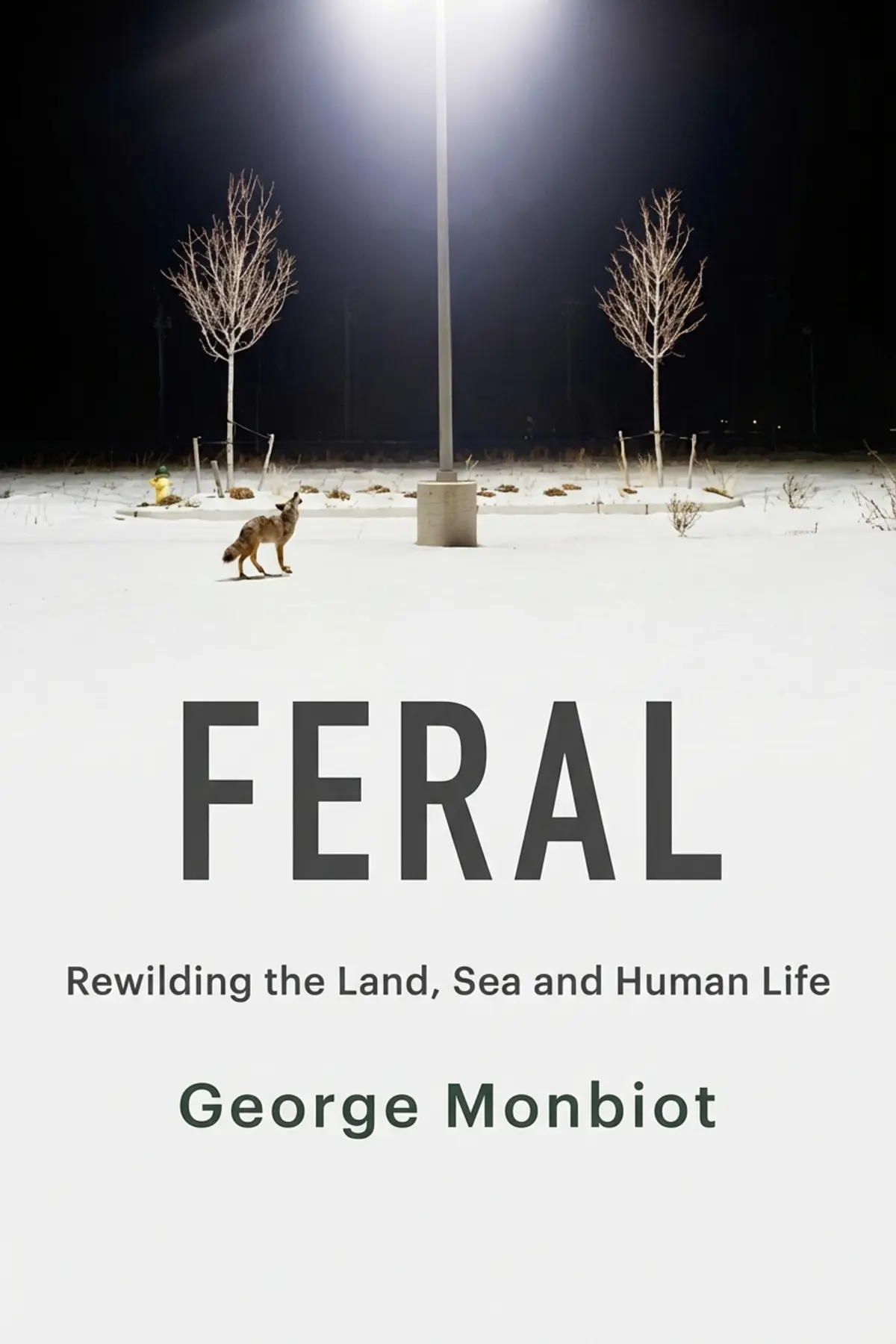
Table of Content
1. Introduction
1 min 04 sec
If your idea of nature is a city park or an afternoon in the botanical gardens, George Monbiot thinks you are missing something your mind still needs. In Feral, the zoologist turned investigative journalist argues that most of Britain’s protected countryside is managed like a rose garden, and that the cure is rewilding: setting land aside and letting nature run its own course. Give back land that farming barely uses, let the large animals that once lived there return, then step out of the way, and both the ecosystems and the people who visit them come alive again. None of it asks anyone to give up farms, cities or flushing toilets.
The case moves from gold miners in the Amazon to a venomous fish in a Welsh bay, children’s footprints kept in mud for thousands of years and a Polish forest where wild boar make room for dozens of flowers. Afterward, a wood full of bluebells or a hillside of sheep will look different, and you will know what to ask of the land near you.
2. Name the boredom that tame places leave behind
1 min 58 sec
A gold rush in the Amazon and a Maasai warrior’s 35-mile run left one British journalist uneasy about his own comfortable life. What he felt has a name, and it may describe yours too.
3. Rewilding asks for less land than you fear
1 min 56 sec
Calls to let nature back in often raise fears about food, farms and towns. A population estimate from the Stone Age shows exactly where the limits of the idea lie, and where it fits.
4. See how far the sea's baseline has slipped
1 min 46 sec
Officials declared a fish stock healthy even as local fishers watched its shoals shrink from miles to yards. The gap between those two views reveals a trap that hides loss in plain sight.
5. Let old footprints pick which animals come home
1 min 38 sec
Children’s footprints pressed into Welsh mud thousands of years ago survived beside the tracks of a tall bird Britain later lost. Together they suggest a sensible test for deciding what to bring back.
6. Phantom big cats reveal our hunger for wildness
1 min 32 sec
Thousands of Britons report seeing large wild cats every year, some of them trained wildlife professionals. No one has found proof, yet the sightings may say something true about the people making them.
7. Read a carpet of bluebells as a warning
1 min 39 sec
A woodland floor glowing with a single beautiful flower looks like nature at its finest. A forest in Poland, and an animal Britain barely tolerates, explain why it may mean the opposite.
8. Step back and let a landscape heal
1 min 39 sec
Those charged with protecting nature often defend habitats that people made in the first place. The famous green hills of England show what that costs, and what a different approach would ask of us.
9. Conclusion
1 min 12 sec
Feral is an argument about two kinds of tameness at once. The land has been tidied into sheep pasture, managed heath and woods with a single flower, and the people living beside it have been tidied too, into lives so safe that some see leopards in the hedgerows. Monbiot prescribes one remedy for both. Set aside the land that farming hardly needs, let cranes, beavers, boar and their predators return, and resist the urge to manage whatever follows.
Much of that sits with governments and landowners, but part of it is yours. Learn to read a place: a floor covered in one plant or a hillside grazed bare tells you something is missing, and the memories of older fishers and walkers show how far the baseline has slid. Back the return of animals the ground itself remembers, the way the Severn footprints pointed to the crane. And go out yourself. Monbiot’s own advice is simple: pack a bag and spend a few days camping as close to nature as you can manage, no wolves required.
A strange fish on a line once made a grown man afraid, and he treasured the moment. That shiver is what a wilder country would give back.
About this book
What is this book about?
Most of what passes for nature in a modern country is tidy and predictable: parks, gardens, grazed hills and protected heaths kept much as they are. George Monbiot argues that this tameness costs us twice. Ecosystems lose their variety, and people lose contact with the wild that once kept them alert and alive. His answer is rewilding. Set aside land that farming barely needs, let animals such as cranes, beavers, wolves and wild boar return, and then leave nature to find its own balance. He draws on his reporting from the Brazilian gold rush and his friendship with a Maasai warrior, on fishing trips in a Welsh bay, on ancient footprints in the Severn Estuary and on a Polish forest where boar keep the woodland floor full of flowers. Monbiot is clear that he is not asking anyone to give up farming or cities. Readers learn how to tell a managed place from a wild one, why a single dominant flower can signal trouble, how our standards for a healthy sea have slipped, and why conservation itself may need to change.
Book Information
Who it's for
Office workers, city dwellers
Office workers and city dwellers who feel flat and want a deeper reason to get outdoors.
Curious about empty countryside
Walkers, anglers and nature lovers curious why protected countryside can still feel empty.
Conservation students and campaigners
Students and campaigners in conservation weighing what rewilding should and should not mean.
About the Author
George Monbiot
George Monbiot was born in 1963 and grew up in Oxfordshire. He studied zoology at the University of Oxford before turning to investigative journalism, and his first book, Poisoned Arrows, examined human rights in West Papua. He writes regularly for The Guardian and has written books including Captive State and The Age of Consent. He founded The Land is Ours, a campaign for people's access to the British countryside, and has received the Global 500 award and the Orwell Prize.
Ratings & Reviews
Ratings at a glance

What people think
Listeners find this work captivating and thoroughly documented, with one review specifically pointing to its scientific facts on rewilding and nature’s restoration. Furthermore, the prose is lauded for its lyrical quality, as listeners value the book's striking beauty and intellectual depth. They also appreciate the perspective on biodiversity, with one review noting its remedies for major ecological problems, while another mentions the focus on the careful stewardship of our planet’s health.
Top reviews
Den
After hearing Monbiot on a podcast, I felt compelled to dive into his vision for a wilder world, and I wasn't disappointed. The concept of 'shifting baseline syndrome' is a total revelation that changed how I view the countryside. We are so used to seeing barren, sheep-grazed hills as 'natural' when they are actually ecological deserts. Monbiot writes with a rare combination of scientific rigor and poetic beauty. He doesn't just complain about the state of the earth; he offers a thrilling, well-researched roadmap for its regeneration. It’s a book that leaves you feeling more alive and deeply connected to the possibilities of the landscape around you.
Show morePalm
The chapter on the reintroduction of wolves to Yellowstone serves as a breathtaking testament to how quickly nature can heal when we simply step out of the way. Monbiot is a revolutionary thinker who manages to make conservation feel like a grand adventure rather than a list of restrictions. I was captivated by his descriptions of extinct megafauna and the idea that our landscapes still carry the 'ghosts' of these animals. This book is a fascinating exploration of how rewilding could restore the wonder we've lost in our modern, sanitized lives. It is easily one of the most thought-provoking environmental manifestos I have encountered in years.
Show morePui
Ever wonder why our 'beautiful' hills are so barren and silent? Monbiot ruthlessly deconstructs the aesthetic of the British countryside, exposing it as a sheep-ravaged desert that has been stripped of its natural diversity. His argument that sheep farming is a slow-burning disaster for our living systems is both shocking and meticulously researched. I loved the way he tied together history, biology, and personal memoir to create a vision of what the land could be. It’s a fascinating look at how we can move past 'preservation' toward true ecological restoration. This book didn't just inform me; it fundamentally shifted my perspective on what 'nature' even means.
Show moreBella
Wow. This is a gorgeous, challenging book that demands we rethink our entire relationship with the land and the sea. Monbiot uses poetic language to describe the 'enchantment' of wild places, making a logical case for why we need them for our own psychological well-being. The scientific facts on nature regeneration presented here are stunning, especially regarding how quickly ecosystems can bounce back when we stop over-managing them. It’s a radical call for a 'self-willed' world where humans aren't the only actors on the stage. If you care about the future of biodiversity, you absolutely need to read this. It’s a fascinating, well-researched, and ultimately joyful look at what we could achieve.
Show morePongpan
Monbiot’s prose is undeniably poetic, weaving scientific rigor with a palpable, almost desperate, love for the natural world. He challenges our obsession with 'tidy' landscapes and makes a case for 'self-willed' land that functions without human micromanagement. I appreciated the deep dive into 'trophic cascades'—a concept that explains why bringing back apex predators isn't just about the animals themselves, but about the entire ecosystem's health. Some might find his personal anecdotes about sea kayaking a bit too much, but for me, they grounded the science in real, raw experience. It’s a provocative argument against the agricultural status quo in the UK.
Show moreMay
Not what I expected from a standard environmental text, but Feral is all the better for its eccentricity and passion. Frankly, his description of 'ecological boredom' resonates deeply with anyone trapped in the suburban grind, longing for a world with more edges. The book provides actual, science-based solutions for biodiversity loss rather than just lamenting the damage already done. I did find the tone a bit smug in certain sections, particularly when he discusses rural communities or those who don't share his radical vision. Despite that, the wealth of information on how ecosystems actually function is worth the price of admission alone. It’s a bold, necessary shout for change.
Show moreMontri
Picking this up felt like a breath of fresh air compared to the usual doom-and-gloom environmentalism we see today. Monbiot makes a compelling case for the return of beavers and lynx, showing how these keystone species are essential for healthy waterways and forests. The writing is incredibly vivid—you can almost smell the damp earth of the regenerating forests he visits in Scotland. There were moments where the pacing slowed down too much during his personal anecdotes, but the overall message is powerful. This is a must-read for anyone interested in planetary health and finding a more hopeful path forward for our wild spaces.
Show moreNora
To be fair, the book is a bit disjointed, jumping between personal anecdotes of sea kayaking and dense ecological data about the Cambrian Mountains. However, the information on 'shifting baseline syndrome' is so essential that I’m willing to overlook the somewhat clunky structure. Monbiot argues convincingly that what we consider 'natural' today is often just a degraded remnant of a much richer past. I was particularly fascinated by the section on beavers; their ability to engineer entire wetlands is a perfect example of nature doing the work for us. It’s a thought-provoking read that offers a rare sense of hope for our planetary health and biodiversity.
Show moreWissanu
While the core message regarding biodiversity and planetary health is incredibly urgent, I struggled with the structure of this book. The truth is, I found the constant shifts between high-level ecology and his personal fishing trips a bit jarring. At times, the author's focus on his own 'ecological boredom' felt a little self-indulgent compared to the gravity of the environmental collapse he describes. However, his critique of the Common Agricultural Policy and its impact on the British uplands is absolutely stinging and necessary. It’s a mixed bag—brilliant scientific insights often interrupted by what feels like a glorified boy scout’s adventure diary.
Show moreMingkwan
I really wanted to like this, but I couldn't get past the author's relentless self-insertion into every single narrative. Instead of a deep dive into rewilding biology, we mostly get the random adventures of a glorified boy scout trying to reclaim his 'manly' instincts. His concept of 'ecological boredom' felt like a massive first-world problem when the world is facing actual survival crises. The prose is certainly beautiful, but the smug tone he adopts when discussing critics or other viewpoints is incredibly off-putting. If you're looking for a rigorous scientific text, this might frustrate you with its constant detours into personal machismo and sea kayaking near-misses.
Show moreQuestions about this book
What is Feral by George Monbiot about?
Feral argues that much of Britain’s protected countryside is managed scenery, not wilderness, and that this leaves both ecosystems and people poorer. Monbiot proposes rewilding: setting aside land with low farming value, letting large animals such as boar, beavers, wolves and cranes return, and then leaving nature to find its own balance. He draws on his reporting in Brazil and Kenya, fishing trips in Wales and archaeological finds in the Severn Estuary.
What does rewilding mean in Feral?
For Monbiot, rewilding means choosing particular areas and letting nature run its own course there. It differs from most conservation, which keeps heaths and moorlands fixed in place like a tended garden. Simply releasing wolves or bears into such managed land does not count. Rewilded areas would sit on poor uplands kept farmed mainly by subsidies, and people would be free to visit and experience real wildness.
Does Monbiot want people to live like hunter-gatherers?
No. He notes that hunter-gatherers lived short lives without medicine and that even foragers damaged wildlife wherever they settled. A 1992 study by Christopher Smith estimated that Mesolithic Britain could support at most 5,000 people, so modern farming must stay. Rewilding, in his view, belongs only on land that farming barely needs, alongside cities and agriculture rather than in place of them.
Why does Monbiot say a bluebell wood can be a bad sign?
When one plant such as bluebells, wild garlic or dog’s mercury covers a woodland floor, he argues, the ecosystem is out of balance. In Poland’s Białowieża Forest, wild boar churn up the soil, small pools form and many species find room, so dozens of flowers grow. In Britain, boar are left to the mercy of landowners, and the woods are poorer for it.
How can I apply the ideas in Feral?
Start by reading places differently: notice whether the ground holds many plants or one, and ask older locals what a river or coast used to hold so you know the true baseline. Support the return of animals that once lived in your region. Monbiot’s own advice is to pack a bag and spend a few days camping as close to nature as you can.
Readers also enjoyed
Beyond Words: What Animals Think and Feel
Carl Safina

Cradle to Cradle: Remaking the Way We Make Things
William McDonough
Cod: A Biography of the Fish That Changed the World
Mark Kurlansky
Comfortably Unaware: What We Choose to Eat is Killing Us and Our
Richard A. Oppenlander
Drinking Water: A History
James Salzman
AUDIO SUMMARY AVAILABLE
Listen to Feral in 15 minutes
Get the key ideas from Feral by George Monbiot, plus 5,000+ more nonfiction titles.
- 5,000+ titles
- Listen as much as you want
- 7-day free trial
- Cancel anytime









