
13 min 30 sec
Available in: English
 ไทย
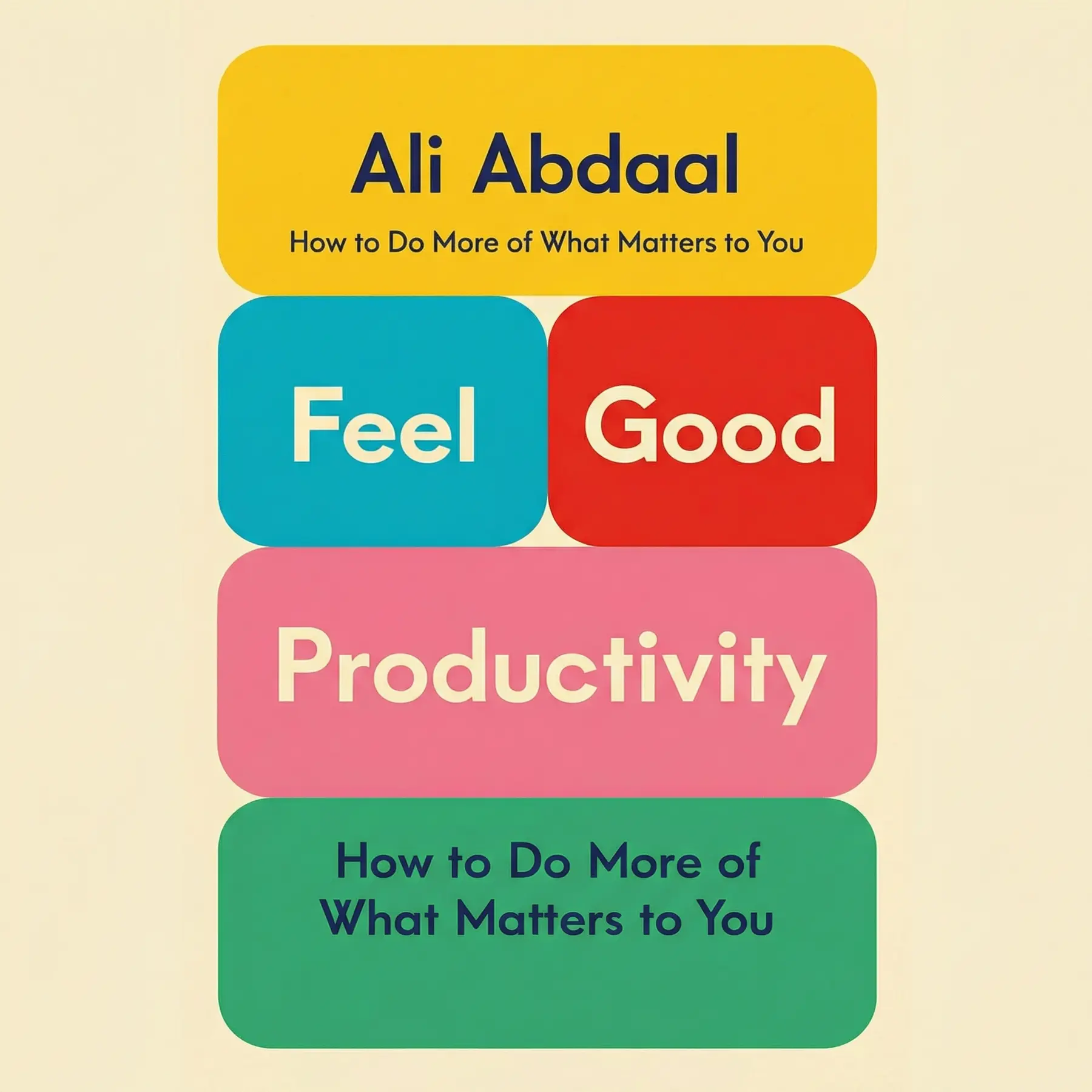
EnglishไทยFeel-Good Productivity: How to Do More of What Matters to You
By Ali Abdaal
Shows why feeling good fuels lasting success better than grim discipline. It also explains how to restore energy, beat procrastination by finding its real cause, and recover from the specific kind of burnout you face.
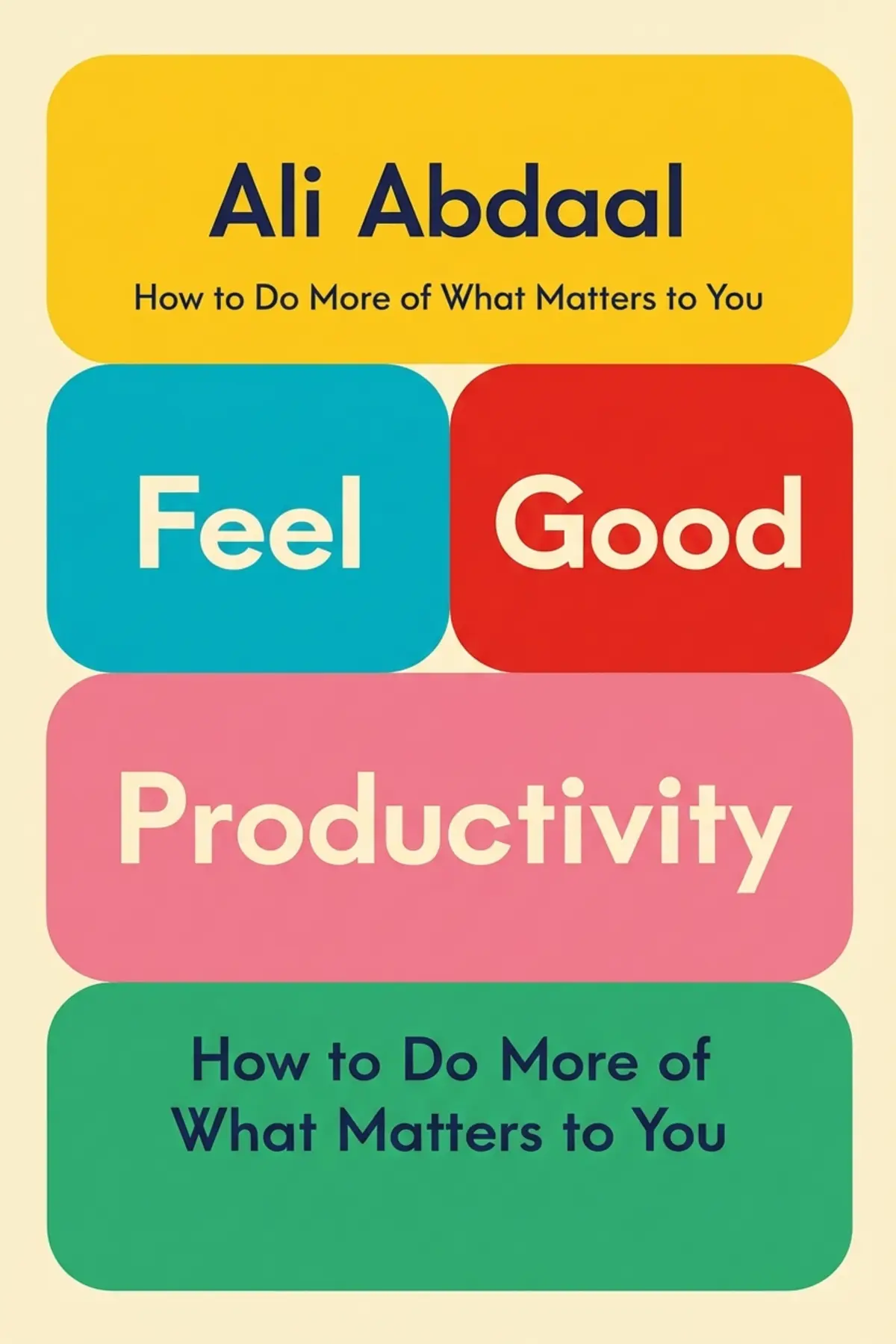
Table of Content
1. Introduction
1 min 08 sec
If your work gets done only by forcing yourself through it, you may be running on the fuel that burns out fastest. In Feel-Good Productivity, former junior doctor and YouTuber Ali Abdaal argues that the order is backwards: feeling good is what produces lasting success, and success built on grim effort rarely holds. He reached that view after years of pushing through hospital shifts and late-night video work on discipline alone, then studying the science and philosophy of getting things done.
His case rests on three forces that drain enjoyment and stall progress: low energy, procrastination and burnout. Each has its own remedy. Energy returns through play, power and people. Procrastination gives way once you find whether confusion, fear or inertia is behind it. Burnout eases when the cure matches its type. Along the way he offers small experiments you can try at your desk tomorrow, from a five-minute start to a crystal-ball plan for a hard project.
2. Stop forcing results and start with feeling good
1 min 35 sec
A doctor who had mastered discipline found himself frozen over a dropped tray on a holiday shift. What he discovered afterward suggests the energy you need may already be inside you, waiting for the right trigger.
3. Bring play and control into dull work
1 min 36 sec
You may not choose your projects, your boss or your deadlines. Abdaal argues that two sources of energy remain in your hands anyway, and one of them starts with a question most adults stopped asking long ago.
4. Surround yourself with people who give energy
1 min 33 sec
Some colleagues leave you lighter and others leave you empty. Abdaal suggests a way to tilt the balance, and a simple request that turns out to help the other person nearly as much as it helps you.
5. Find the root cause of procrastination and name it
1 min 46 sec
Discipline and motivation are the usual answers to putting things off, and both fail often. Abdaal proposes a third approach that starts with a diagnosis, and the cause is rarely the one people assume.
6. Small experiments that turn stalling into starting
1 min 38 sec
A crystal ball, a question about the next ten years and a stranger on the internet. Each one answers a different reason for delay, and none of them asks you to feel motivated first.
7. Tell which kind of burnout you have
1 min 33 sec
He had left medicine, was earning more than ever and loved his work, yet he was lying face down on the sofa. His recovery began when he realized that one word was hiding three separate problems.
8. Recover by matching the fix to the cause
1 min 31 sec
A precise ratio of work to rest, a walk among trees and an exercise that sounds morbid. Each targets a different kind of exhaustion, and using the wrong one may leave you just as tired.
9. Conclusion
1 min 10 sec
Abdaal’s book asks overachievers to reverse a lifelong habit. Delaying enjoyment until success arrives is, in his view, counterproductive, because the good feeling is what supplies the energy, clears the blocks and keeps the effort going for years. The doctor staring at dropped syringes on Christmas Day and the successful creator face down on his sofa had the same problem. Both treated well-being as a prize for later.
What he leaves you with is a stance. He wants you to act like a scientist of your own days, curious and willing to test things, and he credits that playful mindset more than any single technique.
So begin small. When a task drags, ask how you could make it fun. When you stall, name whether confusion, fear or inertia is behind it, and give it five minutes. When you are worn out, work out which burnout you have before choosing a cure, whether that is a 17-minute break, a walk among trees or an honest look at how you want to be remembered.
Feel good first, and the work you care about finally has something to run on.
About this book
What is this book about?
Many capable people get things done by forcing themselves through the work and saving enjoyment for later. Ali Abdaal did exactly that as a junior doctor and YouTuber, until a Christmas Day hospital shift left him staring at a dropped tray of syringes. He went looking for a better way and reversed his view of productivity. Success, he concluded, grows more reliably and lasts longer when it comes from feeling good. He identifies three forces that drain enjoyment and stall progress: low energy, procrastination and burnout. For energy, he offers three energizers: play, power and people. For procrastination, he shows how to tell whether confusion, fear or inertia is behind it and how to answer each. For burnout, he separates overexertion, depletion and misalignment, each with its own remedy. Readers get small, low-risk experiments to try straight away, including a pre-mortem, the 10/10/10 exercise, a 52-minute work rhythm and the eulogy exercise, along with a curious, playful attitude toward their own working days.
Book Information
Who it's for
Running low on willpower
Professionals and students who get results through sheer willpower and feel close to running out.
Wondering why they procrastinate
Chronic procrastinators who want to know what is really stopping them.
Hoping to beat burnout
People feeling burned out, even in work they love, who want a clear way to diagnose and recover.
About the Author
Ali Abdaal
Ali Abdaal studied medicine at Cambridge University and practiced in the UK's National Health Service as a physician, all the while posting about his attempts to live a healthier, more productive life on YouTube and other platforms. In 2021 he left medical practice to work on his online projects full time. He creates content on productivity, psychology and lifestyle design, hosts the Deep Dive podcast, and has been covered by Business Insider, Men's Health and the Times. This book draws on about a decade of his study.
Ratings & Reviews
Ratings at a glance
What people think
Listeners find this guide to productivity useful for reaching objectives while avoiding exhaustion, valuing its foundation in scientific research and evidence-based concepts. It provides realistic guidance with concrete methods for implementation, delivering specific, actionable tasks within each chapter. Listeners characterize it as an accessible work that improves joy and satisfaction, with one listener highlighting its profound relevance to the difficulties of contemporary living.
Top reviews
Manee
Finally got around to reading Ali’s book and it completely flipped my perspective on what it means to be effective. Instead of the typical 'hustle harder' narrative, this guide focuses on the radical idea that joy is actually the engine of our success. The research-based approach provides a sturdy foundation for the advice, making it feel more like a science experiment than a lecture. I especially loved the actionable steps at the end of each chapter because they felt genuinely doable in my chaotic schedule. Truth is, I was skeptical about another productivity book, but the warmth in his writing style won me over. It addresses modern challenges with a sense of compassion that most business books lack entirely. If you are struggling with feeling drained by your to-do list, this is the refreshing reset you need.
Show moreDiego
Wow, I never realized how much my negative mindset was holding back my actual output until I sat down with this. Ali Abdaal has managed to distill years of productivity research into something that feels light, joyful, and entirely accessible. The book suggests that feeling good leads to success, rather than success being the prerequisite for happiness, and that resonated deeply with me. Every chapter is packed with science-backed theories that are explained without any confusing jargon or fluff. I found myself highlighting passages on almost every page because the insights were just so practical. It’s more than just a guide; it’s a journey into redefining how we approach our daily tasks. Truly, this is the most helpful book I’ve read all year, and I’ve already recommended it to my entire team at work.
Show morePannipa
Ever wonder why some people seem to breeze through their to-do lists while you're constantly drowning in stress? This book answers that question by focusing on the emotional side of work. Ali's fresh perspective is a revelation in a market saturated with 'get up at 4 AM' advice. He uses great references to things we all know—like Pirates of the Caribbean—to make complex psychological points feel obvious. The writing is brilliant and brought a collection of facts together without making me feel like I was back in school. I loved the tangible ways to put the theories into practice immediately. It really helps you understand those tiny moments of resistance we all feel. I’ve never been so fascinated by the intersection of happiness and work. This is a must-read for anyone seeking to infuse a bit more joy into their professional journey.
Show moreMikael
Direct opinion: this is the most practical productivity book on my shelf. Ali Abdaal captures the modern struggle of trying to balance results with inner peace perfectly. His conversational tone makes it feel like you’re getting advice from a smart friend rather than a condescending expert. Not gonna lie, I usually hate the 'science' sections in these kinds of books, but here they were actually engaging. The focus on play and curiosity as drivers for work is something I hadn't considered before. Each chapter offers clear, actionable steps that don't feel overwhelming or impossible to achieve. Even though the author comes from a place of significant privilege, the core lessons about positivity are applicable to anyone. It’s an easy read that manages to boost your mood while giving you a clear plan for your week. Absolutely worth the buy.
Show moreTong
The chapter on burnout alone makes this worth the price of admission for any corporate worker. Ali Abdaal moves away from the toxic 'grind culture' and offers a much-needed antidote that emphasizes mental well-being alongside output. Look, some of the psychological experiments he cites might feel a bit surface-level to a professional psychologist, but for the average reader, they provide enough context to make the points stick. I found the 'experiments' at the end of sections to be tangible ways to test his theories in real-time. My only gripe is that the tone occasionally feels a bit too optimistic, bordering on naive regarding people in high-stress, low-control jobs. Regardless, the focus on harnessing positivity to fuel your goals is a transformative shift from the typical 'discipline is everything' mantra. It’s a solid 4-star read that I’ll likely revisit when I feel my energy dipping.
Show moreRod
Picked this up during a particularly stressful month at work and found it surprisingly soothing. This book isn't about doing more; it's about feeling better while you do what matters. Abdaal’s writing is bright and encouraging, which helps the medicine of his productivity tips go down easier. Personally, I appreciated the references to pop culture like The Office, which kept the tone from feeling like a dry psych class. While some of the advice felt a little repetitive by the end, the core message about prioritizing inner satisfaction is vital for today’s world. It’s a quick read that provides immediate, actionable experiments you can start tomorrow morning. Not every tip hit the mark for me, but the ones that did have already changed my morning routine for the better. It’s a great gift for anyone starting their first 'real' job.
Show morePooja
After hearing so much hype on social media, I was worried this wouldn't live up to the reputation. Thankfully, it's a very solid manual for anyone looking to improve their life without losing their mind. The advice isn't necessarily revolutionary, but it is sound and presented in a very digestible format. I found the sections on mindset changes particularly helpful for tackling my procrastination habits. It’s a nice reminder to prioritize the things that make us feel human in an age of late-stage capitalism. There is a bit of padding toward the end, and some sections felt like they could have been shorter blog posts. Despite that, the overall message is powerful and the research feels credible enough to warrant a try. It’s definitely more 'feel-good' than your standard business manual, which I genuinely appreciated.
Show moreSomkid
As a long-time subscriber to Ali’s YouTube channel, I found myself feeling like I had heard most of this before. The writing is incredibly conversational and easy to breeze through, but much of the content felt like a repackaging of his existing videos. To be fair, having all these concepts in one place is convenient, and the way he summarizes other giants like Covey is helpful. However, the volume of padding in the latter half of the book was a bit frustrating for someone looking for deep, novel insights. It’s a solid entry point for beginners who haven't touched the self-help genre yet. For the rest of us, it’s a light, pleasant reminder rather than a groundbreaking revelation. I just wish there was more 'oomph' or perhaps some newer research that hasn't been covered in his vlogs a dozen times already.
Show moreYok
In my experience, this book works best as a curated 'best of' collection for the productivity world. It’s a fun, quick read that summarizes several important psychological concepts well. However, if you are a seasoned reader of the genre, you might find the lack of original framework a bit disappointing. The conversational style makes it easy to consume, yet it occasionally drifts into being a bit tedious with the anecdotal stories. I did appreciate the focus on avoiding burnout, as that is a topic often ignored by other 'alpha' productivity gurus. To be fair, it’s a beautiful physical book and the layout is great for skimming. It’s just not the revolutionary text the marketing might lead you to believe. It's a nice, gentle reminder to be kinder to yourself while working toward your goals, but don't expect deep new insights.
Show moreNoppadol
Not what I expected from a medical doctor, to be frank. While the prose is light and easy to digest, it often feels like a collection of 'cod psychology' gleaned from much better, more academic sources. There is a persistent sense of privilege throughout the narrative that makes it difficult to relate to if you aren't already a successful content creator or a high-earner. The author seems to gloss over the reality that many people cannot simply 'choose' to make their work feel like play. Calling every anecdotal story 'the science' felt a bit condescending and lacked the rigour I was hoping for. It’s basically a glossy summary of other popular self-help books without adding any significant new value to the conversation. If you’ve read '7 Habits' or 'Atomic Habits,' you can safely skip this one as it mostly echoes those sentiments with a cheerful veneer.
Show moreQuestions about this book
What is the main idea of Feel-Good Productivity?
Ali Abdaal argues that lasting success comes from feeling good, not from grim, draining effort. Feeling good releases hormones such as dopamine and serotonin that give you mental and physical energy. He identifies three forces that block productivity, low energy, procrastination and burnout, and offers a set of remedies for each: energizers, unblockers and sustainers, backed by small experiments you can try right away.
What are the three energizers in Feel-Good Productivity?
Abdaal names play, power and people. Play means bringing fun and lightness into your days while still caring deeply. Power means a sense of control over yourself, such as choosing how you do a task even when you cannot choose the task. People means spending time with those who lift you up and asking for help, which he says can be a gift to the helper as well.
How does Ali Abdaal suggest beating procrastination?
Instead of relying on discipline or motivation, he recommends finding the root cause. It is usually confusion, fear or inertia. Confusion is answered with clarity, for example through a pre-mortem. Fear is answered with courage, by naming the feeling or using the 10/10/10 exercise. Inertia is answered with action, by setting a five-minute starting goal or finding an accountability buddy.
What are the three types of burnout according to Ali Abdaal?
He distinguishes overexertion, depletion and misalignment. Overexertion means doing too much, even of work you love, and calls for conserving, such as turning down good opportunities and taking breaks in a 52 to 17 minute rhythm. Depletion comes from downtime that does not restore you and calls for recharging, ideally in nature. Misalignment comes from work that clashes with your values and calls for the eulogy exercise.
Who should read Feel-Good Productivity?
It suits people who push through work on willpower and feel worn down by it, chronic procrastinators looking for the real reason they stall, and anyone burned out despite doing work they enjoy. Its tools are small and low risk, from asking how a dull task could be fun to imagining what you want said at your funeral and adjusting your life to match.
Readers also enjoyed



AUDIO SUMMARY AVAILABLE
Listen to Feel-Good Productivity in 15 minutes
Get the key ideas from Feel-Good Productivity by Ali Abdaal, plus 5,000+ more nonfiction titles.
- 5,000+ titles
- Listen as much as you want
- 7-day free trial
- Cancel anytime









