

14 min 02 sec
Available in: English
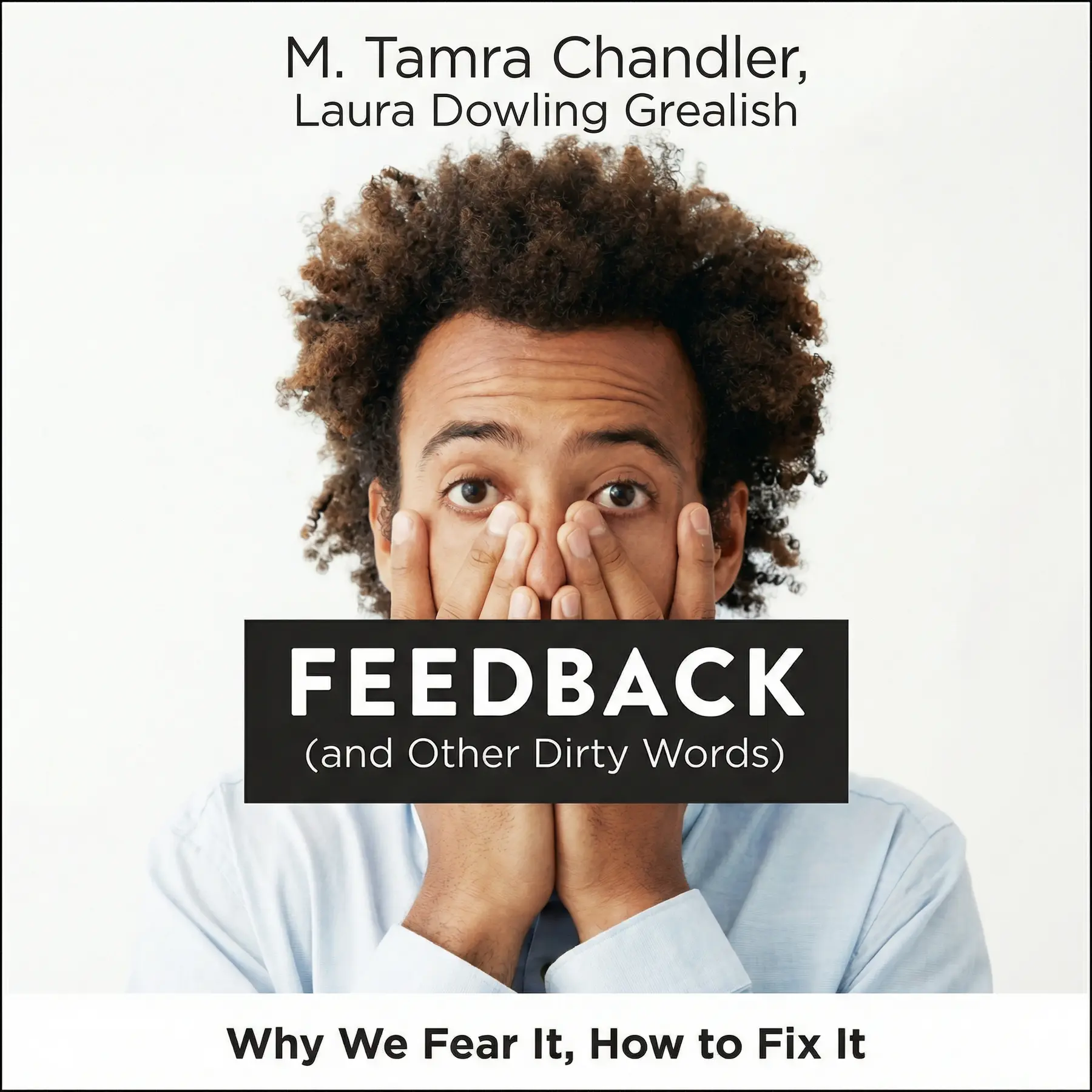
Feedback (and Other Dirty Words): Why We Fear It, How to Fix It
Explains why feedback sets off dread at work and how to make it useful: calming the body's fear response, building trust, asking focused questions and giving small, frequent insights aimed at growth.
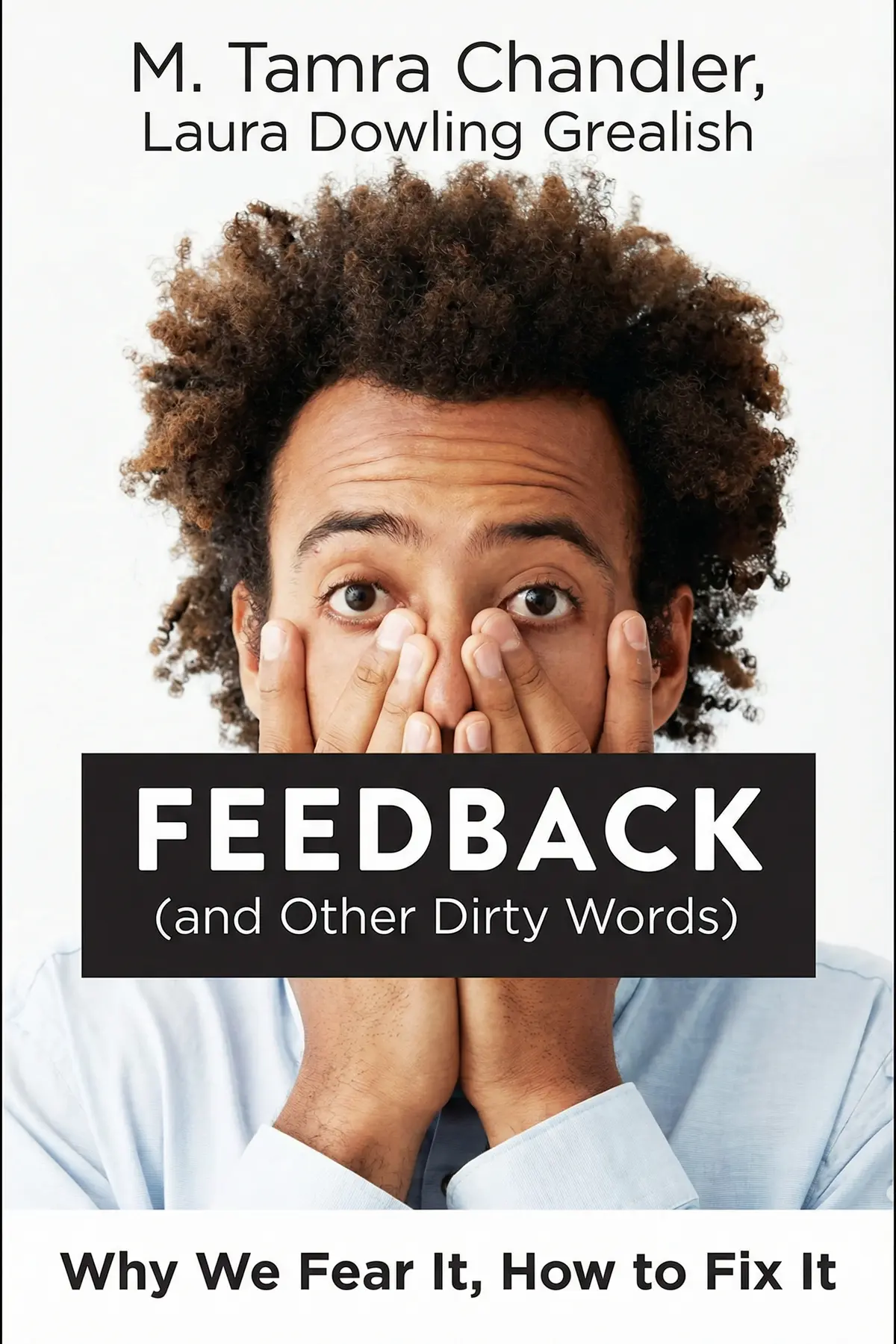
Table of Content
1. Introduction
1 min 00 sec
A manager leans out of her office and says she has some feedback for you, and your pulse jumps before you know what it is about. In Feedback (and Other Dirty Words), consultants M. In the view of Tamra Chandler and Laura Dowling Grealish, this dread is something we learn, and it conceals one of the most valuable tools available to any workplace. In one 2018 study, the companies best at feedback saw twice the financial gains of those worst at it.
The authors’ case is that feedback stops being frightening once it is treated as clear, specific information offered only to help someone grow, resting on trust and arriving often, in small pieces. They explain why the body panics, how to calm it, and how to seek, receive and give feedback that moves people forward. The next tense review or hallway comment can go differently, with a breathing technique, a few sharp questions and a better way to ask.
2. See why the best feedback cultures double their gains
1 min 39 sec
Feedback has a reputation as something bosses do to people, yet most workers say they want more of it. A study of 57 companies suggests the gap between those two facts is costing businesses real money.
3. Calm your body when feedback feels like danger
1 min 41 sec
A reaction that once saved our ancestors from predators now fires in meeting rooms, and it can make you deaf to perfectly fair advice. One small trick of attention helps switch it off.
4. Define feedback so it helps people grow
1 min 40 sec
Telling someone to keep up the good work feels kind, yet it may be nearly as unhelpful as harsh criticism. The authors’ definition of feedback rules out a surprising amount of what passes for it today.
5. Build the trust that makes feedback land
1 min 40 sec
The same comment can be shrugged off from one colleague and taken to heart from another. A marriage researcher’s ratio and a simple habit of attention explain the difference, and how to change it.
6. Ask for feedback you can actually use
1 min 41 sec
Asking a manager how you’re doing seems like the brave, open thing to do. It often backfires, leaving both of you uneasy. A narrower request, sent to the right people, works far better.
7. Questions that turn vague criticism into clear direction
1 min 42 sec
A clumsy remark about a typo in front of the team can feel like a deliberate humiliation. The authors show how a few questions, asked out loud and in your own head, change what you take away.
8. Small, frequent feedback beats the annual review
1 min 40 sec
Managers tend to think their praise is warmer and more effective than it really is, and many readers may worry they lack time for frequent check-ins. Research on schoolchildren and on leaders suggests both beliefs deserve a second look.
9. Conclusion
1 min 19 sec
Chandler and Grealish’s deeper argument is that the fear around feedback was built by bad habits, so better habits can take it apart. Hoarded verdicts, blunt attacks and defensive replies trained our bodies to react as if a tiger had walked into the room. Clear information, offered to help and exchanged often between people who trust each other, can retrain them.
The authors want feedback to be frequent, fair and focused, and each of those can start small. Before a hard conversation, breathe in for four, hold for seven and out for eight. When you ask, name the one thing you want someone to watch, and ask a peer as well as your manager. When criticism stings, separate what is true from what seems biased, then decide what you will do with it. And this week, tell one colleague something specific they did well.
Fairness also means looking inward. The authors suggest the Implicit Association Test, designed by researchers at universities including Harvard, to see how ingrained stereotypes about things such as race or sexuality may shape the feedback you give and hear.
Done this way, the boss leaning out of her office becomes the start of a useful conversation.
About this book
What is this book about?
For many people, a manager saying she has some feedback is enough to make the heart race. M. According to M. Tamra Chandler and Laura Dowling Grealish, people pick up this reaction over time rather than being born with it. Leaders have used feedback to punish or show power, decent managers have saved it all for the yearly review, and receivers have answered with defensiveness. The result is a word most people dread, even though most workers say they want more of it. The authors, both management consultants, redefine feedback as clear, specific information that is given or sought only to help someone grow. They explain the brain science behind the fear response and offer a breathing technique to calm it. They then show how to lay foundations of trust and careful noticing, how to ask for focused feedback from several sources including peers, how to receive it without spiraling, and how to give it in frequent, bite-sized pieces. Readers get a practical way to make feedback frequent, fair and focused, and evidence that doing so pays off, from team motivation to a company's financial results.
Book Information
Who it's for
Employees nervous about feedback
Employees whose pulse jumps when a manager asks for a quick word about their work.
Managers giving feedback yearly
New and experienced managers who save everything for the annual review and want a better rhythm.
Wanting a feedback culture
Team leads and HR professionals trying to build a workplace where people ask for feedback.
About the Author
M. Tamra Chandler
M. Tamra Chandler founded the consulting firm PeopleFirm in 2008 and led it as CEO; it appeared on a Forbes list of America's best management consulting firms from 2016 to 2019. She later became a leader in EY's Americas People Advisory Services group, and Consulting Magazine twice named her one of the country's Top 25 Consultants. Laura Dowling Grealish has spent about two decades helping clients build healthy workplaces, strong teams and modern performance management, after roles at GE Capital, Genworth Financial, The Cleveland Clinic and Russell Investments.
Ratings & Reviews
Ratings at a glance
What people think
Listeners find the strategies for converting feedback into a professional advancement tool to be exceptionally practical and easy to implement. While perspectives differ on the uniqueness of the fundamental principles, listeners value the authors’ dedication to fostering trust through consistent, equitable, and targeted interactions. Moreover, they highlight the benefit of the evidence-based case studies, with one listener remarking that the guide offers superb advice for cultivating both collective teams and individual workers.
Top reviews
Pranee
This book completely flipped my perspective on those dreaded annual reviews. Instead of treating feedback like a surgical strike, Chandler and Grealish argue for making it a "frequent, fair, and focused" part of daily life. The writing is engaging and surprisingly funny, which helps when you're tackling such a heavy subject. I particularly appreciated the emphasis on trust; without it, even the best advice falls flat. My only minor gripe is that some of the workplace scenarios felt a bit idealized for a high-stress corporate environment, but the core principles are undeniably solid. If you want to stop cringing when your boss says "can we talk?", this is a must-read for your professional development.
Show moreRiley
Finally got around to reading this, and the timing couldn't have been better for my team. We’ve been struggling with communication silos, and the "frequent, fair, and focused" pillars gave us a common language to start repairing that. It’s not just for the office, though; I found myself applying the "seeking" feedback tips in my personal life with great results. The authors come across as very impressive and knowledgeable individuals who truly care about the human element of business. It’s refreshing to read a leadership book that doesn't feel like it was written by an AI. This is a powerful resource for anyone interested in personal growth and creating meaningful connections.
Show moreJong
After hearing about Chandler's work on leadership, I jumped into this expecting a dry HR manual, but I was pleasantly surprised by the warmth and practicality. The authors do an incredible job showing how we constantly bungle our communications. They offer specific examples that make the "frequent and focused" framework easy to visualize in a real office setting. Truth is, we all have blind spots, and the research-backed approach here helps bridge that gap between intention and impact. I did think the middle section dragged a bit with repetitive points, yet the overall message remains vital. It’s a great tool for anyone looking to build a more transparent culture within their team.
Show moreKob
The chapter on rewriting the "feedback" script is worth the price of admission alone. Most of us are conditioned to fear the "sandwich method" or vague critiques, but this book provides a much-needed alternative. By focusing on growth and connection rather than just "fixing" people, the authors provide a pathway to genuine improvement. I loved the specific prompts for seeking feedback, like asking "what is the one thing I should do more of?" instead of a general "how am I doing?". It’s a very practical guide. I'm taking off one star because the layout was a bit cluttered, making it hard to find specific tips later on. Still, it's a solid addition to any manager's library.
Show moreKet
As someone who has always avoided giving negative critiques, I found the 'fair and focused' framework incredibly practical. It takes the "gruesome" element out of the conversation. The book is packed with research-backed examples that explain why our brains go into lockdown during reviews. I especially liked the actionable advice on taking the Implicit Association Test to check our own biases before judging others. My only criticism is that the authors are very anti-360 survey, which doesn't quite align with my own positive experiences using those tools for leadership development. Despite that disagreement, the core message about building trust and frequent communication is absolutely spot on.
Show moreJoseph
Ever wonder why feedback feels like such a punch to the gut? This book explains the neuroscience behind that "fight or flight" response and offers a roadmap to fix it. While the concepts are helpful, I found myself comparing it to "Thanks for the Feedback" or "Let's Talk," and it didn't quite reach those heights for me. The advice is actionable, sure, but a lot of it feels like common sense packaged in new terminology. I enjoyed the section on the Implicit Association Test from Harvard—it’s a wake-up call regarding our hidden biases. It’s a decent introductory text for new managers, but seasoned leaders might find it a bit elementary and repetitive.
Show moreHazel
To be fair, the authors do a great job highlighting how poorly we usually handle these conversations, but I didn't find much here that felt truly revolutionary. If you are familiar with the FUKO method or basic radical candor, this will feel like a retread of familiar ground. The focus on trust and building a "growth-ready" culture is important, but the execution felt a bit "Blinkist-lite" in parts. I appreciate the emphasis on reducing the fear factor associated with critiques. It’s a quick read, and the tone is very accessible, which is a plus. If you're new to the workforce, grab it. If you've been leading teams for a decade, you can probably just skim the summaries.
Show moreSomboon
Look, the advice here is definitely sound, but it lacks a bit of the punch I was hoping for. The authors argue that feedback should be a positive force for improvement, which is a sentiment I totally get behind. However, the book spends a lot of time on the "why" and not quite enough on the difficult "how" when dealing with truly toxic employees. It’s a very "sunny" approach to a topic that is often quite messy. The tips on asking for specific examples to clarify vague feedback were the highlight for me. It’s a decent read for a plane ride, but it didn't change my life. I’d give it a 3.5 if I could.
Show moreGrace
Frankly, I have mixed feelings about the authors' stance on traditional feedback tools like the 360 survey. While they make some valid points about how these systems can be manipulated or biased, I think they throw the baby out with the bathwater. That said, the emphasis on creating "frequent" touchpoints rather than waiting for annual reviews is a game-changer. The tone is casual and conversational, making it an easy read. If you’re looking for a way to make your workplace less anxiety-ridden, there is definitely value here. It’s a solid 3-star book—useful for the basics, but perhaps a bit dogmatic in its dismissal of certain industry standards.
Show moreNoo
Not what I expected, unfortunately. While I agree that feedback is often "dirty" and poorly handled, the solution presented here felt a bit thin. My biggest issue was the authors' suggestion to ditch traditional tools like 360-degree surveys. I’ve seen those surveys work wonders when paired with the Zenger-Folkman research, so dismissing them entirely felt shortsighted. The writing style is energetic, but it often prioritizes buzzwords over deep, nuanced strategy. If you’ve never read a book on management before, you might find some gems, but for me, it lacked the "aha!" moments I was looking for. It felt more like a long-form blog post than a groundbreaking business book.
Show moreQuestions about this book
What is the main idea of Feedback (and Other Dirty Words)?
M. The reason feedback feels threatening, say Tamra Chandler and Laura Dowling Grealish, is that people have misused it to punish, to manipulate, or to unload a whole year of comments in one go. Redefined as clear, specific information given or sought only to help someone grow, and built on trust and regular attention, it becomes a strong driver of personal and business improvement.
Why do people react so badly to feedback?
The authors explain that past bad experiences can make even a harmless offer of feedback trigger a fear response in the amygdala, the primitive part of the brain. The body prepares for danger, and reason and emotional control fall away, so the listener cannot process what is said. Focusing on physical sensations and using 4-7-8 breathing can calm that reaction.
How should I ask for feedback at work?
Make the request narrow. Instead of asking how you’re doing, ask a manager to watch something specific, such as your body language and eye contact during a presentation. Then widen your sources. The authors stress that peers who work beside you daily see your best and worst, and cite a Globoforce study linking peer recognition to better financial results.
How often should managers give feedback?
The authors report that research supports informal feedback at least every two weeks, and they cite a study of schoolchildren who learned more when feedback came before, during and after a task. Each exchange should stay bite-sized, with one suggestion or goal, and managers should add more praise, since research suggests they give less of it than they think.
How can I handle feedback that hurts?
Assume the giver meant to help, as with a manager who clumsily mentions a typo in front of the team. If one remark starts a negative spiral, which psychologist Susan Nolen-Hoeksema showed can happen, ask yourself what is true in it, what seems biased and how you can use it to make progress.
Featured in
Readers also enjoyed







AUDIO SUMMARY AVAILABLE
Listen to Feedback (and Other Dirty Words) in 15 minutes
Get the key ideas from Feedback (and Other Dirty Words) by M. Tamra Chandler, plus 5,000+ more nonfiction titles.
- 5,000+ titles
- Listen as much as you want
- 7-day free trial
- Cancel anytime









