
12 min 04 sec
Available in: English
Fast Burn!: The Power of Negative Energy Balance
By Ian K. Smith
A nine-week intermittent fasting plan that moves you from a twelve-hour eating window to much longer fasts in gradual steps, paired with exercise and simple meals, so your body starts drawing on its stored fat.
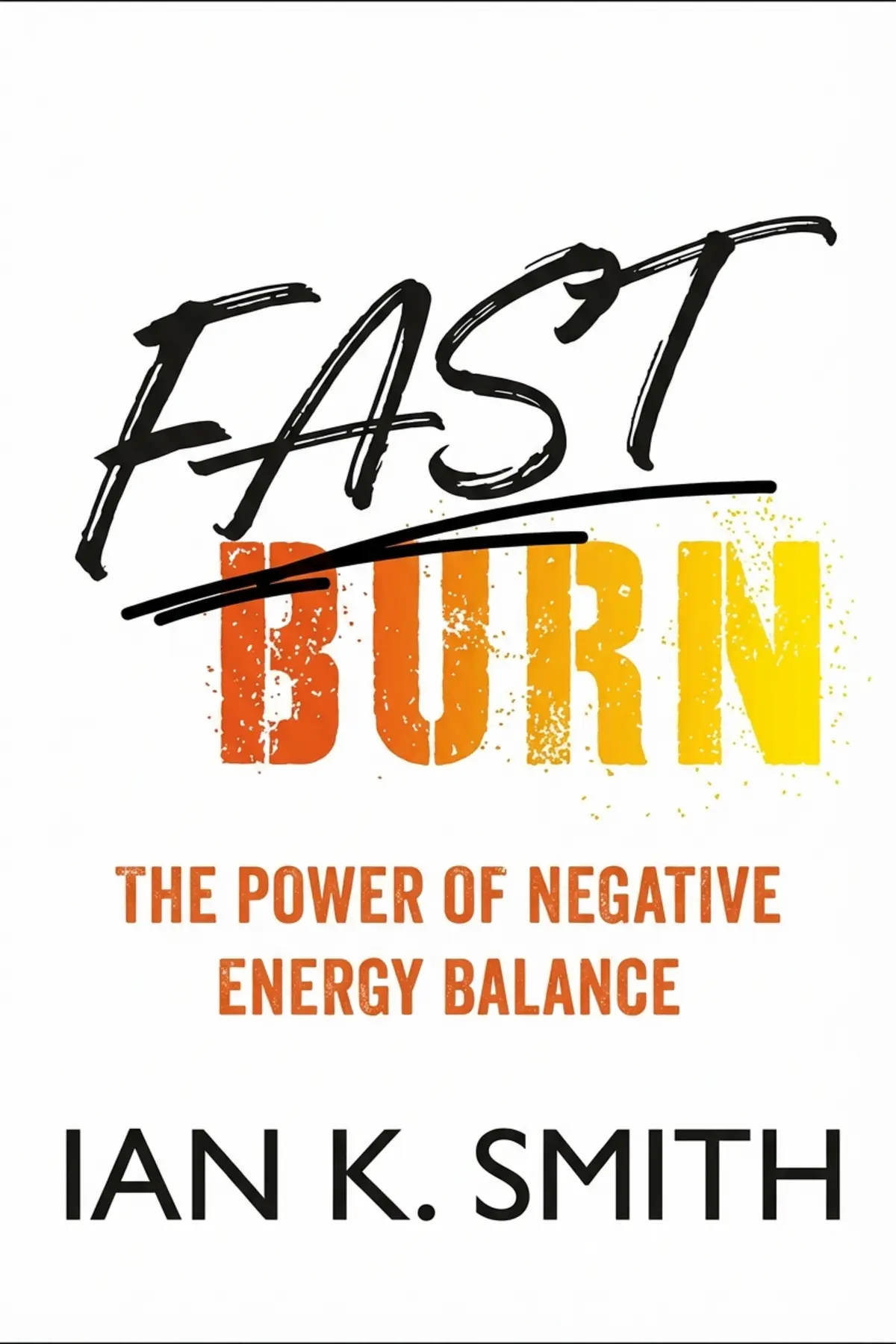
Table of Content
1. Introduction
1 min 02 sec
If you have tried intermittent fasting, you know the hard part is not the idea but the plan: which schedule, how long, and what to eat when the clock finally says yes. In Fast Burn!, physician and former NBC News medical correspondent Ian K. Smith starts from one plain rule of weight. Take in fewer calories than you burn, and the body turns to its stored fat for fuel.
His tool for creating that gap is timing. Smith argues that a body eating on a fixed schedule, eased into longer fasts over nine weeks and fed well inside its eating window, will draw down its fat reserves without a sudden shock.
What follows is his short guide to the four kinds of fat, the main fasting schedules, the program week by week and three meals that fit it. By the end, you will know exactly where to set your first eating window and how to stretch it. Smith also advises speaking to your own doctor before any major change in diet.
2. Keep the fats that help and cut the rest
1 min 50 sec
Fat is the nutrient most diets treat as the enemy, yet the body cannot survive without it and the brain rewards you for eating it. The real question is which kind ends up on your plate.
3. A fixed eating window helps your body burn stored fat
1 min 41 sec
Food has never been easier to get, and our bodies were never built for that. Early humans lived with long gaps between meals, and Smith thinks those gaps hold the key to losing weight today.
4. Ease into fasting with a gentle first month
1 min 37 sec
Leaping straight into long fasts is a fast route to giving up. Smith’s opening month asks surprisingly little of you, and the order of its small steps is what makes the harder weeks possible.
5. A rest week that protects your progress
1 min 35 sec
Just when the plan starts working, Smith tells you to stop pushing. His fifth week looks like a pause, but it decides whether the hardest stretch of the program ends in results or in burnout.
6. Tighten the window once your body is ready
1 min 39 sec
The final four weeks are where Smith expects the biggest change, and they come with fasts far longer than anything before. He also builds in small safety valves for the days that feel too hard.
7. Make every meal inside the window count
1 min 38 sec
Most people new to fasting obsess over the hours without food and forget the hours with it. Smith shows how a careless eating window can erase a perfect fast, and what a good day of meals looks like.
8. Conclusion
1 min 02 sec
Fast Burn! turns a vague trend into a calendar. Its core claim is simple arithmetic: when fewer calories come in than go out, stored fat becomes the fuel. What Smith adds is a way to make that deficit feel normal. He fixes the hours of eating, stretches the fast in small steps, rests before the hardest stretch and refuses to waste the eating window on soda and white pasta.
The program also asks for patience. Its strictest weeks, the 16-hour and 18-hour fasts, arrive only after two months of practice, and only for those who feel healthy enough to try them.
If you want to begin, the first move is small. Pick a twelve-hour window that fits your mornings, open it about two hours after you wake, and keep it at the same times every day for two weeks, with water close by and easy cardio a few times a week. Before tightening it further, talk to your doctor, since any major change to your diet should be checked with a physician first.
The body already knows how to live through a gap between meals. Smith’s plan simply gives that gap a schedule.
About this book
What is this book about?
Intermittent fasting is everywhere, but most people who try it have no clear plan. They do not know which schedule to start with, how fast to tighten it or what to eat when the eating window opens. Physician Ian K. Smith offers a structured answer built on one rule: when fewer calories come in than the body burns, it turns to its fat stores for fuel. Smith's Fast Burn program runs for nine weeks. Four weeks of Ignition get the body used to a regular eating clock. A one-week Intermission allows rest and reflection. Four weeks of Acceleration then stretch the fasting window toward 16 and even 18 hours, with two reduced-calorie days borrowed from the 5:2 method. Exercise grows alongside the fasting, and plant-heavy Jigsaw weeks keep the diet varied. Readers also get a short guide to the four kinds of dietary fat, an overview of the main fasting models, and recipes for a smoothie, a grain bowl and a quesadilla that fit inside the window. Smith advises checking with a doctor before any major change to your diet.
Book Information
Who it's for
Wanting a fasting plan
People who have read about intermittent fasting but want a clear week-by-week plan to follow.
Workday snackers
Busy professionals who snack all day and want a fixed eating schedule that fits around work.
Cooks wanting simple meals
Home cooks looking for simple meals that suit a shorter eating window.
About the Author
Ian K. Smith
Ian K. Smith, M.D., studied at Harvard College, earned a master's in science education at Columbia's Teachers College and took his medical degree at the University of Chicago Pritzker School of Medicine. He has been a medical correspondent for NBC News and a host of the television show The Doctors. In 2007 he launched the 50 Million Pound Challenge, a weight loss campaign, and in 2010 he joined the President's Council on Fitness, Sports, and Nutrition. Several of his diet books have reached number one on the New York Times bestseller list.
Ratings & Reviews
Ratings at a glance

What people think
Listeners find this guide productive for weight reduction, noting impressive milestones like losing 4lbs in the first week, and enjoy the straightforward layout and helpful information. The dietary strategy earns praise, as one listener points out that it directs exactly what and when to consume, while the menu selections provide several different options. Listeners hold differing views on the ease of the recipes. Finally, perspectives vary on whether the book offers good value for money.
Top reviews
Eleni
After seeing Dr. Ian on TV, I decided to give this 9-week challenge a real shot. I lost about 12 pounds and, more importantly, I finally kicked my diet soda habit for good! The clean eating principles are easy to understand, and the Facebook group provides such a massive boost of motivation when you're feeling sluggish. It’s more than just a quick fix; it feels like a sustainable way of eating for the long haul. I appreciate that he gives so many meal choices so you never feel like you're starving or stuck eating the same bland chicken every night. Highly recommend if you need structure!
Show moreOwen
Congratulations to Dr. Smith for another winner that actually delivers on its promises! I’ve tried several of his programs, and this is by far the easiest one to follow because of the sheer variety of snack suggestions. You frankly don’t feel like you’re on a diet when you have this many choices for every meal. The nine-week cycle is long enough to build real habits but short enough that the finish line feels reachable. It’s a great resource for anyone who wants to transition into a healthier lifestyle without feeling lectured or talked down to by the author.
Show moreLaddawan
I’m actually quite impressed with how quickly the weight started coming off. I dropped four pounds in the very first week, which was the jumpstart I desperately needed to stay focused. The book acts as a daily handbook, telling you exactly when to eat and what to do, including specific exercises like walking up the stairs. My only gripe is that the editing feels a bit rushed because I spotted several typos throughout the text. Despite that, the variety of snacks and meal options kept me from feeling deprived, which is usually where I fail on these plans.
Show moreWanphen
Finally, a diet book that isn't just theory but actually gives you a roadmap. I love how the book is organized by day, so you can just flip to where you are in the nine weeks and see your schedule. The flexibility within the food lists is a huge plus because I'm a picky eater. I did notice some of the recipes are a bit more complex than I’d like for a busy weeknight, but the results speak for themselves. I’m down ten pounds and I feel significantly more energetic than I did two months ago. It takes dedication, but it works.
Show moreNoi
The structure here is what saved me from my usual cycle of starting and stopping diets. Having a specific list of what to eat and when to move kept me accountable, especially during the first two weeks. I gotta say, the 'Fast Burn' approach to clean eating combined with short bursts of exercise really worked for my metabolism. It’s not a magic pill—you definitely need some serious dedication to stick to the timing—but the layout makes it as easy as possible. I just wish there were more scientific citations to explain the 'why' behind some of the more specific rules.
Show moreKrisada
The plan itself is solid if you are looking for a very guided experience with every meal spelled out for you. I appreciated the emphasis on clean eating, but the exercise sections felt like they were just there to take up space. Most of the routines are basic things you can find for free on any fitness blog. I’ve read Dr. Smith before and I like his encouraging tone, but this book didn't offer any groundbreaking information for seasoned dieters. It’s a good starting point for a total novice, but it might feel a bit too restrictive for those who prefer flexibility over exact prescriptions.
Show moreOrm
It’s a decent guide for beginners, but I’m on the fence about the value for money here. On one hand, the meal plans are helpful and the results are real; on the other hand, about a third of the book is repetitive exercise instructions and basic definitions. Dr. Ian has a great writing style that is very accessible, which I like. However, if you already have his other books, you might find this one a bit redundant. It’s a toss-up depending on how much you value having a pre-written schedule to follow versus learning the underlying science of weight loss.
Show moreJan
Who has time for this kind of rigid scheduling in the real world? The plan demands that you wait at least two hours after waking up to eat, which is impossible if you have a demanding commute or an early work shift. I found many of the rules to be completely impractical and occasionally contradictory to other intermittent fasting protocols I've studied. Why are flavored beverages allowed during the fasting window? Why do we need two plant-based days a week? None of these specifics are backed up with data or explanations. It feels like a lot of 'do this because I said so' without any real substance.
Show moreLandon
If you are new to fasting, this might be an okay introduction, but for me, it was mostly a recipe book with very little substance. I was hoping for deep dives into the science of Time Restricted Feeding, but instead, I got pages of duplicated instructions for basic movements. The 14/10 window he suggests is actually pretty easy, but trying to cram three meals and three snacks into that time feels counterproductive to the goals of fasting. It just didn't feel like there was a unique personality or new research here. You're better off checking out 'Fast. Feast. Repeat.' for better IF info.
Show moreA
This was such a letdown compared to his earlier work. To be fair, the first few chapters just explain what fat is, which feels like total filler for anyone who has ever picked up a health book before. The most frustrating part is how the 9-week plan is laid out; it's incredibly repetitive, with instructions duplicated over and over just to pad the page count. Where is the actual science? There are almost no references to specific research studies on intermittent fasting, making the whole thing feel like a rushed bandwagon project. Save your money and just look up recipes online.
Show moreQuestions about this book
What is the main idea of Fast Burn! by Ian K. Smith?
Smith argues that weight comes off when you take in fewer calories than you burn, because the body then uses its stored fat as fuel. His tool for creating that deficit is intermittent fasting: limiting the hours in which you eat. The Fast Burn program builds this up over nine weeks, combining time-restricted feeding, elements of the five two method, regular exercise and healthy meals.
How does the nine-week Fast Burn program work?
It has three stages. Ignition, weeks one to four, starts with a twelve-hour eating window and narrows it to ten hours, with light cardio growing into harder workouts. Intermission, week five, is a lighter week for rest and reflection. Acceleration, weeks six to nine, adds daily exercise, two half-calorie days and, for those healthy enough, eating windows of eight and then six hours.
What should you eat during intermittent fasting according to Fast Burn!?
Smith says the eating window matters as much as the fast. He advises avoiding sodas, white pasta, potatoes and other sugary or starchy foods, and favoring leafy greens, whole grains such as quinoa and brown rice, and berries. His sample day includes a fruit and spinach smoothie, a Greek grain bowl with chicken and feta, and a baked chicken quesadilla.
How do you start intermittent fasting with Fast Burn!?
Begin with a twelve twelve schedule for two weeks: twelve hours of eating, twelve of fasting, at consistent times. Get up no less than two hours ahead of your initial meal, space your meals out evenly, drink lots of water and keep any snack in a fasting period under 50 calories. Add about four 30-minute sessions of light cardio a week. Smith recommends checking with your doctor first.
Featured in

Readers also enjoyed






AUDIO SUMMARY AVAILABLE
Listen to Fast Burn! in 15 minutes
Get the key ideas from Fast Burn! by Ian K. Smith, plus 5,000+ more nonfiction titles.
- 5,000+ titles
- Listen as much as you want
- 7-day free trial
- Cancel anytime









