

14 min 55 sec
Available in: English
Farmageddon: The True Cost of Cheap Meat
Shows what cheap factory-farmed meat really costs in polluted water, lost wildlife, wasted land and water, hunger and illness. It also shows how shoppers and governments can move food production back toward traditional farming.
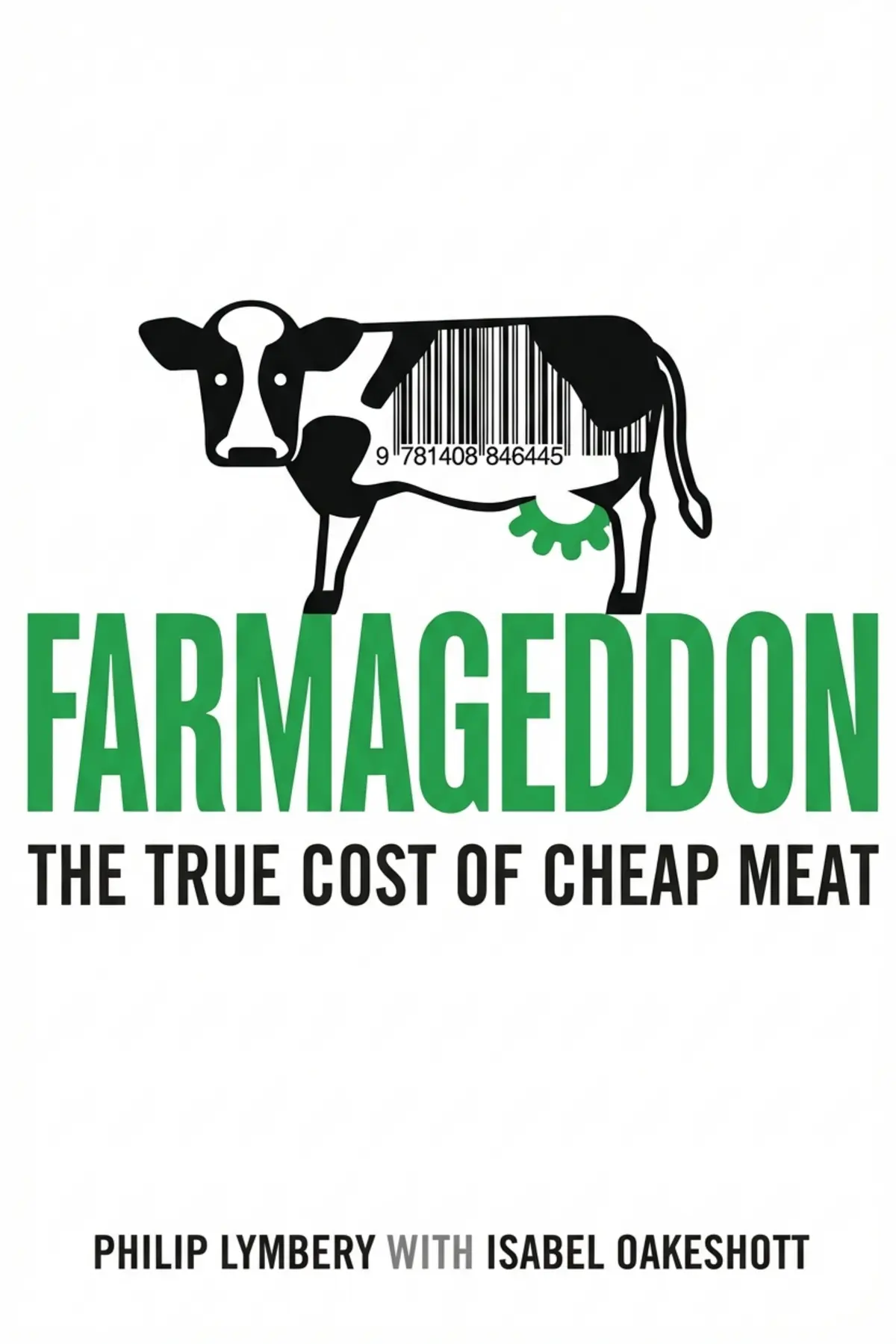
Table of Content
1. Introduction
56 sec
Most shoppers see a low price on a pack of chicken and assume the system works. In Farmageddon, animal welfare campaigner Philip Lymbery and political journalist Isabel Oakeshott argue that the label shows only part of the bill. A single kilogram of beef, they report, takes nearly 90 bathtubs of water to produce. The rest of the cost turns up elsewhere, in leaking waste lagoons, emptied seas, cleared forests, dearer bread and bacteria our medicines find much harder to treat.
Their case is that factory farming only looks efficient because it pushes its costs onto the environment, the poor and our own bodies. Shoppers and governments, they argue, can push farming back toward traditional methods. Follow that bill line by line and you will be able to judge a meat label in seconds, answer the claim that industrial farming feeds the world, and see which purchases actually send farmers a signal.
2. Spot what really sits behind cheap meat and milk
1 min 48 sec
The farm on the milk carton barely exists anymore. What replaced it produces waste on the scale of a whole country, and the children living nearby are among the first to feel it.
3. See how farming harms birds, bees and oceans
1 min 58 sec
Almond growers in California fly in billions of bees from the other side of the world. The reason connects a vanished English hedge to a collapse of seabirds off South America.
4. Count the hidden land, water and oil in meat
2 min 03 sec
Packing animals into sheds looks like a clever way to save land. Follow the feed, though, and a small chicken shed turns out to need a territory far larger than anyone sees from the road.
5. Understand how cheap feed makes food dearer for the poor
1 min 37 sec
Industrial farming is sold as the way to keep food affordable. Yet a loaf of bread in an African city and a farming region in India tell a very different story about who pays.
6. Protect your health from factory farm germs and fats
1 min 53 sec
The crowding that keeps meat cheap also makes it a breeding ground. Bacteria learn to survive our medicines there, and a decades-old study suggests the fat inside the meat has changed too.
7. Judge high-tech farming fixes with one simple question
1 min 46 sec
Engineered rice could prevent a deadly deficiency, and cloning promises perfect prize animals. So why do the authors remain unconvinced that the laboratory will solve the coming food crunch?
8. Read labels and spend in ways that change farming
1 min 55 sec
Some words on a meat package mean something and others mean nothing at all. Knowing the difference, and what happens to food after you buy it, turns an ordinary shopping trip into a vote.
9. Conclusion
59 sec
Farmageddon reads like an itemized receipt for a cheap meal. The price on the pack leaves out a leaking waste lagoon, a lost hedge in the UK, missing seabirds off Peru, fenced-off Qom tribal land, a dearer loaf in Lusaka and an infection antibiotics struggle to treat. Someone always pays the full bill, Lymbery and Oakeshott argue, and factory farming is skilled at moving it out of view.
What can be moved away can be moved back. At the shop, look for a real certification and walk past empty words like farm-fresh, natural and corn-fed. Eat less factory-farmed meat, and when you buy it, favor animals raised on grass. Throw away less of what you bring home, since every wasted portion carries its share of land, water and oil. And when food subsidies come up in the news, remember that they help decide what looks cheap.
No pack of chicken will ever print its true cost. You can now read it anyway.
About this book
What is this book about?
Meat, milk and eggs look cheap, and more and more of them now come from farms that work like factories. Philip Lymbery, a longtime campaigner for farm animal welfare, and political journalist Isabel Oakeshott argue that the low price hides a much larger bill, and that someone else is paying it. They trace that bill around the world. Waste lagoons leak, and water near mega-dairies in Washington's Lower Yakima Valley was found to carry more E. coli. Hedgerows and bees are vanishing in Britain and the United States. Seabirds are collapsing off Peru because the anchovies they eat become fishmeal. Forests in Argentina are cleared for soy, bread prices have soared in Zambia, and bacteria in crowded farms are growing resistant to antibiotics. Along the way the authors test the industry's favorite claims: that crowding animals saves space, that it keeps food affordable, and that genetic modification and cloning will feed a growing population. Readers get the numbers to answer those claims and steps they can take now: which meat and egg labels mean something and which are marketing, why wasting less food matters so much, how grass-fed farming keeps soil healthy, and why subsidies decide much of what looks cheap.
Book Information
Who it's for
Curious about cheap meat
Meat eaters who want to know what the low supermarket price leaves out.
Confused by food labels
Shoppers confused by labels like farm-fresh, natural, corn-fed and grass-fed.
Needing facts on farming
Students, campaigners and policy people who need hard numbers on industrial farming's effects on land, water, wildlife and health.
About the Author
Philip Lymbery
Philip Lymbery has led Compassion in World Farming, a charity focused on farm animal welfare. He played a leading part in European reforms that ended veal crates for calves and barren battery cages for laying hens. In 2021 the UN named him a Champion for its Food Systems Summit. He has been a visiting professor at the University of Winchester and president of Eurogroup for Animals. Isabel Oakeshott is a British political journalist, a former political editor of The Sunday Times and the co-author of several non-fiction books.
Ratings & Reviews
Ratings at a glance

What people think
Listeners find the text highly educational, and one listener draws attention to its thorough breakdown of agricultural techniques. Feedback on the prose is varied; listeners appreciate the accessible human narratives included, but they also remark on the use of particularly emotional language.
Top reviews
Gift
Wow. This was a punch to the gut that I didn't see coming. We all know industrial farming is bad, but Lymbery peels back the layers on the "true cost" of that cheap rotisserie chicken in a way that feels deeply personal. The writing balances human stories with terrifying statistics about antibiotic-resistant bacteria and the loss of biodiversity. I appreciated that the authors didn't just scream at me to go vegan, but instead argued for a return to sensible, mixed farming. Some parts are incredibly distressing, especially the descriptions of windowless concrete hangars where animals never see the sun. It’s a dense read, and the British perspective is quite prominent, but the message is universal. We are trading our future health for cheap calories today.
Show moreDek
Ever wonder why supermarket meat is so cheap while our environment pays such a high price? This book answers that question with brutal clarity and a wealth of investigative research that spans the entire globe. I was particularly struck by the connection between intensive farming and the decline of wild bird and butterfly populations. The authors don't just complain; they offer a three-part solution involving reducing food waste and prioritizing people over profit. It is a frightening read, certainly, but also an inspiring one if you believe in the power of the consumer. If you care about what you put into your body and the world your children will inherit, you need to read this immediately.
Show moreSaengdao
Lymbery doesn't just point fingers; he offers a roadmap for change that feels achievable for most families. The book highlights the "Farmageddon" we are facing if we continue to prioritize profit over animal welfare and soil health. I was fascinated (and disgusted) by the descriptions of mega-dairies where cows are essentially treated like milk-producing machines in barren carousels. The writing is clear, the research is extensive, and the authors make a compelling case for returning to traditional, pasture-based systems. It changed the way I think about the word "efficiency" in agriculture. Efficiency shouldn't mean more meat per square foot; it should mean a system that can sustain itself for generations.
Show moreJulian
This isn't just a book about animals; it's about the future of our planet's survival and the hidden costs of our modern diet. I was captivated by the way the authors linked intensive farming to everything from flu viruses to global droughts. The section on how corporate interests dominate the seed and fertilizer markets was particularly eye-opening for someone who isn't usually interested in economics. It's a massive, sprawling subject, but the narrative stays grounded through the authors' travels and first-hand observations. Even if you only agree with half of what they say, the data on pollution and waste is impossible to ignore. A five-star call to arms that every meat-eater should have on their shelf.
Show moreA
As someone who grew up near a traditional farm, seeing the shift toward these "mega-farms" described in the book is heartbreaking. Lymbery and Oakeshott do a fantastic job explaining how the cycle of pesticides and monocultures is essentially sterilizing our countryside. While the book is highly informative, I did find the prose a little dry in the middle sections when they dive into the specifics of policy. However, the sections on how edible fish are being ground up to feed land animals—a total waste of resources—really opened my eyes. It makes you realize that the system isn't broken; it's working exactly as intended for profit, not for people. We need more books that challenge the corporate takeover of our food chain.
Show moreSangduan
Finally got around to finishing this, and I have to say, the chapter on the overuse of antibiotics is terrifying. We are basically breeding superbugs just so we can cram more pigs into filthy, overcrowded sheds. The authors write with a sense of urgency that is hard to ignore, even if the "posh" tone of the narrative occasionally feels a bit detached from the grit of the subject matter. Truth is, I expected more photos to drive the point home, as sometimes the descriptions of lagoon waste feel abstract until you see the scale. Despite the lack of visuals, the evidence presented is damning for the industrial complex. It’s a solid read that will definitely change how you browse the meat aisle.
Show moreSelin
The chapter on mega-farms in the US really turned my stomach. The sheer scale of the environmental destruction detailed here is enough to make anyone reconsider their next burger. From the poisonous excrement lagoons to the way corporate farming displaces vulnerable farmers globally, the book covers an immense amount of ground. Personally, I found the "Farmageddon" concept a bit hyperbolic at first, but by the end, I was convinced. The authors argue that we need to farm as if the future mattered, which is a hauntingly simple idea. My only real gripe is that the economic drivers—the "why" behind the profit-seeking—could have been explored with more depth rather than just blaming the corporations themselves.
Show morePrasarn
It’s a grim reality check for anyone who thinks that putting a "free-range" sticker on a carton of eggs fixes everything. Lymbery exposes the loopholes and the "comfortable lies" told by the industry to keep us buying. I liked that the book didn't preach a strict vegan lifestyle, making it more accessible to the average person, though some of my more principled friends might find it too moderate. The focus on the global commodity chain—how soy from the Amazon feeds cows in Britain—was a highlight for me. Occasionally the writing felt a bit repetitive, and the British-centric viewpoint might alienate some international readers. Still, it’s a vital piece of investigative journalism.
Show moreLiam
To be fair, I went into this expecting a more evidence-based methodology, but found it relied quite heavily on emotive language and anecdotal "human interest" stories. While Lymbery is clearly passionate about animal welfare, some of the criticisms of GMOs felt a bit dated and didn't fully account for the complexities of feeding a global population. It's a moderate take that might appeal to those who aren't ready to go vegan, but for me, the solutions felt a bit surface-level. Why spend so much time discussing "humane slaughter" when the core issue is the commodification of living beings? It’s a decent overview of the current crisis, but it lacks the radical bite needed to really challenge the status quo.
Show moreAkosua
Look, I wanted to love this, but the narration and the somewhat detached writing style made it hard to stay engaged with such a depressing topic. It feels like a very British, upper-middle-class take on a problem that is killing the poorest people on the planet. I was hoping for more focus on the capitalistic drivers of the industry, but instead, we got a lot of descriptions of shimmering countrysides and emotive pleas. While the facts about antibiotic resistance are important, the book lacks a certain urgency in its call to action. It’s fine for a beginner, but if you’ve already read about factory farming, there isn't much new here. I’d recommend a more modern perspective if you're already aware of the basics.
Show moreQuestions about this book
What is the main idea of Farmageddon?
Philip Lymbery and Isabel Oakeshott argue that factory farming only looks cheap and efficient because its real costs are paid elsewhere. Waste lagoons pollute water and air, wildlife loses its habitat, feed crops swallow land, water and oil, food prices rise for the poor, and crowded animals breed drug-resistant bacteria. They call for less waste, a return to traditional farming and informed shopping to change the system.
Does factory farming really save land?
Not according to the authors. Crowded animals still need feed, and growing it takes vast areas. One 892 square meter chicken shed producing 150,000 birds a year needs about 90 hectares of feed land, which they call ghost acres. A third of the world’s cereal grain and 90 percent of its soy meal go to livestock, and that grain could feed 3 billion people.
Which meat and egg labels does Farmageddon recommend?
For American shoppers, the authors recommend beef labeled grass-fed or pasture-raised, plus chicken with a Certified Humane, Global Animal Partnership or Animal Welfare Approved certification. For milk and eggs, look for Animal Welfare Approved, and Certified Humane on eggs. They warn that farm-fresh and all-natural have no legal meaning about how animals were raised, and that corn-fed chicken is a gimmick because most factory chickens eat corn.
How does factory farming affect human health?
Crowded animals spread disease, so farmers dose them with antibiotics, and bacteria grow resistant. The authors cite 25,000 deaths a year in the EU from resistant infections. Professor Michael Crawford’s 1968 study found a 50 to 1 ratio of bad to good fats in factory-farmed animals, against 3 to 1 in organic ones, which the authors link to rising obesity.
Who should read Farmageddon?
It suits anyone who buys meat, milk or eggs and wants to understand what the price leaves out, especially shoppers puzzled by labels. Students and campaigners will find a wide set of figures on water, land, oil, wildlife, hunger and health. Readers interested in food policy get a case for changing subsidies that favor feed crops like corn.
Readers also enjoyed


AUDIO SUMMARY AVAILABLE
Listen to Farmageddon in 15 minutes
Get the key ideas from Farmageddon by Philip Lymbery, plus 5,000+ more nonfiction titles.
- 5,000+ titles
- Listen as much as you want
- 7-day free trial
- Cancel anytime









