
ADHD an A-Z: Figuring It Out Step by Step
Leanne Maskell
 English
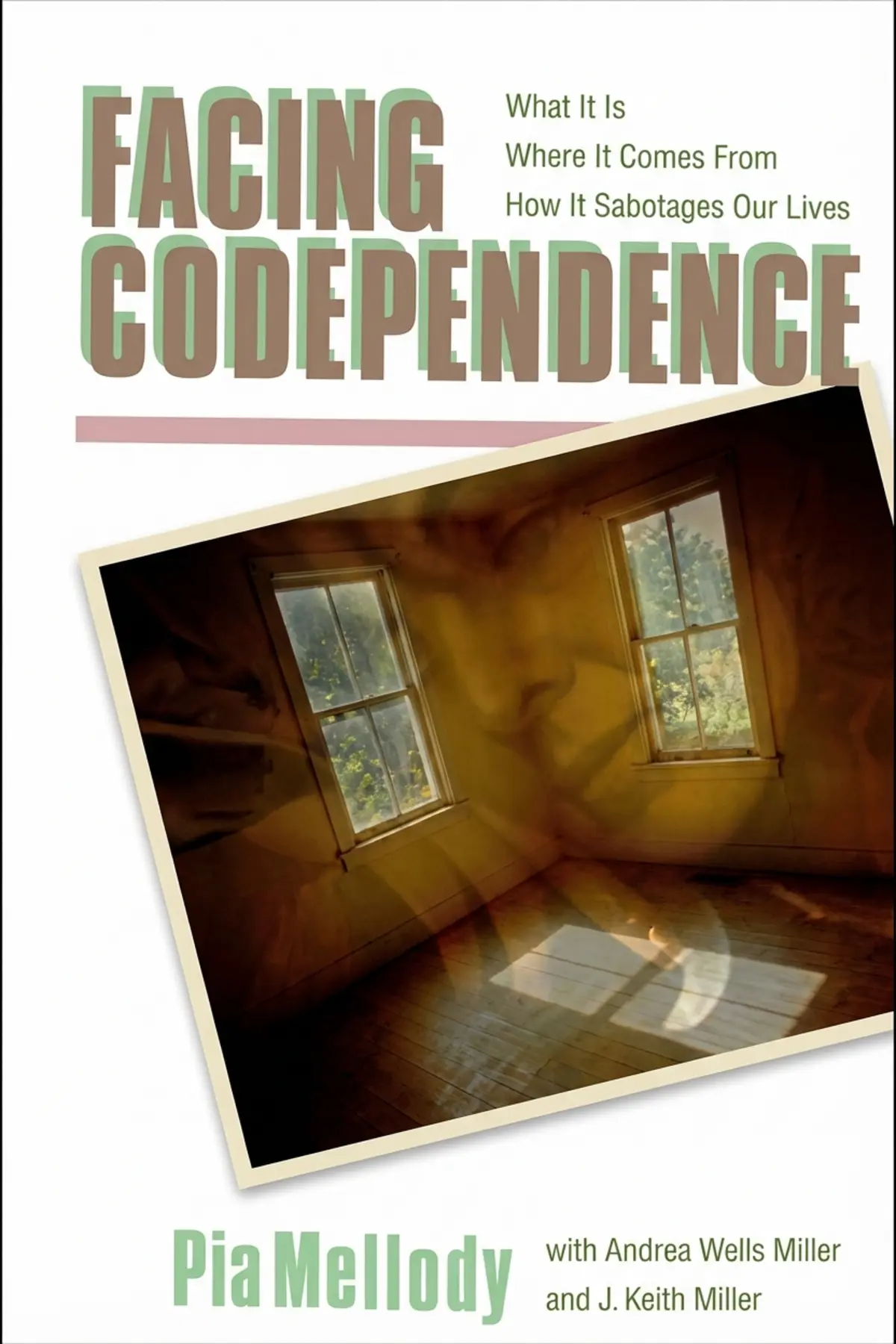
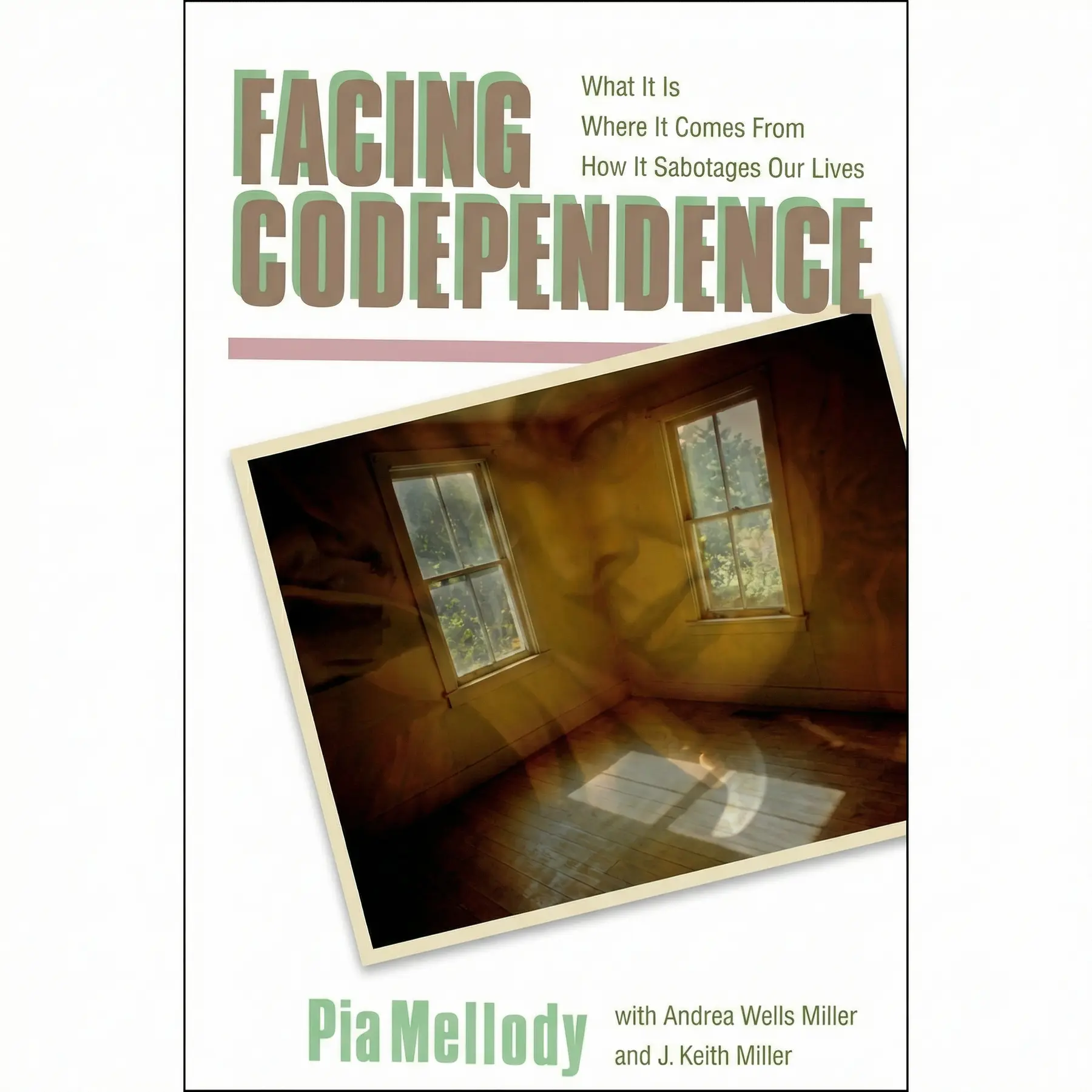
Shows how codependence, an inability to function as a mature adult, grows out of childhood harm. You learn to recognize its five core symptoms in yourself and where recovery begins.
1 min 04 sec
If you measure your worth by what you own, or keep everyone at arm’s length, the problem may have a name and a starting point. In Facing Codependence, therapist Pia Mellody, writing with Andrea Wells Miller and J. Keith Miller, defines codependence in plain terms: being unable to function as a mature adult. That definition covers more lives than you might expect. One is a successful architect whose identity vanished with his money. Another is a sixteen-year-old who has never made his own sandwich. A third is a senior bank officer so fierce that nobody comes near her.
The book’s argument fits in one line. Codependence shows up as five core symptoms, and each grew from a natural childhood trait that caregivers attacked or neglected. Recovery starts when you can name the symptom and trace it back to where it began. What follows is a way to read your own patterns, find where they started and know what the first year of change really feels like.
1 min 48 sec
An architect, a teenager and a bank officer seem to have nothing in common. One plain definition links all three, and it may describe patterns you have always taken for your personality.
1 min 38 sec
Frank felt fine for years, until the money and influence disappeared and took his sense of self with them. The pattern behind his collapse is common, and it often starts with how a child earns praise.
1 min 41 sec
A fierce manner can look like strength and still leave someone isolated and miserable. The authors separate four ways personal limits fail, and children pick up each one by watching.
1 min 49 sec
Some people know exactly what they feel and never say it. Others have lost track of it altogether. Both problems trace back to how a family once reacted to a child’s mistakes.
2 min 01 sec
A teenager who has never made a sandwich and an adult who threatens divorce over the dishes share a hidden problem. The book connects both to what happened when they were small.
1 min 56 sec
The symptoms do not stay inside one person. They show up in resentment, in escape, in health and above all in closeness with others, and they can pass to the next generation.
1 min 57 sec
Getting better from codependence can feel, at first, like swapping one extreme for another. The authors explain where to find support and why that early discomfort is often a good sign.
1 min 10 sec
Facing Codependence turns painful patterns into something you can work on. The architect who fell apart with his fortune, the teenager who has never fed himself and the banker behind her wall are not defective by nature. Each carries a child’s trait that was attacked or ignored, and each still acts it out as an adult. Seeing it that way replaces shame with a question about history.
The book supports a few concrete moves. Write your own Step One. Take the five symptoms one at a time and note plainly where each appears in your days and what it costs you. Look back honestly at how your value, vulnerability, imperfections, needs and immaturity were treated when you were small. Find people who know this ground, whether that is a CODA meeting, a sponsor or a therapist who specializes in it. And when the first changes feel like swinging too far, remember that the middle is usually reached from the edge.
Maturity, in Mellody’s sense, is a skill nobody taught you. You can still learn it, and learning it may spare your children from having to learn it later.
Some people borrow their whole sense of worth from money or a child's grades. Some keep everyone at a distance, and some still rely on a parent for the simplest everyday tasks. Therapist Pia Mellody gives all of these patterns one name: codependence, which she defines as an inability to function as a mature adult. It harms the person who has it, and it harms everyone close to them. Working with Andrea Wells Miller and J. Keith Miller, Mellody describes five core symptoms: unhealthy self-esteem, broken boundaries, trouble owning one's own reality, confusion about needs and wants, and a life lived at the extremes. She traces each one to a natural trait every child is born with, namely value, vulnerability, imperfection, dependence and immaturity, and to the ways abusive or neglectful caregivers attack those traits. Readers get a mirror for their own patterns and a map of where those patterns started. They also see how codependence damages intimacy, health and the next generation, and they get a realistic picture of recovery: Twelve Step meetings, a written Step One, a sponsor, a specialist therapist, early changes that can feel like swinging to the opposite extreme, and a first year that can be painful.
People who measure their worth by money, status or their children's success and want a steadier footing.
Anyone who keeps swinging between walling others off and having no boundaries at all in close relationships.
Parents who worry they are passing their own childhood patterns on to their kids.
Pia Mellody is a therapist who has served as a consultant at The Meadows, an addiction treatment center in Wickenburg. Her account of codependence was put into book form with Andrea Wells Miller, president of the communications company A. W. Miller and Associates, and J. Keith Miller, an author, speaker and conference leader. His bestsellers include The Taste of New Wine and Hope in the Fast Lane, and he also wrote A Hunger for Healing on the Twelve Steps. HarperCollins published the book in 1989.
Listeners find this book both informative and beneficial for personal growth, specifically regarding the understanding and resolution of codependency. The healing techniques receive high praise, with one listener mentioning that the text was more effective than decades of psychotherapy. While some listeners consider it an easy read, others find it difficult to follow, and the tone is described as not for the faint of heart. The writing and formatting get mixed reviews, as several listeners noticed typographical errors on every page.
This book offers a piercing look at how childhood dynamics forge adult behavior, especially through the lens of 'little traumas' that we often dismiss. Pia Mellody argues that codependence isn't just about being a 'people pleaser' but is actually a complex disease rooted in how our caregivers treated our innate vulnerability. I found the section on the five primary symptoms—unhealthy self-esteem, boundary issues, reality struggles, dependency, and moderation—to be incredibly illuminating. It was painful to see myself in the stories of characters like Frank and Maureen, but that recognition was the first step toward actual change. The writing is dense and requires focus, but the depth of the analysis is unmatched in the self-help genre. This isn't just fluff; it's a rigorous map of the human psyche and how it breaks. For anyone who felt their upbringing was 'fine' but still struggles with intimacy, this is essential reading.
Show moreWow, I’ve spent thousands on talk therapy over the years, yet this text managed to pinpoint my core issues in just a few chapters. The way Pia Mellody describes the struggle with moderation and internal self-esteem provided me with a clarity I’ve never had before. It’s a heavy read and certainly not for the faint of heart because it forces you to look at painful childhood origins you’d rather ignore. However, the 'Step One' written exercise was a turning point for my own self-awareness and recovery journey. Not gonna lie, the tone can be quite clinical and even harsh at times, but the truth it delivers is necessary for real change. This is easily more effective than decades of traditional psychotherapy for anyone willing to do the hard work. It honestly changed how I view my own history.
Show moreFinally got around to finishing this, and while the tone isn't for the faint of heart, the clarity it provides is unmatched. I was raised with the 'it's not that bad' mentality, and Pia Mellody was the first person to tell me that my feelings were valid. The book does an excellent job of explaining how even 'covert' abuse can lead to a lifetime of anti-dependency and emotional walls. I loved the distinction between 'knowing reality' and 'expressing reality,' as that is a hurdle I struggle with daily in my marriage. Some might find the 12-step focus limiting, but I found it provided a much-needed structure for the messy process of healing. This is a life-changing book if you are ready to stop making excuses for the people who hurt you and start taking responsibility for your own recovery.
Show moreAfter hearing about 'little traumas' for years, I finally understand what that looks like in practice thanks to this book. It’s a comprehensive guide that doesn't shy away from the ugly parts of childhood dysfunction, including intellectual and spiritual abuse. I’ve read a lot on this topic, but Mellody’s breakdown of the five core symptoms is the most logical and easy-to-apply model I’ve seen. It’s hard to read at times because it forces a level of introspection that can be quite draining. To be fair, you have to be in the right headspace to tackle this, or you might find it overwhelming. But for those ready to break free from the cycle of codependency, this book is a beacon of hope. It provides the vocabulary needed to discuss things that previously felt like invisible weights on my soul. Highly recommended for personal development.
Show morePicked this up during a particularly rough patch in my relationships and it was exactly the mirror I needed to see my own patterns. The way the authors define boundaries—not just as walls, but as a complex system for protecting the self—is the best explanation I've ever encountered. I particularly appreciated the focus on how we oscillate between being too vulnerable and erecting massive emotional walls. While the 12-step framework isn't usually my favorite approach, the way it’s integrated here as a tool for recovery felt practical rather than preachy. My only real complaint is that the book can be quite repetitive, hammering home the same points about childhood abuse over and over. Still, the correlations drawn between past trauma and current self-sabotage are undeniable. It's a challenging, heavy read that demands you take your time to process the emotional weight.
Show moreAs a therapist with a decade of experience, I was surprised to find new insights in these pages, particularly regarding 'spiritual abuse.' Mellody identifies how parents can attack a child's innate qualities, such as their imperfection or their dependence, which was a revelation for my clinical practice. The book provides a very thorough description of how these symptoms manifest in adulthood, like David’s lack of self-sufficiency or Frank’s externalized self-worth. I do think the writing style is a bit academic and dry, which might make it inaccessible for some readers looking for a lighter touch. Additionally, there are quite a few typographical errors throughout the text that can be distracting. However, the core message about breaking the generational cycle of dysfunction is powerful and necessary. It serves as a comprehensive guide for both professionals and those struggling with these issues personally.
Show moreThe chapter on the five primary symptoms—especially the struggle with moderation—really resonated with my daily habits and internal chaos. I've always struggled with 'all or nothing' thinking, and seeing that framed as a symptom of codependence was a huge 'aha' moment for me. Mellody’s explanation of how we use negative control and resentment to manage our relationships hit home in a way that was both uncomfortable and deeply healing. Frankly, the book is a bit long-winded in its descriptions of various characters, and I think it could have been 50 pages shorter without losing the core message. But the actionable steps toward recovery, like finding a CODA sponsor and working with a specialized therapist, provide a clear roadmap. It’s not an easy journey, but this book makes it feel possible. It’s a solid resource for anyone serious about personal development.
Show moreIn my experience, many self-help books offer fluff, but this one provides a rigorous framework for understanding enmeshment and boundaries. I found the relatable stories of Frank, David, and Maureen to be very helpful in identifying my own maladaptive behaviors. The book is very focused on the 'where it comes from' aspect, which helped me forgive myself for patterns I didn't even realize I had. Look, the formatting is a bit dated and there are definitely some typos that suggest a lack of recent editing. However, the content itself is pure gold for anyone trying to understand why their relationships always seem to follow the same dysfunctional script. It doesn't give you all the answers on 'how' to be functional, but it tells you exactly 'why' you aren't, which is a necessary starting point. A very informative and helpful read overall.
Show moreEver wonder why a book with such incredible psychological insight hasn't been given a proper editorial polish to fix the constant typos? I found myself distracted by errors on almost every page, which is a shame because the core concepts regarding the five symptoms are quite strong. While the analysis of childhood abuse is thorough, the author's approach to gender roles and sexual orientation felt quite dated and heteronormative. There is also a glaring lack of consideration for how socioeconomic class affects family dynamics; sometimes a parent is 'absent' because they are working three jobs to survive, not because they are a workaholic. It’s a useful read for the correlations it draws, but it definitely needs a modern update to remain fully relevant today. I found myself skimming the latter half once the main points were made.
Show moreTo be fair, I really struggled with the heavy reliance on the 12-step disease model and the constant assumption that a 'Higher Power' is necessary for recovery. As an atheist, I found the framework incredibly exclusionary, as if healing is only possible for those who embrace a specific brand of spirituality. Furthermore, the book's dependence on anecdotal evidence and controversial theories regarding repressed memories felt like bad science to me. While the description of family boundaries was helpful, it didn't make up for the outdated psychological assertions. It feels like a product of its time that hasn't quite aged well compared to modern, evidence-based practices. If you aren't a fan of the 12-step approach, you might find this more frustrating than helpful. I finished it, but I wouldn't recommend it over more contemporary clinical resources.
Show moreMellody defines codependence as an inability to function as a mature adult. It shows up in five core symptoms: unhealthy self-esteem, broken boundaries, trouble owning your own reality, confusion about needs and wants, and difficulty with moderation. It harms the person who has it and also their relationships, their health and their children.
The authors trace it mainly to abusive or neglectful childhood environments. Five natural traits come with every child at birth: worth, vulnerability, imperfection, dependence and immaturity. When caregivers attack or neglect these traits instead of protecting and shaping them, each one turns into a matching adult symptom. For example, value given only for good grades can become other-esteem.
The book describes having no boundaries, having damaged boundaries that work only in some situations or with some people, putting up walls of anger or fear, and switching between walls and no boundaries at all. According to the authors, children copy these habits from their parents, so a child with walled-off parents tends to build walls too.
The authors recommend first recognizing your symptoms and examining your childhood for their causes. After that, you can attend a Codependents Anonymous meeting, write a Step One about how each symptom has affected you, find a sponsor who has recovered from some symptoms and see a therapist who specializes in codependence. Local centers that treat chemical dependency often offer such programs.
Early change often feels like moving to the opposite extreme. An anti-dependent person who starts asking for help may fear they are becoming too dependent, when they are really moving toward moderation. The first year can also be painful as emotions buried since childhood surface, though the book says it brings relief to finally understand what has been wrong.
Leanne Maskell






Alcoholics Anonymous World Services

Steven C. Hayes

AUDIO SUMMARY AVAILABLE
Get the key ideas from Facing Codependence by Pia Mellody, plus 5,000+ more nonfiction titles.









