

11 min 48 sec
Available in: English
Fabricated: The New World of 3D Printing
Shows how 3D printers turn digital design files into solid objects, why that makes changing and testing products cheap, where the technology already reaches medicine and food, and where its environmental record falls short.
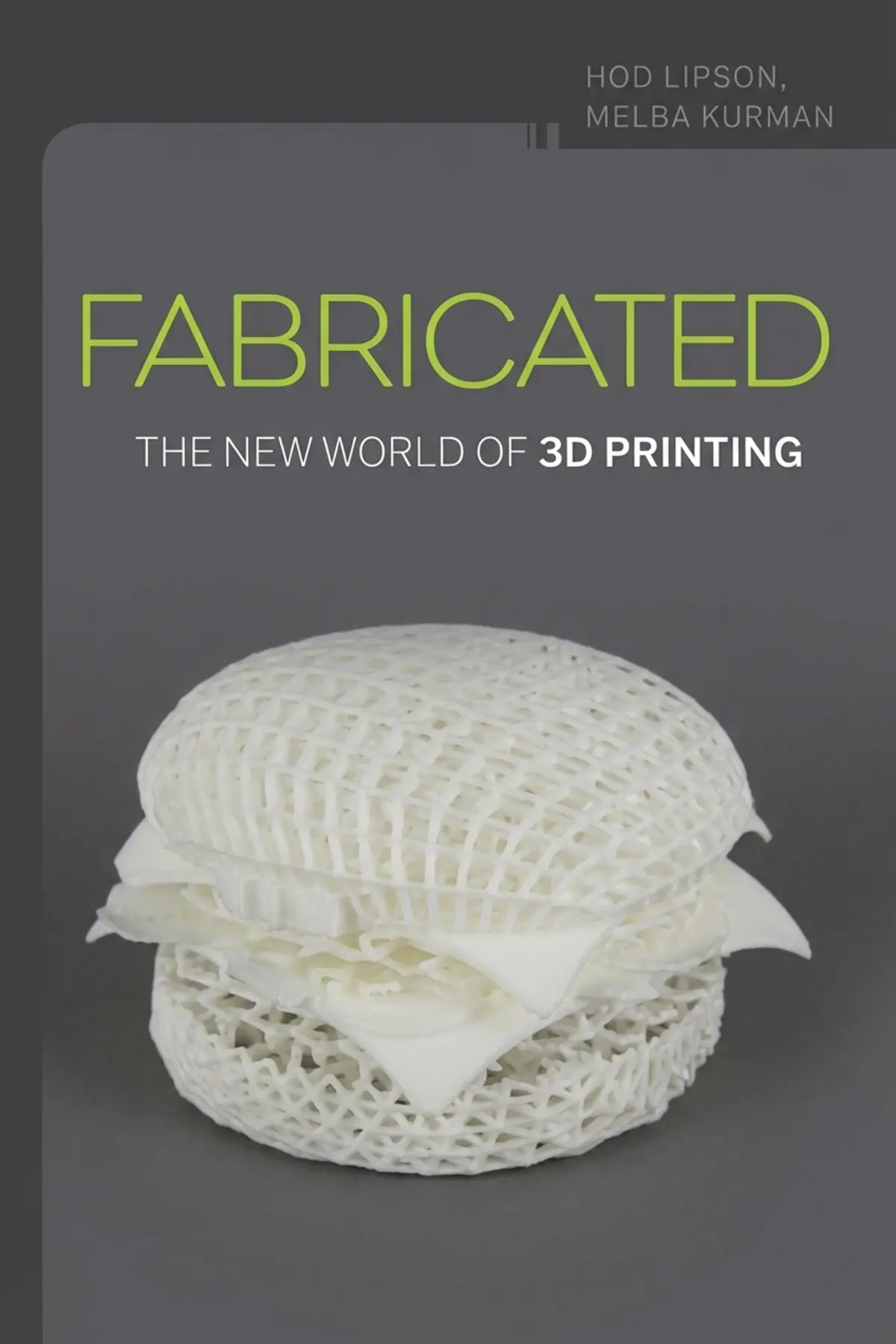
Table of Content
1. Introduction
57 sec
If 3D printing still looks like a hobby for making plastic figurines, you are missing the part that could change how products get made, sold and even fitted to a human body. In Fabricated, engineer Hod Lipson and technology analyst Melba Kurman argue that a printer which builds objects one thin layer at a time makes change cheap, and cheap change shifts who gets to be a producer.
Their case runs like this. When a digital file can become a physical thing, the cost and risk of trying something new fall sharply, and manufacturing, medicine and even cooking open up to small players. The authors are also candid that this young technology can be harder on the planet than a factory in some ways.
Follow their argument and you will be able to explain how the machines work, where they beat mass production, where they already help patients, and which green claims deserve your doubt.
2. See how a design file becomes a solid object
1 min 24 sec
An office printer and a 3D printer both wait for a click from a computer. What happens after that click is completely different, and it explains why a single file can matter more than the machine itself.
3. Test a design from every angle before building
1 min 26 sec
The lamp on your desk probably existed as numbers long before it existed as metal. The tools that shaped it give designers a freedom that paper drawings never could, and they offer a safe space to try out changes without starting over.
4. Get custom products without rebuilding the assembly line
1 min 42 sec
Factories are fast but stubborn, and craftspeople are flexible but slow. A toothbrush maker with a better idea and a sculptor with a custom order show what each side gives up, and what printing changes.
5. Start a manufacturing business with just a design file
1 min 39 sec
Trying something new inside a large manufacturer can sink a budget. A home designer with a new bicycle faces a very different set of odds, and the reason has little to do with money in the bank.
6. Know where printed bones, legs and food stand today
1 min 38 sec
Printed hearts and kidneys sound like science fiction, yet some steps toward them are already in clinics and labs. A simple ranking shows how far the technology has climbed, and what dinner might look like next.
7. Weigh the real environmental cost of 3D printing
1 min 45 sec
It is tempting to assume that making things at home must be cleaner than making them in a factory. Researchers who measured the energy and the waste found a far messier answer.
8. Conclusion
1 min 17 sec
Fabricated is, finally, a book about where the cost of change lives. In a factory, change is expensive because it is built into machines and job descriptions. In a 3D printer, change lives in a file, and a file can be stretched, swapped or sent to a distant producer overnight. That one move explains why a bicycle designer can test parts the next day, why a prosthetic leg can reflect the person wearing it, and why the fear of a failed experiment loses some of its grip.
Lipson and Kurman do not pretend the technology is finished or clean. It is early, it is hungry for electricity, and its plastics can add waste even as its metal work saves it.
The book supports a few concrete habits. Treat a new product idea as something to model and print before you fund it. When printing is pitched to you, ask whether you need many identical copies or the freedom to change, since only the second plays to its strength. And check the material before believing that any printed thing is greener.
The authors’ brass vase makes the point best: built one thin layer at a time, every layer can be redrawn before the next one goes down.
About this book
What is this book about?
To many people, 3D printing looks like a hobby for making small plastic figures at home. Hod Lipson and Melba Kurman argue that this view misses the larger story. Over the coming decades, they expect the technology to change how products are made and sold, how people cook, and how serious illness is treated. The argument starts with how the machines work. A printer reads a design file and builds an object one thin layer at a time, and design software makes that file easy to stretch, turn and refine. Because change lives in the file and not in a production line, 3D printing sits between mass production and handcraft. It can repeat an object precisely and still switch designs at any time. The authors follow that advantage into cloud manufacturing, where small producers print orders for anyone, and up a ladder of life that runs from hearing aids to custom prosthetic legs and, one day, organs. Readers get a clear picture of where printing beats the factory and where it does not, including an honest look at its energy use, its plastic waste and its large savings on metal.
Book Information
Who it's for
Founders and product builders
Founders and product people who want to test physical ideas without funding a factory.
Wanting 3D printing explained
Professionals who keep hearing about 3D printing and want a clear sense of what it can and cannot do.
Curious about new manufacturing
Readers curious about printed prosthetics, food printers and the real environmental cost of new manufacturing.
About the Author
Hod Lipson
Hod Lipson is an American robotics engineer and engineering professor at Columbia University in New York City, where he directs the Creative Machines Lab. His research spans digital manufacturing, evolutionary robotics, artificial life, self-replicating robots, food printing and bio-printing, and he has co-authored hundreds of papers. Melba Kurman is an author and technology analyst who writes about how emerging technologies shape everyday life. She studied at Cornell University and the University of Illinois and also wrote Tech Transfer 2.0 and Driverless.
Ratings & Reviews
Ratings at a glance
What people think
Listeners find the work highly informative and well-crafted, especially valuing the way it translates complex topics into simple English. They characterize it as a superb look at 3D printing, with one listener remarking that it delivers a thorough summary of the technology. The book is lauded for its imaginative approach, readability, and visual appeal; one listener notes it is packed with images of 3D printed goods. However, listeners express conflicting opinions regarding the pacing of the text.
Top reviews
Chai
Finally got around to finishing this deep dive into additive manufacturing. The authors managed to take incredibly complex engineering concepts and translate them into plain English that anyone can follow. I was particularly moved by the section on education and the Fab@School project, which shows how 3D printing can be more than just a hobby for tech-heads. Instead of just hyping up the tech, they provide a pragmatic look at how kids can learn problem-solving through making. The photography throughout the book is excellent and provides a much-needed visual reference for the intricate designs discussed. It’s a visionary work that feels both grounded and incredibly imaginative.
Show moreNina
Ever wonder why 3D printing hasn't replaced every factory on the planet yet? This book does a fantastic job of explaining the nuances of the production chain and why mass production still holds its ground. I loved the breakdown of different printing methods like stereolithography and laser sintering, which helped me understand that 3D printing isn't just one single process. It’s an accessible history that manages to look forward without becoming totally unmoored from reality. To be fair, some of the predictions about household printers in every home feel a bit dated now, but the core logic about customization remains very relevant.
Show moreAkosua
This book made me realize how much our physical world is about to change. Thinking about 3D printed houses and human organs used to feel like science fiction, but the way it’s presented here makes it seem inevitable. The authors strike a great balance between being tech-dazzled and remaining socially conscious of the implications. I found the section on environmental impact particularly interesting, as it addresses the waste generated by failed prints. It’s an emotional rollercoaster for anyone who loves innovation. Just seeing the potential for customized medicine makes the whole read worth it, even if some parts feel slightly over-optimistic.
Show moreNutnicha
Lipson and Kurman don't just stick to the fun stuff; they tackle the scary side of 3D printing too. The discussion on the "dark side"—including plastic guns and the nightmare of copyright enforcement—was the most compelling part for me. It’s rare to find a technology book that spends so much time on legal liability and ethics. The writing is clear and avoids the typical jargon that usually plagues this genre. While it’s full of imagination, it stays rooted in what is actually possible in a lab setting. I appreciated the honesty regarding how long it still takes to get a high-quality print.
Show moreEleni
Picking this up taught me that the real revolution isn't the printer itself, but the digital design process behind it. The authors highlight how we need to break our old habits of thinking in terms of traditional manufacturing. We shouldn't just be printing 2D designs in 3D; we should be conceptualizing entirely new forms. The chapter on bio-printing and cartilage replacement was mind-blowing and well-researched. My only gripe is that the book can be a bit repetitive when it comes to the "complexity is free" mantra. Still, it’s an essential read for anyone interested in the future of how things are made.
Show moreBrooklyn
Truth be told, I expected a lot of Silicon Valley fluff, but what I got was a very grounded analysis. The authors do an excellent job comparing different types of materials, from basic plastics to high-end metals and even food. I specifically appreciated the detailed look at multi-material printing, which is where the real potential for complex machines lies. They don't shy away from the fact that we aren't quite at the "Star Trek replicator" stage yet. It’s an informative journey through the labs and workshops where this future is being built right now. Highly recommended for curious minds who want the full picture.
Show moreGoy
If you want a single book that covers everything from bio-printing to chocolate extrusion, this is it. The range of applications discussed is staggering, and the authors' enthusiasm is contagious throughout the text. I found the analysis of how 3D printing affects the global supply chain to be particularly insightful for business readers. It’s not just about the gadgets; it’s about the shift from mass production to mass customization. The writing is incredibly polished and the photography helps ground the more speculative sections. It’s a comprehensive guide that serves as a perfect entry point into the world of making for the average person.
Show moreOscar
The photographs in this book are absolutely stunning and really help visualize the potential of this technology. It’s a very well-written overview, but I felt it lacked a bit of a "next step" guide for people who want to actually get started. The authors excel at showing the broad landscape—from medical applications to food printing—but it feels more like a coffee table book for your brain than a practical manual. Look, it’s a great introduction if you know nothing about the field, but if you’ve already spent time on Maker forums, you might find the information a bit basic.
Show moreSudarat
It’s a solid introduction but definitely shows its age in a few chapters. I enjoyed the wide variety of topics covered, from chocolate printing to the legal mess of intellectual property. However, the pacing is a bit uneven, with some sections dragging on while others move too quickly through important details. To be fair, the plain English approach makes it very readable for a general audience. It's a decent overview, though I wish there was more focus on the current limitations of materials. Not a bad pick-up for a weekend read, but don't expect it to be a technical bible for your workshop.
Show moreJom
As someone who works in a machine shop daily, I found this remarkably frustrating. The authors have a habit of going on long, repetitive rambles that could have been edited down to half the length without losing any substance. While the "complexity is free" concept is a great takeaway, much of the rest feels like a disorganized collection of "what-if" scenarios. I was hoping for more technical depth about the actual mechanics, but it stays very much on the surface. Frankly, the writing style just didn't click for me, and I found myself skimming through chapters that seemed to repeat the same basic utopian predictions.
Show moreQuestions about this book
What is the main idea of Fabricated by Hod Lipson and Melba Kurman?
The authors argue that 3D printing, which builds objects layer by layer from a digital design file, will change many areas of life over the coming decades. Because the design lives in an easily edited file, changing or testing a product becomes cheap. That opens manufacturing to small producers, encourages experimentation and allows custom products, from replacement bones to prosthetic legs, while the technology still has clear environmental drawbacks.
How does 3D printing compare with mass production?
Mass production is excellent at making millions of identical items cheaply, but changing a design means retraining workers and reorganizing the line. 3D printing can also make precise copies and can switch designs at any time without that disruption. The authors note its limit: printing cannot be split into simple steps that raise output and lower the cost of each unit, so it does not win on price per piece.
What is cloud manufacturing in Fabricated?
Cloud manufacturing spreads production across a network of small makers instead of a few giant factories. You upload a design file, the system matches it to a suitable producer, and the order is printed and delivered to you. The authors describe a home designer getting bicycle parts the next day to assemble and test, and they argue this lowers the cost and risk of trying new ideas.
Is 3D printing better for the environment?
Not across the board, according to the book. Researchers at the University of Nottingham found printers can use up to ten times more electricity than conventional machines for an object of equal weight, and thermoset plastic cannot be recycled. But printing avoids the toxic release agents used in molding, and nearly all leftover metal powder can be recycled, compared with 15 kilograms of metal processed for a one kilogram airplane part.
Readers also enjoyed








AUDIO SUMMARY AVAILABLE
Listen to Fabricated in 15 minutes
Get the key ideas from Fabricated by Hod Lipson, plus 5,000+ more nonfiction titles.
- 5,000+ titles
- Listen as much as you want
- 7-day free trial
- Cancel anytime









