
15 min 06 sec
Available in: English
 ไทย
EnglishไทยEverything Is Tuberculosis: The History and Persistence of Our Deadliest Infection
By John Green
John Green explains why a disease curable since the 1950s still kills more than any other infection. He traces the stigma, rigid rules and drug prices behind it, and shows how doctors, patients and activists forced change.
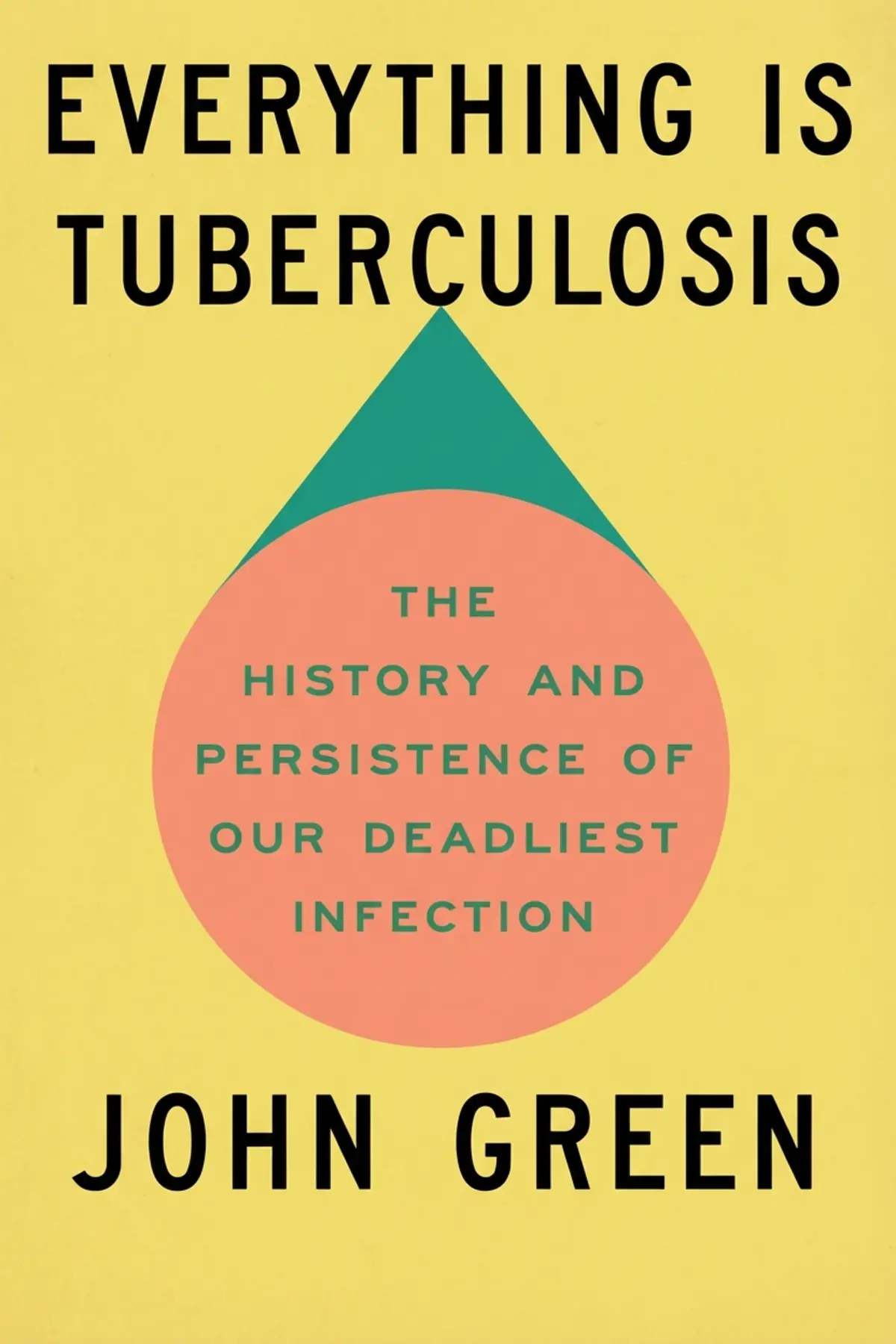
Table of Content
1. Introduction
59 sec
Most of us assume that once a disease can be cured, it stops killing people. In Everything Is Tuberculosis, novelist and global health advocate John Green shows how wrong that is. Tuberculosis has been curable for decades and remains our deadliest infection, and Green traces the reason to human decisions about which lives are worth the cost of saving.
He follows those decisions through two centuries of history and through one young patient, Henry Reider, a teenager in Sierra Leone. The thread is simple. The disease survives on stigma, on rules built from distrust and on prices set far away, and each of those can be reversed by people who refuse to accept them.
By the end, any health crisis in the news becomes easier to read. Ask what story is being told about the sick, who controls the cure, who set its price, and who is organizing to change the answer.
2. Read the story a society tells about illness
2 min 18 sec
The same disease was once a fashionable sign of genius and later a mark of filth. The switch happened almost overnight, and it changed who was pitied and who was left to die.
3. Spot rules that turn distrust into failure
2 min 24 sec
The world finally had drugs that could cure tuberculosis, and it built a careful system to deliver them to the poor. That system’s central rule ended up producing the danger it was designed to prevent.
4. See the hidden cost when a patent blocks a cure
2 min 07 sec
A machine that reads an infection in hours and a pill that could replace toxic injections both existed while a boy in Sierra Leone went without them. What stood in the way was not medicine.
5. See the loops that keep poor people sick
2 min 16 sec
In the early 1980s, African doctors watched young patients die of tuberculosis in weeks instead of years. The drugs to stop it existed, and the reason given for withholding them was astonishing.
6. Learn the Lima clinic's lesson that rewrote global TB rules
2 min 08 sec
The official advice for drug-resistant tuberculosis in poor countries was to do nothing. A small team in Peru ignored it, and what they achieved forced the rule makers and the drug market to move.
7. A chain of survivors that saves the next life
1 min 38 sec
A teenager who lost his hearing to an unaffordable drug is alive today. The people who made that possible were spread across decades and continents, and one of them was a survivor of the same disease.
8. Conclusion
1 min 16 sec
Green’s title sounds like an exaggeration until the pattern becomes clear. Tuberculosis has absorbed every prejudice brought to it: the romance of the delicate elite, contempt for the poor, the suspicion built into a pill-watching program, a price set in a boardroom, an aid chief’s excuse about clocks and the sun. The bacterium itself barely changed. What changed was who people decided was worth saving.
That is also where the book finds hope. Obstacles made by people can be removed by people, and the Lima clinic, Shreya Tripathi’s court case and Phumeza Tisile’s campaign show it happening.
Green’s account suggests a few habits of attention. When an illness is described as someone’s fault, look for the housing, food and money behind it. When a program fails the people it serves, check whether it planned for their meals and their bus fare. When a cure is called too expensive, ask who set the price and who benefits from it.
Henry Reider will never hear again in his left ear. He also stands up for the hospital where he was expected to die, and that second fact is the one Green asks us to build on.
About this book
What is this book about?
Antibiotics that reliably cure tuberculosis have existed since the middle of the twentieth century. Yet the disease persists, concentrated among the poor. John Green sets out to explain that contradiction, and his answer is that the gap is made by people, not by science. Green follows the illness from its days as a fashionable affliction of European artists to its rebranding as a disease of dirt and poverty after Robert Koch identified its cause in 1882. He then follows one patient, Henry Reider, a teenager in Sierra Leone, through a treatment program built on distrust, a diagnostic test priced out of reach, and a patented drug his country could not buy. Alongside Henry's story come the HIV crisis in Africa and the court fight of Shreya Tripathi in India. The book also offers an answer. A small group of doctors in Lima proved that drug-resistant tuberculosis could be cured among the poorest patients, and their success set off a chain of guideline changes, cheaper generic drugs and patient activism. Readers get a clear way to see how health inequality is built, and how ordinary people have taken it apart.
Book Information
Who it's for
Assuming curable means solved
Readers who assume curable diseases are solved problems and want to know why they are not.
Wanting inequality made human
Students and workers in health, policy or development looking for a clear human case study of inequality.
Moved by patient activism
Anyone moved by patient activism who wants to see how ordinary people changed drug prices and global rules.
About the Author
John Green
John Green is a novelist from Indianapolis who studied English and religious studies at Kenyon College. His debut, Looking for Alaska, won the Printz Award for 2006, and The Fault in Our Stars followed in 2012. With his brother Hank he started the Vlogbrothers YouTube channel and helped launch Crash Course. This is his second nonfiction book. He is a trustee of the global health nonprofit Partners In Health and has worked with it and other groups on fighting tuberculosis.
Ratings & Reviews
Ratings at a glance

What people think
Listeners find the book remarkably educational and filled with historical details about tuberculosis, while appreciating its captivating and emotionally poignant narrative style. The writing is described as superb; one listener points out its approachable tone, and another emphasizes the rare harmony achieved between storytelling and scientific inquiry. Furthermore, the work earns praise for its medical perspectives, with one listener noting how it clarifies complicated healthcare themes and another mentioning how it explains immunological issues simply but correctly.
Top reviews
Joshua
Finally got around to reading John Green's latest and it is like sitting down for coffee with a friend who is incredibly smart and slightly hyper-fixated. This is a perfect nonfiction book for people who don't usually read the genre because it flows so naturally. I was moved to tears by the story of Henry, the young boy in Sierra Leone, whose life puts a human face on these staggering global statistics. The way Green explains the science of the bacteria without making it feel like a textbook is a rare feat. He manages to balance the clinical reality of the disease with a deep, crushing empathy for those it affects. It is a quick read, but the message about our collective failure to treat a curable illness will stick with me. We have the cure, yet we choose a world where millions still suffer. It’s heart-wrenching but necessary.
Show moreLogan
Wow. I am just sitting here reeling from that ending. John Green has used his massive platform to write what is essentially an impassioned plea for the humanity of the poor. Through the lens of tuberculosis, he exposes how our global systems value profit over the literal breath of human beings. The immunological explanations were simple enough for me to grasp but didn't feel like they were talking down to the reader. Hearing about the $30 tests that could save lives while billions are spent elsewhere is just infuriating. The book is short, but every page feels urgent. It is a story of human history—the organism that can do so much but cannot save what it most loves. Please read this if you want to understand why the world is the way it is.
Show moreAnchalee
The chapter on the intersection of pharmaceutical profits and public health is genuinely infuriating and brilliantly written. John Green explores how a curable, preventable disease remains our deadliest killer simply because treating it isn't "profitable" for the global north. This book goes way beyond statistics; it puts a name and a face to the suffering through the story of Henry. I appreciated the way Green centers empathy and refuses to treat the sick as mere data points in a cost-benefit analysis. The writing style is wonderfully conversational, making complex healthcare topics feel urgent and personal. It really highlights the gap in the American educational system regarding global health. We are powerful enough to light the world at night, yet we let children die for lack of a $300 course of medicine. It is a call to action wrapped in a memoir.
Show moreErn
Look, John Green has this incredible way of making you care about things you didn't even know existed twenty minutes ago. I wasn't sure I wanted to read an entire book about a lung disease, but this is actually a book about what it means to be human. It’s about how we treat each other when we’re at our most vulnerable. The history is fascinating—did you know F. Scott Fitzgerald had TB?—but the heart of the book is the modern-day tragedy of Sierra Leone. He explains the science of the disease and the history of sanatoriums with such clarity. I finished it in one sitting because I literally couldn't put it down. It’s an act of collective will to change the world, and this book feels like a first step toward that. Truly a must-read for everyone.
Show morePrayoon
This book is a masterclass in accessible nonfiction. It’s rare to find a work that can explain immunological issues simply but correctly while still making you sob over the fate of a teenage boy in a hospital. John Green’s voice is so distinct and empathetic here. He takes us from the history of 19th-century literature to the current halls of the Lakka Government Hospital with ease. The realization that we have lived in a world with a cure since the 1950s but choose not to distribute it is life-altering. It’s a very quick read, surprisingly so given the subject matter, but it packs a massive punch. I'm really grateful for what the Green brothers do with their influence. This isn't just a book; it's a tool for advocacy that I hope everyone picks up.
Show moreKai
As someone who usually finds medical history a bit dry, this was a total revelation in terms of engagement. I loved learning about the "poet's disease" and how everything from Stetson hats to Adirondack chairs actually traces back to tuberculosis sanatoriums. It is fascinating how much our culture was shaped by a disease we now mostly ignore in the West. My only minor gripe is that it occasionally felt a little surface-level, as if it was grazing the tops of massive systemic issues without fully diving into the sociological depths. However, as an introductory text to global health and the injustices of pharmaceutical capitalism, it is incredibly accessible. John’s voice is clear and passionate throughout the narrative. He really makes you realize that "nothing is so privileged as thinking history belongs to the past."
Show moreAubrey
Ever wonder why we stopped talking about the deadliest infectious disease in human history even though it’s still killing over a million people a year? This book answers that question with a heavy dose of reality and a bit of historical trivia. I found the section on the "white plague" and the romanticization of the dying artist particularly interesting. It’s wild that we used to view TB as a mark of beauty before we realized it was bacterial. Once it became a disease of the poor, the culture shifted to vilification and stigma almost overnight. Green’s storytelling is engaging and the book moves at a breakneck pace. While I wish there were more about the specific grassroots movements fighting this now, it’s a solid 4-star read. It makes you care about a problem that feels far away but is actually right at our doorstep.
Show moreGift
Personally, I loved the balance between the gritty science of the bacteria and the heartbreaking human elements. Green doesn't eschew medical jargon entirely, but he makes it straightforward for the layperson to understand why TB is so hard to kill. The book argues convincingly that the cure is where the disease is not, and the disease is where the cure is not. It’s a systemic failure, not a medical one. I did find some of the personal anecdotes a bit repetitive towards the end, and the tone can be almost too earnest at times. Still, the message is so important that it’s easy to overlook the occasional sentimentality. This isn't just a book about a disease; it's an indictment of a global system that values property over people. It’s educational, infuriating, and ultimately hopeful.
Show moreLena
After hearing about this project for years on the podcast, I was surprised by how much the focus shifted toward systemic inequality rather than just the biology. Green does a good job showing how medical racism and misogyny have historically dictated who gets to live and who is left to die. The story of Henry Reider adds a necessary human element to what could have been a very dry list of facts. I did find myself missing some of the literary connections—I was hoping for more on Fitzgerald! But the focus on the current crisis in global health funding is probably more important. It’s an engaging read that manages to be both informative and deeply personal. It’s definitely going to make me think differently about every cough I hear from now on. A strong addition to his nonfiction work.
Show moreEye
Truth is, I think I have watched too many of John’s YouTube videos to find much that felt truly new or surprising here. For me, this book was a bit too thin and lacked the authority of a medical expert, feeling more like a summary of facts he’s been reciting on his podcast for years. To be fair, he basically admits that he’s just a person obsessed with the topic, but I wanted more grit. It covers a lot of ground very quickly, which makes it accessible, but I found myself wishing he’d gone deeper into the disability theory or the specific political structures mentioned. It’s a good primer for people who know nothing about TB, but if you’ve been following the Vlogbrothers, you’ve heard most of this before. It's a noble effort, just not as academically rigorous as I hoped.
Show moreQuestions about this book
What is the main idea of Everything Is Tuberculosis?
John Green argues that tuberculosis still kills because of human choices, even though it has been curable since the mid-twentieth century. Stigma, a treatment system built on distrust of the poor, and high prices for tests and patented drugs keep the cure from those who need it. He also shows that these choices can be reversed, as doctors and activists proved from Lima to South Africa.
Who is Henry Reider in Everything Is Tuberculosis?
Henry Reider is a young patient from Sierra Leone whose story runs through the book. Pulled from a rigid treatment program as a boy, he developed drug-resistant TB, went untested because of costly test cartridges, and lost hearing in his left ear to an older toxic drug. He eventually received the right medicines and now studies at university and campaigns against stigma.
What was wrong with the DOTS approach to tuberculosis?
Green describes DOTS as cheap and standardized but built on control. It relied on an 1880s microscope test that misses about half of cases, gave everyone the same drugs and required a health worker to watch each pill being swallowed. Practical barriers like food and transport were treated as personal failings, and patients who dropped out risked developing drug resistance.
How did Partners In Health change tuberculosis treatment?
In the early 1990s, when the WHO advised against treating drug-resistant TB in poor countries, Partners In Health treated it in a poor neighborhood of Lima. Adding food, transport and daily support, they cured more than 85 percent of patients. Their success pushed the WHO to change its guidelines, and activists then used generic production to cut treatment costs by more than 90 percent.
How can I apply the ideas in Everything Is Tuberculosis?
The book suggests a few questions to ask about any health problem. What story is being told about the people who are sick, and what does it hide? Do programs plan for practical barriers like meals and travel before blaming patients? Who set the price of a cure, and who profits? Green’s examples show that pressure from patients and activists can change the answers.
Readers also enjoyed



A History of Iran: Empire of the Mind
Michael Axworthy

Afropean: Notes From Black Europe
Johny Pitts

A History of the World in 6 Glasses
Tom Standage


A Long Way Gone: Memoirs of a Boy Soldier
Ishmael Beah

All About Love: New Visions
bell hooks


AUDIO SUMMARY AVAILABLE
Listen to Everything Is Tuberculosis in 15 minutes
Get the key ideas from Everything Is Tuberculosis by John Green, plus 5,000+ more nonfiction titles.
- 5,000+ titles
- Listen as much as you want
- 7-day free trial
- Cancel anytime









