

A Thousand Brains: A New Theory of Intelligence
Jeff Hawkins
 English
 ไทย
Shows how female biology, from the first mammal milk to midwifery and menopause, carried our species through 200 million years, and why that changes how we see pregnancy, women's minds and long lives.
1 min 11 sec
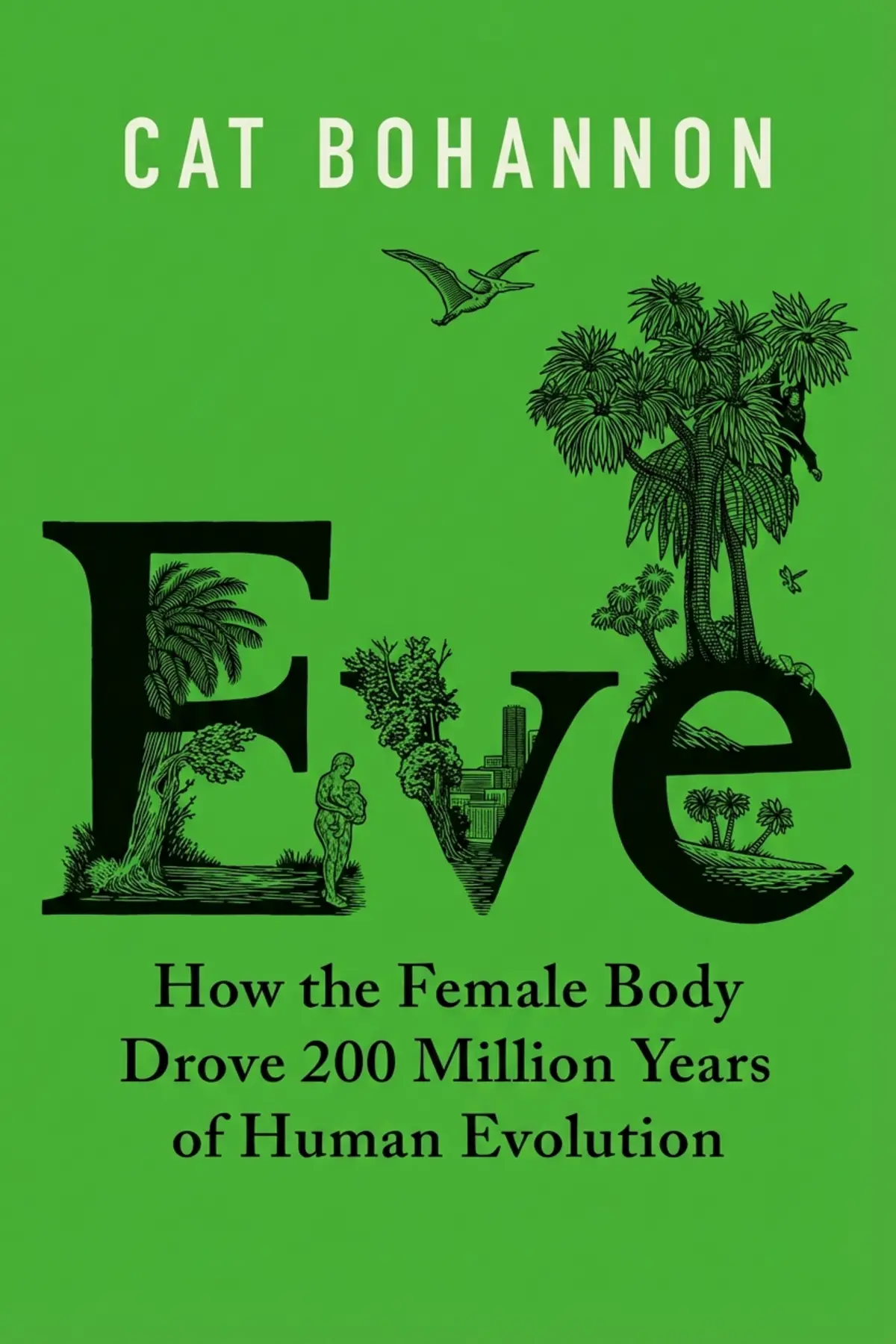
If you grew up picturing human evolution as men with spears, you were given half the picture, and medicine has often worked from that same half. Until quite recently, most medical research used male subjects almost exclusively, even when the subjects were lab animals. In Eve, Cat Bohannon, who earned her doctorate at Columbia studying how narrative and cognition evolved, sets out to restore the missing half.
Her argument is that the female body was not a passenger in our evolution but one of its main engines. Milk, menstruation, midwifery, menopause and even romantic love began as female solutions to the problem of keeping the next generation alive. Those solutions still shape our health, our minds and our relationships.
Follow her line of ancestors, a series of Eves reaching back more than 200 million years, and familiar facts start to look different. Pregnancy turns out to be riskier than its glowing image, women’s longer lives gain an explanation, and claims about a female brain deserve a much harder look.
1 min 53 sec
A tiny insect eater living among dinosaurs faced a problem with her eggs. Her fix still runs through every mammal alive, and it turns out to carry messages in both directions.
1 min 58 sec
The glowing picture of expecting a baby leaves out a struggle happening inside the body every month. One common and frightening condition shows what happens when that struggle tips too far.
2 min 27 sec
Slow to breed and slow to raise their young, humans still reached eight billion. The usual hero of that story is a man with a weapon, but the real breakthrough may have left almost no trace in the ground.
2 min 01 sec
The moody, math-shy female brain is one of the oldest stereotypes around. Neuroscience tells a smaller and more surprising story, and part of it explains how a single sentence can lower a girl’s test score.
2 min 06 sec
Most animals keep breeding until they die, yet human women stop decades early. The popular explanation for that puzzle has two serious holes, and a better one connects menopause to how long we live.
2 min 00 sec
Romantic love sets humans apart from every other animal. The leading theory of how it began involves a trade made long ago, and that trade may still be shaping who holds power at home and beyond.
1 min 16 sec
Eve turns the usual camera around. Instead of the hunter with his spear, the lens rests on a mouse-sized mother feeding her young from her own skin, a habilis woman helping a friend through a dangerous birth, an elder who remembers how to get through a famine. In Bohannon’s telling, the female body is tougher than it gets credit for, and nearly every step of our success passes through it.
Seeing this is fairer, and it also explains things that matter now: why pregnancy can still kill, why women tend to outlive men, why stereotypes about women’s minds hang on despite the evidence.
The book leaves a few habits worth keeping. When pregnancy is presented as pure bliss, remember the struggle underneath and offer support that matches the real risk. When someone claims women are wired to be worse at something, ask how much of the gap comes from upbringing and expectation, and choose your own predictions about people with care. And when you name the inventions that built the modern world, put the speculum and the pill near the top of the list.
Human history runs through a long line of mothers, and the next part of it is being written by the people alive today.
For most of the history of science, research was done on male bodies, even when the subjects were lab animals. So the role of the female body in human evolution was barely examined. Cat Bohannon sets out to fill that gap, and she finds that it was a central one. She follows a line of female ancestors she calls Eves, starting with a mouse-sized mammal that lived among the dinosaurs more than 200 million years ago. Each one solved a problem of bearing and raising young. Skin mucus became milk. A uterine lining became a defense in the struggle between mother and fetus. Shared knowledge of birth and fertility helped our ancestors spread across continents. Menopause and longer female lives became part of how human societies grew. Bohannon pairs the evolutionary science with a sharp social critique. Readers learn why pregnancy is still dangerous and why women tend to outlive men. They also see what neuroscience does and does not say about a female brain, and how an ancient bargain over love and paternity may have helped men gather power.
Curious readers who want human evolution told from the female side, with new science behind it.
Women and their partners facing pregnancy, menopause or health decisions who want the biology behind them.
Teachers, managers and parents who want to question stereotypes about women's minds.
Cat Bohannon earned her doctorate at Columbia University in 2022 with research on how narrative and cognition evolved, a background that suits a book retelling the story of human evolution. Her essays and poems have appeared in Scientific American, Science and The Georgia Review, and her work has been included in The Best American Nonrequired Reading and on The Story Collider. Eve is her debut book. She lives in the US with her partner and their two children.

Listeners find this work both captivating and meticulously documented, noting that the informal prose keeps them entertained. They value the rigorous scientific lens and thorough investigation into female biology, and one listener points out that the author makes intricate biological concepts accessible to everyone. Audiences consider the content to be intellectually stimulating, funny, and informative, with one review praising how effectively the text distinguishes between sex and gender.
Cat Bohannon has achieved something truly rare here by turning 200 million years of evolutionary history into a page-turner that feels as intimate as a conversation over coffee. Her concept of identifying various 'Eves'—the common ancestors who first developed specific traits like lactation or bipedalism—is a brilliant narrative device. It's refreshing to see a book that centers the female experience not just as a niche interest, but as the primary driver of our species' survival. The sections on how female fat stores specifically cater to fetal brain development were absolutely eye-opening and made me realize how little we are taught about our own biology. While the book is quite hefty, the prose is so witty and approachable that the pages fly by. It strikes that perfect balance between being rigorously researched and genuinely fun to read. This isn't just a book for women; it’s an essential history of humanity that fills in the massive gaps left by traditionally male-centered science.
Show moreFinally, someone has written the corrective to the male-centric narrative that has dominated our understanding of human development for centuries. I was stunned to learn how often female subjects are excluded from medical trials simply because our hormonal cycles are seen as 'complicating' the data. Bohannon dismantles this bias with sharp wit and a staggering amount of research. The way she describes the evolution of the womb and the complex 'milk-sweat' of our earliest mammalian ancestors is both poetic and grounded in fascinating biology. I particularly appreciated the distinction she makes between biological sex and the cultural constructs of gender. It’s a dense read, but the conversational tone keeps it from ever feeling like a dry textbook. Every chapter reveals something new and slightly mind-blowing about how our bodies have adapted to survive against all odds. It's a revelatory, empowering, and deeply necessary piece of work.
Show moreWow, I will never look at my own body the same way again after finishing this masterpiece. Bohannon’s exploration of the 'Eve' who first developed menopause—and how that grandmotherly role likely saved our species—actually moved me to tears. We are so often told that the female body is a 'variation' of the male standard, but this book proves we were the innovators. The writing style is wonderfully irreverent and funny, making even the most complex neurobiological mechanisms feel totally relatable. I found myself highlighting passages on every other page, especially regarding the way our hips and thighs store nutrients specifically for our children's retinas. It’s rare to find a science book that feels this personal and life-affirming. If you want to understand why we are the way we are, you have to read this. It’s the kind of book you’ll want to buy for every woman in your life.
Show moreForget Sapiens; this is the history of humanity we actually needed. Bohannon manages to make complex evolutionary biology feel as urgent and exciting as a thriller. I was particularly gripped by the discussion on bipedalism and how the narrowing of the pelvis changed everything for our ancestors. It’s a story of struggle, adaptation, and incredible resilience. The author doesn't shy away from the grosser or weirder parts of our history, which I found refreshing and honest. Her writing is punchy, smart, and deeply researched without ever feeling pretentious or inaccessible to a layperson. I finished this book feeling a profound sense of awe for the millions of years of 'Eves' who came before me. It is truly a revelatory vision of our past that everyone should read.
Show moreThe way Bohannon structures each chapter around a specific 'Eve'—from the sweat-beaded Morganucodon to the first midwife—is nothing short of brilliant. This book isn't just about biology; it's about the narrative of who we are. I was fascinated by the exploration of sensory perception and how our primate ancestors' lives in the trees shaped the way we see the world today. The author’s voice is so engaging that I felt like I was being led through a museum by a particularly brilliant and funny friend. She addresses controversial topics with a balanced, scientific approach that still feels deeply human. It’s a monumental achievement that manages to make the deep past feel incredibly relevant to our modern lives. I've been recommending this to everyone, regardless of their background in science. It's simply one of the best nonfiction books I've read in years.
Show morePicked this up on a whim after seeing it on several 'best of' lists and I was absolutely floored by the sheer depth of research combined with such a humorous, approachable voice. Bohannon takes us from the Jurassic period all the way to modern medical labs, showing exactly how the female body has been the primary engine of human evolution. I loved the 'Eden' segments that opened each chapter—they really helped visualize these ancient ancestors as living, breathing creatures rather than just fossils. The section on how our nipples communicate with a baby's saliva to change the milk's formula was particularly fascinating and felt like a superpower I never knew we had. This book is a triumph of popular science. It manages to be educational, thought-provoking, and deeply entertaining all at once. It’s a long journey, but every single page is worth it for the perspective shift it provides.
Show moreWhile the 600-page length initially intimidated me, Bohannon’s witty and conversational prose made the dense biological concepts surprisingly digestible. I loved the chapters on tool use and the evolution of the voice, which offered a fresh perspective on why we communicate the way we do. Frankly, I think every doctor should be required to read the introduction about the 'male-as-default' model in medicine. There were a few moments where the author's personal asides felt a bit long-winded, and some of the evolutionary psychology felt more like educated guessing than hard fact. That said, the book remains a fascinating deep dive into what it means to be biologically female. It’s an ambitious project that mostly succeeds in its mission to rewrite the human story. I’ll definitely be thinking about the 'milk-baby communication' via nipples for a long time. Definitely worth the read if you enjoy accessible science.
Show moreThe chapter on menopause alone is worth the price of admission, offering a perspective that challenges everything I thought I knew about our 'evolutionary purpose.' Bohannon argues convincingly that older women weren't just 'left behind' by evolution, but were actually central to our survival as a species. While I found some of her personal anecdotes a bit distracting from the main scientific narrative, her ability to explain things like the Grandmother Hypothesis is top-notch. The book is definitely a commitment at 600 pages, but the conversational style keeps it from dragging too much. I appreciated the careful way she addressed the differences between sex and gender, even if she couldn't please everyone. It’s a thought-provoking read that will definitely spark some intense dinner-table conversations. Most importantly, it highlights just how much of our medical history has been based on a 'male as default' model that needs to change.
Show moreTo be fair, the first half of the book is a masterclass in engaging science writing, but the latter half loses its way in cultural commentary and some questionable historical facts. I loved the early chapters on lactation and the Morganucodon; they were genuinely informative and well-paced. However, as the book progressed, the author started making some very broad claims about things like the 'Dark Ages' and sex work statistics that felt sloppy compared to the earlier biological data. The prose is undeniably chatty and easy to read, which is great for such a thick volume, but I often found myself wanting to fact-check her asides. It’s a fun, imaginative journey through time, but you have to take some of the evolutionary psychology with a grain of salt. It’s a decent introductory text for the casual reader, though it lacks the rigorous accuracy a specialist might be looking for.
Show moreAs much as I wanted to love this ambitious look at the female body, the author’s tendency to drift into wild speculation and fundamental misunderstandings of natural selection became impossible to ignore. In the early chapters, the discussion on paleontology and 'tree thinking' is actually quite strong and beautifully written. However, the further Bohannon moves from hard data into evolutionary psychology, the shakier the ground becomes. She frequently references 'species fitness,' a concept that many evolutionary biologists would find problematic or outright incorrect. It feels like she’s trying to force biological facts into a specific cultural narrative rather than letting the data speak for itself. While the call for more inclusive medical testing is vital, the scientific errors regarding how evolution actually functions make it hard to recommend this as a serious educational text. Truth is, it's more of an entertaining 'what if' scenario than a rigorous scientific study.
Show moreBohannon argues that the female body was a main driver of human evolution, not a side note. Starting with a mouse-sized mammal over 200 million years ago, she traces a line of female ancestors, or Eves, whose adaptations, including milk, menstruation, shared knowledge of childbirth and menopause, helped our species survive and spread. Science long overlooked this, she says, partly because research was done mostly on males.
Because mother and fetus do not have identical interests. The fetus pulls for resources the mother needs, and the monthly uterine lining, shed as menstruation, works as a buffer against invasive embryos. Only humans, bats and elephant shrews menstruate this way. When the placenta’s control of blood pressure goes wrong, preeclampsia can follow, a condition Bohannon says affects more than five percent of US pregnancies.
Women outlive men by more than five years on average, and Bohannon links this to menopause. She doubts the grandmother hypothesis, since menopause seems to predate long human lives and also occurs in killer whales. Instead she ties it to the value of elders in complex societies. Estrogen and related hormones appear to protect the heart, immune function and cholesterol levels.
Only slightly. Bohannon reports that adult brains of men and women are strikingly similar. Men tend to do a bit better on spatial tests and women on language tests, but IQ scores match until adolescence and math gaps narrow when family income is considered. Hormones do affect mood, yet she argues most differences come from socialization, including stereotype threat.
Offer pregnant people support that matches the real risks instead of expecting constant joy. Be careful with what you predict out loud about girls and women, since stereotype threat can make low expectations come true. Plan for a long life if you are a woman. And look at your relationships to see whether they run on cooperation or carry older patterns of control.
Jeff Hawkins

Tracy Rosenthal


Jessica Valenti





Lisa Kaltenegger

Johny Pitts
AUDIO SUMMARY AVAILABLE
Get the key ideas from Eve by Cat Bohannon, plus 5,000+ more nonfiction titles.









