

14 min 35 sec
Available in: English
 ไทย
EnglishไทยEducated: A Memoir
Tara Westover's memoir follows a girl from an Idaho junkyard with no schooling to a Cambridge PhD. It shows how learning gave her the words to see her family clearly and the strength to choose herself.
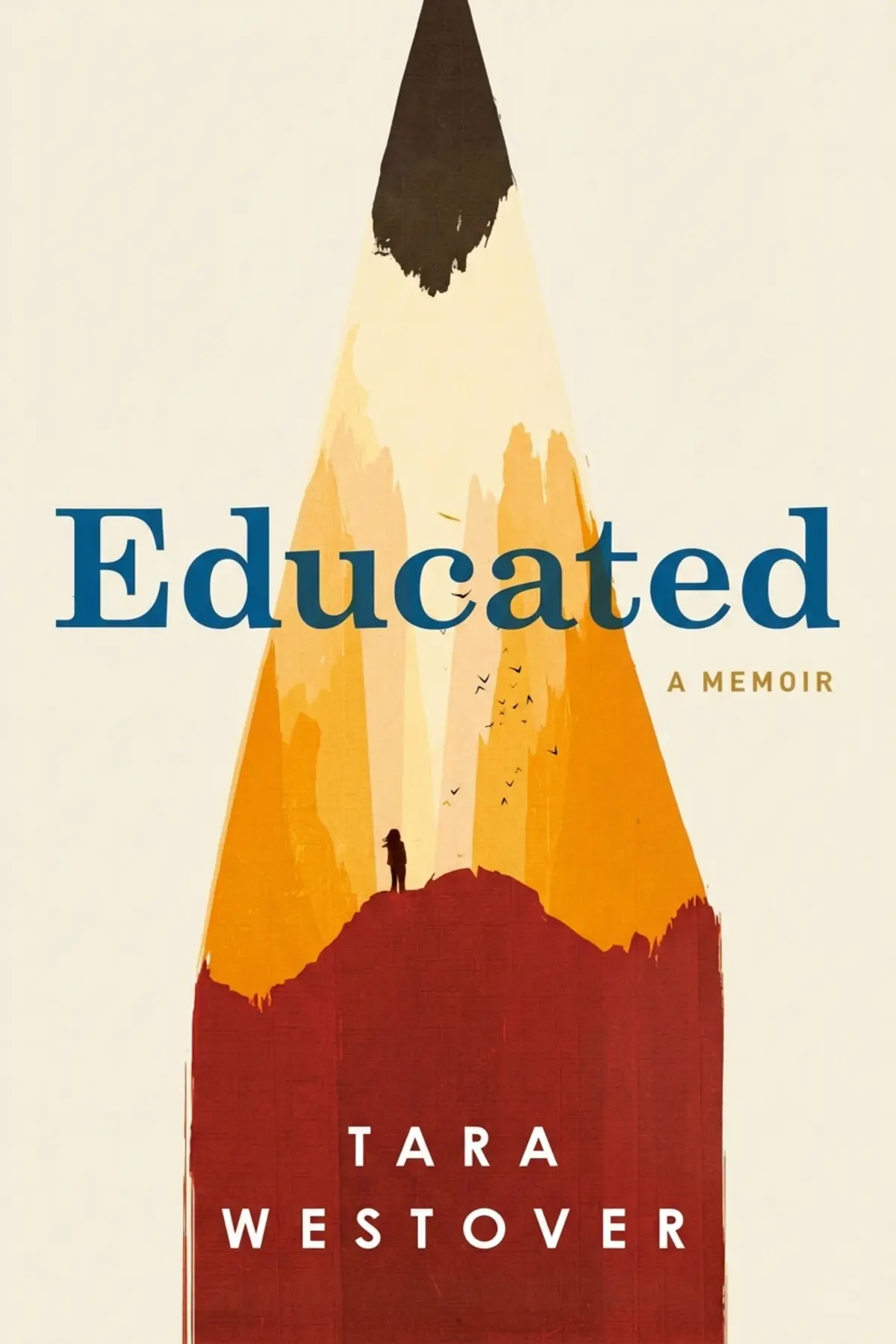
Table of Content
1. Introduction
59 sec
Growing up inside a family’s version of the truth can make your own thinking feel like betrayal. In her memoir Educated, Tara Westover describes reaching her first classroom at seventeen without knowing what the Holocaust was, then earning a PhD in history from Cambridge about a decade later. Her father, a Mormon in rural Idaho, called schools brainwashing, called medicine poison and expected the year 2000 to bring the end of the world.
Her story makes one case. Education gave her more than knowledge: it gave her the words and the nerve to see her family clearly, and holding on to that clear sight cost her the family itself.
Her path, from a junkyard to a college in England, shows how inherited beliefs take hold, how one sibling or teacher can open a door, and what it takes to trust your own memory when the people you love insist on theirs.
2. Spot the beliefs you absorbed before choosing
1 min 36 sec
A seven-year-old was offered a way out of her isolated life, with a ride leaving at dawn. Her answer reveals how strongly a family’s view of the world can hold a child who has never seen another.
3. Notice when a family treats harm as normal
1 min 20 sec
Two car crashes, a head injury and a brother’s night-time attack all ended the same way in the Westover home. The pattern explains the survival story Tara told herself for years.
4. One person's example can open the first door
1 min 35 sec
Her math stopped at long division and her future was already planned around marriage and midwifery. A brother’s decision, and one stubborn test score, changed what seemed possible.
5. Turn an embarrassing gap into a starting point
1 min 35 sec
On her first days at college, roommates, buses and textbooks all overwhelmed her. Then she asked one innocent question in class, and the silence that followed showed her exactly how far behind she was.
6. Accepting help is a skill you can learn
1 min 24 sec
Two small pills, a sore throat and a decaying tooth tested beliefs she had held all her life. Each one asked her to trust someone outside the family, and each time it felt like a risk.
7. The right words help you make sense of your past
1 min 35 sec
A list projected on a classroom wall made her sit very still. Soon afterward, a phone call from home forced her to face the man that list described, in the worst possible circumstances.
8. Being taken seriously changes what you attempt
1 min 33 sec
A professor who checked every comma she wrote seemed certain to judge her harshly. What he said about her final essay surprised her, and it set off a chain of events she had never imagined.
9. Keeping your own mind may cost you your family
1 min 49 sec
Her parents booked flights to Harvard and planned to stay in her dorm room, bringing an offer she could accept or refuse. Either answer would cost her something she could never get back.
10. Conclusion
1 min 09 sec
Educated is finally a story about who gets to say what is true in a life. For years the Westovers ran on one rule: if Gene said it, it was so, whether the subject was the end of the world, a burn or a brother’s violence. Each step of Tara’s schooling wore that rule down. A test score proved she could learn. A painkiller proved her parents could be wrong. A list on a classroom wall gave her father’s moods a name, and a professor’s praise told her that her own words carried weight. When her parents finally asked her to trade her memory for their blessing, she had too much of herself left to hand over.
The memoir supports a few habits of mind. When a belief feels beyond question, ask where you first learned it and who gains from your keeping it. When you hit a gap in what you know, ask the question out loud, as she did in Western civilization. And watch for the help you refuse by reflex.
She arrived at college with a dozen jars of peaches from home. The skill that filled them came from her family. The life she built afterward was her own.
About this book
What is this book about?
Tara Westover had no birth certificate, had never seen a doctor and had never set foot in a classroom. Her father, a devout Mormon in rural Idaho, believed schools brainwashed children, that medicine was poison and that the year 2000 would bring the end of the world. Her brother's violence was met with silence. Educated traces how she got out. With her mother's help she worked through algebra to pass the ACT, arrived at Brigham Young University not knowing what the Holocaust was, and slowly learned to accept painkillers, doctors and financial aid. A psychology class gave her father's moods a name. A demanding Cambridge professor told her that her writing was among the best he had seen in decades. The memoir is also about the price. As her education gave her a mind of her own, her parents asked her to trade her memory of her brother's abuse for their blessing. Readers get a gripping story and a clear look at how inherited beliefs take hold, how mentors open doors and what independence can cost.
Book Information
Who it's for
Sorting inherited beliefs
Readers raised in strict or isolated families who are still sorting inherited beliefs from their own.
First-generation students, career switchers
First-generation students and career switchers who feel far behind everyone around them.
Torn over family loyalty
Anyone weighing loyalty to family against the right to trust their own memory and choices.
About the Author
Tara Westover
Tara Westover was born in Idaho in 1986 and did not attend school as a child. She first entered a classroom at seventeen, earned a BA from Brigham Young University in 2008, won a Gates Cambridge Scholarship and completed an MPhil at Trinity College, Cambridge. After a visiting fellowship at Harvard, she received a PhD in history from Cambridge in 2014. Educated, her first book, debuted at No. 1 on The New York Times bestseller list, and Time named her one of its 100 most influential people of 2019.
Ratings & Reviews
Ratings at a glance

What people think
Listeners find this autobiography compelling and accessible, portraying it as a fascinating tale of endurance that flows like fiction. The narrative is beautifully crafted, highly motivating, and stimulating, with one listener mentioning it provides an enlightening perspective on finding oneself. The emotional substance is poignant and easy to connect with, although some listeners consider the material unsettling.
Top reviews
Rung
This memoir is a staggering testament to the human spirit's ability to transcend even the most restrictive environments. Tara Westover writes with a poetic precision that makes her childhood in the mountains of Idaho feel both legendary and terrifyingly real. I found myself holding my breath during the scrapyard scenes, fearing for these children who were essentially their father’s expendable workforce. It’s a gripping story of perseverance that reads with the pacing of a high-stakes novel, yet the weight of it being true never leaves you. While some of the family dynamics are truly heartrending to witness, the way Westover pursues her education—from not knowing what the Holocaust was to earning a PhD at Cambridge—is deeply inspiring. She captures the complex, messy loyalty we feel toward family, even when that family is hurting us. It’s a thought-provoking look at what it means to truly own your own mind.
Show moreSin
Picked this up on a whim and was immediately sucked into the world of Buck Peak. The fact that Tara didn’t even have a birth certificate until she was nine blew my mind. How do you exist in the modern world without any record of your birth? The descriptions of her father's paranoia regarding the 'Deep State' and the medical profession were genuinely eye-opening, if not a little disturbing. I loved the chapters where she finally reaches BYU and starts realizing how much of the world she’s missed, like the moment she asks about the Holocaust in class. It’s a relatable feeling for anyone who has ever felt like an outsider, though obviously her circumstances were much more extreme. Westover’s resilience is just incredible. The truth is, I couldn’t put it down even when the descriptions of the violence from her brother, Shawn, became almost too much to handle. This is a must-read for anyone who believes in the power of self-discovery.
Show moreGin
As a teacher, I found Tara’s path to academia absolutely riveting and deeply moving. It’s a testament to the fact that curiosity is a powerful force that can’t be extinguished, even by a father who thinks school is a government brainwashing scheme. The contrast between the rugged, dangerous life in the salvage yard and the hallowed halls of Cambridge is stark and masterfully handled. I felt a surge of triumph when she finally started to succeed in her classes, despite having never taken an exam or written an essay before BYU. It’s a record of horror in many ways, but the 'tale of hope' part really shines through by the end. Her ability to forgive her mother, or at least attempt to understand her, shows a level of maturity that most people never reach. This book is a triumph of the will and an essential read.
Show moreKung
There’s a specific kind of bravery required to write a book that exposes your family’s deepest, darkest secrets, and Westover has it in spades. She doesn't just recount events; she interrogates her own memory and the ways she was gaslit by the people who were supposed to protect her. The 'Hagrid' moment when her professors at BYU and Cambridge finally recognize her talent brought tears to my eyes. It reminded me that even when you feel like an alien, there are people out there who will see your potential if you’re brave enough to step out of the shadows. The writing is incredibly vivid—you can almost smell the mountain air and the grease from the junkyard. It’s an eye-opening account of self-discovery that left me feeling both exhausted and exhilarated. I can’t recommend this enough to people who like memoirs that challenge their perspective on the world.
Show moreSudarat
Looking back at my own 'normal' childhood, this book made me realize how much I took for granted. No birth certificate, no doctors, no textbooks—it’s like something out of a past century, yet it happened in the 90s and 2000s. The descriptions of Faye’s herbalism were fascinating, but the underlying danger of neglecting medical care for severe burns and brain injuries was terrifying to read. Westover’s journey is an amazing story of perseverance, and she writes with such a gifted command of language that you forget she didn't even know how to write an essay until her late teens. The emotional content is heavy and relatable for anyone who has had to walk away from a toxic situation to save themselves. It’s a gripping, heartrending masterpiece that explores the costs of becoming your own person. This is easily one of the best memoirs I have ever read.
Show moreMaksim
Have you ever wondered what it would be like to grow up completely off the grid? Educated offers a window into that world, and it’s a view that is as horrifying as it is beautiful. Westover’s father, Gene, is a character study in undiagnosed mental illness masked as religious fervor. The way he manipulated his children's reality was chilling. I appreciated how the author didn’t just paint her family as monsters; she showed the moments of love and the 'God’s pharmacy' tinctures that actually did provide some comfort. The analytical part of my brain wanted more about the actual 'learning' process, but the emotional core of the memoir is what kept me turning pages late into the night. It’s a thought-provoking meditation on how much of our identity is shaped by the stories our parents tell us. Definitely worth a read, even if it leaves you feeling a bit unsettled.
Show moreSuvannee
Wow, I am still processing the emotional rollercoaster of this book. It is a powerful look at the ties that bind us to family and the heavy price of breaking those ties to find yourself. The scenes with her brother Shawn were the most difficult to stomach; the psychological warfare he waged was just as damaging as the physical abuse. I found myself deeply moved by Tara’s internal struggle to trust her own memory when everyone she loved was telling her she was crazy. It’s an amazing story of grit, though I do wish there was a bit more detail on how she managed the financial side of her transition to such elite universities. Scholarships help, but the jump from the mountain to Cambridge is a massive leap that felt a bit glossed over in the narrative. Regardless, it’s a beautifully written, heartrending account of a girl who had to lose her family to find her voice.
Show moreKwame
Finally got through this and I can see why it’s a bestseller. It’s a compelling, often disturbing look at the power of ideology and the fragility of the human mind when it’s isolated from society. While I found the later chapters at Cambridge a bit less engaging than the early years on the mountain, the overall arc is incredibly satisfying. Tara’s transformation is stunning, but she’s honest about the scars that remain. It’s not a simple 'happily ever after' story, which makes it feel much more authentic. The complex portrayal of her father—as both a loving provider and a dangerous zealot—was particularly well-done. Some parts of the narrative felt slightly polished for dramatic effect, but the core truth of her experience rings loud and clear. It’s a thought-provoking read that will stay with me for a long time.
Show moreMalee
The description of Westover's upbringing is certainly fascinating, but I found the middle section of the book quite repetitive. We get it: the scrapyard is dangerous, her father is making poor decisions, and her brother is abusive. After a while, the cycle of her being gaslit by her family and then going back for more became frustrating to read. I kept wanting to scream at the page for her to just leave and never look back! That said, her prose is beautiful and there’s no denying the importance of her journey. The way she describes her mother’s transition from a healer to a midwife, and the subsequent betrayal when she fails to protect Tara, was the most painful part for me. It’s a decent read that offers a lot to think about regarding religious fundamentalism, but the pacing felt a bit off. I’m glad I read it, but I’m not sure I’d revisit it.
Show moreWipada
To be fair, I think I’m in the minority here, but I struggled to reconcile many parts of this story. While Westover is undeniably a talented writer, the 'survivalist' label felt a bit exaggerated when they clearly had access to phones, television, and enough money to fix heavy machinery or buy cars after multiple wrecks. I also found it hard to believe how someone with zero formal schooling could bridge the massive gap to Cambridge and Harvard so seamlessly, regardless of natural brilliance. Education is a cumulative process, and the sheer number of life-threatening injuries the family survived using only 'God’s pharmacy' of tinctures stretched my suspension of disbelief to the breaking point. It felt more like a collection of distorted childhood impressions than a cohesive record of events. I appreciate her drive to escape an abusive situation, but as a memoir, it raised more questions for me than it answered.
Show moreQuestions about this book
What is Educated by Tara Westover about?
Educated is Tara Westover’s memoir of growing up on a farm in rural Idaho with a Mormon father who rejected schools, doctors and the government. She never attended school, taught herself enough to pass the ACT, and went on to Brigham Young University and then a PhD in history at Cambridge. The book shows how education helped her see her family clearly and why that clarity led to a painful break with her parents.
Did Tara Westover go to school as a child?
No. She first entered a classroom at seventeen. Her father believed schools brainwashed children, and homeschooling was minimal: her brother Tony taught her to read at four and her mother taught some math and history for a few years, but by the time Tara was eight the children were left to teach themselves from old textbooks and occasional library visits.
How did Tara Westover get into college?
Her brother Tyler, who had left for college himself, told her anyone could take the ACT and that Brigham Young University had long accepted homeschooled students. Her math had stopped at long division, so she learned algebra with her mother’s help and practiced for months. She scored 22 on her first attempt, below the 27 BYU required, then retook the test, scored 28 and was admitted.
What does Educated teach about family and independence?
The memoir shows how a family can treat danger and abuse as normal, and how a child can absorb that denial. As Westover learned, through a psychology class, books on feminism and mentors who took her seriously, she gained words for what had happened at home. When her parents demanded she accept their version of her brother’s violence, she refused, choosing her own mind at the cost of her relationship with them.
Who should read Educated?
It suits readers who grew up in strict or closed families, first-generation students who feel out of place, and anyone torn between family loyalty and their own judgment. It also speaks to people starting over in a new field, since Westover’s story shows how one embarrassing question, one mentor and the willingness to accept help can carry someone much further than they expected.
Readers also enjoyed

A Promised Land
Barack Obama


A River in Darkness: One Man’s Escape from North Korea
Masaji Ishikawa

A Spy Among Friends: Philby and the Great Betrayal
Ben Macintyre



A Year in the Life of William Shakespeare: 1599
James Shapiro

AUDIO SUMMARY AVAILABLE
Listen to Educated in 15 minutes
Get the key ideas from Educated by Tara Westover, plus 5,000+ more nonfiction titles.
- 5,000+ titles
- Listen as much as you want
- 7-day free trial
- Cancel anytime









