
13 min 59 sec
Available in: English
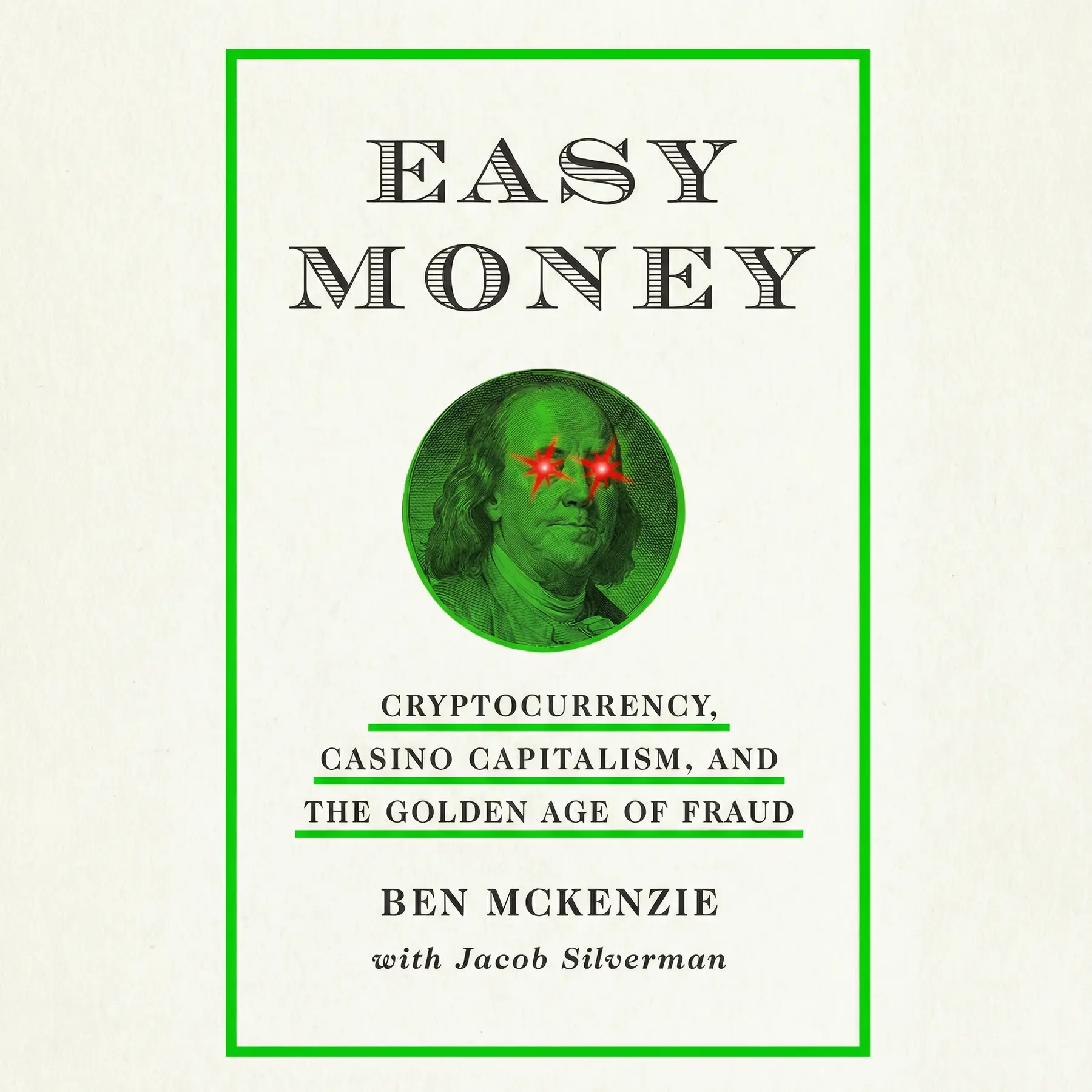
Easy Money: Cryptocurrency, Casino Capitalism, and the Golden Age of Fraud
Shows how the crypto boom, sold as financial freedom, hid unaudited companies, tangled borrowing and fraud. It also gives you warning signs that apply to any investment that sounds too easy.
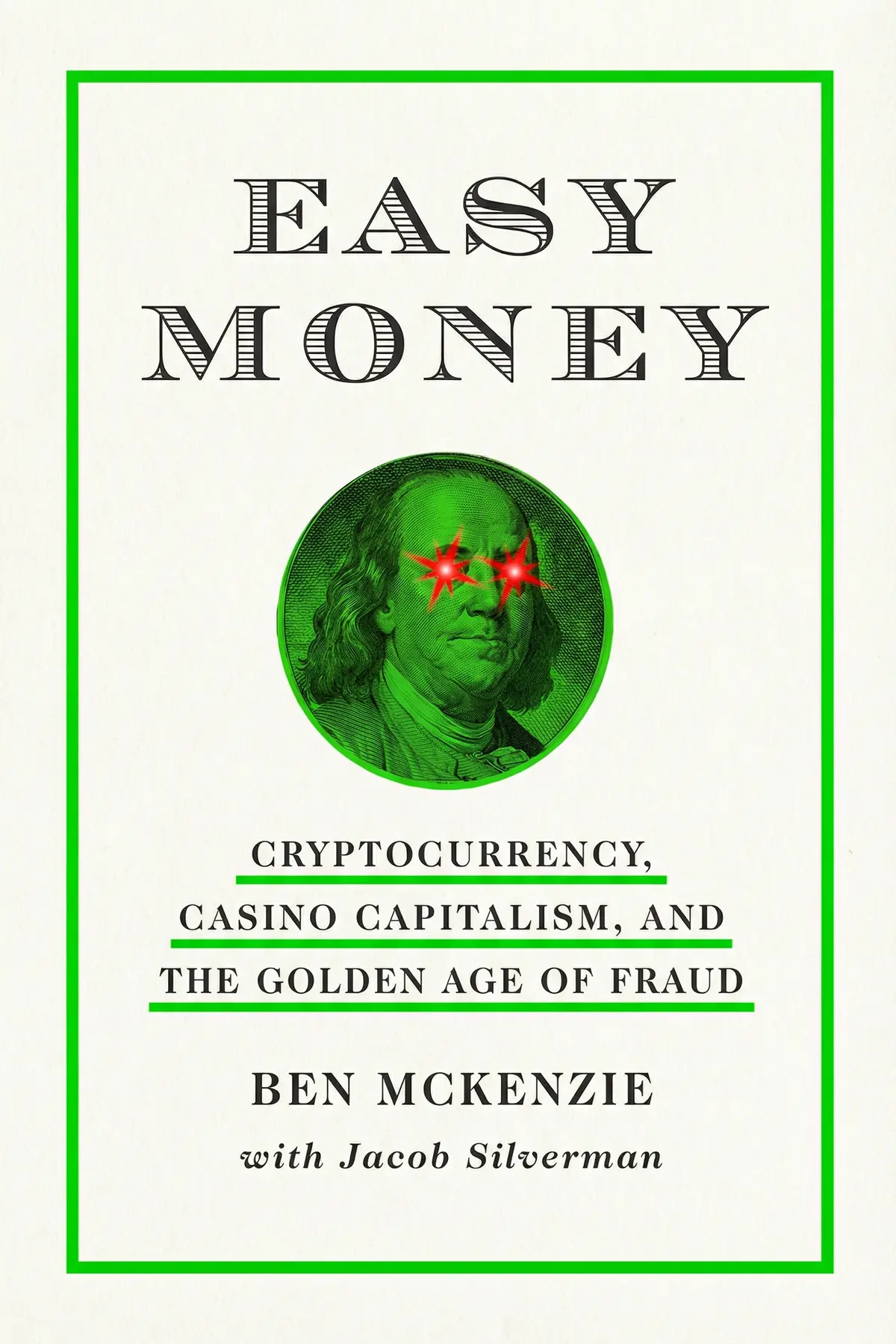
Table of Content
1. Introduction
1 min 07 sec
Maybe crypto has made you feel foolish for staying out, or uneasy for getting in. Easy Money gives you a sharper way to judge it. Actor Ben McKenzie and journalist Jacob Silverman argue that the boom sold itself as freedom from banks while running, underneath, like a casino with weak oversight and plenty of room for fraud.
McKenzie, best known from television, began doubting the hype around 2020 and backed that doubt with his own money. The book follows him from a losing bet through a Miami conference, an interview with Sam Bankman-Fried and an appearance before the US Senate, until the industry’s biggest names were bankrupt, sued or arrested.
One thread runs through all of it. A good story is not evidence, and the cheapest protection is to keep asking what actually stands behind a promise. Along the way, the book hands you warning signs that reach far beyond crypto: missing audits, borrowed money stacked on borrowed money, and founders who dodge simple questions.
2. Tell a payment system from a betting chip
1 min 39 sec
A currency invented to free people from banks found some of its first real customers on a black market. Then its pitch changed again, and that second change matters most for anyone deciding whether to buy in.
3. Test any promise with the fraud triangle
1 min 29 sec
A company claiming to hold tens of billions of dollars ran with about a dozen people and no full audit. A simple model from the study of financial crime shows why that combination should worry anyone.
4. Hold a skeptical view when the market disagrees
1 min 42 sec
McKenzie put real money behind his doubts, and for a long stretch the market made him look foolish. His year of losses shows the hidden cost of being right at the wrong moment.
5. Read the sales floor behind the revolution talk
1 min 45 sec
At a giant Bitcoin gathering, speakers promised freedom from banks and governments. Walking the halls, McKenzie noticed something else on offer, and a meeting with a Tether cofounder did nothing to ease his worries.
6. See how borrowed coins turned one crash into many
1 min 42 sec
In the spring of 2022, about $40 billion disappeared almost overnight. What happened next shows why a single failure in an unregulated market rarely stays single, and what that means for anyone chasing high yields.
7. Listen for what a confident founder dodges
1 min 45 sec
Sam Bankman-Fried was hailed as a prodigy while he bought up failing rivals. Sitting across from him, McKenzie heard confident answers on some subjects and strange silences on others, and the silences told him more.
8. Learn what kept the crash from toppling most banks
1 min 33 sec
Arrests, lawsuits and bankruptcies swept through crypto’s biggest names. Yet McKenzie argues the damage could have been far worse, and the reason points to what keeps everyday savings safe from a speculative bust.
9. Conclusion
1 min 17 sec
Easy Money is, finally, a book about the distance between a story and a balance sheet. Crypto’s story was freedom from banks and governments. What McKenzie found underneath was a company holding tens of billions with about a dozen staff and no full audit, lenders bound together by borrowed coins, and a celebrated founder who could not explain his own partners. The story was strong enough to lift the market to $3 trillion and to make a careful skeptic doubt himself. Its foundations proved too shaky to hold once the collapse spread across the industry.
What the book supports is a set of habits, not a market forecast. Before trusting anyone with money, ask who audits them, who gains if the numbers are wrong, and how quickly you could get out. When a pitch moves from what something does to how high it might go, call it a bet. Listen hardest to the questions a confident leader avoids. And if you hold an unpopular view, keep your bets small enough and your life full enough that you can afford to wait.
In McKenzie’s story, the clearest sight never came from the boldest bet. It came from asking, again and again, what was behind the promise.
About this book
What is this book about?
Crypto arrived with a powerful story. After the 2008 financial crisis, it promised money without banks, payments without middlemen and a financial world beyond government control. By 2021, the market was worth about $3 trillion, and anyone who doubted it looked foolish. Actor Ben McKenzie doubted it anyway, and he and journalist Jacob Silverman went looking for what was behind the promise. They examine Tether, a stablecoin with a market cap above $60 billion, only about a dozen staff and no comprehensive audit, through the fraud triangle of motivation, opportunity and rationalization. They walk the floor of the Bitcoin 2022 conference in Miami, follow the 2022 chain of collapses from Terra and Luna to Three Arrows Capital and Celsius, and interview Sam Bankman-Fried months before FTX fell apart and he was arrested. What readers get is part investigation, part personal story of a skeptic who lost money betting against the boom before he was proven right. Most of all, they get a set of practical tests for any scheme that promises easy money: who checks the books, where the returns come from, and what a confident leader refuses to answer.
Book Information
Who it's for
Professionals eyeing high yields
Professionals tempted by crypto or high-yield platforms who want clear tests before investing.
Following FTX and Terra
Readers who followed the FTX and Terra headlines and want the full chain of events explained.
Doubting a rising market
Anyone who has held an unpopular view against a rising market and wondered whether to hold on.
About the Author
Ben McKenzie
Ben McKenzie is an American actor, author and commentator, known for television roles in The O.C., Southland and Gotham. He has become a prominent critic of the cryptocurrency bubble and the fraud around it, and he directed and produced the documentary Everyone Is Lying to You for Money. Jacob Silverman is a journalist who reports on technology, politics and power in Silicon Valley. He wrote Terms of Service, and his work has appeared in the New York Times and the Los Angeles Times.
Ratings & Reviews
Ratings at a glance
What people think
Listeners consider the book to be highly informative and well-documented, as one listener draws attention to its comprehensive exploration of cryptocurrency's history. Furthermore, they prize its approachable style, quality of writing, and overall reliability, with one listener highlighting how it effectively exposes the ten billion dollar+ fraud. There is also commendation for the book's thoroughness; one listener points out the variety of topics discussed, and listeners generally find the content accessible. However, the quality of the narrative draws varied responses, with one listener noting that the authors hold a somewhat biased perspective.
Top reviews
Somporn
Picked this up because I remember Ben McKenzie from The O.C., but I stayed for the brilliant breakdown of the crypto house of cards. To be fair, I didn't expect a Hollywood actor to produce such a credible, well-researched piece of investigative journalism. McKenzie and Silverman peel back the layers of the industry, showing how "Ponzinomics" became the norm rather than the exception. The writing is incredibly smooth, making complex financial concepts like stablecoins and offshore exchanges actually digestible for the average person. It’s a terrifying look at how billions in fraud can hide in plain sight just by using enough jargon to confuse everyone. Highly recommended if you want to understand the madness of the last few years; it's much more than just a celebrity vanity project.
Show morePierre
After hearing about the collapse of FTX and Celsius, I wanted a deep dive that wasn't just technical jargon, and this book delivered in spades. The level of research here is astounding, covering everything from the early days of Bitcoin to the offshore tethering schemes that kept the whole thing afloat. I was particularly impressed by how McKenzie used his celebrity status to gain access to industry players who might have otherwise stayed hidden. The storytelling is confident, and despite the heavy subject matter, it reads like a breeze because the authors know how to pace a scene. It’s an eye-opening account of how easily we can be fooled by the promise of "easy money" and high yields. If you are even remotely curious about financial crime, this is essential reading for our current era.
Show moreNatnicha
Wow, this was an unexpected treat that managed to surprise me even though I thought I knew everything about the crypto scams of 2022. The authors have a knack for finding telling anecdotes and funny character profiles that bring the absurdity of the industry to life in a way that news articles just can't. In my experience, most books on this topic are either too technical or too fawning, but this hits the sweet spot of being informative and deeply skeptical. The title "Easy Money" is a bit generic, but the content is anything but, offering a sharp-edged critique of how "Ponzinomics" became a legitimate business strategy. The writing is consistently engaging and the authors' passion for exposing the truth is palpable on every page. It’s one of those rare books that is both educational and entertaining.
Show moreChiw
Ever wonder how we all got swept up in the NFT and Bitcoin craze without actually understanding what a blockchain does? This book serves as a fantastic, if somewhat cynical, guide through the wreckage of the crypto markets. The authors do a solid job of explaining the history of these digital assets while maintaining a fast-paced narrative that feels more like a thriller than a textbook. Truth is, some of the snarky comments and "actor-turned-journalist" framing can feel a bit self-indulgent at times, but the core reporting is undeniable. It’s far more informative than Michael Lewis’s recent take on SBF, providing a broader look at the systemic rot rather than just focusing on one guy. A solid, easy read for anyone who wants to see the man behind the curtain.
Show moreAnthony
As someone who followed the 2008 financial crisis closely, I found the comparisons here to be poignant, even if they didn't always land perfectly. The book is an excellent introduction for anyone who feels like they missed the boat on crypto but suspects the whole thing was a grift anyway. McKenzie’s journey from actor to skeptic is a useful framing device, even if the "man on a mission" energy is a little high-octane for every single chapter. Personally, I think the sections interviewing major crypto players were the strongest, highlighting the sheer absurdity of their claims with dry wit. It might be a bit dense in the middle, but it’s a necessary read for understanding modern financial fraud. It shows the ten billion dollar plus fraud in a way that feels visceral and urgent.
Show moreValentina
Finally got around to reading this after seeing Ben McKenzie on various news segments, and I was pleasantly surprised by the depth of his knowledge. The book successfully demonstrates how tens of billions of dollars were siphoned off through clever marketing and a total lack of regulation. It’s well-researched and credible, providing a history of cryptocurrency that feels thorough without being overwhelming for a layman. My only real gripe is that the narrative occasionally feels a bit too much like it's trying to be "The Big Short," with some forced drama sprinkled in to keep the reader engaged. Still, it’s an incredibly readable and important piece of work for anyone trying to make sense of the digital gold rush. It’s refreshing to see someone use their platform for such thorough investigative work.
Show moreSangduan
The chapter on Tether alone is worth the price of admission, as it explains the backbone of the crypto market in a way that finally made sense to me. McKenzie and Silverman have written a book that is more broadly about the culture of greed and less about the technical specs of the blockchain, which I appreciated. Not gonna lie, the actor-as-journalist angle felt like a gimmick at first, but McKenzie proves he has the economics background to back up his assertions. While the tone is definitely biased toward the skeptic side, the factual material is so overwhelming that it’s hard to argue with their conclusions. It’s a solid, easy read for anyone who wants to understand how the "future of finance" was built on such a shaky foundation. Definitely worth your time.
Show moreKru
Ben McKenzie brings a surprisingly sharp analytical eye to a world that usually thrives on obfuscation and hype. This book is a relief to read because it doesn't try to "both sides" the issue of crypto; it calls a scam a scam and backs it up with extensive interviews and data. The descriptions of meeting big players in the space and hearing their ridiculous claims are easily the highlights of the book. To be fair, some readers might find the narrative a bit one-sided, and the humor is definitely an acquired taste that leans heavily into sarcasm. However, for a clear-eyed look at how we got here, this is probably the best resource available right now. It covers a lot of ground without ever feeling like it's getting bogged down in the minutiae.
Show moreSau
This book provides a solid foundation for why the crypto market is essentially a giant Ponzi scheme, but the prose is a major hurdle. Every few pages, there’s an attempt at a clever one-liner or a sarcastic observation that just falls completely flat and makes the narrator seem like a bit of a bully. Look, the research is top-notch and the investigative work into offshore exchanges is genuinely impressive, but the delivery is exhausting. You are constantly beaten over the head with the theme that "everyone is a moron" except the authors. If you can get past the "empty snark" and the occasionally repetitive nature of the arguments, there is good information here, but it’s a slog to get to. It’s informative, but the tone definitely won't be for everyone.
Show moreOksana
Not what I expected given the hype, as the book quickly devolves into a series of political jabs that have very little to do with financial theory. While I have a passing interest in how these scams work, I found the author's condescending tone toward anyone with a different worldview to be incredibly jarring and unnecessary. Frankly, the Trump bashing started almost immediately, and it felt like the financial analysis was just a vehicle for airing personal grievances. Beyond the politics, the writing style relies too heavily on empty quips and cringey humor that distracted from the actual facts about crypto fraud. I ended up DNF-ing this halfway through because the bias was just too much to overlook. It’s unfortunate because there is probably a good story here if it weren't buried under such vitriol.
Show moreQuestions about this book
What is Easy Money by Ben McKenzie and Jacob Silverman about?
It follows actor Ben McKenzie’s investigation into the crypto boom, written with journalist Jacob Silverman. They argue that a market sold as freedom from banks worked more like an unregulated casino, full of borrowed money and opaque companies. The book moves from Bitcoin’s origins and the Tether stablecoin through the Miami Bitcoin conference, the 2022 collapses of Terra, Three Arrows Capital and Celsius, an interview with Sam Bankman-Fried, and the arrests that followed.
What is the fraud triangle in Easy Money?
The fraud triangle is a model the authors use to judge Tether. It says fraud tends to appear when three things come together: a motive to cheat, an opportunity created by weak oversight, and a rationalization that makes cheating feel acceptable. In the authors’ view, Tether, with its small staff, missing audits and difficult redemptions, showed all three. The same three questions can be asked of any business holding other people’s money.
Did Ben McKenzie make money betting against crypto?
Instead, they cost him money. He wagered that Bitcoin would drop under $10,000 before 2021 ended, but the price remained far higher than that, and the wager cost him a great deal of money. He then took larger positions against crypto and related stocks as the total market reached about $3 trillion. The book uses this stretch to show that being right and being right on time are different problems.
How can I use the lessons of Easy Money to protect my money?
The book suggests a few tests. Ask who audits a platform and how easily you could withdraw your money. The book’s account points to looking hard at the risks a crypto firm takes, since Three Arrows Capital fell through its heavy TerraLuna stakes and Celsius halted withdrawals with liabilities $4.7 billion above its assets. And treat a leader’s evasive answers on basic questions as a warning, as McKenzie did in his interview with Sam Bankman-Fried.
Who should read Easy Money?
It suits readers curious or nervous about crypto, investors weighing high-yield platforms, and anyone who followed the FTX and Terra headlines and wants the story connected. It also speaks to people holding an unpopular opinion against a rising crowd, since McKenzie’s own losing bet and self-doubt are a large part of the book.
Readers also enjoyed
Digital Gold: The Untold Story of Bitcoin
Nathaniel Popper
Going Infinite: The Rise and Fall of a New Tycoon
Michael Lewis

AUDIO SUMMARY AVAILABLE
Listen to Easy Money in 15 minutes
Get the key ideas from Easy Money by Ben McKenzie, plus 5,000+ more nonfiction titles.
- 5,000+ titles
- Listen as much as you want
- 7-day free trial
- Cancel anytime









