
13 min 55 sec
Available in: English
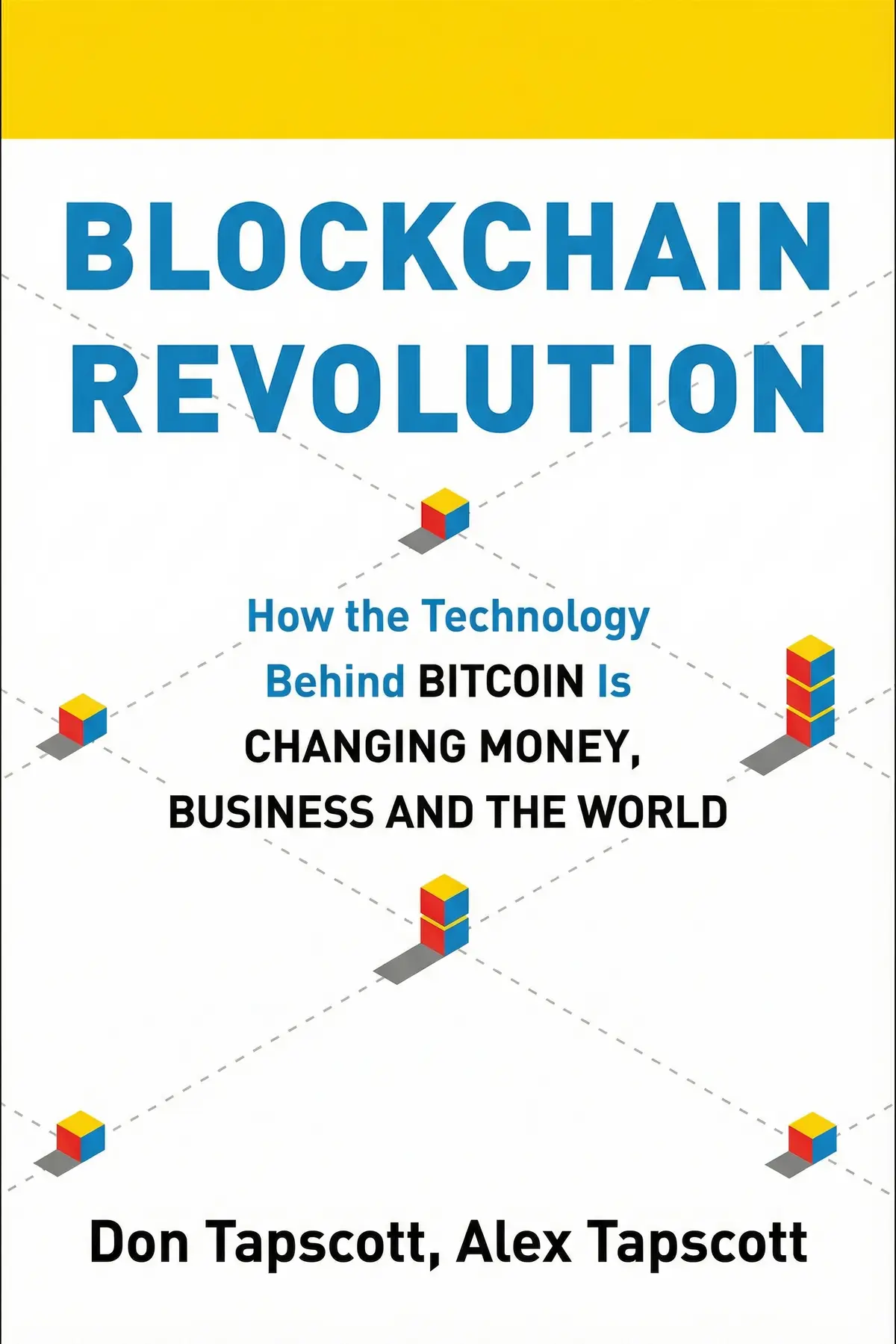
Digital Gold: The Untold Story of Bitcoin
Traces how Bitcoin, a currency run by its users instead of banks, grew from an anonymous 2009 proposal into a tool for drug markets, activists and Argentine savers. It also explains why its design resists hackers and governments.
Table of Content
1. Introduction
1 min 04 sec
If Bitcoin still sounds to you like a mystery or a scam, the clearest way in is the strange fact at its center: no bank, company or government runs it. In Digital Gold, journalist Nathaniel Popper traces how a currency created, held and moved by its own users went from an anonymous post in January 2009 to a tool for drug dealers, activists and worried savers. One pattern repeats throughout his account. Whenever banks or governments tightened their grip on money, Bitcoin offered people a way around them, and its price and following grew.
That is the thread followed here. Bitcoin is a design for taking control of money away from institutions and handing it to individuals, and every chapter of its early life put that design to the test. By the end, you can explain the blockchain without jargon, say why it is so hard to hack, and understand why people from an online black market to ordinary savers in Argentina reached for it.
2. See what makes Bitcoin unlike any other money
1 min 41 sec
A currency launched by someone nobody has identified, with a ledger anyone in the world can read. It sounds like a recipe for chaos, yet that openness is exactly what the design depends on.
3. Understand what keeps a community-run currency safe from hackers
1 min 57 sec
Many cash withdrawals still depend on basic PIN codes. Bitcoin has no bank, no guard and no head office, so who stops a thief from simply writing himself a fortune?
4. Learn where Bitcoin's first users really came from
2 min 07 sec
In 2011 a senator urged that Bitcoin be eliminated, and within two days its value had climbed to $30. The story behind that jump begins in one of the darkest corners of the internet.
5. See what frozen donations taught people about Bitcoin
2 min 07 sec
In 2011 one organization lost almost all of its income without a court ruling against it. The episode showed activists everywhere who really controls the flow of money, and what an escape route might look like.
6. A refuge for savings when currencies fail
1 min 55 sec
Two ways to sell the same $100 ticket: one paid 595 pesos after two weeks, the other far more in two days. For people burned by inflation, that gap meant much more than convenience.
7. Spot uses for the blockchain beyond money
1 min 56 sec
During the financial crisis, one of the biggest banks in the world was rescued by a piece of paper sent through the mail. That moment hints at how much of daily life still runs on slow, trusted middlemen.
8. Conclusion
1 min 08 sec
Popper’s story is finally about who holds the account book. For centuries the answer was a bank or a state, and everyone else had to trust it. Bitcoin offered another answer: everyone holds a copy, mathematics guards the keys, and the rules change only when most users agree. Its early years were a series of stress tests, and each one, from a hidden drug market to a park in Manhattan to a peso losing value, showed a different group discovering what money without a gatekeeper could do for them.
The book supports a few habits of mind. When you hear Bitcoin praised or dismissed, separate the design from the uses people make of it, since the same features served activists and drug dealers alike. When a payment, transfer or contract feels slow and costly, notice the middlemen in it and ask what they really add. And when a company or government can switch off your access to money, remember the $9 billion check sent by mail.
The old system works well enough on an ordinary weekday. Bitcoin was built for every other day.
About this book
What is this book about?
Money has always depended on someone in the middle: a bank keeping the records, a government managing the currency, a payment company deciding who can receive funds. Journalist Nathaniel Popper tells the story of the first serious attempt to remove that middle. Bitcoin appeared in January 2009, posted by an unknown figure called Satoshi Nakamoto. It is a currency whose code anyone can read and whose ledger sits on every computer in its network. Popper explains in plain terms how the blockchain, public-key cryptography and majority voting make Bitcoin hard to hack and impossible for any one person to steer. He then follows the currency through its early tests. Its price first jumped on the hidden drug market Silk Road. It was suggested as a donation route for WikiLeaks after payment companies cut off its funds, it drew interest from Occupy Wall Street as a way to take donations no authority could freeze, and it offered a refuge to Argentinians who had watched inflation make their money worthless. By the end, readers can explain what Bitcoin is, why its first users came from the margins and where its shared public record might reach beyond money, from instant transfers to contracts that need no notary.
Book Information
Who it's for
Professionals curious about Bitcoin
Professionals who hear about Bitcoin constantly and want to understand how it actually works.
Looking beyond banks
Founders and freelancers who depend on banks and payment companies and want to see an alternative.
Curious about crypto's story
Curious readers who want the human story behind cryptocurrency, from Silk Road to Argentina.
About the Author
Nathaniel Popper
Nathaniel Popper is a journalist who has covered Wall Street and Silicon Valley, with earlier roles at The New York Times, the Los Angeles Times and the Forward. He studied history and literature at Harvard University. His research into where Bitcoin came from began with an article on the large Bitcoin holding built up by Cameron and Tyler Winklevoss. Digital Gold, published in 2015, was shortlisted for the Financial Times Business Book of the Year and named an Editors' Choice by The New York Times.
Ratings & Reviews
Ratings at a glance
What people think
Listeners find this work an absorbing narrative that unfolds like a suspense novel while offering a superb history of Bitcoin’s origins. Furthermore, the storytelling is immersive, with one listener highlighting its quick tempo, and the prose itself is gripping. Beyond that, the material is thoroughly researched without becoming overly technical, and listeners value the in-depth profiles of Bitcoin's early proponents. They find the subject matter fascinating, and one listener points out that it contains plenty of amusing specifics.
Top reviews
Oksana
Popper has managed to turn what could have been a dry economic lecture into a high-stakes techno-thriller. This is an incredible deep-dive into the early believers, the cypherpunks, and the outright oddballs who saw the potential in Bitcoin long before the masses. The narrative drive is relentless. I was particularly struck by the descriptions of the Silk Road and the subsequent legal drama surrounding Ross Ulbricht, which felt like something straight out of a movie. While the book stops around 2014, it remains the definitive origin story for anyone trying to understand where this movement came from. The writing is sharp and accessible, focusing on the human ego and the clashing ideologies that fueled the code. It is a brilliant piece of investigative journalism that makes complex financial concepts feel personal and urgent. If you want to understand the 'why' behind the blockchain revolution, start here.
Show moreMoon
Finally got around to reading this after seeing it on every 'must-read' crypto list for years, and it absolutely lives up to the hype. Popper’s ability to weave together the disparate threads of Finnish coders, Japanese developers, and Silicon Valley venture capitalists is masterful. The chapters covering the rise and spectacular collapse of Mt. Gox were particularly gripping. I couldn't put it down. It captures that specific moment in time when Bitcoin transitioned from a hobbyist experiment into a legitimate financial threat. The book is incredibly well-documented, clearly showing the author spent years interviewing the key players. Some might find the level of detail about the early forum posts a bit much, but I think it’s essential for capturing the authentic 'ground floor' vibe. It is a stellar piece of non-fiction that feels remarkably balanced despite the polarizing nature of its subject matter.
Show moreEarn
As someone who came to the Bitcoin party late, this book was an eye-opener regarding the sheer chaos of the early years. The mystery of Satoshi Nakamoto is handled with just the right amount of intrigue without descending into baseless conspiracy theories. I loved the way Popper contrasted the different motivations of the early adopters—some were in it for the gold, some for the politics, and others just for the puzzle. It reads like a thriller. The detail regarding the early mining rigs and the technical hurdles the community faced was fascinating to me. It’s rare to find a book that handles technology this well while keeping the human element front and center. I finished it in two sittings. Even if you aren't interested in finance, the story of how a small group of people can challenge the global banking system is a universal and compelling one.
Show moreDen
Truth is, I didn't think a book about digital ledgers could be this gripping. Popper crafts a narrative that is both an educational resource and a page-turner. The way he details the philosophical underpinnings of the movement—referencing the desire for a system free from government debasement—is excellent. It provides a bridge between abstract economic theory and the lived reality of the people trying to build a new world. The book is packed with entertaining details that I hadn't heard before, despite following the news for years. It’s an incredibly well-documented account of a revolution in the making. Even though the technology has moved on, the foundational conflicts described here are still very much alive today. Highly recommended for anyone who likes a good underdog story with global implications. It is easily the best book on the subject.
Show moreZanya
Ever wonder how a bunch of libertarians and mathematicians actually built a multi-billion dollar asset out of thin air? Digital Gold provides a fantastic chronological account of that improbable journey. I really appreciated the focus on Wences Casares and his perspective on inflation in Argentina. It adds a much-needed layer of global sociological context that many other tech books miss. To be fair, there isn't much here for the hardcore coder looking for a technical breakdown of the SHA-256 algorithm or Merkle trees. However, as a character study of the pioneers like the Winklevoss twins and Erik Voorhees, it is top-tier. The pacing is fast, and the author does a great job of explaining the 'Wild West' atmosphere of the Mt. Gox era. It’s a compelling read that prioritizes the people over the protocol, which makes it far more readable for the average person.
Show moreJirapat
The chapter on the Silk Road alone makes this worth the price of admission. Popper paints a vivid picture of the tension between the utopian ideals of the founders and the gritty reality of the dark web. I found the transition from the 'cypherpunk' phase to the 'big business' phase to be the most fascinating part of the narrative. It’s interesting to see how Marc Andreessen and other institutional players eventually swooped in to legitimize what started as a fringe experiment. The prose is clean and the research is clearly exhaustive. My only real gripe is that it feels a bit dated now, given how much has happened in the crypto space since 2014. A follow-up or an updated edition is desperately needed. That said, as an 'origin story' for the digital age, it is quite an achievement. It’s a great piece of reportage.
Show moreJiraporn
This book reminds me of the best tech-focused journalism out there, like 'Hatching Twitter' or some of Michael Lewis's work. It’s an accessible, character-driven story that demystifies a topic that usually feels impenetrable. Popper does a great job of explaining the ideological battle between the central banks and the decentralized dreamers. Gotta say, the portrayal of the various developers and their internal squabbles was both hilarious and enlightening. It humanizes a technology that many people view as cold or purely mathematical. While I wish there was more about the alt-coin explosion, I understand the focus had to stay on Bitcoin for the sake of the narrative. The writing is consistently engaging, and the research feels solid. It’s a very thorough account of a period that changed finance forever. Definitely worth your time if you're curious about the roots of the current market.
Show moreOtt
Picked this up on a whim and was immediately sucked into the drama surrounding the Winklevoss twins and the early exchange failures. It’s a very entertaining read that manages to cover a lot of ground without ever feeling bogged down. The author has a real talent for explaining the significance of certain events, like the first real-world Bitcoin transaction for a pizza, in a way that highlights the cultural shift happening. Look, it’s not a technical manual, but it is a fantastic history of an idea. Some of the characters are truly bizarre, but Popper treats them with a fair amount of respect while acknowledging their flaws. The book captures the excitement and the danger of the early days perfectly. It’s an essential historical record for anyone who wants to understand why people are so obsessed with this 'digital gold' in the first place.
Show moreOrathai
While the writing is certainly fluid, I found myself frustrated by the lack of technical meat on the bones. Much of the middle section reads a bit too much like a celebrity gossip column, focusing on the personal feuds and private lives of the developers rather than the innovation itself. It’s well-researched, sure, but the focus on 'eccentric personalities' felt a bit repetitive after a while. I was hoping for more analysis on the economic implications or the actual security of the blockchain. Instead, we get a lot of blow-by-blow accounts of meetings and parties. Still, it’s an okay introduction for those who know absolutely nothing about the history of Satoshi Nakamoto. It serves its purpose as a historical record, but it lacks the intellectual depth I was looking for. It is an entertaining enough way to pass the time on a flight.
Show moreElla
Not what I expected based on the title, which suggests a serious analysis of the underlying protocol and its future potential. Instead, this felt like a cheap magazine feature stretched out into a full-length book. I struggled with the author's decision to concentrate so heavily on the drama and the 'shady' elements of the early community. It almost felt like he was aiming for a Hollywood script rather than a serious piece of financial history. There’s barely any mention of the actual mathematics that make the system work. If you enjoy reading about the social lives of billionaires and programmers, you might like this. But if you want to understand the actual technology, look elsewhere. The tone is often too sensationalist for my taste. It’s a fast read, but ultimately a shallow one that leaves the most interesting questions about the technology's future entirely unanswered.
Show moreQuestions about this book
What is Digital Gold by Nathaniel Popper about?
Digital Gold tells the early story of Bitcoin, the digital currency introduced in January 2009 by the pseudonymous Satoshi Nakamoto. Popper explains how its open-source code, public blockchain and strong encryption let users create, hold and transfer money without a bank or government. He then follows how it spread, through the Silk Road drug market, the WikiLeaks and Occupy Wall Street episodes, and savers in Argentina.
How does Bitcoin work according to Digital Gold?
Bitcoin records every coin and every transaction in the blockchain, a public ledger copied to every computer in the network. New transactions are added in blocks roughly every ten minutes so all copies stay identical. Public-key cryptography protects funds: the public key is visible to everyone, but only the private key holder can access the money. Changes to the rules need majority approval.
Can Bitcoin be hacked?
Popper describes Bitcoin’s encryption as beyond the reach of even the most powerful supercomputers. The main theoretical risk is an attacker controlling 51 percent of the network, which would let them change the rules and take over the blockchain. He considers this very unlikely as the network grows, and notes that even such an attacker could not spend other people’s bitcoins, only reverse their own payments and block others.
Why did Bitcoin become popular in Argentina?
Argentina had a long history of financial crises and inflation, plus heavy restrictions such as an artificial dollar exchange rate and a ban on PayPal. Bitcoin offered a faster, better-paying way to receive money: meetup organizers got 920 pesos in two days for a $100 ticket paid in Bitcoin, versus 595 pesos after 14 days by credit card. Many also used it to protect savings from inflation.
What uses does the blockchain have beyond money?
Popper points out that because the blockchain is visible to everyone and cannot be altered, it can establish trust without a traditional witness. Signing a contract or a will has usually required a notary or solicitor to be present; with a public blockchain, anyone can confirm the agreement took place. He also highlights instant transfers, fee-free cross-border payments and tiny online charges, and believes the most interesting uses are yet to come.
Readers also enjoyed

AUDIO SUMMARY AVAILABLE
Listen to Digital Gold in 15 minutes
Get the key ideas from Digital Gold by Nathaniel Popper, plus 5,000+ more nonfiction titles.
- 5,000+ titles
- Listen as much as you want
- 7-day free trial
- Cancel anytime









