AI 2041: Ten Visions for Our Future
Kai-Fu Lee
 English
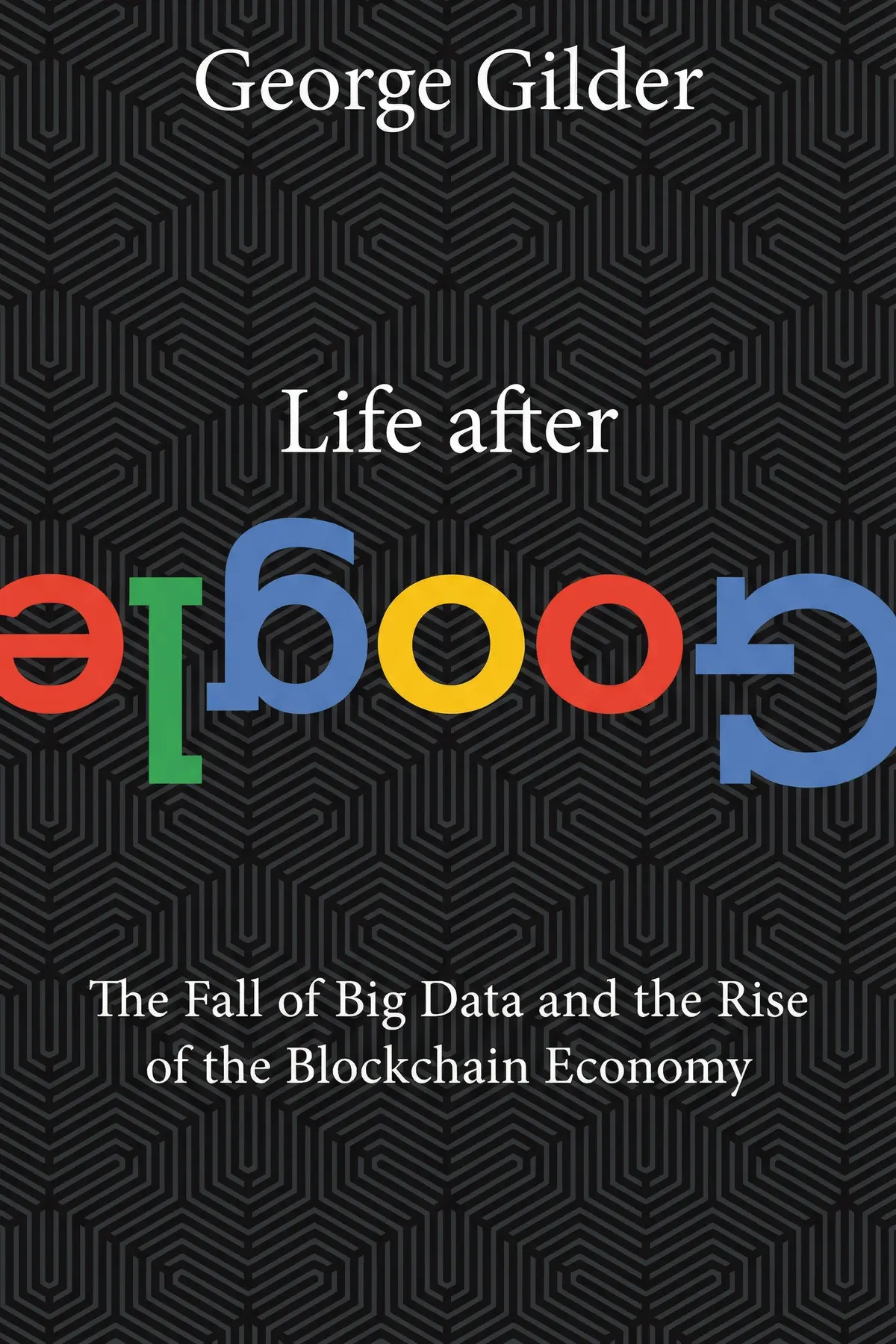
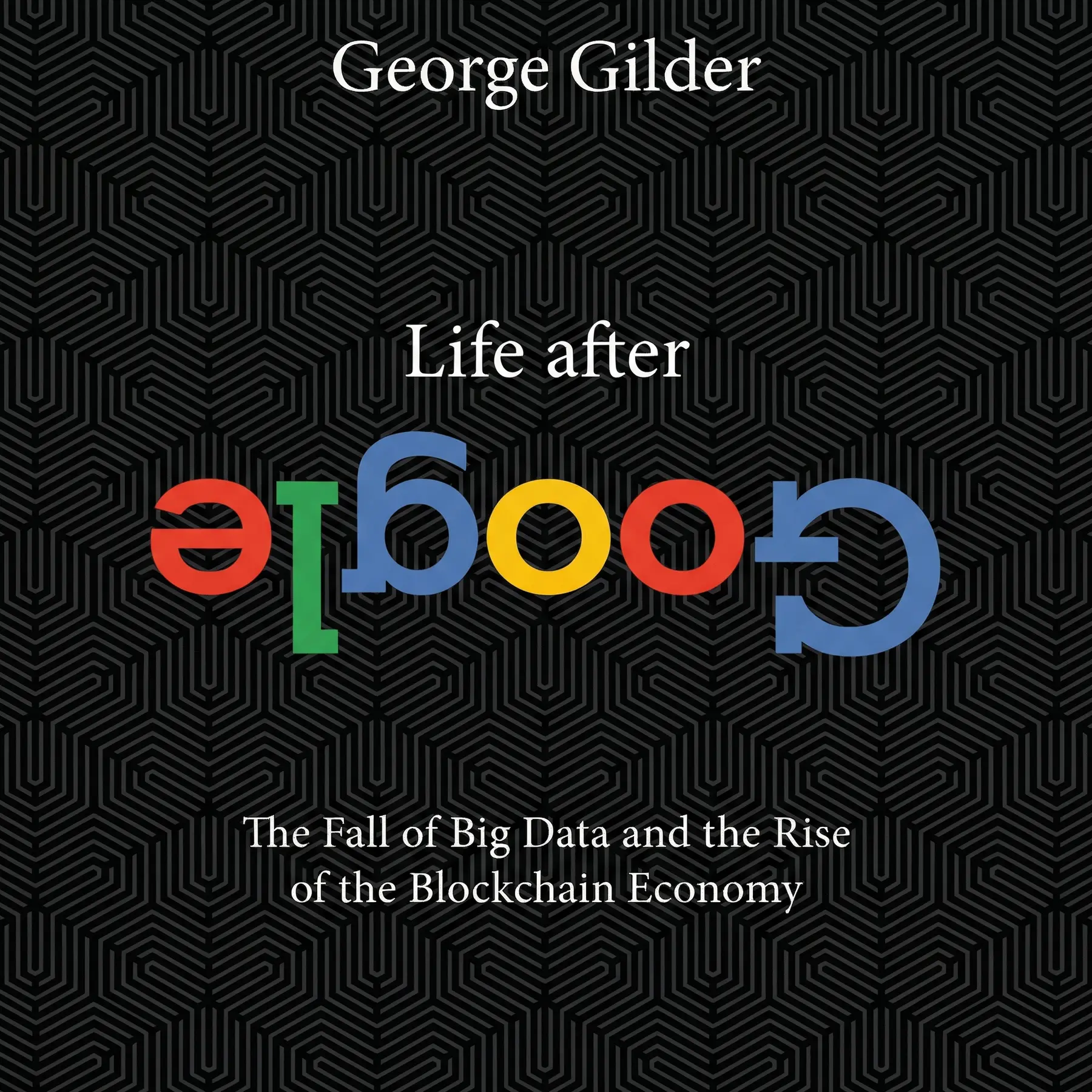
Explains why George Gilder thinks Google's model of central data hoards and ad revenue is reaching its limit. It also shows how blockchain technology spreads security and computing power back to individual users.
54 sec
Every free search you run gets paid for, with your time, your attention and your personal data. In Life After Google, economist and investor George Gilder argues that this bargain, which built Google into the defining company of our age, is close to its limit. Holding the world’s information in one central store makes that store a target, and feeding it demands ever more computing power.
His claim is that the centralized giants are giving way to a decentralized system, the blockchain, where each person holds their own data and many computers together verify what is true. Gilder also takes aim at the fear of runaway artificial intelligence, and he admits a real flaw in bitcoin’s design as money. By the end, you will be able to explain how a blockchain keeps records safe, why Gilder thinks the cloud giants are vulnerable, and where his optimism meets hard economics.
1 min 45 sec
You never get a bill from Google, yet the company earns billions from you every year. Gilder traces how its idea of knowledge and its idea of value both depend on one thing users rarely think about.
1 min 48 sec
Some of the people building artificial intelligence meet privately to warn the world about it. Gilder thinks a mathematician answered their fear almost a century ago, the day before a famous colleague announced the opposite.
1 min 51 sec
A degree that costs twice as much without teaching any better, and a grant that pays bright students to drop out. Gilder sets these side by side to show where he thinks real progress is coming from.
1 min 36 sec
A record that thousands of strangers can read, yet nobody can quietly change. Gilder explains the two simple tricks that make it possible, and why they turn a single big target into none at all.
1 min 47 sec
A 24-year-old cast doubt on a man claiming to be bitcoin’s creator with one simple argument. The platform that young man founded lets strangers trade shares and money with no middleman holding the funds.
1 min 40 sec
Roughly once a decade, cheaper computing has toppled the reigning way of building computers. Gilder sees the next turn coming, and it involves the machine sitting idle on your desk tonight.
1 min 46 sec
Bitcoin’s creator designed it to behave like gold, with a fixed supply and mining that gets harder over time. One economics blogger explains why that very design makes it unfit to anchor money.
1 min 10 sec
Gilder’s book is really a forecast about where trust will live. For twenty years, Google has asked people to hand their information to one central store in exchange for free services, and to pay with their attention. Gilder argues that this arrangement has reached a tipping point. The servers keep growing, the hunger for processing power outruns what is possible, and a single store of everyone’s data is a single target. The blockchain offers a different deal: records that many computers verify, signatures that prove identity without exposing it, contracts that release assets only when every side delivers.
He does not pretend the new world is finished. Bitcoin’s fixed supply makes its price swing too wildly to anchor money.
The book supports a few habits worth keeping. Notice what each free service collects from you and where it stores it. When talk of thinking machines turns fearful, remember Gödel and ask who wrote the rules. And judge any new money by how steady it stays.
Gilder’s bet is that the next system of the world will be held in many hands, including yours.
Google shapes how billions of people search, write and find their way, and it pays for all of it with advertising and a vast store of personal data. George Gilder argues that this model, which he calls Google's system of the world, has reached a tipping point. Holding everyone's information in one central place makes it a target, and the company's appetite for ever more computing power is outrunning what technology can supply. Gilder's answer is the cryptocosm, his name for a decentralized world built on blockchains. He explains how public and private keys, mined blocks and an unbreakable chain of records let strangers trust each other without a central guard. He then follows the builders: Ethereum's self-executing contracts, Blockstack's network for apps, Golem's shared supercomputer made from idle machines, and young founders who skipped college to build them. Along the way he dismisses the fear of runaway artificial intelligence with a 1930 proof by Kurt Gödel, and he admits a real weakness in bitcoin's design as money. Readers get a clear picture of how blockchains work and why Gilder thinks they could pull power away from the cloud giants.
Professionals who use Google daily and want to understand who pays for free services and how.
Founders and investors weighing blockchain projects who want the core mechanics explained plainly.
Readers uneasy about artificial intelligence or cryptocurrency hype who want a contrarian economist's view.
George Gilder, born in 1939, is an American author, economist and investor who chairs George Gilder Fund Management. He has written nineteen books, including Wealth and Poverty, which made the case for supply-side economics and capitalism in 1981, early in the Reagan administration, as well as Life After Television and The Scandal of Money. He co-founded the Discovery Institute, a public policy think tank, where he began studying information theory.
Listeners find the book to be skillfully crafted and intellectually engaging, featuring a knowledgeable author and profound observations on various topics. The text also offers valuable perspectives on future developments, particularly regarding blockchain, and listeners categorize it as a mandatory read. That said, there is a lack of consensus on its clarity and educational benefit, with some finding it simple to follow while others find it convoluted. Pacing is another area where opinions are split.
Ever wonder why the internet feels so broken and centralized lately? Gilder provides the most comprehensive answer I've found yet. He utterly demolishes the premises that Google's empire is built upon, showing how their "System of the World" is actually a dead end. To Gilder, the assumption that machines will eventually replace human consciousness is a fatal flaw in Silicon Valley's thinking. He uses Shannon's Information Theory to prove that creativity is what actually drives the economy, not just big data crunching. It’s a dense, challenging read, but it’s packed with the kind of "mind-expanding" scope that changes how you look at your smartphone. If you want to understand why blockchain actually matters beyond the crypto-hype, this is the book.
Show moreThis is the first book I’ve read that actually makes a compelling case for why Google’s reign might be ending. Gilder isn't just guessing; he's looking at the fundamental laws of information and physics to show why a centralized model can't sustain itself forever. I found his explanation of the "cryptocosm" to be a revelation, especially the idea that security should be built into the architecture of the web rather than added as an afterthought. Gotta say, his writing is incredibly energetic and hopeful. Even if you don't agree with his libertarian leanings, the sheer breadth of knowledge on display here—from fiber optics to the philosophy of consciousness—is staggering. It's a necessary read for anyone invested in the future of the digital economy.
Show moreFinally got around to finishing this, and it’s a total brain-bender. Gilder has this unique ability to see tech trends decades before they become mainstream, and his vision of a decentralized internet where we actually own our data is inspiring. He spends a lot of time on Information Theory, which was a bit over my head at times, but the core message resonates: the current Google era of "free" is actually quite expensive in terms of privacy and security. The way he connects the history of the microprocessor to the rise of the blockchain economy is masterfully done. I do think he’s a bit too dismissive of AI's potential, but his defense of human creativity as something machines can't replicate is a welcome counter-narrative to the usual Silicon Valley gloom.
Show moreThe central argument that Google's "free" model is a security catastrophe hits hard. Gilder explains that by offering everything for free, Google has essentially removed the market incentive to actually protect user information. Look, his writing style is definitely dense and requires your full attention, but the payoff is worth it if you care about where the internet is heading. I loved the chapters on the rise of the blockchain and how it provides a "ground of truth" that the current web lacks. While I’m a bit skeptical of his "gold standard" views on Bitcoin, his analysis of the fragility of centralized power structures is spot on. It’s an essential read for anyone trying to figure out what comes after the era of the data giants.
Show moreAfter hearing Gilder talk about Information Theory, I had to dive into the source material. This isn't just a book about tech; it's a deep dive into the philosophy of how we value information and time. Gilder’s optimism is a breath of fresh air compared to the dystopian vibes of most futurist books. He makes a compelling case that the blockchain isn't just a trend but a fundamental shift in how the world's economy will function. I will say, the book gets a bit muddled when he tries to tackle too many topics at once, and his disdain for certain mathematical processes feels more personal than logical. Still, the insights here regarding the "scandal of money" and the future of wireless technology are incredibly valuable.
Show moreFrankly, the way Gilder weaves together Gödel’s Incompleteness and modern cryptography is brilliant, if a bit dense. He’s not just talking about gadgets; he’s talking about the very fabric of our digital reality. I appreciated his deep dives into the lives of key movers and shakers in the tech world, which helped humanize the complex theories he was discussing. The book isn't perfect—some of the anecdotes feel a bit self-promotional, and he repeats certain points about "Bitcoin as gold" a few too many times—but the overarching vision of a more secure, decentralized world is hard to ignore. It’s a sophisticated argument that requires you to slow down and think, which is rare for a tech book these days.
Show morePicked this up because I wanted to understand the blockchain shift, but I’m leaving with more questions than answers. Gilder is clearly a brilliant thinker, and his optimism about the future is infectious, but the book is incredibly obscure in places. He tries to tie together Gödel, Turing, and Shannon’s Information Theory in a way that left me scratching my head more than once. The truth is, I enjoyed his takedown of the "free" internet model—the idea that if you aren't paying, you are the product—but I’m not convinced that the "Singularity" is as impossible as he claims. It’s a thought-provoking read, for sure, but the pacing is uneven. Some chapters fly by with gripping insights, while others feel like a slog through dense, academic mud.
Show moreIs George Gilder a genius or just a very well-connected eccentric? It’s hard to tell after finishing this. On one hand, his critique of Google’s "System of the World" is biting and feels very relevant in an era of constant data breaches. He rightly points out that centralized data is a gift for hackers and that our current security model is fundamentally flawed. On the other hand, the book often feels like a long-winded advertisement for his specific investment philosophy or the latest crypto-startup his friends are launching. Personally, I found the parts about the "fall of big data" much more compelling than his mystical theories about how the universe functions. It’s a mixed bag that requires a lot of patience to get through.
Show moreThis book feels more like a fever dream than a serious tech analysis. Gilder spends an inordinate amount of time attacking Markov Processes and machine learning, seemingly because they don't fit his mystical view of human consciousness. To be fair, his knowledge of history is impressive, but it’s buried under layers of libertarian grandstanding and "invisible hand" magic. He claims Bitcoin is the new gold, yet his explanations of blockchain technology are muddled and occasionally factually suspect. I found the pacing frustrating, with the author frequently veering off into self-indulgent anecdotes about his elite connections instead of providing a concise summary of the future. It’s a very smart man rambling about a world that doesn’t quite exist, and frankly, it left me more confused than informed.
Show moreThe technical jargon is so thick in this book that it often feels like Gilder is just showing off his vocabulary rather than teaching the reader. I was looking for a clear roadmap for the "cryptocosm," but instead, I got a scattered collection of thoughts that jump from Information Theory to the second law of thermodynamics without any clear conclusion. Not gonna lie, I almost put it down when he started bad-mouthing Markov Chains as being "memoryless" and therefore inferior to blockchain. It’s a bit of a stretch to say Google is doomed just because their AI identifies cats using probability tables. While there are some interesting tidbits about security vulnerabilities in centralized data silos, the overall argument is buried in pseudo-philosophical gobbledygook that is hard to follow.
Show moreGeorge Gilder argues that Google’s model, gathering the world’s information in one central cloud and earning 95 percent of its revenue from advertising, is reaching its limit. Central data stores are targets, and the demand for processing power is outrunning technology. He believes blockchain systems, which spread data and verification across many users, are laying the foundation for what comes next.
Gilder points to Kurt Gödel’s 1930 proof that no logical system can be complete, since every system rests on premises it cannot prove from within. An AI that could teach itself from all the world’s data with no human input would have to be complete. So, Gilder argues, any dangerous AI would have to be programmed that way by people.
Gilder describes two mechanisms. Each user has a public key and a private key, so messages can only be read by their owner and replies carry a signature proving identity. Transactions are recorded in blocks stamped through mining, which many computers verify, and each block leaves traces in later ones, so changing old records is close to impossible.
No. Satoshi Nakamoto designed bitcoin to mimic gold, with mining that grows harder and a cap of 21 million coins. But Gilder cites economics blogger Mike Kendall, who argues that a fixed supply forces bitcoin’s price to swing whenever demand changes, as it did between $1,183 and $19,401 in 2017 and 2018. Other cryptocurrencies, Gilder says, must fix this.
It suits people who rely on free online services and want to understand the trade behind them, founders and investors curious about Ethereum, smart contracts and decentralized computing, and readers who want a skeptical view of fears about artificial intelligence. It also offers a frank look at why bitcoin’s design struggles as stable money.
AUDIO SUMMARY AVAILABLE
Get the key ideas from Life After Google by George Gilder, plus 5,000+ more nonfiction titles.