

A Promised Land
Barack Obama
 English
 ไทย
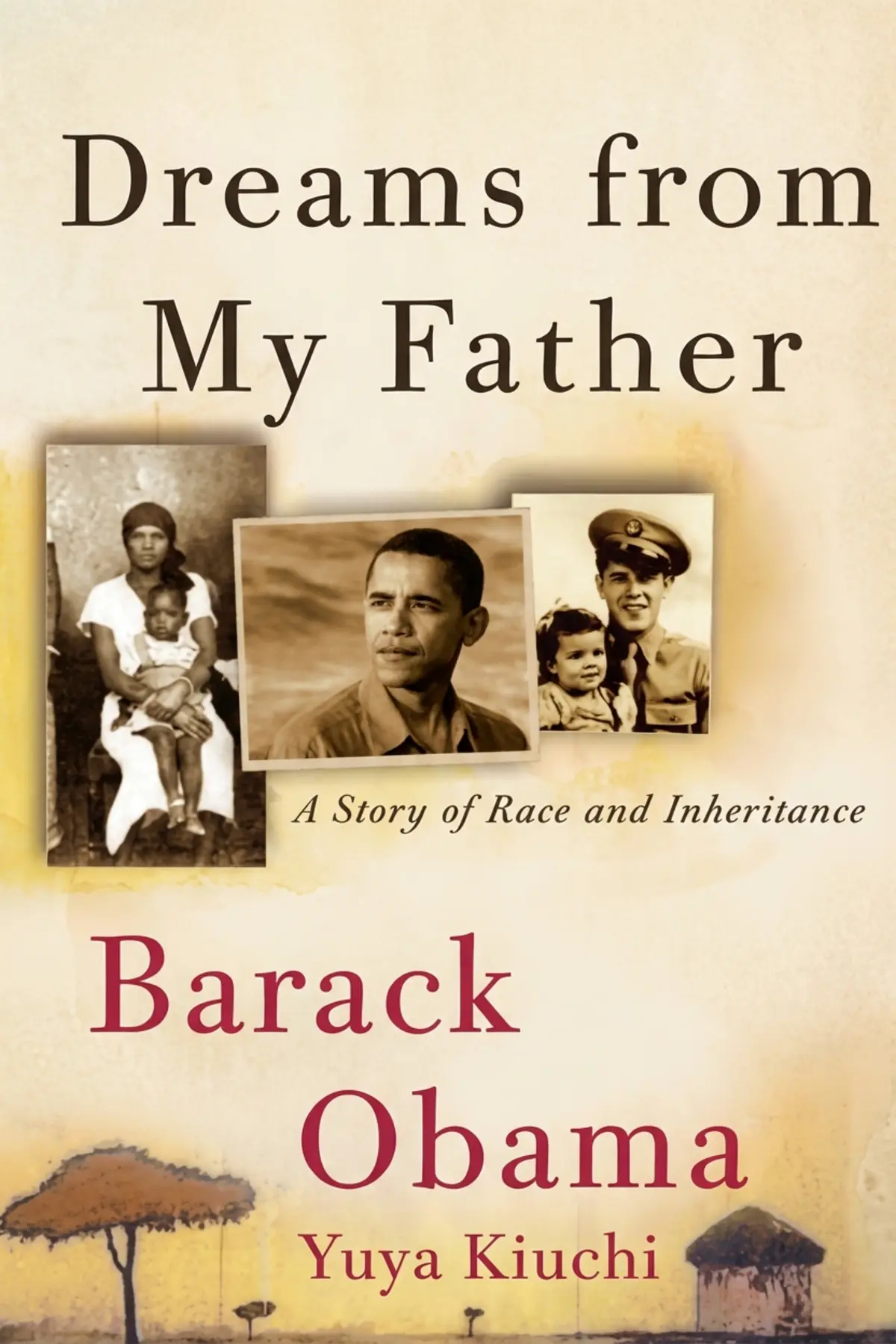
Barack Obama's memoir follows a boy of mixed race across Indonesia, Hawaii, Chicago and Kenya in search of the father he barely knew, and shows how facing family truths let him choose who to become.
1 min 01 sec
Feeling that you belong to two worlds, and fully to neither, can leave a person trying to fit someone else’s picture. In Dreams from My Father, Barack Obama shows another way: learn the whole truth about where you come from, then decide for yourself who to be. He signed the contract in the early 1990s, while still in law school and newly the Harvard Law Review’s first Black president, planning a study of race relations in America. What he wrote instead was the story of growing up as the son of a mother from a Kansas family and a Kenyan father he barely knew.
Every place Obama lived, from Indonesia to Hawaii to Chicago to Kenya, gave him a piece of who he was, and none gave him the finished thing. Following his search, you see the forces that shaped a future US president, and you get a usable lesson for anyone building a sense of home on their own terms.
1 min 30 sec
A boy born to parents whose marriage was illegal in parts of America ended up running through the streets of Djakarta. That restless start left him without a father, but with something else he would use for life.
1 min 41 sec
At an elite Hawaii school, a boy with a missing father turned him into royalty. Then a letter arrived announcing the real man was coming for Christmas, and every invented detail suddenly looked dangerous.
1 min 41 sec
The father who limped into the house that December was nothing like the prince of the playground stories. Within a month he caused a family rupture, charmed a classroom and left behind an unexpected gift.
1 min 44 sec
On the mainland, a young man raised on mutual respect found bitterness on every side of the color line. Somewhere between Los Angeles and New York, he made a decision about the name on his own front door.
1 min 39 sec
His classmates went into finance while he chose a job nobody could define. In Chicago he was good at it, yet one question from pastors and colleagues kept returning, and he could not answer it.
1 min 34 sec
In Kenya his surname finally opened doors instead of marking him as foreign. Then the family stories began, and some of them explained tensions he had felt in a Hawaii living room years before.
1 min 32 sec
Over dinner in Nairobi, an old friend of his father asked whether Kenya had let him down. Her answer about her own daughter gave Obama the words for a challenge he had been carrying for years.
1 min 13 sec
Dreams from My Father began as a planned study of race in America and became a son’s effort to gather the scattered parts of his inheritance. No single place could give Obama a whole identity. Each offered a fragment, and Kenya showed him that the pain in his family ran back generations, to a grandfather angry at a son who worked for the colonizers. What he took home from Rukia Odero’s table was permission to stop searching for a pure self.
The image worth keeping is the dance in 1971. The boy did not know the steps. He learned by moving, unsure, beside a father he barely knew.
If you feel split between places or labels, the book supports a few habits. Learn the real history of your family, uncomfortable parts included, rather than the flattering version. Notice when you are telling a story about yourself mainly to fit in, as Barry did at Punahou. And when people ask why you do your work, follow the question instead of brushing it off. Obama’s inheritance gave him his starting steps; the direction he chose himself.
Barack Obama signed a book contract in the early 1990s to write about race relations in America. He was still in law school and had just become the Harvard Law Review's first Black president. What he wrote instead was the story of his own search for belonging, as the son of a mother from a Kansas family and a Kenyan father who left when he was small. The book moves from the streets of Djakarta to a Honolulu prep school, through college in Los Angeles and New York, into community organizing in Chicago and finally to Kenya, where relatives fill in the history of his father and grandfather. Along the way Obama confronts invented family myths, a painful Christmas visit, old divisions on both sides of his family and the question of why he does the work he does. Readers get a clear account of the forces that shaped a future US president, and a grounded lesson for anyone torn between places or labels: learn the real story of where you come from, then decide what to carry forward.
Readers of mixed heritage or immigrant families who feel caught between two cultures.
Young professionals choosing work that friends and family question.
Anyone with an absent or difficult parent trying to understand where they came from.
Barack Obama was born in Honolulu, graduated from Columbia University in 1983 and worked as a community organizer in Chicago. While studying at Harvard Law School, he was elected head of the Harvard Law Review, the first Black person to hold that post. He later practiced civil rights law, taught constitutional law at the University of Chicago and served in the Illinois Senate and the US Senate before winning the presidency in 2008 and again in 2012. Yuya Kiuchi has worked as an assistant professor at Michigan State University, researching African American history, cities and youth culture.
Barack Obama
Listeners find this memoir to be an essential read that is exceptionally easy to follow, with one listener highlighting that it was composed prior to Obama entering the political sphere. Furthermore, the work offers significant perspective on the writer's experiences and broadens the listener's comprehension while recounting an extraordinary tale of a youth's path. Additionally, listeners characterize the account as profoundly sincere and captivating, as one review mentions how it takes readers on a journey of body and spirit.
Picked this up because I wanted to understand the man before the presidency, and the truth is, this is a remarkable piece of literature. Because it was published in 1995, there are no political intentions or rehearsed talking points; it’s just a young man trying to find his place in the world. He writes with such a cordial and articulate voice that you feel like you're sitting at a dinner table with him. The stories about his mother’s insistence on values and integrity were my favorite parts. She was clearly an exceptional woman who shaped his destiny through sheer force of will. It’s a must-read for anyone who appreciates a story about the search for identity and the power of lineage.
Show moreListening to the audiobook version narrated by Obama himself is an absolute must-do experience. There is a specific story about his mother making him eat breakfast and calling him 'buster' that just felt so ordinary and relatable. You can tell he misses her deeply, and that warmth radiates through his narration. He somehow balances being both ordinary and extraordinary throughout this journey of the spirit. The way he describes his grandfather and his early life in Indonesia is so vivid you can almost smell the air. It’s a remarkably honest book that opens doors to understanding the complexities of the American experience. I found it inspiring and couldn't recommend it enough to those who enjoy deep, character-driven non-fiction.
Show moreThe most striking thing about this book is its vulnerability. Published way back in 1995, it shows a man who is genuinely grappling with his identity without knowing he would one day lead the country. It is an articulate, poignant story that bridges the gap between different worlds—Hawaii, Indonesia, Chicago, and Kenya. He doesn't sugarcoat the struggles of his family or the complexity of his mixed heritage. The readability is wonderful, and the narrative flows like a long, meaningful conversation. It’s a remarkable story about a young person’s journey toward self-discovery. Even if you aren't a fan of his politics, the quality of the writing here is undeniable and deeply engaging.
Show moreFrankly, this is one of the best-written memoirs I have ever encountered. Obama has a gift for storytelling that makes even the most mundane personal anecdotes feel significant. The way he explores his search for a black community while acknowledging his white heritage is handled with such grace and honesty. It’s a journey of both body and spirit that takes you across the globe. He is incredibly open about his flaws and his confusion, which makes him feel very human. This book provides great insight into the experiences that shaped him long before he was in the public eye. It’s a deeply moving, remarkable story that I think everyone should read at least once.
Show moreAfter hearing so much about Michelle’s memoir, I finally got around to reading the book that started it all for her husband. The writing style is surprisingly sophisticated for someone who hadn't even entered politics yet, though it does move quite slowly in the Chicago sections. I was particularly struck by his search for a black community and how he navigated being mixed-race in a world that wants you to pick a side. While the beginning felt a bit dry and academic, the final third in Kenya was incredibly moving and intimate. It’s a deeply honest journey of body and spirit that feels much more vulnerable than your typical political autobiography. A few more photos or a family tree would have helped with the complicated Kenyan lineage, though.
Show moreLook, the level of introspection here is rare for any public figure. Obama captures the voices of his relatives in Kenya so vividly that I felt I could hear their accents through the page. It’s an amazing autobiography that doesn't hold back on the fractured nature of his immigrant family. I did think he was a bit hard on himself regarding his youth in Hawaii, and at times the narrative felt a bit disconnected, almost like reading a Wikipedia article about his own life. However, the emotional connection he builds during the homecoming to Africa is undeniable. It’s a poetic exploration of how our ancestors influence the people we eventually become, even if we never truly knew them.
Show moreNot what I expected from a future politician, as it feels more like a literary novel than a political manifesto. Personally, I loved the descriptions of his time in Kenya; it provided such a necessary lens into his fractured lineage. He manages to see the best in people without being blind to their many weaknesses. My only gripe is the lack of an index or a family tree, which made keeping track of his many Kenyan relatives quite difficult. Some parts of the Chicago section felt a bit repetitive, yet his observations on race and community remain incredibly relevant today. It’s a thoughtful, searching book that requires your full attention to truly appreciate the depth of his reflections.
Show moreEver wonder why this memoir is cited so often? I found it to be a bit of a mixed bag, to be fair. On one hand, the prose is elegant and he has a lot of interesting things to say about the frustrated-black-man syndrome. On the other hand, the book is full of redundancy and the middle section regarding community organizing in Chicago really dragged for me. I wanted more about his personal life—his time at university, his relationships, or even just his hobbies—but he kept the narrative very focused on race and family history. It’s a worthwhile read for the historical context, but it doesn’t quite 'slap' as hard as other modern memoirs I’ve enjoyed recently.
Show moreTo be fair, I expected a more straightforward history lesson, but this is much more of a psychological study. The writing is good, but the pace is incredibly sluggish, especially during the long stretches in the U.S. where he’s trying to find his footing. I found myself getting frustrated with how much he obsessed over his father, a man who essentially abandoned him, while his mother’s influence felt secondary in the early chapters. It’s a bit full of cliches about 'finding oneself' that felt a little tired by the halfway mark. Still, the insights into his community organizing work were interesting, and he seems like a very sympathetic person. Just be prepared for a very slow burn.
Show moreThis memoir felt like a total chore to get through, and I honestly don't get the hype. The book lacks the common sense you'd expect from someone so educated, paying way too much attention to side characters who simply don't deserve the spotlight. Barack makes his upbringing sound like some unbearable struggle when, in reality, he had a loving family and went to a prestigious private school. It felt like he was making a massive fuss over his identity just to make his life seem more complicated than it actually was. Also, why give his father so much credit? The man was barely there, yet the book treats him like some foundational hero while his mother did all the actual work. It’s a big, redundant mess that wasted my time.
Show moreIt is Barack Obama’s memoir of growing up as the son of a mother from a Kansas family and a Kenyan father who left when he was small. It follows him from Indonesia and Hawaii to college in Los Angeles and New York, community organizing in Chicago and a trip to Kenya, where relatives told him his father’s and grandfather’s stories.
He signed a book contract in the early 1990s, while still in law school and freshly named the first Black person to lead the Harvard Law Review, planning to write about race relations in America. The book became a personal account instead, exploring his own upbringing, the family secrets behind his birth and the struggles passed between generations.
Through his half-sister Auma he learned about his grandfather, Hussein Onyango Obama, a farmer and Luo elder, and about family rifts over inheritance and over his father’s choice to work for the colonial authorities. A dinner with Dr. Rukia Odero taught him that cultures change and that a person can be free to be themselves beyond any tradition.
The book suggests that identity is not handed down whole. Obama gathered pieces of himself in many places, faced uncomfortable truths about both sides of his family and then chose his own path, including reclaiming the name Barack. Knowing your history fully frees you to decide which parts to carry forward.
Barack Obama


Masaji Ishikawa


Ben Macintyre

Fay Bound Alberti


Daniel Goleman

James Shapiro

AUDIO SUMMARY AVAILABLE
Get the key ideas from Dreams from My Father by Barack Obama, plus 5,000+ more nonfiction titles.









