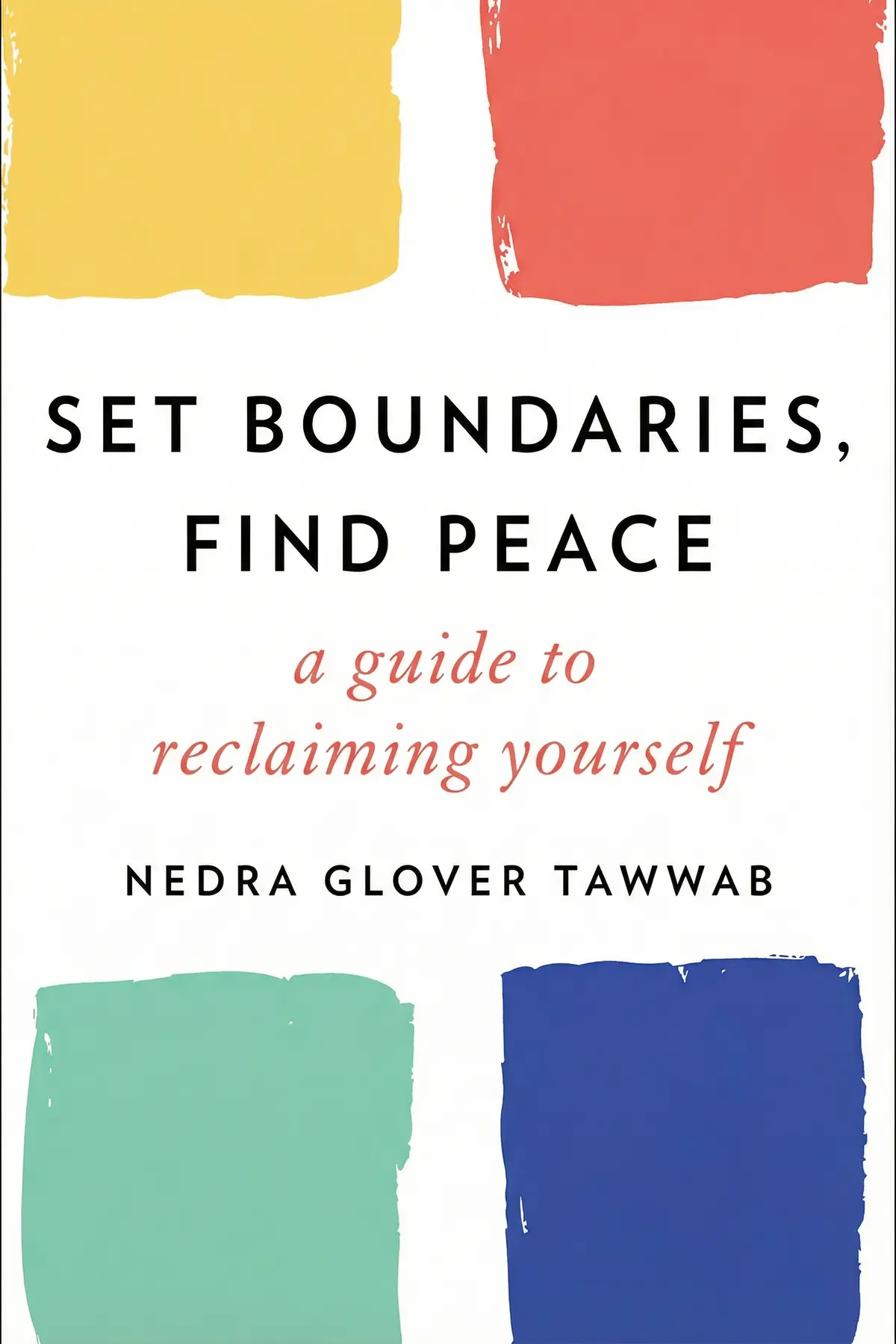
Set Boundaries, Find Peace: A Guide to Reclaiming Yourself
Nedra Glover Tawwab
 English
A therapist's guide to difficult parents, siblings and adult children. It shows how to stop waiting for relatives to change, set clear limits, decide when to step away and build support beyond blood ties.

1 min 07 sec
If a parent, sibling or grown child keeps hurting you and you keep hoping they will finally stop, the starting point of this book may sting: you cannot make them change. In Drama Free, therapist Nedra Glover Tawwab, who has spent nearly 20 years helping people build healthy boundaries, argues that this hard fact is where your power begins.
Family is the one group most of us did not choose, and we usually live inside it for our first 18 to 21 years. Its patterns follow us into friendships, partnerships and the way we raise our own children. Tawwab’s answer is to stop working on the other person and start working on your side: your readiness, your expectations, your boundaries, how much distance you keep and who you count as family.
Each idea opens with a short story and ends with something to try. What it builds is a way to decide, one relationship at a time, whether to stay close, step back or leave, and how to live with that decision without sinking into guilt.
1 min 47 sec
Kelly’s other siblings have already cut off their cruel brother, yet she cannot bring herself to do it. Her loyalty feels like patience, but Tawwab sees something else growing underneath, and it changes where Kelly should put her effort.
1 min 45 sec
Feeling guilty and stuck can look like failure. Tawwab argues it is often a sign you are exactly where change begins, and knowing your exact position tells you what the next small move should be.
1 min 51 sec
Tiffany loves her mother, and she keeps paying for her mother’s money troubles. She does not want to walk away. Tawwab shows three things Tiffany can change that have nothing to do with changing her mom.
2 min 07 sec
Jacob tried acceptance, self-change and suggesting therapy, and nothing held. Deciding to end contact with his father was only half the struggle. The guilt that follows such a decision is the part Tawwab speaks to most directly.
1 min 51 sec
The people who came to Dan’s graduation and became his children’s grandparents were not his relatives at all. His story points to two sources of support that anyone from a difficult family can start building this week.
1 min 56 sec
A favored brother, an unfair will, a father who returns after years away. Each family role brings its own typical traps, and a simple trick with first names can change how an old anger toward a parent feels.
1 min 09 sec
Drama Free starts with a hard sentence and turns it into a freeing one. You cannot change your brother, your mother or your father. Once you stop spending your strength on that, it becomes available for the things that do respond: your expectations, your words, your distance and the people you let close. Tawwab calls facing these problems one of the most important kinds of self-care, liberating and frightening at once.
What she offers is permission backed by method. Notice where you stand with one difficult relative and let that stage set your pace. Write one honest sentence about what that person can and cannot do, then say out loud where your limits are. If you are weighing estrangement, decide what you find unforgivable, and stop waiting for an apology before you forgive yourself. Meanwhile, invest in the Reddings of your own life, the people who keep showing up.
You did not choose the family you grew up in. As an adult, you do choose how you live alongside it, and you can still become the person nobody in that house taught you to be.
Family is the one group of people most of us never chose, and we usually spend the first 18 to 21 years of life inside it. When those relationships are unhealthy, through neglect, codependency or abuse, the damage follows us into friendships, partnerships and the way we raise our own children. Therapist Nedra Glover Tawwab starts from a hard fact: you cannot make another adult change. Instead of treating that as defeat, she uses it as a starting point. Short stories open each idea. A woman who keeps bailing out her mother, a son who finally ends contact with his father, and a boy raised partly by the neighbors next door each show one way of taking back control of your side of the relationship. Readers get a five-stage map for changing long-standing patterns. They also learn three things to adjust when staying close, an honest way to think about estrangement and guilt, and practical advice for parents, siblings and grown children. The promise is modest and freeing. Whatever you did not learn at home, you can still learn now.
Adults worn down by a parent or sibling who keeps crossing the same lines.
People weighing whether to step back from, or cut off, a family member and struggling with the guilt.
Parents of grown children who sense distance and want to understand their part in it.
Nedra Glover Tawwab is an American therapist, social worker and writer who has practiced relationship therapy for almost 20 years, specializing in helping people build healthy boundaries. Her book Set Boundaries, Find Peace became a New York Times bestseller and has been translated into over 35 languages. She was named to the TIME 100 list for influence in global health and lives in Charlotte, North Carolina.
Nedra Glover Tawwab

Listeners consider this title a worthwhile use of time and value its wise, actionable advice, with one listener observing how it strips concepts down to their core foundations. Additionally, the text offers a crucial roadmap for family connections; one listener draws attention to the way chapters are categorized by specific relationship types. Listeners also find the content easy to digest and relatable, with one noting its assistance during a challenging life stage. Listeners appreciate how the book promotes inner peace, as one listener mentions its role in helping them handle dysfunctional family dynamics.
Wow, I didn't realize how much I needed a manual for my adult relationships until I opened this. The book breaks everything down to a foundational level, making the "why" of family drama so much clearer. I found the Stages of Change chart on page 78 incredibly helpful for measuring my own progress—it’s not just a straight line, and Nedra reminds you of that constantly. Dealing with unhealthy family dynamics is exhausting, but this book offers a sense of peace that feels attainable rather than just aspirational. The chapters are conveniently divided by specific relationship types, like in-laws or siblings, which makes it easy to jump to what you need most. Look, it’s not going to fix your family overnight, but it gives you the tools to stop letting their chaos dictate your emotional state. It’s an essential read for anyone feeling stuck.
Show moreThis is the boundary bible. After reading Tawwab’s first book, I had high expectations, and this follow-up did not disappoint in the slightest. It’s rare to find a self-help book that manages to be both compassionate and incredibly direct about the hard truths of family life. Truth is, you can love your family and still need to protect yourself from them, and this book gives you the permission to do exactly that. The writing style is crisp and approachable, stripping away the academic jargon to focus on what actually works in real-world scenarios. I’ve already recommended it to three friends who are struggling with their holiday plans. If you’re tired of the constant cycle of drama and feel like you’re the only one trying to change, please buy this immediately. It’s a game-changer for your mental health.
Show moreAfter hearing so much about Nedra Glover Tawwab, I finally dove into 'Drama Free' during a particularly rocky month with my parents. It was exactly the lifeline I needed. The book helped me understand that "maturity" in my childhood was actually just a survival mechanism for dealing with dysfunction. That realization was eye-opening and painful, but necessary for my growth. I love how the book is split into unlearning, healing, and growing—it makes the process feel manageable rather than overwhelming. The advice on managing unhealthy dynamics is practical and, most importantly, realistic about the fact that you can't change other people. You can only change your reaction. This book helped me find a sense of peace I haven't felt in years. If you’re ready to break the cycle and start living for yourself, this is the guide you've been waiting for.
Show moreThe quote "two things can be true at the same time" is going to be my new mantra. You can love your family and still recognize the deep wounds they’ve caused, and Nedra explains this duality so beautifully. I found the examples pulled from her therapy clients to be the most compelling parts of the book, as they provided real-world context for her advice. The wisdom here is foundational; it gets to the root of why we stay in toxic loops and how to consciously choose a different path. I’ve read a lot of books on boundaries, but this one focuses specifically on the unique challenges of family, which is often where the most resistance happens. It’s a brilliant guide for anyone trying to navigate the messy middle of healing. I feel much more equipped to handle the upcoming holiday season now.
Show moreEver wonder why certain family interactions leave you feeling completely drained? This book explains the mechanics of that exhaustion and provides a way out. Tawwab’s approach is incredibly grounding and provides the wisdom needed to manage even the most difficult personalities. I particularly liked the focus on becoming a "cyclebreaker" and creating a new legacy for future generations. It’s about more than just avoiding drama; it’s about actively building a life that feels authentic to you. The book is easy to navigate, the tone is supportive, and the advice is actionable from day one. I would consider this essential reading for anyone who feels like they’re drowning in family expectations. It’s an empowering resource that actually delivers on its promise of helping you find peace. Highly recommended for everyone.
Show moreFinally got around to reading this and that chapter on 'cyclebreakers' really hit home. The way Tawwab describes the burden of being the one to end generational patterns is both validating and heavy. I especially appreciated the section about the struggle of buying greeting cards for parents you don't actually like; it’s a small detail that most people overlook, yet it’s such a common source of anxiety for those of us in "complicated" dynamics. The book is organized beautifully, moving from unlearning to actual growth, which makes it feel like a roadmap rather than just a lecture. My only gripe is that some of the anecdotes felt a little repetitive by the end of the second section. Still, it’s a necessary guide for anyone trying to navigate the messy reality of family without losing their sanity in the process.
Show moreAs someone who has struggled with in-law boundaries for years, the specific chapters on different family roles were a godsend. Tawwab doesn’t just give vague advice; she provides actual scripts and examples that feel realistic. Personally, I found the section on blended families to be one of the most insightful parts of the book, as that’s an area often ignored in mainstream self-help. The tone is very calm and grounding, which is exactly what you need when you're reading about stressful topics like substance abuse or emotional neglect. I did feel like the Instagram-sourced examples were a bit hit-or-miss—some were profound, while others felt a little like filler. However, the overall message of "giving yourself grace" while navigating these minefields is something I will carry with me. It’s a solid 4-star read that I’ll definitely be keeping on my shelf for future reference.
Show moreI’m not usually a big self-help reader, but this one really resonated with me on a personal level. Most of us have some sort of family drama, and Tawwab has a way of making you feel less alone in that struggle. The sections on unlearning dysfunction were especially powerful, helping me spot patterns I didn’t even know were there. Not gonna lie, some parts were hard to read because they were so accurate to my own experiences, but it was the "good" kind of hard. I appreciated that it wasn't just a book of complaints; it actually offers tips on how to move forward and build a new trajectory for your life. It's a very quick read, which I liked, though I wish some of the troubleshooting sections for siblings were a bit longer. Overall, a very insightful and relatable book for anyone looking to simplify their family life.
Show morePicked this up because the buzz was everywhere, but it felt a bit disjointed. To be fair, Nedra's advice is solid, yet the structure of the book reminded me too much of scrolling through a curated Instagram feed. Each section is a snippet that works for a quick hit of wisdom, but I found myself wanting more depth in the psychological theories behind family dysfunction. As a therapist, I didn't find much "new" information here, though the specific breakdown of how 'maturity' is weaponized in toxic homes was a gut punch. It’s a great introductory resource for someone just starting to look at their family tree with a critical eye. If you need a dense, academic dive into trauma, this isn't it. But if you want something digestible you can refer to when a family holiday is approaching, it serves its purpose well enough.
Show moreNot what I expected given the rave reviews. While the information is certainly "good," it feels very elementary for anyone who has already done a significant amount of therapy or self-reflection. Frankly, the book reads like a series of expanded Instagram captions rather than a cohesive deep-dive into family systems. I appreciated the anecdotes, but they often dominated the chapters at the expense of deeper psychological analysis. It’s helpful if you need a quick "how-to" on setting a boundary, but it lacks the nuance I was hoping for regarding complex trauma or long-term reconciliation strategies. For a beginner, this is a five-star resource, but for those of us further along the healing journey, it might feel a bit redundant. It’s okay, just not the groundbreaking work I was led to believe it would be.
Show moreTawwab argues that you cannot make a family member change, so the only lasting progress comes from changing your side of the relationship. That means adjusting your beliefs and expectations about the person, having honest conversations, setting boundaries, taking distance when needed and, in some cases, ending contact. She also encourages building support from friends and neighbors, because family is defined by safety and love, not only by blood.
Tawwab describes precontemplation, when you do not yet see the problem; contemplation, when you weigh change and often feel guilty; preparation, when you try small experiments such as telling a relative a remark was not acceptable; action, when you take responsibility and stop acting as a victim; and maintenance, an ongoing stage where you repeat new behaviors until they become habits and resist sliding back.
She treats estrangement as a serious step, often taken after years of problems and failed attempts to change, as with Jacob and his aggressive father, Bruce. Being family never gives anyone the right to mistreat you, she argues, and only you can decide how much suffering is too much. She suggests reflecting on what you find truly unforgivable and forgiving yourself instead of waiting for an apology.
Using the story of Tiffany, who keeps rescuing her mother financially, Tawwab suggests three shifts. See your parent as an ordinary person with limits, not a wiser authority. Base your expectations on who they actually are, stated in a plain sentence. Then talk openly: decide how much help you will give, say what you expect and speak up when that line is crossed. Taking some distance is also healthy.
AUDIO SUMMARY AVAILABLE
Get the key ideas from Drama Free by Nedra Glover Tawwab, plus 5,000+ more nonfiction titles.