

14 min 29 sec
Available in: English
Do Pause: You Are Not a To Do List
Shows why constant busyness leaves people stressed and short of ideas, and how deliberate pauses, from a single breath to a week away, can improve thinking, conversations and everyday enjoyment.
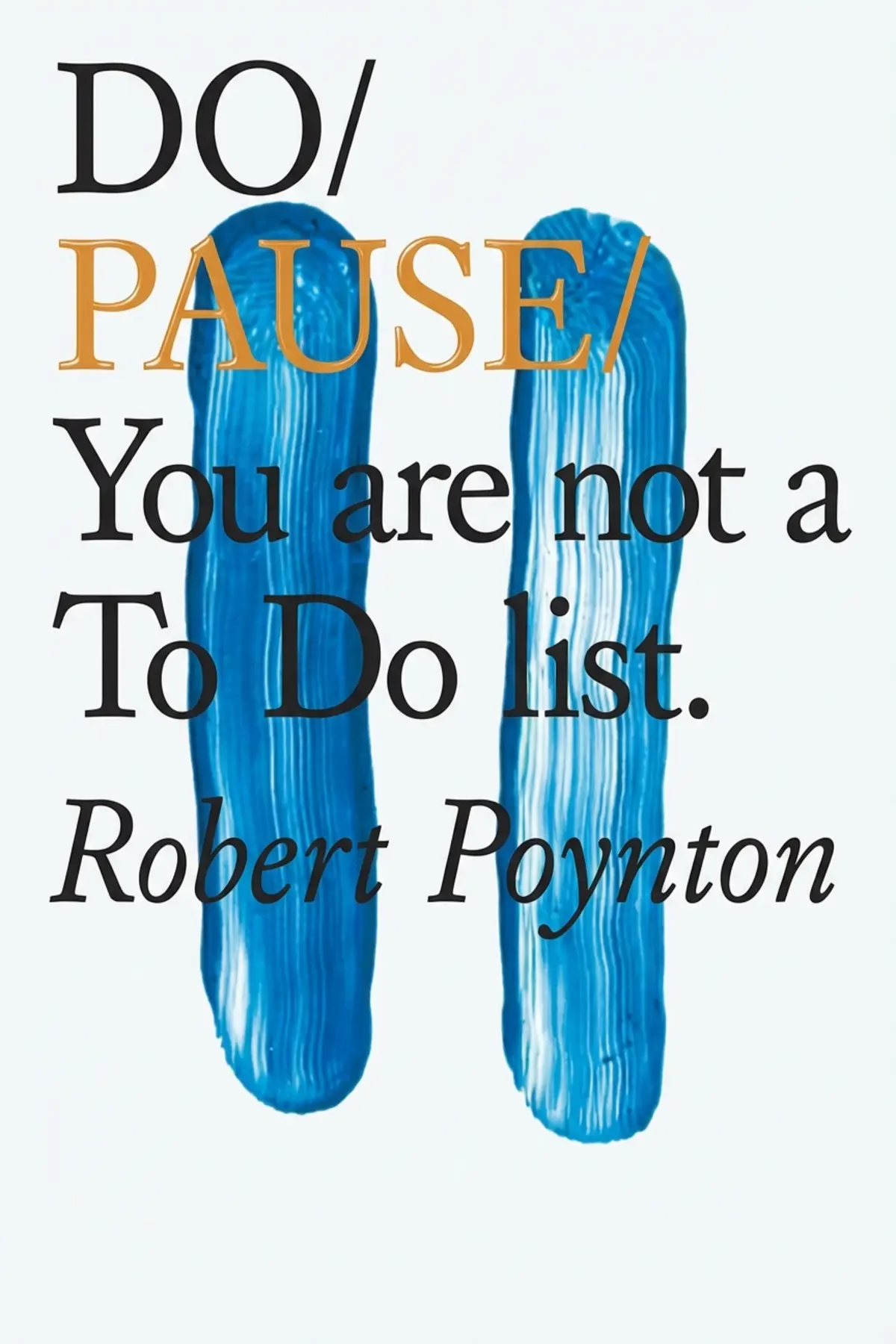
Table of Content
1. Introduction
1 min 03 sec
Most busy people treat every free minute as a gap to fill, then wonder why they feel anxious instead of accomplished. In Do Pause, Robert Poynton, who worked on executive education at Oxford’s Saïd Business School, argues that the gaps are where the best part of life happens. In his view a pause is never empty. It is a change of rhythm that lets attention go where it normally cannot.
His case is that people are not machines. Stopping on purpose, for one breath or for a whole week, makes us more creative, closer to others and more awake to our own lives than constant activity does. The evidence includes a hike in the Spanish mountains, a famously silent piece of music, a filmmaker’s trick on set and a small town where nobody minds waiting hours in line. It leaves you with a breathing habit for your next tense reply, a way to plan a longer break without turning it into a project, and a reason to stop admiring the colleague who is always on.
2. See the view you keep walking past
1 min 54 sec
On a mountain hike in Spain, the author made the best time of anyone in his group and enjoyed it the least. The reason says a lot about how many of us now run our working days.
3. Treat a pause as a fresh start
2 min 07 sec
A friend arrived at the author’s villa worried that a weekend of reading would waste his time. Two days later he left with answers to questions he had not known he was asking.
4. Get better ideas and deeper conversations by stopping
2 min 04 sec
Philosophers, advertising executives and researchers rarely agree on anything, yet one creative director found a habit they all shared. It works in conversation too, with a single small word and some nerve.
5. Take one breath before you answer
1 min 59 sec
A seasoned facilitator knows her answers improve when she waits a couple of minutes, yet she almost never does. A psychologist’s advice about toddlers explains why, and offers a simple way out.
6. Plan a longer break around an open question
2 min 07 sec
Bill Gates clears his calendar for a full week every two years. Copying him takes more than booking time off, and the step most planners reach for first may spoil the whole thing.
7. Borrow a slower rhythm from other places
2 min 05 sec
In a small Spanish town, people wait hours to have their olives pressed and nobody complains. The author found that their patience slowly changed how he saw his own ambitions.
8. Conclusion
1 min 10 sec
The subtitle carries the whole argument: you are not a to-do list. A machine on pause stops. A person who pauses starts noticing, thinking and listening in ways that nonstop activity rules out. That is why the friend at the villa found answers he was not looking for, why a flute player’s breath makes the music possible, and why Poynton’s own discovery was that he had been hurrying past the view.
You can begin small. Before your next reply, relax your stomach and take one full breath. In a conversation that matters, try the unfinished So and let the silence do the asking. Give one day each week, your own version of the Sabbath, to rest and to people. And when you can manage a longer break, go somewhere beautiful, leave the phone behind and bring a question instead of a goal.
None of this will make you look busier. Poynton’s claim is that it will make you more creative, closer to the people around you and more grateful for what you already have. The summit will still be there tomorrow. The view is only on the way up.
About this book
What is this book about?
Many people fill every free moment with calls, emails and new goals, because stopping feels like wasting time. For many of them the result is stress and anxiety. Robert Poynton argues that the problem is the way we copy machines: we chase constant speed and output, and we admire colleagues who never switch off. His alternative is the pause, a break in rhythm that lets attention wander to what it usually overlooks. It can last five seconds or a year. Poynton draws on a mountain hike in Spain, a weekend of reading at his villa, John Cage's silent composition, the creativity research behind the books How to Get Ideas and Where Good Ideas Come From, a filmmaker's trick on set and Bill Gates's Think Week. He shows that pausing feeds creativity, deepens relationships and sharpens judgment. He also gives practical ways to start. One is a belly breath taken before every reply. Another is a longer break planned around an open question rather than a goal. A third is a weekly day of rest borrowed from another culture. Readers learn how to stop treating their lives as a list of tasks, and why doing so can make them more effective, not less.
Book Information
Who it's for
Professionals feeling behind
Professionals who fill every spare minute with email and still feel behind and anxious.
Wanting more honest conversations
Facilitators, managers and creatives who want better ideas and more honest conversations.
Guilty about time off
Anyone who feels guilty taking time off and wants a practical reason to stop.
About the Author
Robert Poynton
Robert Poynton has been an associate fellow at the Saïd Business School at the University of Oxford, where he worked in executive education. His books include Do Improvise, Everything's an Offer, Do Pause and Do Conversation. After Do Pause drew wide attention, he created The Pause Project. Across his work he argues that setting up the conditions for good things to happen works better than trying to control people or events.
Ratings & Reviews
Ratings at a glance

What people think
Listeners find this book to be a timely prompt to decelerate within a hectic society, although they express differing views regarding the depth of the author's reasoning and his use of personal stories. They describe "the pause" as a potent method for enhancing creative flow and rethinking life choices, while one listener highlights that taking a moment allows people to see the "bigger picture" rather than just completing tasks. Additionally, they value the actionable advice for weaving these intervals into their routine, such as taking two-minute breaks or disconnecting from technology. They also observe that the work is a fast, easy-to-digest guide providing a novel take on our contemporary obsession with being busy.
Top reviews
Den
Picked this up during a particularly frantic week at the office and it felt like a breath of fresh air. Poynton explores how our obsession with constant motion actually stifles our ability to produce anything of real value. I was particularly struck by the idea that being "busy" is a form of laziness because it allows us to avoid the hard work of thinking. The concept of the "pause" as a tool for creativity, rather than just rest, changed how I view my downtime. It isn't just about stopping; it is about creating space for ideas to incubate and grow. While the book is a quick read, its impact on my daily rhythm has been profound. I now try to find those small moments to disconnect from my devices and just listen to the background noise of life. It’s a powerful reminder to look at the bigger picture instead of just ticking off boxes on an endless to-do list.
Show moreCherry
Ever wonder why your best ideas come in the shower or while you’re out walking the dog? This book explains the mechanics of that phenomenon perfectly by highlighting the necessity of the "incubation" phase for our brains. Poynton’s writing style is gentle yet persuasive, making a strong case for why we must resist the pressure to provide immediate answers. I particularly loved the advice on disconnecting from technology to allow for the unexpected to occur. In my experience, we have become so afraid of boredom that we have lost our ability to truly listen to ourselves and others. This isn't just a self-help book; it’s a call to reclaim our time from the rush of modern life. It’s the kind of work I plan to revisit annually to keep my priorities in check.
Show moreArnav
Two minutes of intentional breathing sounds simple, yet it completely shifted my approach to high-pressure situations this week. Poynton captures the essence of why we feel so drained and offers a simple, elegant solution that doesn't require a total life overhaul. I loved the distinction between being busy and being productive, especially the observation that busyness can be a shield against the bigger picture. The book is beautifully designed and the writing is clear, making it very accessible for people who don't have time for a 400-page tome. Personally, I found the personal anecdotes to be relatable rather than distracting. They helped ground the concepts in real-world experiences that I could see myself having.
Show moreNatchaya
As someone who lives by a Google Calendar, the idea of "doing nothing" felt inherently wrong before I finished this. Poynton argues that the modern world is addicted to speed, which usually results in shallow work and burnt-out relationships. I appreciated the practical suggestions, like the two-minute breathing breaks before responding to emails. To be fair, some of the personal anecdotes felt a bit like filler, but the core philosophy remains solid. Taking a sabbatical isn't realistic for everyone, but anyone can manage a few moments of intentional silence. The author successfully reframes the pause as a productive act rather than a sign of procrastination. If you feel like a machine grinding through tasks, this is the manual you need to remember how to be human again. It’s a quick, accessible read that doesn't overstay its welcome.
Show morePla
Frankly, I didn't think I needed a book to tell me to stop working, but Poynton makes a compelling case for the "pause" as a strategic tool. It’s not just about taking a nap; it’s about intentionally changing your rhythm to gain a fresh perspective on your life. I’ve started implementing the "two-minute pause" before big decisions, and it really does help generate better, more thoughtful answers. The book is small and easy to digest, which makes the message feel more attainable for a busy professional. While I agree with other reviewers that it can be a bit light on academic research, the practical value is high. It’s a refreshing take on the modern addiction to being "on" at all times. Give it a chance if you feel like you're drowning in your to-do list.
Show moreRiley
Finally got around to reading this after seeing it recommended on several blogs, and I found it quite refreshing. The author addresses the mental pressure we all feel to be constantly "productive" and offers a way out through simple, rhythmic changes. I especially appreciated the sections on how technology drains our ability to reflect on our own choices. It’s a quick read, which I finished in a couple of hours, but the ideas have stuck with me for days. One minor gripe is that the tone can be a bit repetitive at times, almost as if it’s trying too hard to be profound. Regardless, the advice to pause and listen to others when asking about their day is something we all need to hear. It’s a solid 4-star book that provides a much-needed reality check for the work-obsessed.
Show moreWoramet
Truth is, the modern world treats us like machines, and this little book is a necessary manual for reclaiming our humanity. Poynton doesn't demand that you move to a cabin in the woods; he just asks you to interrupt your daily grind for a few moments. I found the connection between pausing and creativity to be the most compelling part of the book. By giving our ideas room to breathe, we actually end up achieving more than if we just plowed through our tasks. To be fair, the book is quite short and relies heavily on personal perspective rather than hard data. However, for a book about pausing, its brevity feels appropriate and respectful of the reader's time. It serves as a gentle nudge to look up from the screen and reconnect.
Show moreEllie
This book offers some interesting perspectives, but I found the overall depth to be somewhat lacking for my taste. It feels more like a collection of thoughts or a long-form essay than a fully developed argument. Poynton summarizes several ideas from other authors, which is great for beginners, but it felt a bit superficial if you’ve already read about mindfulness. I enjoyed the section on how pausing helps with creativity and finding the bigger picture in our lives. However, the reliance on personal stories didn't always provide the weight I was looking for. Look, it’s a decent introductory text if you're new to the concept of slowing down, but don't expect a deep scientific dive. It’s a pleasant enough read for a single evening, but I wanted more rigorous development of the central premise.
Show moreElena
Not what I expected, though I did find some gems buried within these short, punchy chapters. The core concept of the "pause" is undeniably important in our hyper-connected society. But the truth is, the book often feels like it's skimming the surface of much larger topics without really diving in. I liked the idea that constant busyness is a way to avoid the bigger picture, but I wish the author had expanded on that more. Some of the anecdotes were charming, while others felt like they didn't quite support the argument being made. It's a very fast read, which is ironic for a book about slowing down, but maybe that’s the point. It’s a nice reminder to stop and breathe, even if it lacks the heavy-hitting evidence I usually prefer in non-fiction.
Show moreZoe
The chapter on personal anecdotes really missed the mark for me and felt like it was filling space rather than proving a point. While the central idea of "Do Pause" is noble, the execution feels recycled from other, better-known productivity and mindfulness books. I found the arguments to be quite thin and the writing style a bit too casual for the weight of the topic. Honestly, it felt like the author summarized a few TED talks and called it a day. There are some okay tips about taking two-minute breaks, but you could get that from a single blog post. I struggled to stay engaged because the book never really goes beyond the "slow down is good" surface level. If you’ve never read anything about mindfulness, you might enjoy it, but for me, it was a disappointment.
Show moreQuestions about this book
What is the main idea of Do Pause by Robert Poynton?
Poynton argues that modern life pushes people to copy machines, staying always on and valuing speed over quality. Humans work differently. A pause is a break in rhythm, from five seconds to a year, that frees attention to notice what it usually misses. Taken on purpose, pauses improve creativity, deepen relationships and sharpen judgment, which makes them productive rather than wasted time.
How do you take a pause according to Do Pause?
For short pauses, Poynton suggests taking one breath before you respond to anything: turn your attention toward your stomach, loosen the muscles in that area and inhale deeply until your belly expands. Psychologist Jon Stokes compares the busy brain to an overactive toddler that you can only distract, so the breath works as a replacement habit for constant busyness.
How should I plan a longer break or retreat?
Poynton takes his cue from Bill Gates’s Think Week. Pick a place of natural beauty, ideally with poor phone reception, and leave your phone at home. Above all, do not set goals, because a pause is not a task. Instead, bring an intention such as a question you want to explore, so that something unexpected has room to appear.
How does pausing help creativity and relationships?
The creative director who wrote How to Get Ideas found that every creative thinker he studied built in a pause, whether they called it mental digestion or incubation. Steve Johnson describes new ideas as slow hunches that need time to grow. In conversation, Poynton uses silence: he asks a half-question such as So and waits, and the other person usually fills the gap with what they really think.
Who should read Do Pause?
It suits busy professionals who feel guilty about downtime, people struggling with stress from constant activity, and facilitators, managers or creatives who want better ideas and more open conversations. Its advice is simple to apply, from a single breath before replying to a secular weekly day of rest modeled on the Sabbath, as Poynton used during his college exams.
Readers also enjoyed



AUDIO SUMMARY AVAILABLE
Listen to Do Pause in 15 minutes
Get the key ideas from Do Pause by Robert Poynton, plus 5,000+ more nonfiction titles.
- 5,000+ titles
- Listen as much as you want
- 7-day free trial
- Cancel anytime









