
13 min 10 sec
Available in: English
 ไทย
EnglishไทยDie with Zero: Getting All You Can from Your Money and Your Life
By Bill Perkins
Shows why saving every possible dollar can waste your best years, and how to spend money deliberately on experiences, family and bold choices while you still have the health to enjoy them.
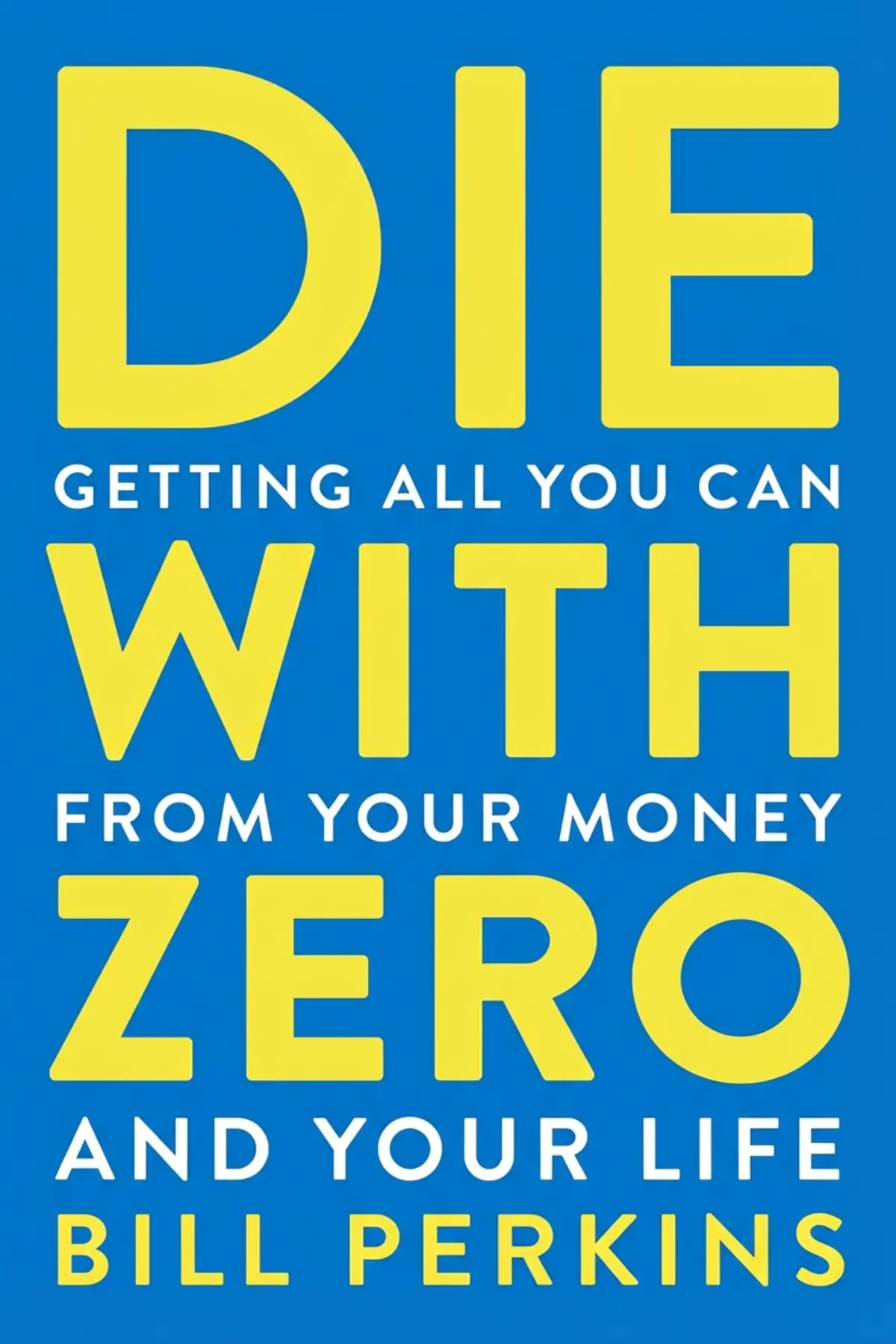
Table of Content
1. Introduction
59 sec
If you save carefully and still feel your life is on hold, Bill Perkins has a blunt diagnosis: money you never spend is life you never lived. In Die with Zero, the hedge fund manager and onetime energy trader argues that the usual advice to work hard, save everything and enjoy it all in retirement can waste the years when money buys the most.
His alternative is simple. Spend your wealth down deliberately, on experiences, on the people you love and on bold bets, at the ages when each is worth most, and aim to reach the end with close to nothing left. The case rests on vivid stories and plain numbers: a saver who in effect worked two and a half years for free, a trip that pays dividends for decades, a dream that is cheap to chase at 21 and costly at 35. What follows gives you a number to aim for and a map for when to spend beyond it.
2. Spend on the years you cannot get back
1 min 50 sec
A junior finance worker proudly reported how much he was saving, and a senior colleague’s reply led him to start spending his extra money on enjoying his twenties. The problem it exposed is one most careful savers never notice.
3. Stop working for free by spending your savings
1 min 44 sec
A disciplined saver retires with $770,000 and dies with money to spare. Turn her leftover balance into hours, though, and her careful plan starts to look like a very long stretch of unpaid work.
4. Buy experiences that keep paying you back
1 min 29 sec
A ten thousand dollar trip earns no interest and builds no career skill, yet Perkins insists it is an investment. A gift to his ailing father shows what kind of return he has in mind.
5. Match each dream to the decade that suits it
1 min 31 sec
The day his daughter rejected her favorite film, the author realized something about his own life had ended. That small moment leads to a simple map for deciding what to do, and when.
6. Find your enough number and stop climbing past it
1 min 33 sec
Saving more always feels safer, but there is a point where extra wealth stops protecting you and starts costing you. A quick piece of arithmetic shows where that point might sit for you.
7. Give your children their inheritance while it helps most
1 min 27 sec
Most people receive their parents’ money at an age when it changes little in their lives. Perkins argues that loving parents can do much better, and that a common fear holding them back has a cheaper fix.
8. Take your boldest risks while failure is still cheap
1 min 24 sec
Moving to Los Angeles to chase acting makes sense at one age and looks reckless at another. The reason has as much to do with the rewards of success as with the cost of failing.
9. Conclusion
1 min 13 sec
Die with Zero reverses a familiar virtue. Saving is still wise, Perkins argues, but past a certain point every extra dollar stored is a piece of life traded away, because the health and openness to new things needed to enjoy it fade while the balance grows. His real measure of wealth is the store of memories you build and share, and those pay more the earlier they begin.
He offers one more correction, to the idea of golden years. Most people picture them starting at retirement, around 65. Perkins places them roughly between 50 and 65, when many people finally have both money and time and are still fairly fit. That is the window to begin the things you have been saving for, while your body can still keep up.
So work out your enough number and watch for the moment your net worth passes it. Sort the experiences you want into the decades where they fit, and give your children their share while it can still change their lives. Then spend the rest deliberately. The goal is to finish with a full memory bank and an account that has done its job.
About this book
What is this book about?
The standard advice is to work hard, save as much as you can and enjoy life after retirement. Bill Perkins argues that following it too faithfully can mean wasting the years when money buys the most. Health and time decline with age, while money can usually be earned again, so wealth left unspent at the end stands for hours of work that bought nothing. Perkins, a hedge fund manager and onetime energy trader, builds his case around plain numbers and personal stories. A careful saver's leftover balance equals two and a half years of unpaid labor. A trip keeps paying memory dividends for decades. A dream is cheap to chase at 21 and costly at 35. He draws on the Life-Cycle Hypothesis, which favors level spending across a whole life. Readers learn how to estimate how much is enough for retirement, why passing an inheritance to children while they are young does more good, how to map experiences onto five to ten year periods of life, and why the golden years arrive earlier than most people expect.
Book Information
Who it's for
Disciplined savers
Disciplined savers who feel they are postponing their life until retirement.
Young professionals weighing spending
Young professionals deciding whether to save hard now or spend on travel and bold career moves.
Midlife parents
Parents in midlife working out how much to leave their children, and when to give it.
About the Author
Bill Perkins
Bill Perkins, born in 1969, manages a hedge fund and also works as an entrepreneur, a film producer and a poker player. An electrical engineering graduate of the University of Iowa, he trained on Wall Street before moving to Houston, Texas, to work as an energy trader. He founded Skylar Capital, an energy-focused hedge fund, and co-founded the Earth observation company SkyFi and the data and geospatial intelligence company SynMax.
Ratings & Reviews
Ratings at a glance

What people think
Listeners find this book to be an accessible and stimulating guide that provides new insights into managing finances and planning for the future. It offers practical tips for getting the most out of life's moments and utilizing one's income, assisting listeners with financial preparation while shifting their mindset toward investing in experiences. Listeners value the intriguing ideas presented and the book's ability to encourage living a more meaningful life.
Top reviews
Violet
Picked this up during a vacation and it completely reframed how I view my itinerary. Instead of worrying about the cost of a guided tour, I started thinking about the 'memory dividends' that Perkins describes. It’s a powerful shift. We spend so much energy stacking cash for a future version of ourselves that might be too frail to enjoy it. To be fair, the author lives in a different financial stratosphere than most, but the logic remains sound. Why die with a million dollars in the bank when that money could have bought a lifetime of stories? This is a wake-up call for anyone obsessed with their 401k.
Show moreChai
As a chronic over-saver, Perkins' philosophy hit me like a ton of bricks. I’ve been so focused on the 'number' that I forgot what the money was actually for. The breakdown of the 'go-go,' 'slow-go,' and 'no-go' years is a sobering reminder that our health is a finite resource. It’s not just about spending; it’s about optimizing your life's energy. I’ve already started planning a trip with my parents that I previously put off until 'someday.' This book gave me the permission I didn't know I needed to stop living for a hypothetical future and start investing in my present self.
Show moreGame
The concept of giving to your children while you're alive instead of leaving an inheritance at 90 is worth the price of the book alone. My kids need help with a down payment now, not a windfall when they are already retirees themselves! Perkins turns traditional estate planning on its head in a way that is both logical and deeply compassionate. It’s about maximizing the impact of your wealth when it matters most. Not every chapter applied to my middle-class lifestyle, but the sections on timing and 'peak utility' are universal. It is easily the most thought-provoking financial book I have read in a decade.
Show moreKenji
Bill Perkins is clearly playing a different game than most of us, but his rules are surprisingly applicable if you look past the wealth. I loved the idea that our lives are the sum of our experiences. We often treat money as the goal rather than the fuel. Since reading this, I’ve stopped feeling guilty about spending on things that create lasting memories with my family. The math is simple: you can't take it with you. If you finish the race with a full tank of gas, you didn't win; you just didn't drive far enough. This is essential reading for anyone feeling burnt out by the grind.
Show moreKiattisak
After years of following traditional FIRE advice, I found this to be a necessary corrective to my mindset. I’ve been so afraid of 'squandering' money that I’ve been squandering my youth instead. Perkins highlights the tragedy of the 'no-go' years, where you finally have the funds but no longer have the health to use them. I kept thinking about the friend he mentioned who missed out on a European hostel trip in his 20s. You can’t recreate those specific memories at 60, no matter how much money you have. This book is a reminder that time, not money, is our most precious non-renewable resource.
Show moreAnthony
Ever wonder why we spend our healthiest years hoarding cash we won't be able to enjoy at eighty? Bill Perkins offers a radical alternative to the typical retirement grind. While some of the examples involving private jets and Caribbean islands feel like they belong in a different universe, the underlying math about declining utility is hard to ignore. I particularly liked the section on 'bucket groups'—sorting activities by the age ranges where you can actually physically do them. It’s not a perfect guide, and the tone can be a bit boisterous, but it forced me to have some very necessary conversations with my spouse about our future.
Show moreZanya
Finally got around to reading this after hearing my financial advisor mention the 'Die with Zero' concept. It’s a fast, engaging read that challenges the 'work until you drop' mentality prevalent in our culture. The writing style is casual, almost like having a beer with a very wealthy, very opinionated friend. You have to filter out the high-roller anecdotes, but the core message is vital: money is just a tool for fulfillment. My only gripe is that it ignores the psychological security that a large 'safety net' provides for some people. Still, it’s a necessary counter-balance to the extreme frugality movement.
Show moreFatima
Stop thinking of your bank balance as the scoreboard for your life. That’s the main takeaway here, and it’s a good one. However, the book feels quite repetitive by the halfway mark. To be fair, the author admits he isn't a financial advisor, and it shows in some of the more 'laissez-faire' suggestions regarding insurance and annuities. I appreciated the statistics on how much retirees actually spend (or don't spend), but I wish there was more practical advice for people who aren't energy traders. It’s an interesting philosophical exercise, but it lacks the groundedness of other personal finance classics. Worth a skim.
Show moreOksana
This book is the definition of a great concept stretched far too thin. I agree that we shouldn't sit on our money like Smaug, but did this really need to be 200 pages? It reads like a blog post that got out of control. The author repeats the same three points—buy experiences, you’re getting older, and don't die rich—over and over again. Look, if you’ve ever thought about personal finance for more than five minutes, you probably already understand the core of this. It’s an easy read, but I honestly felt like I was wasting the very time he tells me to value.
Show moreChatri
Wow, talk about a lack of perspective. While the basic premise of 'don't be a miser' is fine, the actual advice in this book is bordering on dangerous for the average person. Perkins suggests taking out loans in your twenties to fund 'experiences' because your future self will be richer. Frankly, that is some of the most irresponsible financial guidance I have ever encountered. Most people I know are struggling with existing debt, not looking for more. He also spends way too much time bragging about his 45th birthday bash. It’s hard to take life lessons from a multi-millionaire who thinks flying out a rock star for a private party is a relatable example.
Show moreQuestions about this book
What is the main idea of Die with Zero?
Bill Perkins argues that money is worth only what it lets you do while you still have the health and time to enjoy it. Instead of piling up savings you never use, he suggests spending your wealth down across your life, following the Life-Cycle Hypothesis idea of fairly level spending, so that you reach the end with roughly nothing left and a large store of memories built along the way.
How much money do I need to retire according to Die with Zero?
Perkins suggests multiplying your yearly living costs by the number of years you expect to live. In his example, $12,000 a year for 40 years comes to $480,000. Because savings keep earning interest as you draw them down, he puts the real requirement at around 70 percent of that estimate. Once your net worth passes your survival amount, he recommends spending more on experiences or working less.
Does dying with zero mean leaving nothing to your children?
No. Perkins asks parents to decide how much they want each child to have, treat that sum as already theirs and give it while they are still alive. He cites research showing most Americans inherit at around 60, when the money helps far less than it would at 30. For parents worried about costly illness, he notes that long-term care insurance usually costs less than saving for the worst case.
What are time buckets in Die with Zero?
Time buckets are periods of five to ten years into which you divide the rest of your life. You list the experiences you still want, decide at what age you would enjoy each one most, and place it in the matching bucket. The result shows roughly how much to spend in each period and which wishes will expire soonest if you keep postponing them.
When are the golden years according to Bill Perkins?
Perkins argues they arrive before retirement, somewhere from age 50 up to about 65. In that stretch many people have more money and time than they did when younger while still being fairly fit. His advice is not to wait for retirement: as soon as you have money, time and health together, start doing the things you have been saving for.
Readers also enjoyed



AUDIO SUMMARY AVAILABLE
Listen to Die with Zero in 15 minutes
Get the key ideas from Die with Zero by Bill Perkins, plus 5,000+ more nonfiction titles.
- 5,000+ titles
- Listen as much as you want
- 7-day free trial
- Cancel anytime









