
15 min
Available in: English
 ไทย
EnglishไทยCribsheet: A Data-Driven Guide to Better, More Relaxed Parenting, from Birth to Preschool
By Emily Oster
Shows parents of babies and toddlers how to make hard choices about feeding, sleep, childcare and work by weighing trade-offs against their own priorities, and how to tell solid research from weak studies.
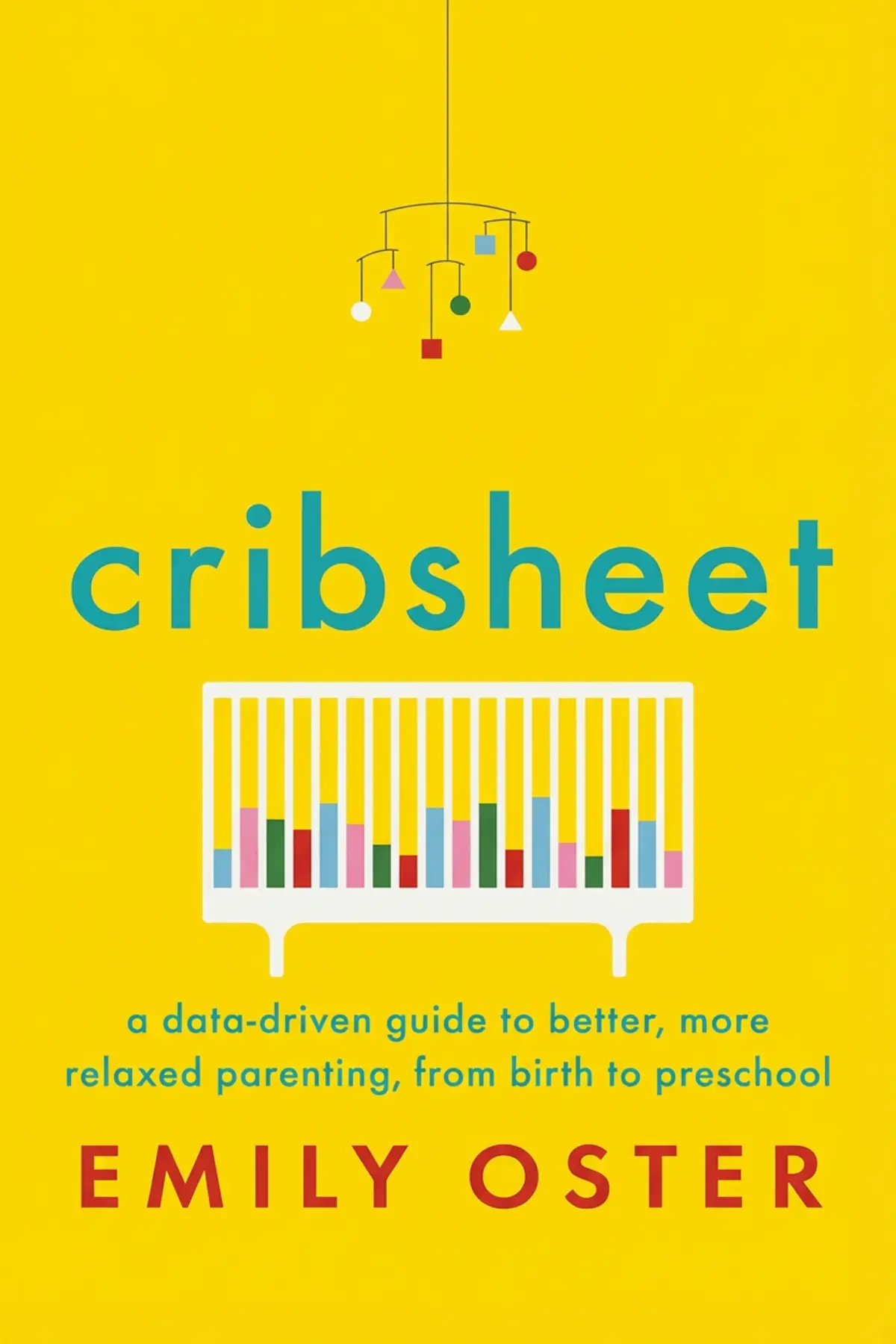
Table of Content
1. Introduction
1 min 07 sec
New parents get a flood of advice, much of it contradictory and delivered with judgment, and almost none of it explains how to choose. In Cribsheet, Brown University economist Emily Oster starts somewhere more useful: for most parenting decisions there is no single right answer, only the one that fits your family. That sounds like a shrug. Oster turns it into a method.
She treats choices about sleep, feeding and work the way an economist treats any decision, weighing costs and benefits against preferences and circumstances. Then she adds a skill most advice skips, judging how much a study really proves. Calm, confident parenting, she argues, rests on those two habits working together. Along the way come a co-sleeping risk smaller than a car ride, a famous IQ gap that shrinks under scrutiny and a doctor’s remark Oster calls the best advice she ever got. The next hard call can be made with less guilt and better evidence.
2. Stop searching for the one right parenting answer
1 min 55 sec
Relatives, doctors and online forums all speak with total certainty, and they rarely agree. An economist’s view of a simple childcare choice suggests the problem lies in the question parents keep asking.
3. Split every big choice into three questions
1 min 35 sec
Deciding whether to go back to work after a baby feels like one agonizing question. Oster shows it is really several, and that only some of them can be settled by research.
4. Put a real price on going back to work
1 min 40 sec
A job that pays $25,000 a year sounds like an easy win for a stretched family budget. Two ideas economists use every day show why the real figure is smaller and harder to judge.
5. Measure scary risks against the ones you accept
1 min 48 sec
Sharing a bed with a baby sounds like a risk no loving parent would take. Yet most parents take a larger one almost every day without a second thought.
6. Spot why a seven-point IQ gap may mean nothing
1 min 47 sec
Study after study finds that breastfed children score higher on IQ tests. For a mother struggling to nurse, that sounds like a verdict. Oster explains what the numbers leave out.
7. Know which studies deserve your trust
1 min 54 sec
Breastfeeding is said to protect children from a long list of illnesses. When Oster sorts the research by how it was done, that list changes dramatically, and the method behind the sorting works far beyond feeding.
8. Treat tiny, handpicked studies with real doubt
1 min 59 sec
A single paper about twelve children helped turn many parents against vaccines. Its story shows how the weakest kind of research can mislead, sometimes by fraud and sometimes through nothing worse than ordinary memory.
9. Conclusion
1 min 15 sec
A student’s crib sheet holds the answers. Oster’s holds something more useful for parents: a way to reach their own. Every choice in the early years sits on a scale with two pans. One holds your family’s preferences and circumstances, which only you can judge. The other holds the real costs and benefits for the child, the parent and the budget, which research can inform if you know how much each study deserves.
Keeping the two apart changes how the next decision feels. Split it into the child’s side, your side and the money side. Check whether the key claim rests on a trial, a careful comparison or a dozen handpicked cases. When a risk frightens you, set its number beside one you already accept, the way a car ride outranks co-sleeping.
Then let go of the rest. Ahead of a vacation, Oster fretted that her baby could get a bee sting for the very first time. Her doctor suggested she simply not think about it, which she calls the best parenting advice anyone ever gave her. Most things that could happen to a child are unlikely, and a parent bracing for all of them decides worse. Enjoying the time together belongs to the method too.
About this book
What is this book about?
From the first hours after birth, parents face decisions about circumcision, rooming in, breastfeeding, sleep and returning to work. The advice they get is contradictory and often comes loaded with moral judgment, and it arrives just when they are most exhausted and the stakes feel highest. Economist Emily Oster brings an economist's toolkit to the problem. Her starting point is that there is rarely one right choice for everyone. A good decision weighs costs and benefits for the child, the parent and the family budget, then filters them through each family's own preferences and circumstances. She shows how opportunity cost turns a return to work into a clearer calculation, and how comparing risks puts frightening ones like co-sleeping in proportion. The second half of her method is reading evidence well. Using breastfeeding as her main case, Oster explains why correlations mislead, why randomized trials and careful sibling comparisons deserve the most trust, and why tiny case studies, like the one that sparked the anti-vaccine movement, deserve the least. Readers get a repeatable way to make parenting calls with less guilt and less worry.
Book Information
Who it's for
Parents overwhelmed by advice
New and expecting parents overwhelmed by conflicting advice on feeding, sleep and childcare.
Parents deciding about work
Parents deciding whether to return to work who want a clear way to weigh money, career and family time.
Making sense of studies
Anyone who wants to judge health headlines and studies about children without anxiety or guilt.
About the Author
Emily Oster
Emily Oster is an economist and, since 2015, a professor of economics at Brown University. She holds a bachelor's degree and a PhD from Harvard and previously taught at the University of Chicago's business school. Her research covers development economics, health economics, research design and experimental methods. She is a New York Times best-selling author of books on data-driven choices in pregnancy and parenting, including Expecting Better and The Family Firm, and the founder of ParentData.
Ratings & Reviews
Ratings at a glance

What people think
Listeners find this parenting guide to be extensively researched and packed with useful statistics, viewing it as an important tool for making educated choices. It is an accessible listen; one listener remarks that it offers a lucid overview of the data, and listeners value the fact-based method used to tackle child-rearing guidance, especially regarding sensitive subjects. Listeners view it as a crucial manual that mitigates the worries of first-time parents and boosts their self-assurance, with one listener characterizing the work as a huge stress reliever. The quality of the prose is also praised for being expertly written.
Top reviews
Ern
Finally got around to reading this after drowning in conflicting advice from every 'expert' on Instagram. Oster’s voice is a breath of fresh air because she doesn't treat you like an idiot or a moral failure for wanting to look at the numbers. The chapter on breastfeeding was particularly enlightening, as it stripped away the guilt and just looked at what the randomized trials actually show. It’s a huge stress reliever for first-time parents who feel like every choice is life-or-death. The writing is snappy and far from a dry academic text, which I appreciated during those 2 a.m. wake-up calls. Look, it won’t solve every problem, but it gives you the confidence to trust your own gut once the data runs thin. Highly recommended for anyone who prefers logic over 'mom-guilt' culture.
Show moreJirapat
After hearing so many people rave about 'Expecting Better,' I had high hopes for this sequel, and it totally delivered. Oster applies her economist’s brain to the chaotic world of infancy, tackling everything from SIDS risks to the actual impact of daycare. I love the way she breaks down the 'why' behind common recommendations, rather than just handing down mandates from on high. To be fair, she does frequently conclude that the data is inconclusive, but that in itself is a valuable lesson: if the data doesn’t show a clear winner, you can choose the path that works best for your sanity. It is a thoroughly researched and well-crafted resource that eased my anxieties about early childhood decisions. Truly a must-read for any informed parent.
Show moreNarut
This book is essentially a tactical manual for survival in the early years of parenthood. Picked this up when my son was three months old and I was spiraling about sleep training and vaccine schedules. What Oster does better than anyone else is filtering out the noise and presenting evidence-based suggestions without the typical judgment. The chapter on vaccines is worth the price of admission alone; she presents the risks and benefits with such clarity that it’s hard not to feel more secure in your decisions. It’s well-crafted, surprisingly funny, and respects the reader’s intelligence. My partner and I found ourselves referencing the 'Cribsheet' framework almost every time a new milestone approached. It’s a total game-changer for anyone who feels overwhelmed by the 'shoulds' of modern parenting. Truly an essential guide for the data-minded family.
Show morePongpan
Ever wonder why every parenting book contradicts the last one? Oster finally answers that by showing us the actual studies—or lack thereof—behind the rules we're told to follow. This book was a huge stress reliever for me. Instead of feeling guilty about not breastfeeding for a full year or choosing a specific type of daycare, I felt empowered to make informed decisions based on my family's specific needs. Her dry humor makes the data easy to digest, and her 'Decision Tool' chapters are incredibly practical. It’s refreshing to read something that acknowledges that the parents' happiness and well-being are actually part of the equation too. If you’re a fan of logic and hate being lectured by 'lifestyle' gurus, this is your bible. It’s easily the most helpful thing I read during my pregnancy and the first year.
Show moreVera
Personally, I found this to be the only parenting book that didn't make me want to pull my hair out. While the data regarding SIDS and breastfeeding was particularly fascinating, the real value lies in Oster's ability to help you build a decision-making framework for the long haul. Even when the evidence for certain toddler behaviors is thin, she provides a sensible path forward that prioritizes family harmony over rigid rules. I also appreciated that she acknowledges her own limitations and personal experiences, which makes her feel like a mentor rather than a lecturer. To be fair, she writes beautifully and the book is very easy to read, making it a perfect gift for anyone expecting. It’s an essential guide that actually respects the parent's intelligence and makes them feel more confident.
Show morePing
Gotta say, it’s about time someone brought some actual evidence to the parenting table. This book is a clear summary of the data that actually exists, and it’s eye-opening to see how little science supports many of the 'rules' we're forced to follow. Oster's tone is nonjudgmental and calm, which is exactly what you need when you're sleep-deprived and worried about everything. I loved how she addressed controversial topics like sleep training with a focus on what the studies actually say rather than personal philosophy. While it can be a little long toward the end as the data gets thinner, it remains an informed and valuable resource. It made me feel like I could breathe again and stop worrying about being 'perfect.' If you want an evidence-based approach that respects your time and intelligence, pick this up.
Show morePat
The truth is, I wanted to love this as much as her first book, but it felt a bit like a broken record by the end. Oster starts strong with infancy, providing some really helpful breakdowns on breastfeeding and the early weeks home from the hospital. However, as the book moves into the toddler years and preschool choices, the data-driven approach starts to crumble. She admits herself that the evidence for things like discipline or school type is thin to non-existent, which makes the latter half of the book feel like a lot of filler. It’s still a sensible and calm resource, but be prepared for the phrase 'the data is inconclusive' to become your new best friend. It’s a decent starting point for first-time parents, but it lacks the depth of more specialized developmental literature. Good, but not groundbreaking.
Show moreDarawan
As someone who appreciates a good spreadsheet, I found this approach to parenting incredibly refreshing and well-researched. Oster doesn't tell you what to do; she gives you the tools to decide for yourself by weighing the actual risks and benefits. I particularly appreciated the section on potty training and the different philosophies behind it, as it helped de-escalate the tension in our house. My only real gripe is that the book is very American-centric in its definitions of success. It focuses heavily on cognitive outcomes while largely ignoring the social and emotional nuances that many international studies prioritize. Still, it’s a valuable resource that helps cut through the noise of 'common sense' advice which is often just outdated tradition. A solid addition to any parent's bookshelf, especially if you like seeing the math behind the message.
Show moreOak
Not what I expected given the massive hype surrounding Oster's supposed data-driven approach. While the premise of using economics to navigate parenting is interesting, the execution felt like a long-winded way of saying 'nothing matters.' Frankly, I found her dismissal of certain studies quite convenient when they didn't align with her personal parenting choices. There’s a noticeable lack of nuance regarding child development and attachment that you’d find in books written by actual psychologists. By framing everything through the lens of test scores and IQ points, she misses the emotional and relational aspects of raising a human. If you want a book that gives you permission to ignore traditional advice, this is for you, but don't mistake it for a comprehensive scientific guide. It felt more like a defense of upper-middle-class lifestyle choices than a rigorous analysis.
Show moreRatree
The biggest issue I have here is that the author treats children like data points in a spreadsheet rather than human beings. As someone with a background in social work, I found her selective use of studies to be incredibly misleading for the average parent. She glosses over significant research regarding infant attachment and the long-term effects of early childcare just to reach a comfortable, 'you do you' conclusion. It’s dangerous to tell parents that these major decisions have no impact simply because the IQ scores at age ten look similar. Kids are not math problems, and their well-being cannot be reduced to whether or not they passed a standardized test in fourth grade. If you are looking for a comrade to tell you that your choices don't matter, you'll love it. But if you want a deep dive into what children actually need to thrive emotionally, look elsewhere.
Show moreQuestions about this book
What is the main idea of Cribsheet by Emily Oster?
Oster, an economist, argues that most parenting decisions have no single right answer for everyone. Good choices come from weighing the costs and benefits for the child, the parent and the family budget, then filtering them through each family’s own preferences and circumstances. She adds a second skill: judging how reliable the research behind a claim really is, so parents can trust strong evidence, doubt weak studies and worry less.
What does Cribsheet say about breastfeeding?
Oster finds the evidence for breastfeeding’s benefits to children far narrower than often claimed. The only large randomized trial found a 4 percent drop in diarrhea and a 3 percent drop in rashes such as eczema, with no significant IQ effect. Careful observational studies point to fewer ear infections. The seven-point IQ gap seen in many studies shrinks as researchers account for differences between mothers.
Is co-sleeping safe according to Emily Oster?
Oster does not call it risk free. Among the dangers of co-sleeping is an elevated chance of Sudden Infant Death Syndrome. She puts that risk in context: she reports infant deaths from car accidents at 0.20 per 1,000 births, against 0.14 for co-sleeping. The main benefit is more sleep for a breastfeeding mother, which matters because sleep loss can lead to depression. Each family must weigh the two.
How can I tell if a parenting study is reliable?
Oster ranks research like Olympic medals. Large randomized controlled trials win gold because random assignment makes groups alike except for the factor tested. Large observational studies with strong controls take silver, especially those comparing siblings. Case-control studies come last, since they often use tiny samples and rely on parents’ memories, as the flawed 12-child vaccine study by Andrew Wakefield showed.
How do I use Cribsheet to decide whether to go back to work?
Split the decision into three questions: what research says about effects on the child, how each path would feel for you, and what the family actually gains financially. Oster’s example is a $25,000 salary against $18,000 in childcare, leaving $7,000. Whether that net amount is worth the time away from your child depends on your needs and what you value.
Readers also enjoyed

AUDIO SUMMARY AVAILABLE
Listen to Cribsheet in 15 minutes
Get the key ideas from Cribsheet by Emily Oster, plus 5,000+ more nonfiction titles.
- 5,000+ titles
- Listen as much as you want
- 7-day free trial
- Cancel anytime









