

13 min 12 sec
Available in: English
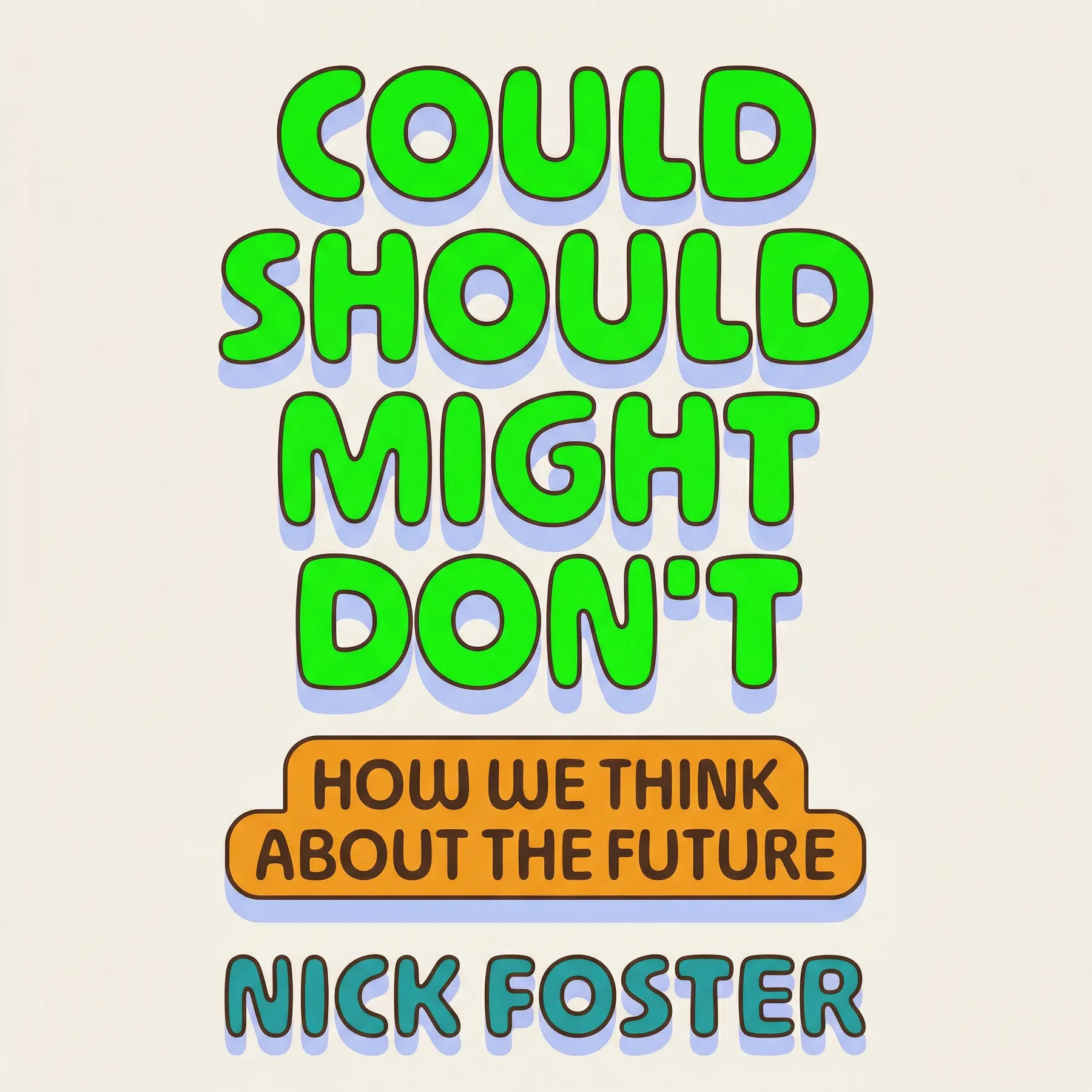
Could Should Might Don’t: How We Think About the Future
By Nick Foster
The author sorts nearly all thinking about the future into four habits: hype, certainty, scenario mapping and warning. The book shows what each sees, what each misses, and how to judge any forecast you are handed.
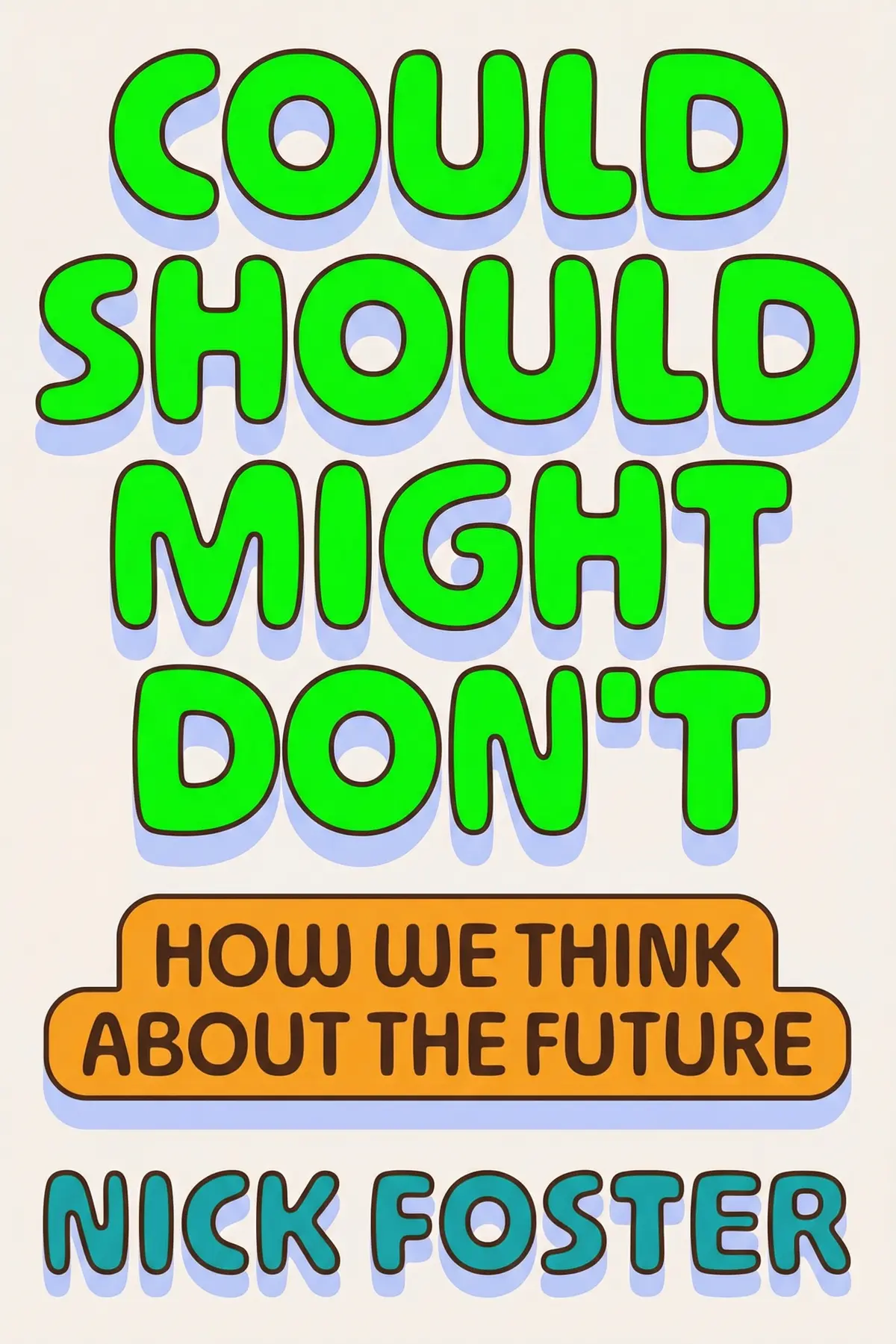
Table of Content
1. Introduction
1 min 01 sec
Most of us hear the future pitched in several voices at once: hype about what technology will bring, confident plans for how things must go, and warnings that it will all end badly. In Could Should Might Don’t, a designer who was once Head of Design at Google X argues that most future-thinking falls into four habits of mind, and that each one has its own value and its own shortcomings. He calls them Could, Should, Might and Don’t. The trouble, he says, is never a shortage of thinking about tomorrow. Most of it is simply poor, and the four habits explain why.
Learn to hear which habit is speaking and you can tell genuine insight from expensive guesswork. The cases run from a 1958 comic strip about jetpack mail to Shell’s oil scenarios and a cockpit where nobody dared correct the captain. Each one hands you a question to ask the next time someone in a meeting tells you what the future holds.
2. Spot why big future budgets buy poor thinking
2 min 00 sec
More money and attention go into imagining tomorrow than ever before, yet young people feel gloomier about it than their grandparents did. The author traces that contradiction to something wrong with the thinking itself.
3. See through the flying cars in a tech pitch
2 min 13 sec
The comic strips of the 1950s promised helicopter commutes by 1980, and the same promises keep coming back. The author explains why the boldest visions of tomorrow look so oddly old, and what they always skip.
4. Question anyone who sounds certain about tomorrow
2 min 11 sec
Some people do not guess about the future; they announce it and start building. The author shows why that confidence feels so comforting, and why one small word at its heart has no agreed meaning.
5. Map several futures before you bet on one
2 min 21 sec
In 1971 an oil company stopped trying to guess prices and started telling itself stories about different worlds. The author follows the method from nuclear war rooms to boardrooms, and shows where even careful maps go blank.
6. Give the worst-case voice a seat at the table
2 min 14 sec
The colleague who always asks what could go wrong can save a project or sink it. A deadly flight in 1997 shows what late warnings cost, and two famous data-driven forecasts show that even wrong predictions can spark policy debate and new technology.
7. Conclusion
1 min 12 sec
What the author leaves you with is a way of hearing. Every forecast you meet, from a product roadmap to a news story about the coming decade, speaks in one of his four voices, and each voice, trusted alone, goes somewhere poor: to flying cars that never land, to certainty that serves one group’s idea of better, to careful models built on bad data, or to warnings so loud that nobody listens anymore.
His remedy is a mix. Take the optimism of Could and press it on the messy middle years it likes to skip. Take the drive of Should and ask whose progress it serves. Use Might’s scenarios to start honest talk about bad outcomes, without trusting them as predictions. And give the Don’t voice in the room a hearing early enough, and precisely enough, to matter.
Remember the junior crew of Flight 801. They saw the error in time; the structure around them kept the warning from being heard. Tomorrow is coming regardless of the quality of our foresight, and the result depends on whether the right voice is heard while action is still possible.
About this book
What is this book about?
Companies, governments and media spend enormous sums imagining what comes next, yet much of the result is shallow, and many young people feel worse about the future than earlier generations did. The author, a designer who has spent his career on future-focused projects, argues that the problem lies in the quality of our future-thinking, not its quantity. His answer is a simple map. Could Futurism is the excited talk of what technology might bring. Should Futurism is the confident blueprint of how things ought to turn out. Might Futurism maps several possible outcomes and prepares for each. Don't Futurism looks for what could go badly wrong. He traces each habit through vivid cases, from a General Motors pavilion at the 1939 World's Fair to Shell's oil scenarios and a cockpit where junior crew stayed silent too long. Readers get a way to recognize which voice is speaking in a pitch, a strategy meeting or a news story, along with the questions that expose its blind spots.
Book Information
Who it's for
Wanting to judge forecasts
Managers and strategists who sit through forecasts and want to judge them quickly.
Tempted by tech hype
Founders and product teams tempted by tech hype who need to see its blind spots.
Anxious about the future
Anyone anxious about the future who wants a calmer, clearer way to weigh predictions.
About the Author
Nick Foster
This author is a designer who has worked on future-focused projects for Apple, Google, Nokia, Sony and Dyson. At Google X he was Head of Design, guiding designers, researchers and prototypers working on early technologies such as intelligent robotics. He coined the term Future Mundane in 2013, became a fellow of the Royal Society of Arts in 2018 and received the Royal Designer for Industry title in 2021. Born in Derby and trained at the Royal College of Art, he is based in Oakland, California, and also writes and gives talks.
Ratings & Reviews
Ratings at a glance
What people think
Listeners find the book to be deeply insightful, particularly valuing its engaging take on long-term thinking. They characterize it as a superb read, with one listener mentioning that it details four essential mindsets. Listeners applaud the author’s professional knowledge, with one listener describing him as a futurist extraordinaire.
Top reviews
Samart
Nick Foster provides a refreshing, grounded perspective on what it actually means to look ahead without falling into the trap of glossy marketing. This isn't your typical tech-hype manual; instead, it lays out four core mindsets that help deconstruct how we perceive what's coming next. I found the discussion on the "mundane" aspects of the future—the consequences and real-life users—to be incredibly insightful. To be fair, Foster does spend some time defending his profession as a futurist, but once you get past that, the wisdom is palpable. It’s a brilliant read for those who want to move beyond gimmicky predictions and start asking harder, more relevant questions about long-term consequences. I really enjoyed the way it forced me to rethink my own assumptions about technology.
Show moreRohan
Finally, a business book that isn't just a gimmicky five-step guide to "disrupting" the market. Foster is a futurist extraordinaire who isn't afraid to call out the bullshit machine that drives so much of the tech industry today. His emphasis on asking better questions rather than providing certain answers is exactly what the industry needs right now. I particularly loved the framework of "Could, Should, Might, Don't"—it's a practical way to filter through the noise of marketing and stories. The book is an informative take on long-term thinking that feels both professional and deeply personal. It’s easily one of the most interesting ways to look at things I've encountered this year. Highly recommended.
Show moreChatri
This is a brilliant read for anyone tired of the Silicon Valley bullshit machine and the constant cycle of hype. Foster manages to be both an insider and a critic, offering a broad philosophy of asking questions that actually matter to real-life users. I loved his take on how we should push back on the "grandiose" visions of the future and focus on the consequences of the technology we’re building today. The conversational tone made it feel like I was having a beer with a very smart friend who has seen it all. In my experience, books on the future are usually too optimistic or too doomsday—this one finds the perfect middle ground. Truly excellent.
Show moreLeo
Ever wonder if 'futurist' is just a fancy word for a professional guesser? Nick Foster tackles that skepticism head-on in the opening chapters, and frankly, he makes a compelling case for the necessity of his role in big tech. The book excels when it moves away from high-level theory and into the practical conversation about how sci-fi tropes often mislead us. I appreciated the way he breaks down the four types of futurists, as it gave me a new lens through which to view corporate strategy. It’s a bit repetitive with historical anecdotes from 20 years ago, but the overall philosophy is solid. A very interesting, conversational listen for anyone in business.
Show moreYulia
As a chronic over-thinker, I found Foster’s approach to deconstructing ideas to be strangely comforting. He doesn't offer a grandiose five-step plan for success, which is a relief in a market saturated with "hacks." Instead, he focuses on the mundane details and the real-life users who often get forgotten in the rush toward the "next big thing." Gotta say, the section comparing our current reality to old sci-fi movies was the highlight for me. It’s written in a very relatable, conversational style that makes complex business concepts feel accessible. It definitely helped me feel more comfortable with the uncertainty of the future, even if I ended up skimming some of the more defensive sections at the beginning.
Show moreMind
After hearing about Foster's work at big tech firms, I was curious to see if his "futurist" title was just hype. It turns out he’s actually quite grounded and skeptical of the very industry he works in. This book is a great tool for anyone in a professional setting who needs to balance innovation with a realistic understanding of consequences. The way he categorizes the four mindsets is very useful for hiring or team-building. It’s not too in-depth or overly complicated, which makes it a quick, engaging read. Personally, I found the last section on the different "futurist" archetypes we meet in our daily lives to be both funny and accurate. Thanks NetGalley for the copy!
Show moreYuwadee
The chapter on how we use Sci-Fi as a crutch really hit home for me as someone who loves the genre but realizes it’s a terrible blueprint for reality. Foster’s expertise shines when he’s deconstructing how companies fall in love with their own stories without considering the actual mundane details of execution. The book pulls you in without being overwhelming or too academic. I do think he could have trimmed some of the older anecdotes, as they felt a bit repetitive for anyone who has lived through the last twenty years of tech. Still, it’s a really interesting way to look at the world and definitely worth the time for long-term thinkers and chronic over-thinkers alike.
Show morePaiboon
I picked this up thinking it would be a deep dive into cognitive psychology and how the human brain processes future possibilities. Instead, it’s more of a memoir-meets-manifesto about the author's career at companies like Google and Sony. While I enjoyed the musings on why we should stop using science fiction as an anchor for our expectations, I found the delivery a bit sluggish in the middle. Truth is, a lot of the examples felt like common knowledge if you’ve followed tech for the last decade. It’s an okay read if you’re looking for a broad philosophy on questioning hype, but don’t expect a "how-to" guide for personal growth. It just didn't have the depth I was looking for.
Show morePruet
Look, the first fifty pages of this book are a bit of a slog because the author seems so intent on justifying his career path. If you can push past that, there is some value in how he discusses the mundane details of future-thinking and the importance of including varied voices. However, I struggled with the delivery at times; it felt like a series of "fun facts" that didn't always connect back to a central thesis. It’s an informative take, but it lacks the punch I was expecting from someone with his level of experience. Good for a casual listen if you're interested in the business of design, but not exactly life-changing for the average person.
Show moreSam
Not what I expected at all, and I'm honestly a bit disappointed. I was hoping for some actual foresight or interesting predictions about where technology is headed, but the author basically spent eight hours of this audiobook telling me that predicting the future is impossible and not worth the effort. Why write a book about it then? The first fifty pages felt like a defensive rant about why his job as a futurist deserves more respect, which was a bit of a turn-off for a casual reader. While there was some food for thought regarding sci-fi anchors, the rest of the text was just a boring compilation of old anecdotes. It felt more like a resume than a helpful guide.
Show moreQuestions about this book
What is the main idea of Could Should Might Don't?
The author argues that most thinking about the future falls into four modes. Could is excited speculation about technology, Should is confident ideology about how things ought to turn out, Might is scenario planning that maps several outcomes, and Don’t focuses on what could go wrong. Each has value and blind spots. His point is that we do not lack future-thinking; its quality is poor, and recognizing the four modes helps fix that.
What is the difference between Could and Should Futurism?
Could Futurists speculate about what technology might make possible, often with the same old images of robots and flying cars. Should Futurists are certain about how the future ought to unfold and focus on making it happen, as with Elon Musk’s Mars plans. The author warns that Should rests on ideology, and that better means different things to different groups, which makes its certainty risky.
Does scenario planning predict the future?
Not reliably, according to the author. Shell’s four scenarios in 1971 are his main success story, but the method depends on good data, which is hard to get and often distorted. In the 1957 missile gap, the CIA counted hundreds of Soviet missiles when there were four. Big disruptions like those that hit Nokia and Kodak came from outside their scenarios. Its real value is the conversations it starts about bad outcomes.
How can I apply the ideas in Could Should Might Don't?
When you hear a forecast, first name which of the four modes it uses. Then ask the question that mode avoids: for hype, what the messy middle years look like; for certainty, whose idea of better it serves; for scenarios, how good the data is; for warnings, what specific risk is at stake and how to reduce it. Raise concerns early and precisely, as the lessons of Korean Air Flight 801 suggest.
Who should read Could Should Might Don't?
It suits professionals who sit through strategy meetings, innovation pitches and forecasts and want a quick way to judge them. Founders and product teams get a check on tech hype, leaders get a case for hearing worst-case voices, and readers worried about the future get a calmer framework for weighing what they hear about tomorrow.
Featured in
Readers also enjoyed








AUDIO SUMMARY AVAILABLE
Listen to Could Should Might Don’t in 15 minutes
Get the key ideas from Could Should Might Don’t by Nick Foster, plus 5,000+ more nonfiction titles.
- 5,000+ titles
- Listen as much as you want
- 7-day free trial
- Cancel anytime









