

ADHD an A-Z: Figuring It Out Step by Step
Leanne Maskell
 English
 ไทย
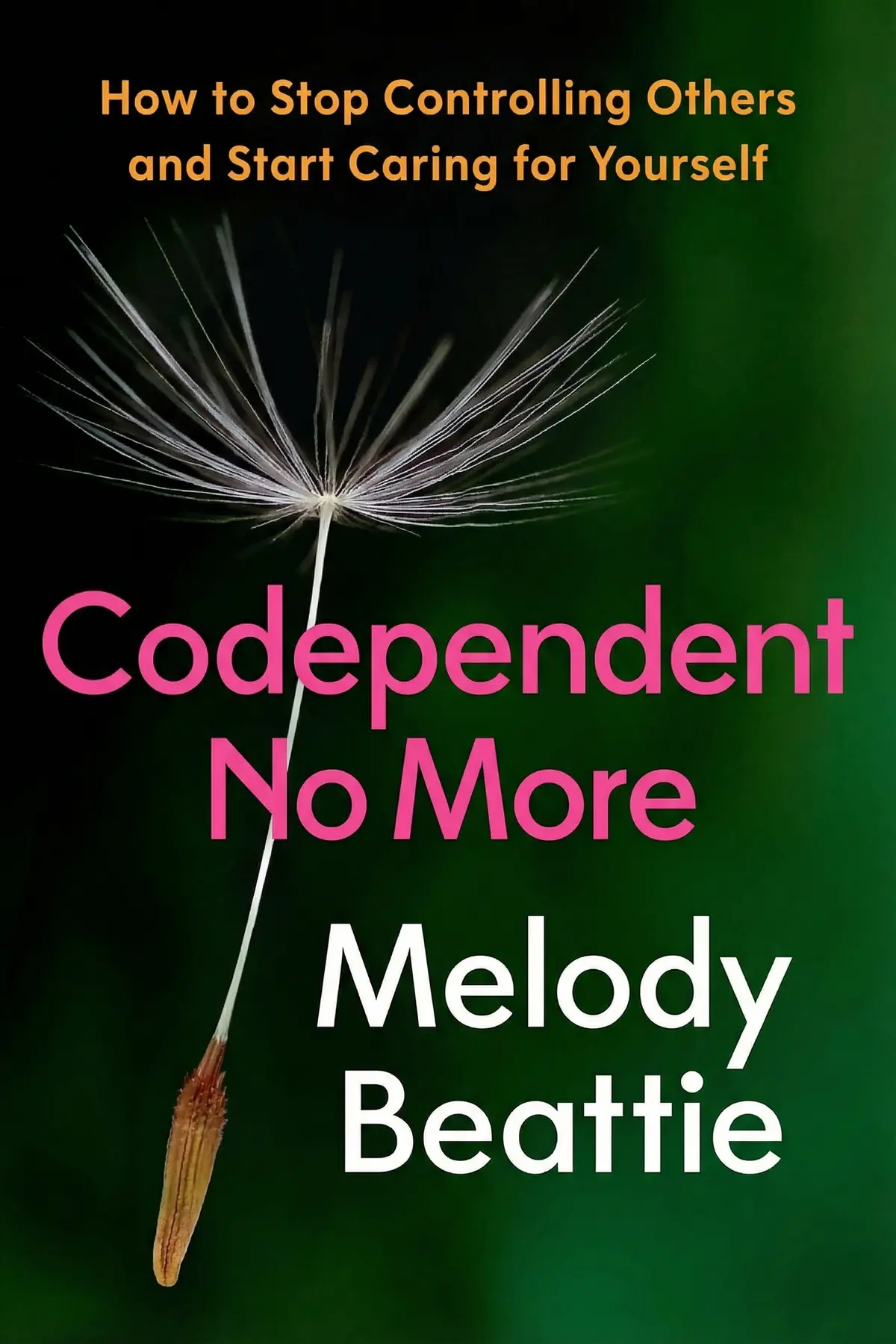
Shows people who keep rescuing, worrying about and managing a troubled loved one how to step back, care for themselves and stop letting another person's problems run their days.
59 sec
If you spend more energy managing someone else’s drinking, moods or mistakes than living your own life, Melody Beattie has a name for that pattern and a way out of it. In Codependent No More, Beattie, who once worked as a recovery counselor, argues that codependency is a set of stress reactions: habits that helped you survive a hard relationship and now slowly hurt you. Like alcoholism, she says, it gets worse when it is left alone.
Her central claim is simple and hard. You did not cause the other person’s problem, you cannot fix it, and the only life you can repair is your own. Each idea that follows serves that line, from loving someone at a distance to pausing before you react, from treating your needs as real to letting yourself feel. What you get is a clear picture of how caring turns into control, and daily practices for bringing your attention back to the one person you can actually help.
2 min 03 sec
Jessica’s husband finally got sober, and she should have been relieved. Instead she was angrier than ever, and the offer of help made it worse. Her reaction reveals a pattern far wider than any one addiction.
1 min 56 sec
Stepping back from a struggling loved one can feel like abandoning them. Beattie describes a way of letting go that keeps the warmth and drops the worry, and she argues it helps both people.
1 min 49 sec
Maria found a job she enjoyed, then quit it right away to stay close to her husband and keep watch over him. Her choice exposes how the urge to manage someone quietly reverses who is in charge.
1 min 41 sec
A worrying message arrives and your body answers before your mind does. Beattie argues that almost nothing in that moment is as urgent as it feels, and she offers a different question to ask.
1 min 43 sec
A woman who already held a job, raised her children and ran her household was sure she couldn’t survive alone. Beattie hears that fear constantly, and she traces it to something buried much deeper than practical skill.
1 min 38 sec
Ask a room of worried relatives how they feel, and they will tell you how someone else feels. Beattie explains why that habit forms, and what it silently costs the people who live by it.
1 min 44 sec
No fees, no sign-up sheet and no obligation to speak. Beattie describes a kind of meeting that can look naive on paper, and explains why so many people leave it feeling changed.
1 min 09 sec
Beattie’s book rests on a relief that sounds like a burden at first. You did not cause the drinking, the gambling or the crisis, so you cannot cure it, and you are free to stop trying. What remains is the one life you can actually repair. Jessica’s anger, Maria’s abandoned job and the group members who could only report their loved ones’ feelings all point to the same loss: attention given away so completely that the giver disappears.
Winning it back is slow work. Beattie compares recovery to learning the piano, something that asks for patience, practice and time, taken one day at a time. The practices themselves are small. When a familiar panic rises, step back before acting and ask what you need to take care of yourself. When someone you love creates a mess, let them hold it. And find a room where others tell your story aloud, so you stop working it out alone.
The person who stops managing everyone else does not turn cold. In Beattie’s account, they gain the clarity to love without manipulating, and a life that finally belongs to them.
Some people spend years trying to manage a partner's drinking, a relative's gambling or a loved one's endless crises. They grow angry, anxious and exhausted, and lose track of their own lives along the way. Melody Beattie calls this codependency: letting another person's behavior take over your life and then trying to control that person. Beattie, who drew on her own recovery and her work as a counselor, treats codependency as a set of stress reactions. They once helped people survive a painful relationship and later turned against them. Through stories such as Jessica, still furious after her husband got sober, and Maria, who quit a job she loved to stand guard over his drinking, she shows how control backfires and why rescuing others can be a form of disrespect. The book's promise is practical and humane. Readers learn to detach without turning cold, to catch themselves before reacting, to treat their own needs as real, to feel their own feelings and to find support in twelve-step groups such as Al-Anon. The aim is a calmer life whose center is finally their own.
Partners, parents and adult children of someone with an addiction who feel worn out from worrying and rescuing.
People who say yes when they mean no and cannot name their own feelings.
Nurses, social workers and other caregivers whose concern for others has crowded out their own needs.
Melody Beattie (1948 to 2025) was an American author of self-help books on codependent relationships. A recovering alcoholic, she worked as a recovery counselor before turning to writing. Codependent No More, published in 1986, became a bestseller and brought the idea of codependency to a wide audience. She later wrote Beyond Codependency and The Language of Letting Go, drawing on her own experience of addiction, grief and healing, including the death of her twelve-year-old son Shane in a skiing accident in 1991. She died in February 2025.

Listeners find this book both useful and functional, offering perceptive material that promotes introspection through its included questions. The work is transformative, especially for individuals navigating difficult circumstances, and is viewed as a must-read for anyone tackling codependency. Listeners value the accessible and clear presentation, with one listener mentioning that revisiting the text provides even more profound insights. They appreciate the healing method used to confront issues alongside its polished and personal writing style.
Wow. I didn’t realize how much I needed this until I hit the chapter on detachment. It felt like Beattie was reading my private thoughts, especially the parts about losing your own identity in someone else’s crisis. The writing is incredibly intimate and doesn’t feel like a cold lecture from a doctor. Instead, it’s a supportive guide through the messy reality of loving someone who is struggling. Truth is, I used to think putting myself first was selfish, but this book taught me that it’s actually a requirement for survival. The self-reflection questions were tough to answer but so necessary for my growth. I feel like I finally have permission to be my own person again. It’s a life-changing resource for anyone feeling drained by their relationships.
Show moreFinally picked this up after my sister wouldn't stop raving about it, and now I'm the one pushing it on people. This book is absolutely essential reading for anyone who feels like they’ve lost themselves in their partner’s drama or their family’s expectations. Beattie’s writing is gentle yet firm, and she has this incredible way of making you feel understood without making you feel like a victim. Look, the religious stuff is there, but you can easily translate it into your own secular philosophy if that’s your vibe. The most important thing is the message of self-responsibility. I’ve started setting boundaries I never thought possible, and my anxiety has dropped significantly. It truly is a transformative piece of literature.
Show moreTo be fair, I went into this skeptical of the whole self-help genre, but Beattie’s voice is so grounding and empathetic that I couldn't help but feel seen. She tackles the heavy stuff—like the compulsive need to control others—with a grace that makes it easier to admit your own flaws. I found the questions at the end of each chapter to be the most helpful part of the experience. They act as a mirror, showing you exactly where you are neglecting your own needs. It’s written in an intimate, accessible way that doesn’t require a degree in psychology to understand. Even though it's an older book, the advice on healthy detachment remains incredibly relevant today.
Show moreAfter hearing the term 'codependency' thrown around for years, I decided to go to the source, and it's clear why this is the gold standard. This book is a masterpiece of self-discovery. It doesn't just point out what’s wrong; it gives you the tools to actually heal. The way Beattie describes the 'compulsion to help' hit me right in the gut. I’ve realized that I can’t change anyone else, but I have total control over my own happiness. The intimate, conversational style made it feel like I was in a private session with a world-class counselor. It is an essential, life-changing read for anyone who wants to stop living for others and start living for themselves.
Show moreAs someone who has spent years putting everyone else's needs before my own, this was a difficult but necessary pill to swallow. I’ve always been the 'fixer' in my family, and seeing those behaviors laid out so clearly was a massive wake-up call. The book is very easy to read, with a therapeutic tone that feels like talking to a wise friend. I particularly appreciated the practical exercises at the end of the chapters because they forced me to actually apply the concepts rather than just skimming. Not gonna lie, some of the alcoholic-specific examples didn’t apply to my situation, but the underlying psychological principles certainly did. It’s a very solid guide for reclaiming your own life.
Show moreThe section on the Karpman Drama Triangle was a total game-changer for me. Seeing the cycle of Rescuer, Persecutor, and Victim written out helped me identify why my past relationships always felt like they were on a loop. This book provides a very clear roadmap for breaking those patterns. While I found the writing style a bit repetitive in the middle, the overall impact was profound. I did find the focus on alcoholics a bit narrow, as codependency can stem from so many different types of toxic dynamics. However, the core message about detaching with love is universal. It’s an insightful read that encourages a lot of deep self-reflection. I’d recommend it to anyone feeling stuck.
Show moreNot what I expected from a book written decades ago, as many of the insights into boundary-setting still feel incredibly fresh and urgent. I struggled a bit with the heavy Al-Anon slant, as that wasn't exactly what I was looking for, but I can't deny how helpful the general advice was. The book is well-written and flows naturally from one concept to the next. Personally, I found the chapter on 'removing the victim' to be the most challenging and rewarding. It’s a book you can read once and then keep on your nightstand to revisit when you feel yourself slipping back into old habits. It definitely earns its status as a classic in the field.
Show morePicked this up during a really rough patch in my relationship and found the structured questions at the end of each chapter remarkably grounding. The truth is, I didn't even know what the word 'codependent' meant until I started reading, but I saw myself on almost every page. Beattie writes with such kindness that you don't feel judged for your mistakes. Instead, you feel empowered to fix them. My only real gripe is that it feels a bit dated in its terminology and its heavy reliance on spirituality. But if you can look past the 80s vibes, there is a wealth of practical knowledge here for anyone struggling with their self-worth. It helped me find my voice again.
Show moreIs this a classic, or just a product of its time? I picked this up hoping for a modern look at relationship boundaries, but found it very deeply rooted in the 1980s recovery movement. While there are some gems of wisdom regarding self-care, the constant references to 'God' and the 'Higher Power' were a bit much for me. To be fair, she mentions that you can interpret this however you want, but the tone remains undeniably religious. I also didn't love how she seemed to downplay the role of professional therapy in some sections. It’s an okay starting point if you want to understand the origins of the term 'codependent,' but I think there are better, more inclusive books out there now.
Show moreThe lack of scientific rigor here is glaring, especially when the author starts listing traits that directly contradict one another. For instance, being told that codependents are both 'extremely responsible' and 'extremely irresponsible' in the same breath made me question the credibility of the entire framework. Frankly, it feels like Beattie is casting such a wide net that literally every human behavior could be labeled a symptom of this supposed 'disease.' I also found the heavy-handed emphasis on the 12-step program and religious themes quite alienating. If you aren't comfortable with 'Higher Powers' or a heavy Al-Anon influence, you might struggle to finish this. It feels dated and far too focused on partners of alcoholics to be universally applicable today.
Show moreMelody Beattie argues that codependency means letting another person’s behavior take over your life and then trying to control that person. She treats it as a set of learned stress reactions, often from living with an alcoholic, that get worse over time. Because you did not cause the other person’s problem and cannot fix it, recovery means taking responsibility for yourself: your choices, your feelings and your healing.
Detachment, for Beattie, is the opposite of being consumed by someone else’s troubles. You attend to your own needs, learn your own emotions and let people handle their own consequences, such as a drunk driving arrest or a missed college paper. It is not coldness, withdrawal or accepting mistreatment. You can stay warm and loving while refusing to carry problems that are not yours to solve.
Rescuing means taking charge of another person’s thoughts, feelings or actions, for example cleaning up a mess they could handle or saying yes when you mean no. Beattie argues that although it feels loving, it treats the other person as helpless, a victim who needs saving. It also traps the rescuer, as Maria found when she quit a job she loved to watch over her husband’s drinking.
Beattie suggests catching yourself before reacting when anxiety, outrage, shame or worry rises, then stepping back with a walk, meditation or rest until things look clearer. Replace the question of how to fix someone else with what you need to do to take care of yourself. Work on putting names to your own feelings, and think about joining a twelve-step fellowship, for example Codependents Anonymous, Al-Anon, or the group for Adult Children of Alcoholics.
The book suits people whose lives revolve around a partner, child or parent with an addiction or compulsion, including drinking, gambling, overeating or sex addiction. Clinicians also found the pattern in families of the mentally or chronically ill and among nurses and social workers. Anyone who rescues, overgives and struggles to say what they feel will recognize themselves in its stories.
Leanne Maskell






Alcoholics Anonymous World Services

Steven C. Hayes

AUDIO SUMMARY AVAILABLE
Get the key ideas from Codependent No More by Melody Beattie, plus 5,000+ more nonfiction titles.









