

AI 2041: Ten Visions for Our Future
Kai-Fu Lee
 English
Shows who really profits when payments go cashless, from card fees to harvested data. It also explains why physical cash is worth defending while better digital options, such as a private central bank currency, are built.
1 min 00 sec
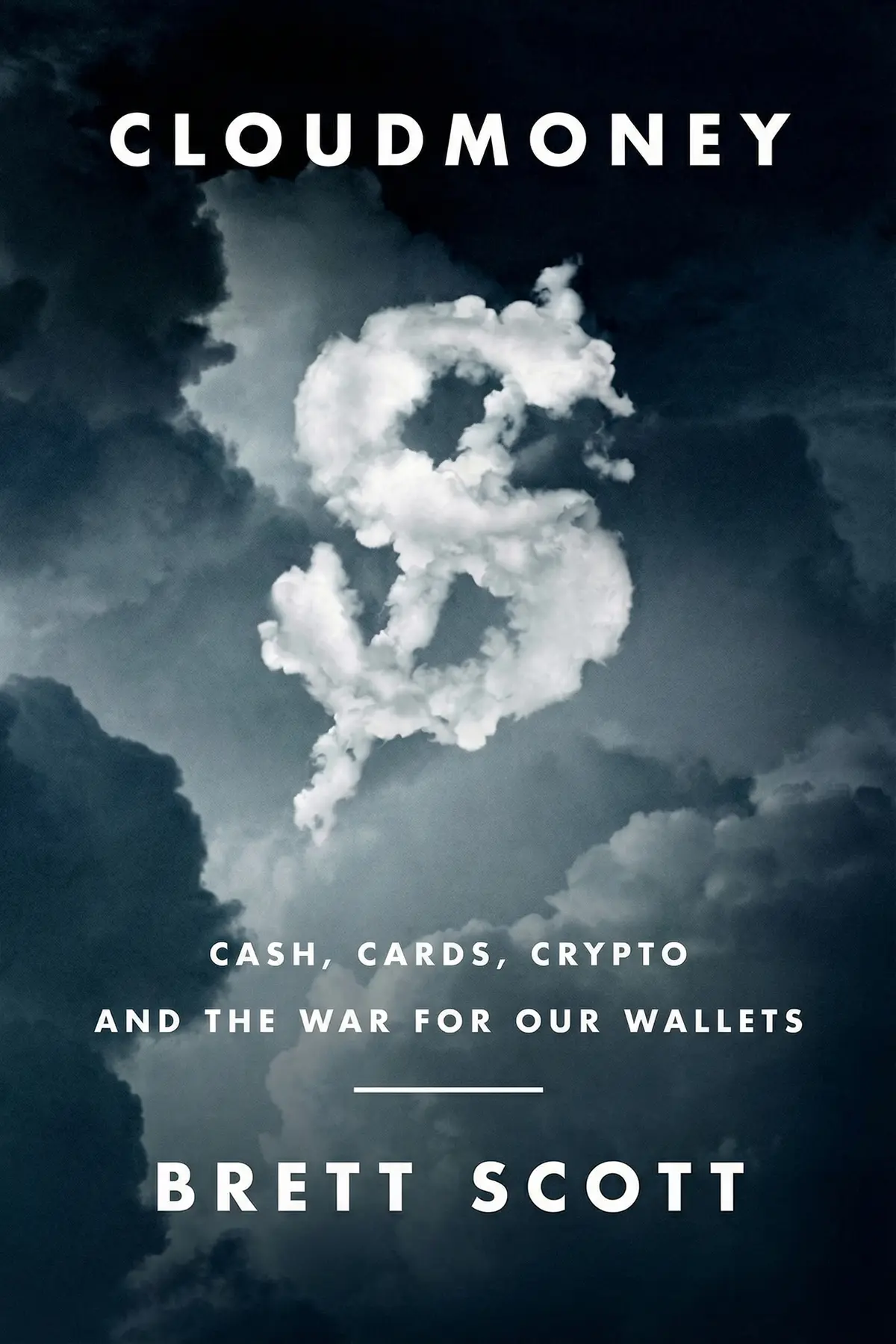
A tap of a card or phone feels effortless, yet Brett Scott shows that buying one drink this way can involve at least three corporate giants, with the card network taking a fee and the tech platform harvesting your purchase data. In Cloudmoney, the journalist and former broker argues that customers never asked for a cashless society. Big finance and big tech are pushing it from the top, because they gain profit and information each time cash disappears.
His throughline is that cash deserves defending, the way a bike lane deserves its place beside a crowded road: slower, but safer, and still working when the digital system jams. Scott follows the story from the 2008 crash to card-only shops in the pandemic, then asks whether crypto or a central bank digital currency could give us digital money without gatekeepers. Expect a sharper eye at every checkout, and a clear case for keeping some money you can hold.
1 min 29 sec
After the 2008 crash, a wave of smartphone startups promised to break the banks and free our money. Something very different happened, and it still shapes the payment apps on your phone today.
1 min 30 sec
Buying one drink at a cashless bar looks like the simplest exchange imaginable. Scott counts the companies hiding inside that moment, and what each one takes from you and from the bar.
1 min 29 sec
When the pandemic arrived, many large stores suddenly refused notes and coins in the name of safety. A report from a central bank told a different story about which surfaces were really risky.
1 min 36 sec
Opponents of cash compare it to the horse cart that the car made obsolete. Scott thinks they picked the wrong vehicle, and the right one explains why people rush to ATMs before every storm.
1 min 29 sec
Visa’s own research found that people paying by card spend far more in certain places. Scott explains why that gap exists, who it hurts most, and why card companies are happy to keep it.
1 min 45 sec
Many things that are legal and accepted today once survived in the shadows. Scott argues that untraceable money kept them alive, and warns about what disappears when every payment leaves a record.
1 min 35 sec
Bitcoin was born with a clear mission: to let people pay one another without any bank in the middle. Scott explains the two defeats that turned it into something else entirely.
1 min 38 sec
Several countries are building digital money held directly at the central bank. Scott sees real promise in it, along with one serious danger, and a design that could turn it into true digital cash.
56 sec
Cloudmoney changes the question. The usual debate asks whether cash is old-fashioned. Scott asks who gains when it goes, and his answer is the card networks, banks and tech platforms that take a fee and a data point from exchanges that once needed only two people and a few coins.
The bicycle carries his whole case. Cash is slower than a tap, yet it does not slip you into debt, it does not report your choices to advertisers or the state, and it keeps working when storms or bank panics jam the digital roads. Close the bike lane and every trip must go through the traffic.
Acting on that is simple. Keep some cash at home for the day the network fails, and use it where your spending tends to run away. When a business or a government proposes a new way to pay, ask who takes a cut and who gets to watch.
A bank can go bust. The notes in the box under your bed will still be there.
Paying by card or phone feels effortless, and many shops, bars and retailers now refuse cash altogether. Brett Scott argues that customers never drove this shift. It is a push from above by big finance and big tech, which earn fees and collect data from every digital payment. Scott traces the story from the 2008 financial crisis and the rise of fintech, which promised to disrupt the banks and ended up serving them, to the pandemic, when hygiene became the new reason to ban cash. He replaces the familiar image of cash as a dying horse cart with a better one: a bicycle beside a traffic jam, slower but safer, and still moving when systems fail. Readers learn why cash helps people spend less, how it has protected social change and why Bitcoin never became digital cash. Scott also sets out what a central bank digital currency could offer if it kept our payments private.
Everyday shoppers who tap to pay and want to know who profits from each purchase.
Shop and bar owners deciding whether to stop accepting cash.
Readers curious about crypto and central bank digital currencies who want a skeptical, plain-spoken view.
Brett Scott is a journalist, campaigner and author. Before he turned to writing, he worked as a broker, which gave him a close view of how the financial system operates. He has been a fellow at the Finance Innovation Lab, and his books include Cloudmoney and The Heretic's Guide to Global Finance.
Listeners find this work to be a reachable and enlightening manual on the intricate landscape of international finance and the ongoing "war on cash." While some feel the author's points are occasionally simplistic or skewed against the convenience of electronic transactions, they value the use of straightforward analogies to explain difficult topics such as surveillance capitalism and blockchain. Furthermore, they highlight that the writing offers a "lucid" and perceptive analysis of what drives large tech firms and financial institutions. The book is also praised for its teaching quality, as one listener points out it serves as a "really good intro book" for anyone wanting to grasp the concealed agendas within the fintech sector.
Finally, a book that pulls back the curtain on the 'frictionless' future the big banks keep promising us! Brett Scott’s storytelling is masterclass level, taking incredibly dense concepts like global transfer systems and making them feel intuitive. I was particularly struck by his breakdown of surveillance capitalism and how our money isn't really ours once it enters the 'cloud.' It is terrifying to realize how few corporations act as gatekeepers to our social participation. This isn't just a book about finance; it's a warning about humanity and the loss of autonomy in an age where every transaction is harvested for data. The way he describes the 2008 crisis as the catalyst for this 'fintech' revolution was eye-opening. If you care about privacy and the slow erosion of the public sphere, you need to read this. It’s a scary look at the world, but absolutely essential reading for the modern age.
Show moreGotta say, this is the most important book I've read this year regarding the future of our society. Scott doesn't just talk about money; he talks about power. He brilliantly illustrates how we are sleepwalking into a world where our ability to buy food or participate in the economy is entirely dependent on the whims of private corporations and their digital rails. The concept that 'cash doesn't crash' is a powerful reminder of why we need to maintain physical alternatives in an increasingly unstable world. Whether it's a natural disaster or a banking collapse, having something offline is vital. The writing is punchy, the analogies are sharp, and the research into how organizations like USAID partner with tech giants to eliminate cash is eye-opening. This book won't soothe your nerves if you're already distrustful of big data, but it will give you the vocabulary to understand exactly what is happening to our financial freedom.
Show moreAfter hearing about the 'war on cash' for years, I found Brett Scott's breakdown of the actual infrastructure behind our payments to be deeply insightful. He managed a very lucid rundown of the various kinds of money in the world, specifically the difference between state money and the 'chips' issued by private banks. It’s straight-up dystopian when you realize how much data Google and Facebook are harvesting from your morning coffee purchase. The truth is, 'cash doesn't crash,' and Scott’s argument for keeping physical money as a backup for when digital systems inevitably fail is hard to dispute. I did feel he ignored a lot of the positive aspects of digital systems—like fraud protection and ease of use—likely to serve his own agenda. Regardless, the frequent mentions of how these systems are implemented in places like Sweden are disturbingly accurate. Highly recommended for anyone who feels a bit distrustful of big tech's overreach.
Show moreThe chapter on Central Bank Digital Currencies (CBDCs) alone is worth the price of admission here. Scott explains the difference between state money and commercial bank tokens with such clarity that even a financial novice can grasp the stakes of the current system. It’s fascinating—and a bit haunting—to read about the symbiosis between USAID, Visa, and Google in pushing digital payment rails into the developing world. He frames this as a form of global gentrification that standardizes corporate chains over traditional small businesses. While his 'leftist' perspective is clear, he raises points that would resonate across the political spectrum, especially regarding state surveillance and the loss of 'gray areas' in our economy. My only gripe is that he occasionally glosses over the reasons why people choose digital, like the safety of not carrying physical currency. It’s a bit one-sided, but the core argument about corporate enclosure is incredibly compelling and well-researched.
Show moreThis book will make you want to go straight to the nearest ATM and pull out every cent you have. The way Scott describes the 'war on cash' as a top-down push for data harvesting rather than a bottom-up demand for convenience is genuinely chilling. He uses great metaphors to explain how digital transfers aren't an 'upgrade' to cash, but a separate, private system that relies on cash for its very existence. It reminded me of the 'Surveillance Capitalism' thesis but applied specifically to my wallet. I loved the discussion on how cash enables social progress and 'creative deviance'—things like the early cannabis industry or grassroots activism that need a degree of anonymity. While the author is a bit reductive when discussing countries like Sweden, the overall message about the risks of cyber-hacking and system failures is spot on. If you value your privacy, this is a must-read, even if you don't agree with every one of the author's political conclusions.
Show moreBrett Scott manages to turn a potentially dry subject like monetary theory into a narrative that feels like a techno-thriller at times. The book provides an eye-opening guide to the murky interests behind 'frictionless' payments. I particularly enjoyed the section on Bitcoin; he explains why it failed as a 'peer-to-peer electronic cash' and became a speculative digital asset instead. It’s a very accessible read that doesn't require a PhD in economics to follow. However, I did find it a bit frustrating that he completely ignores the accessibility benefits of digital money. For people with disabilities, apps can be a lifeline, yet he acts as if the physical nature of cash is inherently better for everyone. That minor blind spot aside, the book is a fantastic exploration of how big finance is trying to insert itself into every pixel of our daily lives. It’s a wake-up call that we all need to hear.
Show moreEver wonder why every bar you go to suddenly requires a QR code and an app just to buy a pint? Cloudmoney does a decent job explaining the corporate interests driving this shift, but the author is far too reductive in his analysis. For example, he lumps Sweden’s transition to cashless in with India’s demonetization without any of the necessary nuance regarding how those societies actually function. Living in a place like Sweden, you see the genuine value of networks like Swish for small merchants. Scott paints everything with a broad, 'anti-corporate' brush that occasionally misses the mark. To be fair, his metaphors—like comparing cash to a bicycle rather than an obsolete horse cart—are brilliant and help demystify the tech. However, the lack of depth in consumer regulation history left me wanting more. It is a good introductory text for the curious, but perhaps too biased for those already familiar with the fintech space.
Show moreAs someone who works in finance, I appreciated the clear-eyed explanation of the 'double' monetary system, yet I couldn't ignore the author's ideological slant. Scott is clearly an economic anthropologist first and a broker second; his disdain for the fintech industry is palpable on every page. He makes a strong case for why we should be wary of a totally cashless world, particularly regarding surveillance. However, he treats the 'convenience' of digital payments as if it's a trick being played on the public rather than a genuine utility people value. Not everyone wants to keep stacks of bills under their mattress! To be fair, his explanation of how PayPal and other fintechs are just layers on top of traditional banking was excellent. It’s a really good intro book for those who know nothing about the plumbing of the financial system, but it lacks the balance needed for a truly objective analysis.
Show moreWhile the metaphors about bicycles and horse carts were clever, I found the author’s disdain for modern convenience a bit patronizing. Look, I get that surveillance is a problem, but Scott acts like the entire world is being tricked by a Visa marketing campaign. The reality is that many of us prefer the safety and tracking of digital payments. He mentions that cash is 'honest' because it’s tangible, but digital tools help me budget and save in ways a physical wallet never could. That said, his explanation of the technical side—how banks create money through loans and how CBDCs could change everything—was genuinely brilliant. It’s a bit of a mixed bag; the educational value is high, but the 'anti-tech' bias is so strong that it occasionally undermines the valid points he's making about corporate power. It is a solid 3-star read that sparked a lot of thoughts, even if I disagreed with half of them.
Show moreI really wanted to like this, but Scott's logic feels incredibly one-sided and frankly narrow-minded at times. He argues that cash is superior because it is tactile, completely ignoring how digital screen readers empower the visually impaired to manage their own finances without feeling vulnerable. Walking around with pockets full of physical bills isn't a safety net for everyone; for many, it's a liability. The author insists we are all being 'forced' into a cashless society by bank propaganda, yet he fails to acknowledge those of us who embraced digital banking for the sheer convenience and the granular data it provides for personal budgeting. He sets out with a predetermined opinion and refuses to deliver a fair argument for the other side. While the explanation of bank 'tokens' was interesting, the blatant disregard for the practical benefits of fintech made it very difficult for me to take his broader dystopian warnings seriously.
Show moreIn Scott’s argument, the shift to a cashless society does not come from what customers want but is pushed down from above by big finance and big tech, which earn money from payment fees and transaction data. He compares cash to a bicycle beside a traffic jam: slower than digital payment, but safer, more private and still working when systems fail. He believes it is worth defending while better digital alternatives are developed.
Scott calls cash honest because you can see it disappear as you pay, while a card can lead you into debt. He points to Visa’s own studies showing people spend more by card than with cash in various situations, including 40 percent more on average at a family restaurant. Card companies, he argues, gain when we spend more, since interest on debt becomes their profit.
In 2008 Bitcoin first appeared in the form of electronic cash passed directly between peers, yet Scott judges that it fell short of that aim. Enthusiasts split between those wanting digital cash and those wanting digital gold, and the second group won, making crypto mainly a speculative asset. Almost no prices are set in crypto either, so it cannot serve as what Scott calls a means of account.
A CBDC would let citizens hold digital accounts directly with their central bank instead of a commercial bank. Scott sees benefits: no profit-driven payment fees, easier direct payments from the state to households, and no risk of losing money when a bank fails. The danger is state surveillance, which he suggests addressing by pairing a CBDC with a private blockchain to keep accounts anonymous.
Scott’s argument supports a few habits. Keep some physical cash at home, since cash keeps working when networks fail or banks come under pressure. Pay in cash where you tend to overspend, so you can watch your money leave. And whenever a business or government proposes a new way to pay, ask who takes a fee and who gets to see your data.
Kai-Fu Lee





Andrew Ross Sorkin

Ha-Joon Chang
Niall Kishtainy
AUDIO SUMMARY AVAILABLE
Get the key ideas from Cloudmoney by Brett Scott, plus 5,000+ more nonfiction titles.









