

14 min 20 sec
Available in: English
Clean: The Revolutionary Program to Restore the Body’s Natural Ability to Heal Itself
Junger and Greeven argue that everyday toxins in food, products and homes wear down the body's ability to heal, and they lay out a 21-day program of liquid meals, nightly fasting and supportive habits.
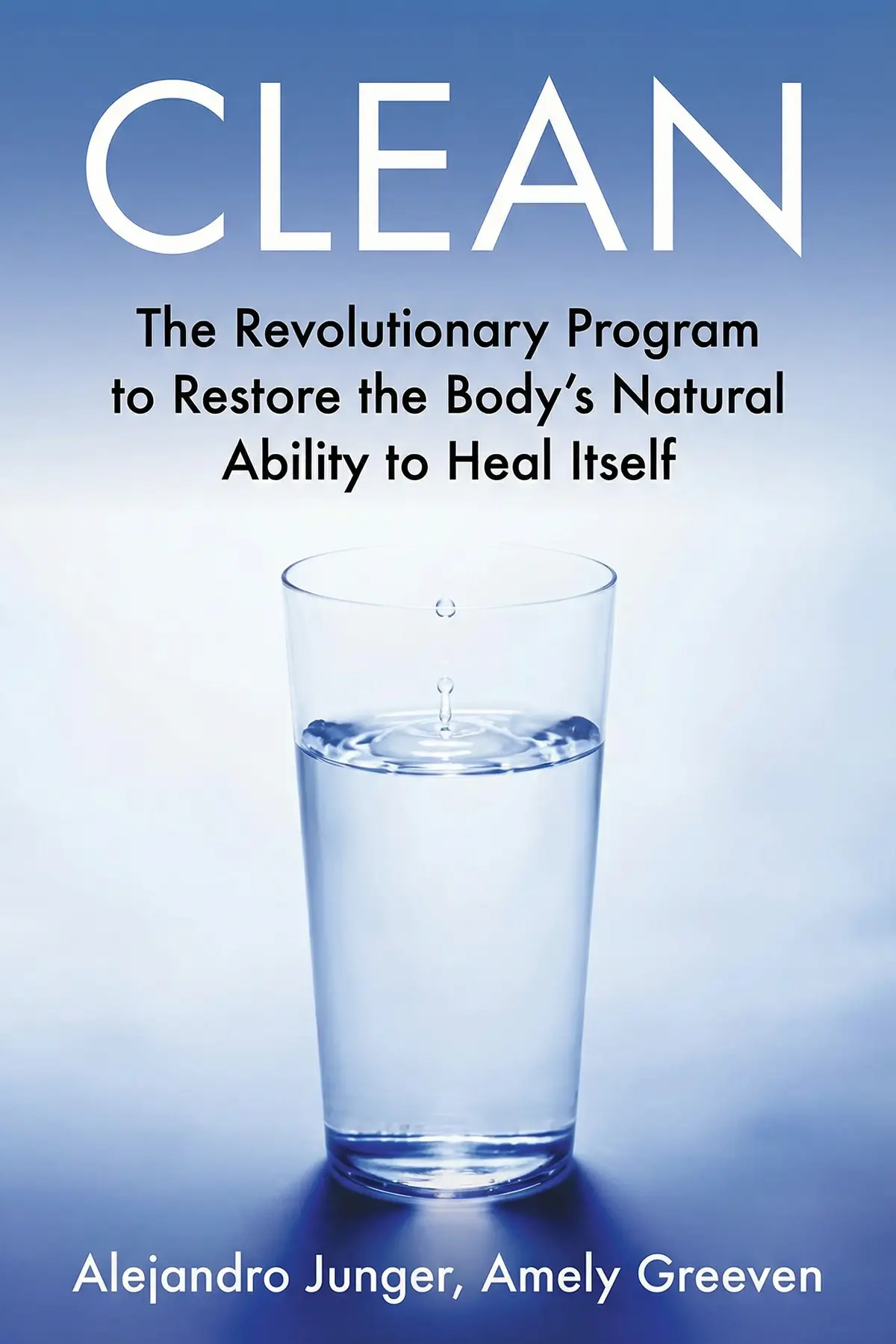
Table of Content
1. Introduction
54 sec
If you lean on a third coffee to get through the afternoon and accept bloating as normal, cardiologist Alejandro Junger thinks your body is asking for a break, and he counts caffeine itself as a toxin. In Clean, written with Amely Greeven, he argues that the body already knows how to clean and repair itself, but modern food, products and habits keep it too busy to do the job.
Lighten that load for three weeks, with easier food, a long nightly fast and a few supporting habits, and in his view the body returns to its own healing work. Along the way you get Junger’s map of where toxins enter daily life, two warning signs you can check at home tomorrow, and the full 21-day plan, from the 12-hour overnight fast to the blender, the juicer and twenty daily minutes of movement.
2. Stop dismissing tiredness and bloating as normal
1 min 50 sec
A New York heart doctor kept seeing the same small complaints in patient after patient. He began to suspect they shared one cause, and that the usual medical response was making things worse.
3. Find the toxins hiding in your four skins
1 min 46 sec
Your deodorant, your favorite shirt and the room you work in may all be doing something you never considered. Junger sorts daily exposure into four layers, and the most surprising one is indoors.
4. Eat like a village full of 100-year-olds
1 min 46 sec
A green vegetable treated for safety, a glass of tap water and a plastic food wrapper all appear on Junger’s list of concerns. His alternative comes from a mountain village where reaching 100 is ordinary.
5. Read the warning signs your body already shows
1 min 49 sec
A two-second pinch test and an honest look at your toilet habits could tell you more than you expect. Junger argues that what most people call normal is already a sign of trouble.
6. Clear your calendar and kitchen before day one
1 min 39 sec
The 21-day program depends on one timing rule tied to what the body does overnight. Getting it right means choosing the right weeks and buying three tools before you start.
7. A daily meal rhythm that tames false hunger
1 min 47 sec
Two of your three daily meals become something you drink, and cravings will arrive. Junger’s most useful tool for them is a single question, and it works long after the program ends.
8. Speed the cleanse with sweat, breath and movement
1 min 46 sec
Saunas, breathing and even a trampoline appear in Junger’s toolkit for the three weeks. The surprise is how strongly he warns against pushing hard, especially in the first week.
9. Conclusion
1 min 03 sec
Clean rests on one picture: a body built to clean and repair itself, kept overloaded by modern life. Junger and Greeven connect that overload to the obesity, depression, constipation and heart disease they see across Western societies. Their remedy is to step back for three weeks so the body can do the work it was made for.
These are the authors’ views, and parts of the program, from long daily fasts to colonic hydrotherapy, are big changes. Anyone managing a health condition would be sensible to talk them through with their own doctor first.
Even without the full 21 days, the book leaves habits that are easy to test. Leave twelve hours between your last bite at night and your first one in the morning. Before you reach for a snack, ask whether you are hungry or looking for comfort. And take the authors’ simplest rule to your bathroom shelf: if you would be afraid to get a product in your mouth, keep it off your skin, because in their view the skin carries it into the blood just the same.
About this book
What is this book about?
Recurring tiredness, bloating, puffiness and constipation are so common that most people, and many doctors, treat them as normal. Cardiologist Alejandro Junger disagrees. After seeing these complaints again and again at his New York clinic, he came to believe that they come from toxins the body never evolved to handle, arriving through cosmetics, clothing, indoor air, pollution, processed food and even tap water. Writing with Amely Greeven, Junger argues that the body already knows how to clean and repair itself. Modern life simply keeps it too overloaded to do so. Drawing on Ayurveda and on long-lived communities such as a mountain village in Sardinia, he describes the warning signs of toxic buildup and a way to lighten the load. The core of the book is the 21-day Clean Program: two liquid meals and one solid lunch a day, a 12-hour overnight fast, supplements for the gut, and supporting practices from saunas and deep breathing to gentle daily movement. Readers get the authors' reasoning, a plan for preparing their home and schedule, and simple tests and habits they can try on their own.
Book Information
Who it's for
Professionals running on coffee
Busy professionals who run on coffee and accept tiredness and bloating as normal.
Curious about detox programs
People curious about detox programs who want to know exactly what a structured three-week plan asks of them.
Rethinking everyday products
Anyone rethinking the cosmetics, cleaners and processed food they use every day.
About the Author
Alejandro Junger
Alejandro Junger trained as a doctor in Uruguay, then specialized in internal medicine at NYU Downtown Hospital and in cardiology at Lenox Hill Hospital in New York, before studying eastern medicine in India. His own struggle with irritable bowel syndrome and depression pushed him to look beyond the system he worked in, and Clean grew from that search. He also wrote Clean Gut and Clean Eats. Amely Greeven is a writer whose work has appeared in Vogue and Harper's Bazaar, with a strong interest in mothering and whole-person health.
Ratings & Reviews
Ratings at a glance
What people think
Listeners find the material straightforward and simple to grasp, providing extensive details on bodily functions. The program itself is easy to adhere to and encourages listeners to pursue wellness, with numerous individuals reporting better health and weight loss. Furthermore, the recipes are a highlight for listeners, though one listener mentions they are fairly standard juice and smoothie options.
Top reviews
Titiluck
Wow. This really changed how I view my morning coffee and those late-night snacks that I used to think were harmless. Frankly, I was a bit intimidated by the 21-day timeline, but Junger breaks down our body mechanics in a way that actually makes sense to a layperson. The central idea isn't just about starving yourself—it's about giving your digestive system a much-needed break from the constant barrage of processed junk. I followed the liquid-solid-liquid meal structure and the energy shift was almost immediate. By the second week, my skin was clearer and that persistent brain fog finally lifted. While some of the talk about toxins in our clothing felt a bit extreme, the core dietary advice is solid. If you are tired of feeling sluggish and want a program that is easy to comprehend without needing a medical degree, this is the one. The smoothie recipes are surprisingly tasty, too!
Show moreNum
The chapter on gut health was a total revelation for me. As someone who has dealt with IBS for years, I’ve tried every pill and potion out there with zero luck. Junger’s approach is different because it focuses on removing the triggers rather than just masking the symptoms. I followed the 21-day cleanse to the letter and the change was night and day. My digestion normalized for the first time in a decade, and I even stopped needing my daily afternoon nap. I love that he includes a variety of options for the cleanse so you don't feel totally restricted. The instructions are thorough and the science—while presented simply—feels intuitive once you start seeing the physical results. This isn't just a fad diet; it's a manual for understanding how your body actually processes fuel. It has fundamentally changed the way I shop for groceries and I feel ten years younger.
Show moreChokdee
As someone who has struggled with chronic migraines for years, this approach was a literal godsend. I’ve read dozens of health books, but 'Clean' provided the most actionable plan I've found yet. Dr. Junger’s tone is compassionate, likely because he went through his own health crisis, which makes the advice feel more authentic. The recipes are actually quite good—the almond smoothie is a staple for me now—and the program is easy to follow if you're organized. I didn't just lose weight; I gained a sense of mental clarity that I haven't had since my twenties. It's empowering to realize that you have so much control over your own well-being just by changing what's on your plate. If you are on the fence, just try the elimination diet for a week. The results will likely convince you to finish the whole book.
Show moreSuvannee
After hearing so much buzz about the GOOP lifestyle and Gwyneth Paltrow's endorsements, I finally decided to see what Dr. Junger was actually proposing. The book is an eye-opener regarding the sheer volume of chemicals we encounter daily, though it can be a bit depressing to realize your shower water might be working against you. To be fair, the plan itself is quite rigorous—cutting out dairy, sugar, and caffeine all at once is no small feat. However, the results speak for themselves; I lost about 12 pounds and my bloating disappeared completely. My only real gripe is the repetitive nature of the writing; he could have easily made his point in half the pages. Still, the 'Clean' system provides a clear roadmap for anyone looking to reset their gut health. It’s a practical guide that moves beyond simple calorie counting into true physiological restoration.
Show moreElan
Ever wonder why you feel sluggish even when you think you're eating 'healthy'? Picked this up on a whim and was surprised by how much I learned about gut health. Dr. Junger explains the 'clean' philosophy with a tone that is both authoritative and encouraging. I didn't buy the expensive supplement kits advertised on his website, and I still saw incredible benefits just by sticking to the elimination diet and the suggested meal timing. The recipes are basic—lots of green juices and almond-based smoothies—but they work well for a busy schedule. I did find the sections on environmental toxins a little paranoid, as if we should all live in a sterile bubble to be healthy. That said, the 3-week program gave me a much-needed reset. It helped me identify that dairy was the secret cause of my frequent headaches, which is worth the price of the book alone.
Show moreTanyaporn
Finally got around to finishing this, and while I’m skeptical of the 'big pharma' conspiracy angles, the basic logic of resting your digestive system holds up. The author does a great job of explaining why our modern diet is so taxing on our internal organs. I particularly liked the section on the 12-hour window between dinner and breakfast; that’s a habit I’ve kept long after finishing the 21 days. The book is easy to comprehend and doesn't get bogged down in too much jargon, though it does lean heavily on the 'clean' branding. Not gonna lie, I missed my morning latte terribly, but replacing it with green tea and smoothies really did stabilize my energy levels. It’s a solid resource for anyone who feels like their body needs a hard reboot, provided you can ignore some of the more 'woo-woo' environmental warnings.
Show moreHemp
It’s a bit depressing to read about how everything from our water to our clothes is 'toxic,' but the actual plan is surprisingly grounded. I’ll be honest, I skipped most of the intro and went straight to the 'Clean System' chapters. The 21-day program is definitely a commitment, especially with the 'no caffeine' rule, but it’s manageable if you use the resources on the website. I appreciated that Junger gives you the DIY version instead of just forcing you to buy his pre-made shakes. My husband and I did it together and we both noticed a massive reduction in joint pain and inflammation. The book can be long-winded at times, and some of the celebrity name-dropping is annoying, but the core message is vital. It’s a thorough guide to modern detoxing that actually delivers on its promises if you're willing to do the work.
Show moreElias
Picked this up because a friend lost fifteen pounds on the program, but the writing style is incredibly repetitive. The truth is, the actual 'Clean' protocol is fairly simple: two liquid meals a day and one solid meal from an approved list. Why did it take over 300 pages to explain that? I appreciated the information on alkalinity and inflammation, but I had to wade through mountains of anecdotal evidence to get to the useful bits. Also, the list of 'don'ts' is so extensive it’s a bit of a 'fear factor' experience for your pantry. No coffee, no nightshades, no soy... it makes socializing almost impossible for three weeks. I did feel better by the end, but the level of focus required to stay on track was exhausting. It’s a decent guide if you need a strict hand to hold, but don’t expect a quick or easy read.
Show morePetch
To be fair, the 'Clean' program isn't as impossible as it sounds at first glance, but it does require a lot of prep work. You basically have to become a full-time chef and chemist for three weeks to ensure you aren't accidentally consuming 'hidden' toxins. I struggled with the liquid dinner part the most; drinking soup while my family ate a normal meal was a test of will. In my experience, the book is a bit heavy on the 'miracle cure' rhetoric, claiming this can fix everything from heart disease to depression. While I did lose some weight and felt less bloated, I'm skeptical of some of the more extreme claims. The list of allowed foods is fine, but you'll spend a fortune at the health food store. It’s a good jumping-off point for a healthier lifestyle, but take the more dramatic medical promises with a grain of salt.
Show moreLevi
This book feels like one giant infomercial for a supplement line I simply cannot afford. Look, I appreciate the emphasis on whole foods, but the lack of peer-reviewed scientific studies is a major red flag for me. Junger spends a lot of time hand-waving away the need for clinical trials by blaming 'big pharma' for not funding natural research, which feels like a convenient excuse for making anecdotal claims. Most of the 'toxin' checklists are so vague—fatigue, puffiness, joint pain—that literally every adult in America would qualify for this program. It’s also quite elitist; the book suggests buying expensive water filtration systems and organic everything, which isn't realistic for the average person. If you want the actual detox plan, it’s only about ten pages in the middle. The rest is just repetitive filler and celebrity testimonials. Save your money and just eat more vegetables instead.
Show moreQuestions about this book
What is the main idea of Clean by Alejandro Junger?
Junger argues that toxins from cosmetics, clothing, indoor air, pollution and processed food build up faster than the body can clear them, causing symptoms like tiredness, bloating and constipation. He believes the body can heal itself if the load is lightened, and he offers a 21-day program of easier food, a 12-hour nightly fast, supplements and supportive practices to give it that chance.
What does a day on the Clean Program look like?
Each day includes one solid meal at lunch plus two liquid meals, a shake, juice or soup, at breakfast and dinner. Twelve hours pass with nothing taken in, usually overnight. Junger adds fiber, probiotics and antimicrobials such as oregano oil or garlic, plus gentle movement for at least twenty minutes, and he advises avoiding intense training, especially in the first week.
Why does the Clean Program use a 12-hour fast?
According to Junger, the body enters detoxification mode about eight hours after the last meal and needs roughly four more hours to complete the process. A daily 12-hour gap gives it that full window. Keeping dinner liquid and light, he says, leaves the body more energy for the work it does overnight.
How can I tell if I need a detox, according to Clean?
Junger suggests two checks. Pinch and gently pull the skin of your face: it should spring back, and puffiness, pimples, visible pores, dark circles or orange-peel dimples point to toxic buildup, which Ayurveda calls amma. Second, look at your digestion. By his account, a healthy pattern is going to the toilet after every meal, so chronic constipation is a warning sign.
Can I use ideas from Clean without doing the full program?
Yes. Several of the book’s habits stand on their own: leaving twelve hours between dinner and breakfast, asking whether a craving is real hunger or a search for comfort, eating seasonal local food and chewing slowly, and avoiding any cosmetic that you would fear swallowing. These are the authors’ recommendations, so anyone with a health condition should discuss bigger changes with a doctor.
Readers also enjoyed






AUDIO SUMMARY AVAILABLE
Listen to Clean in 15 minutes
Get the key ideas from Clean by Alejandro Junger, plus 5,000+ more nonfiction titles.
- 5,000+ titles
- Listen as much as you want
- 7-day free trial
- Cancel anytime









