

13 min 58 sec
Available in: English
Clashing over Commerce: A History of US Trade Policy
Traces more than two centuries of American fights over tariffs and trade deals. It shows how regional interests, party power and world crises swung the country between protection and openness, and why trade still divides voters.
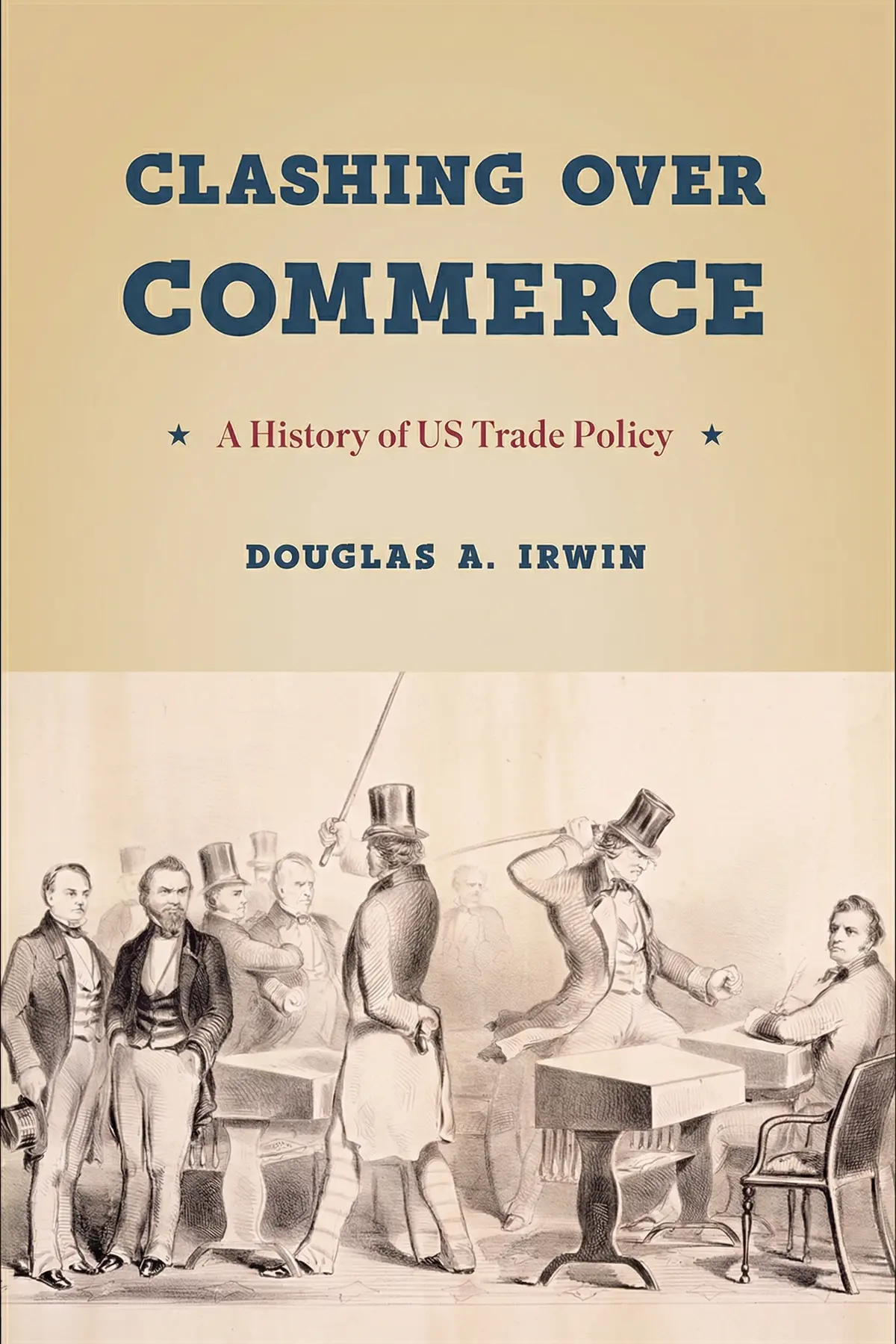
Table of Content
1. Introduction
1 min 13 sec
If tariff headlines leave you unsure who wins and who pays, the history of US trade policy offers a map. In Clashing over Commerce, economist Douglas A. Irwin shows that trade has split American politics since before the country existed: frustration with British trade laws helped push the colonies toward independence. From there, Irwin traces a long swing between protection and openness.
Tariffs first funded the young government, then shielded northern factories for decades, then gave way after the Great Depression to negotiated deals and global rules, until globalization turned trade into a fight about who the economy serves. His argument comes down to one line. The course of American policy on trade has never been a straight path, since it shifts whenever regional interests, party power and world events change.
Follow those forces and today’s arguments over tariffs, China and trade deals stop looking new. They become the latest round of a contest more than two centuries old, and one you can read with a clearer eye.
2. See the trade fight that helped spark independence
2 min 04 sec
Colonists in Virginia and Boston believed they held a strong economic weapon against Britain. How they used it, and how badly they judged its strength, shaped the birth of a nation and its first constitution.
3. Discover how tariffs once paid for an entire government
1 min 57 sec
The young United States had almost none of the tools a modern state uses to raise money. The one tool it did have solved its budget problem and planted a regional quarrel that lasted generations.
4. Spot who pays when tariffs protect an industry
1 min 55 sec
For nearly seventy years, one political party promised that shielding factories would build the nation. The promise sounded simple, but southern and western farmers felt the cost, and even a reform-minded president could not change it.
5. Learn how a failed tariff turned America toward deals
1 min 51 sec
A law meant to shelter farmers and factories from a global slump backfired badly. The response did more than lower rates. It changed who in Washington got to bargain over trade, and that changed everything after.
6. The purpose that kept both parties backing open trade
1 min 59 sec
For decades, lowering trade barriers drew surprisingly little anger in Washington, even as foreign rivals hit American steel and car makers. The reason had less to do with economics than with a larger contest abroad.
7. Hear the deeper question inside modern trade fights
1 min 51 sec
A trade deal backed by both parties in 1993 hid early signs of a split. Within a generation, candidates from left and right were attacking ideas their parties had defended for decades, and tariffs came to mean something new.
8. Conclusion
1 min 08 sec
Over more than two centuries, Irwin shows, the same tension keeps coming back in a new form. Tariffs began as the simplest way to pay for a young government. They became a shield for northern factories and a weight on southern and western farms. After 1930 they turned into bargaining chips in a strategy of diplomacy, and after the Cold War into a symbol of who was winning and losing from globalization. The path was never straight, because the people holding power, and the regions they spoke for, kept changing.
That history offers a habit for reading the news. When someone proposes a tariff or a trade deal, ask which regions and industries gain, and who pays through higher prices or lost markets. Notice who holds the power to decide, Congress or the president, since the switch in 1934 changed what America chose. And keep in mind the colonists who believed their boycotts could force Britain’s hand: trade pressure has limits, and those who apply it often overrate their own strength.
The fight over commerce is older than the country itself, and every generation inherits it with fresh stakes.
About this book
What is this book about?
Trade can look like a technical subject for economists, yet few questions have split American politics for longer. Douglas A. Irwin follows that argument from colonial anger at British trade laws, through the tariffs that paid for the early federal government, to the modern backlash against globalization. He argues that policy changed along with shifting ideas, as well as crises around the world, rivalries between regions and the alliances of the day. Northern manufacturers and southern and western farmers wanted opposite things, and Congress became the arena where compromise and logrolling set the tariff. After the Civil War, protection became doctrine for almost 70 years. The disaster of 1930 and the Great Depression pushed the country toward negotiated deals, presidential bargaining and the global rules of GATT. Cold War goals kept both parties behind open trade for decades, until NAFTA, the World Trade Organization and competition from China cracked that consensus. Readers get one clear story that connects early tariff battles to today's disputes over trade deals and factory jobs, and a practical way to read any trade debate: ask who gains, who pays and who holds the power to decide.
Book Information
Who it's for
Puzzled by tariff headlines
Professionals and investors puzzled by tariff headlines who want the long history behind them.
Students wanting clarity
Students of economics, history or politics looking for one clear story of American trade policy.
Importers and exporters
Business owners who import or export and want to understand why trade rules keep changing.
About the Author
Douglas A. Irwin
Douglas A. Irwin is the John French Professor of Economics at Dartmouth College, a research fellow at the National Bureau of Economic Research and a nonresident senior fellow at the Peterson Institute for International Economics. He previously taught at the University of Chicago Booth School of Business and worked as an economist at the Federal Reserve and the President's Council of Economic Advisers. His research covers past and present US trade policy, with special attention to the Great Depression, and he has written on trade for The Wall Street Journal, The New York Times and the Financial Times.
Ratings & Reviews
Ratings at a glance

What people think
Listeners consider the work highly rewarding and value the writer's lucid and expert prose. The caliber of the content earns praise, as one listener points out that it offers a comprehensive review of U.S. tariff history.
Top reviews
Akosua
This massive volume is the definitive account of American trade policy, and quite frankly, it’s a masterpiece of economic history. Irwin traces the evolution of the nation’s commercial strategy from the colonial boycotts against Britain to the modern debates over globalization with incredible precision. The way he frames the history through the 'Three R's'—revenue, restriction, and reciprocity—makes a complex subject surprisingly easy to follow. I was particularly impressed by how he balances the technical economic data with the human element of political maneuvering. It becomes clear that trade has never been a side issue; it has been central to the American project since 1776. The prose is clear and authoritative, avoiding the partisan traps that often plague this topic. While the sheer length might be intimidating, every page feels necessary to understand our current economic landscape. This is a brilliant, essential work for anyone interested in how policy actually gets made in Washington.
Show moreRotjanee
Ever wonder why trade is so incredibly toxic in our current political climate? Douglas Irwin’s history provides the best answer I’ve found, tracing two centuries of 'clashing' interests that feel eerily similar to today’s headlines. The transition from using tariffs as a primary revenue source to using them as a shield for domestic industry is explained with remarkable clarity. I was particularly struck by how often short-term political maneuvering led to long-term economic consequences that took decades to undo. While the book is certainly a commitment in terms of time, the payoff is a much deeper understanding of the American identity. It’s not just a book for economists; it’s a book for anyone who cares about the intersection of power and prosperity. The maps and tables are actually helpful, not just filler, and they help ground the abstract concepts in real-world data. Highly recommended for the patient reader.
Show moreAnawin
As a student of economics, I found Irwin's deconstruction of the 'Hamilton as protectionist' myth particularly enlightening. Too often, Hamilton is used as a convenient mascot for modern trade barriers, but Irwin shows that his primary concern was actually government revenue and credit, not permanent industrial walls. This kind of nuance is what makes the book so valuable; it strips away the political talking points to reveal the messy reality of our history. The text moves methodically through the Civil War and the long period of Republican dominance, showing how the North and South were locked in a tug-of-war over imports and exports. It’s a dense read, and you definitely shouldn't expect to finish it in a weekend, but the depth of research is just staggering. The author’s ability to remain objective in such a politically charged field is perhaps his greatest achievement. This is economic history at its absolute best.
Show moreApichat
Finally got around to finishing this 800-page beast, and the clarity Irwin brings to the 'Three R's'—revenue, restriction, and reciprocity—is unparalleled. It’s easy to get lost in the weeds of 19th-century tariff schedules, but the author consistently pulls back to show the bigger picture of national development. I found the section on the post-WWII era particularly fascinating, as it explains how the U.S. used trade as a diplomatic tool to contain communism. The truth is, I expected this to be a dry academic exercise, but it reads more like a biography of the nation itself. There are moments where the detail on specific wool or iron duties gets a bit heavy, but the overall narrative arc is strong enough to keep you engaged. It’s an essential piece of scholarship that feels incredibly relevant to the debates we are having about trade agreements today.
Show moreChamp
Wow. This is a staggering achievement that manages to make the history of the tariff genuinely compelling for the modern reader. Irwin shows us that trade has never been just about numbers; it’s always been a proxy for deeper arguments about what kind of nation we want to be. I was fascinated by the transition in the 1930s when the power to set trade policy shifted from a squabbling Congress to the executive branch. That change fundamentally altered our global standing and paved the way for the postwar prosperity we often take for granted. It's a long read, but every chapter feels essential for understanding how we ended up with the polarized trade politics of today. Truly authoritative and remarkably balanced throughout.
Show moreAim
To be fair, I didn't expect to walk away from an 800-page book on tariffs feeling inspired by a Secretary of State. But Irwin’s portrayal of Cordell Hull and his vision for a rules-based international system is one of the highlights of this work. The book does an amazing job of showing that our current 'free trade' consensus was never a given; it was a hard-won victory that emerged from the ashes of the Great Depression. The writing is authoritative and clear, even when handling the complex intersection of currency values and trade barriers. Some might find the level of detail regarding the 19th-century Whig and Democrat debates a bit much, but I found it provided necessary context for our modern partisan divide. It’s a comprehensive, objective, and deeply researched history that belongs on the shelf of any serious history buff.
Show morePui
Not what I expected from a book on trade policy, but Irwin manages to keep the narrative moving even when diving into the granular details of the Smoot-Hawley Act. Most people think of trade as a boring, technocratic subject, but this book reveals it as a high-stakes arena of political scheming and regional warfare. I loved the way the author highlighted the role of specific personalities, especially the transition of power from Congress to the President during the New Deal. The data presentation is also superb, with summary tables that make complex shifts in import duties easy to visualize across centuries. It's rare to find a book that is this academically rigorous while still being accessible to an informed layperson. This should be required reading for anyone in Washington right now, as it provides a much-needed long-term perspective on globalization.
Show moreVera
The chapter on the 1828 'Tariff of Abominations' reads like a political thriller, proving that trade has always been more about backroom deals than pure theory. It was fascinating to see how a bill designed by its opponents to fail ended up becoming law and nearly tearing the Union apart decades before the Civil War. Irwin has a real knack for explaining how regional alliances shifted over time, especially as the West became a swing vote between the industrial North and the agrarian South. My only gripe is that the book can be a bit repetitive in its structure, following the same pattern for almost every major tariff act. However, the summary tables at the end of each section are a lifesaver for keeping track of the data. It’s a bit of a marathon, but if you want to understand why trade remains such a volatile issue in American politics, this is the definitive source.
Show moreYuki
Look, if you still think the Civil War was primarily fought over tariffs rather than the preservation of slavery, you need to read this book immediately to correct that misconception. Irwin expertly debunks that narrative by showing that tariffs were actually at their lowest point in decades right before the South seceded. The book is divided into distinct eras that help organize what could have been a very chaotic timeline of legislative history. I particularly enjoyed the sections on how the Republican Party became the champion of the 'home market' and high duties for nearly seventy years. My only real complaint is that the writing style is occasionally workman-like and dry, lacking the narrative flair of more popular histories. Still, the historical charts and the analysis of how regional interests shaped national policy are top-notch and incredibly useful for anyone trying to understand modern trade debates.
Show moreSven
I'll be blunt: this book is an absolute mountain of information that occasionally feels like a hike through waist-deep mud. While Irwin is clearly the leading authority on the subject, the prose is incredibly dense and the sheer volume of data tables can be overwhelming for anyone who isn't a professional economist. I appreciated the objective tone and the way he traces the shift from revenue-based tariffs to full-blown protectionism, but the middle sections felt like a repetitive cycle of Congressional vote-counting. If you have the patience for a 700-page deep dive, the insights into Smoot-Hawley and the Great Depression are invaluable. However, for a casual reader looking for a breezy history of the U.S. economy, this might be a bit too academic. It's an important book, certainly, but it’s a grueling marathon that requires a lot of coffee to get through.
Show moreQuestions about this book
What is Clashing over Commerce about?
Douglas A. Irwin traces American trade policy from colonial anger at British trade laws to modern fights over globalization. He argues that policy never moved in a straight line. Tariffs first funded the federal government, then protected northern industry for decades after the Civil War, then gave way after 1930 to negotiated deals and GATT. Trade has once more become among the most divisive questions in American politics since the 1990s.
Did the Smoot-Hawley Tariff cause the Great Depression?
Irwin argues the Smoot-Hawley Tariff was not the source of the Depression, though it deepened the pain. Passed in 1930, it pushed duties to their highest level since the Civil War and drew foreign retaliation. Trade collapsed and faith in protection was shaken. Lawmakers enacted the Reciprocal Trade Agreements Act in 1934, which allowed the president to bargain with foreign governments over tariff reductions that both sides would share.
Why did trade become so divisive in recent decades?
Irwin points to several shifts. With the Cold War over, the security rationale that had held both parties to open trade disappeared. The World Trade Organization brought new disputes, and China’s entry in 2001 exposed American workers to intense competition, hollowing out manufacturing regions. Critics said trade deals served corporations, and by 2016 candidates from both major parties were challenging the idea that free trade benefits the country.
Who should read Clashing over Commerce?
It suits readers who want the history behind today’s tariff and trade debates: students of economics, history or politics, professionals following the news and business owners affected by trade rules. It offers a clear way to read any trade proposal by asking which regions and industries gain, who pays and whether Congress or the president holds the power to decide.
Readers also enjoyed
A History of the World in 6 Glasses
Tom Standage

A Splendid Exchange: How Trade Shaped the World
William J. Bernstein

A Long Way Gone: Memoirs of a Boy Soldier
Ishmael Beah






AUDIO SUMMARY AVAILABLE
Listen to Clashing over Commerce in 15 minutes
Get the key ideas from Clashing over Commerce by Douglas A. Irwin, plus 5,000+ more nonfiction titles.
- 5,000+ titles
- Listen as much as you want
- 7-day free trial
- Cancel anytime









