

15 min 57 sec
Available in: English
Chaos Under Heaven: America, China, and the Battle for the 21st Century
By Josh Rogin
Shows how the Trump White House split between Wall Street doves and security hawks over China, how Beijing used that divide, and why deep financial ties still weaken America's position.
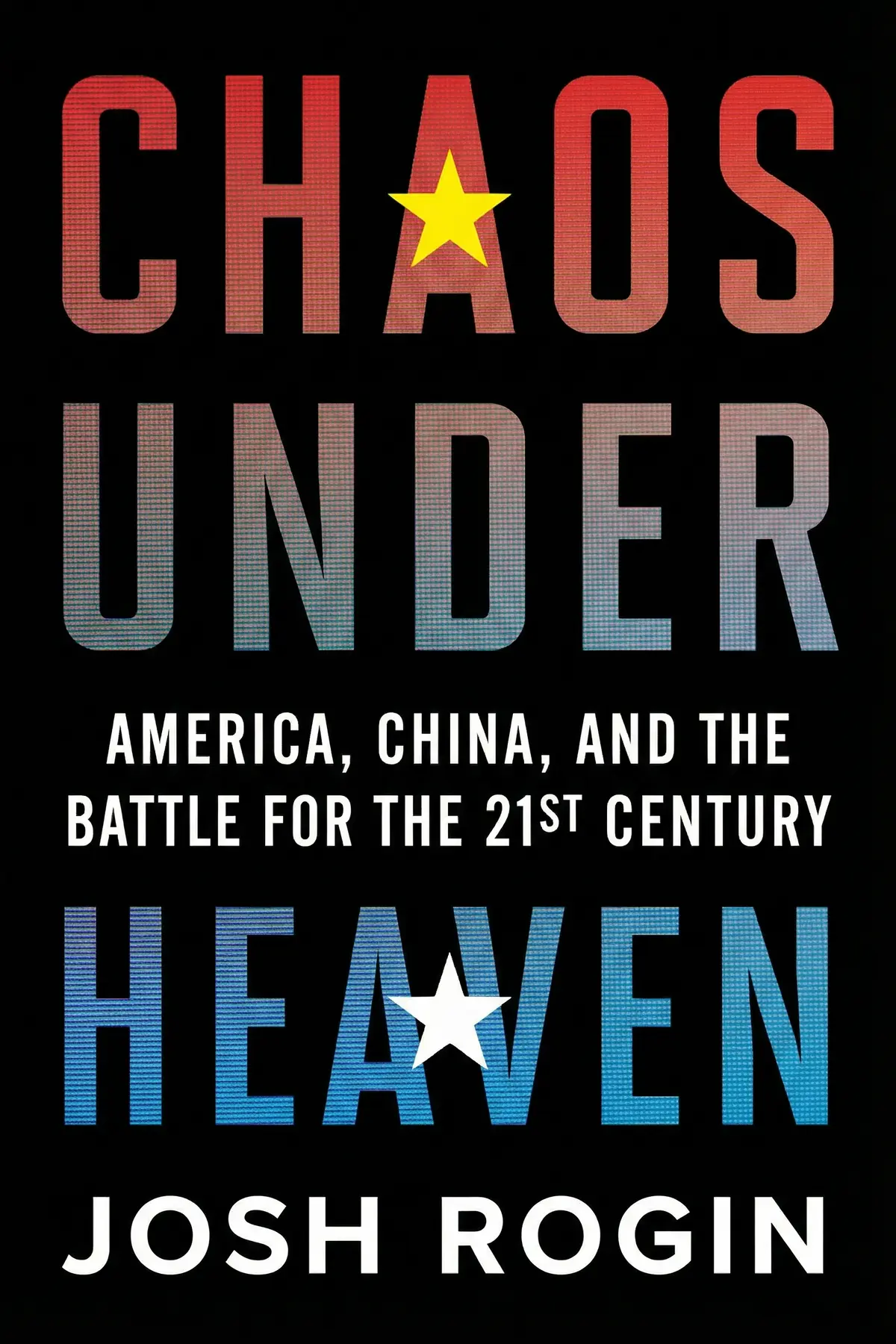
Table of Content
1. Introduction
49 sec
If the rivalry between America and China feels like a blur of headlines, the Trump years make a clear case study in how that contest is run, and how it gets mishandled. In Chaos Under Heaven, Washington Post foreign policy columnist Josh Rogin shows a White House arguing with itself about China for four years. Beijing, meanwhile, kept one simple message: treat us as an equal and stay out of our affairs.
Rogin’s case is that the split between Wall Street doves and security hawks let China gain ground at almost every turn. A president who treated Xi Jinping as a business friend made it worse. And deep financial ties keep America’s hand weak today. Along the way the book shows how to read China’s moves, and your own exposure to them, more clearly.
2. Learn what went wrong with the bet on China
1 min 26 sec
For forty years, Washington believed trade would slowly change Beijing. Then the internet arrived, and something about how Chinese companies really work turned the theory upside down.
3. Spot the two camps that split Washington
1 min 43 sec
Five senior Americans sat across from one Chinese diplomat, and the Chinese side was the one that sounded united. The first meeting already showed the fault line that would run through four years.
4. A friendly summit that handed Beijing the advantage
1 min 34 sec
One phone call from Taiwan nearly froze relations before Trump took office. Undoing it cost more than an apology, and the price showed what the president was willing to trade for a good meeting.
5. Discover how Xi steered American policy
1 min 56 sec
Talks collapsed, tariffs were prepared, and then a dinner changed everything again. A repeating pattern in Trump’s China policy meant Beijing never had to give much ground to calm things down.
6. What the Uyghur camps revealed to Americans
1 min 48 sec
For years a whole people was disappearing into camps while Washington kept the subject off the agenda. What finally broke the silence was the story of one student doing her homework.
7. Trace China's reach into global institutions
2 min 04 sec
UN agencies, an Australian institute, American campuses and a basketball team all felt the same pressure. The machinery behind it is old, organized and largely invisible to the people it targets.
8. Secrecy that clouded the pandemic's first months
1 min 43 sec
A trade deal was signed one day and a mystery illness was on the table the next. What Beijing said, cleaned up and silenced in those weeks still shapes what anyone can know.
9. Follow the money that weakens America's hand
1 min 49 sec
Tough words and sanctions finally arrived in 2020. Yet a stream of ordinary American savings kept flowing east, including into a company that builds missiles, and nobody in charge would stop it.
10. Conclusion
1 min 05 sec
In the end, Chaos Under Heaven is a portrait of a superpower that never decided what it wanted. One camp in Washington wanted quiet markets and a deal. The other could not ignore stolen technology, prison camps and a reach that ran from UN agencies to a basketball league. Between them stood a president who believed a personal friendship with Xi could carry the relationship, and who swung with every turn in the trade talks. Beijing held one position from the first meeting to the last. Apart from a thin Phase One deal, little was settled, and China’s influence kept growing.
The book supports a few habits of attention. When you follow any negotiation with China, notice which side speaks with one voice. Treat data shared with a Chinese company as data the state can reach. And check what your own savings are paying for, because Rogin finds America’s weakest point in its investment portfolios.
His sharpest image involves no summit at all: the pension of an American public servant helping to pay for missiles in a rival’s air force.
About this book
What is this book about?
For decades, Washington bet that a richer China would become a freer China. By the time Donald Trump took office, that bet had failed. Chinese hackers were taking intellectual property, private firms were handing data to the Communist Party, and the state was tightening its grip at home. Josh Rogin, a foreign policy columnist, follows how the Trump administration handled that reality, and how badly it was split. Doves with ties to Wall Street wanted calm markets and a trade deal. Hawks wanted to confront Beijing over theft, human rights and influence. The president swung between the two, guided mostly by his personal friendship with Xi Jinping and the mood of the trade talks. The book runs from a confused first meeting in December 2016 through the Mar-a-Lago summit, the Uyghur internment camps, China's reach into UN agencies, universities and an NBA team, and the secrecy of the early pandemic. It ends with money: millions of Americans' retirement savings flowing into Chinese firms, including a maker of missiles. Readers get a clear account of why American policy toward China kept stalling and where its real weak points lie.
Book Information
Who it's for
Professionals following geopolitics
Professionals who follow geopolitics and want a clear account of America's China policy under Trump.
Doing business with China
Founders and managers with Chinese suppliers, partners or customers who need to understand the risks to their data and reputation.
Investors curious about holdings
Investors curious about what their index funds and pensions actually hold.
About the Author
Josh Rogin
Josh Rogin writes a foreign policy column for The Washington Post's Global Opinions section and is a political analyst on CNN. His reporting on foreign policy and national security has appeared in Bloomberg View, Newsweek, The Daily Beast, Foreign Policy and Congressional Quarterly, and he has covered China for many years. He was a 2011 finalist for the Livingston Award for Young Journalists and won the Interaction Award for Excellence in International Reporting.
Ratings & Reviews
Ratings at a glance
What people think
Listeners find the book a worthwhile investment of time and money, and one listener observes that it reads like a thriller. Furthermore, the caliber of information is well-regarded, with one listener highlighting its comprehensive coverage of the 2016-2020 period. The storytelling style also earns acclaim, with one review describing it as a high geopolitical drama that leaps off the page. However, the author's material and interview segments receive mixed reactions, and one listener notes the book has a relentlessly critical tone.
Top reviews
Natalie
This book reads more like a high-stakes spy thriller than a dry political science text. Josh Rogin has managed to capture the frantic energy of the 2016-2020 period with a narrative that truly leaps off the page. Not gonna lie, I was skeptical about another 'Trump book,' but this focuses so heavily on the shifting sands of foreign policy that it feels essential. He details the internal power struggles between the Wall Street billionaires and the national security hawks with incredible precision. The way Rogin describes the CCP’s influence—from Hollywood to the NBA—is both terrifying and necessary for any American to understand right now. While the author's background at the Washington Post shows through in some of the framing, the quality of information is undeniably high. It provides a comprehensive roadmap of how we got to this new Cold War.
Show moreHassan
Wow, what an eye-opening deep dive into the CCP's long-term strategy to undermine American interests through economic coercion and technological theft. Rogin manages to turn complex trade policy into a gripping narrative that feels like a geopolitical thriller. Gotta say, the way he breaks down the 2016-2020 period is far more comprehensive than anything I’ve seen on cable news. The book highlights how the 'America First' platform was constantly being undermined by internal factions with their own agendas. It's fascinating to see how the CCP used the lure of capitalism to compromise American institutions over the last few decades. Even though the author can be a bit heavy-handed with his criticisms of the administration, his analysis of the existential threat remains sharp. This is a vital resource for anyone trying to make sense of the chaos in current international relations.
Show moreKanokporn
The chapter on the origins of COVID-19 alone makes this worth the purchase price for any curious reader. Rogin’s investigative journalism into the Wuhan lab and the subsequent cover-up by the CCP is truly gripping stuff. In my experience, most political books are dry, but this one has a narrative that leaps off the page. He masterfully connects the dots between China’s domestic human rights abuses and their aggressive territorial expansionism. The author explains how the world finally woke up to the malignancy of the CCP during the 2020 outbreak. While the book is definitely a bit outdated now, the historical context of the trade war remains essential for understanding today's headlines. It’s a thorough and biting analysis of the most significant challenge facing the free world today. I highly recommend it for those who want the full picture.
Show moreTantipat
Rogin delivers a masterclass in investigative journalism that leaps off the page with every turn of the leaf. Personally, I found the comprehensive coverage of the 2016-2020 period to be the most detailed account available to the public. The author captures the intense friction between the 'trash Trump tribe' and the career diplomats who were trying to steer the ship. It’s a biting analysis of how the CCP uses money—from infrastructure loans to Hollywood deals—to stifle any criticism of its actions. The book makes it clear that we are beyond the point of asking whether a strategic rivalry is necessary. It provides the ethical and moral logic for why the US must finally stand up to China’s bullying. While the tone is sharp and often critical, the quality of the information is top-notch. This is the kind of work that should be required reading for the current administration.
Show moreOrm
After hearing Rogin on several podcasts, I decided to dive into his comprehensive account of the Trump administration's internal wars over China. The depth of the interview content here is staggering, offering a fly-on-the-wall perspective of the Oval Office. To be fair, the tone is relentlessly critical of the former president’s temperament, yet Rogin gives credit where it’s due regarding the total shift in the China consensus. He highlights how the CCP isn't just a competitor but a malignancy seeking global hegemony through IP theft and subversion. My only real gripe is that some of the sections on capital markets felt a bit dense and slowed the pace. Despite the occasional dry patch, it remains a high geopolitical drama that explains the current tension perfectly. It is well worth the time if you want to understand the modern world.
Show moreNiphon
Finally got around to finishing this massive tome, and the sheer volume of interview content is undeniably impressive for a modern political book. It provides a comprehensive look at the years leading up to the pandemic, showing how our policy was often a series of mixed signals. Look, the narrative quality is excellent, even if the author’s tone stays relentlessly critical throughout the entire journey. I found the bits about Mike Pence’s surprisingly hawkish foreign policy to be the most fascinating part of the text. Rogin argues that the 'chess board' was flipped, but the administration struggled to set the pieces back up in a coherent way. While some chapters feel a bit rushed, especially toward the end, the overall work remains an important piece of investigative journalism. It’s a wild ride through the halls of power that reveals why our relationship with Beijing will never be the same.
Show moreEarn
Ever wonder why our policy toward Beijing shifted so radically in such a short amount of time? This book answers that question by diving into the internal chaos of the White House and the shifting global consensus. Rogin is a talented writer who makes foreign policy feel as fast-paced as an action movie. Not gonna lie, I was surprised by how much I enjoyed the deep dives into the state security hawks' motivations. The book does an excellent job spelling out how the CCP has used forced transfers and hacking to hollow out American manufacturing. It’s a thorough look at how the 'America First' approach eventually led to a permanent change in how we deal with the CCP. My only complaint is that the epilogue felt a bit too hopeful about the incoming administration’s ability to lead. Still, it’s a brilliant piece of work that offers new insights into the battle for civilization.
Show moreOmar
Picked this up because I wanted to understand the 'chaos' of the previous administration's trade wars and international maneuvering. Rogin offers a nuanced look at how Trump’s vanity was often played by Xi Jinping, even as his advisors pushed for decoupling. The reporting on IP pilferage and the subversion of financial markets is deeply researched and quite sobering. I appreciated how the book didn't just focus on the politicians, but also on the tech moguls of Silicon Valley. There is a sense of high geopolitical drama here that keeps you turning the pages late into the night. Some of the hacking claims felt a little thin on technical evidence, but the overall geopolitical argument is very strong. It’s a well-worth-it read for anyone concerned about the future of global democracy. Rogin has written a definitive account of a very turbulent era.
Show moreTariq
As someone who follows foreign policy closely, I found the reporting here to be a bit of a mixed bag. Personally, I think the reliance on 'anonymous sources' and 'leading officials' gets exhausting after the first few hundred pages. It makes me question the objectivity, especially when the author injects so many personal jabs at the administration's intelligence. However, the truth is that the sections on the CCP’s Confucius Institutes and their influence on college campuses are genuinely alarming. Rogin does a solid job explaining how the previous presidents were largely indifferent to China's rise until the recent 'awakening.' I wish there was less commentary and more hard data to back up some of the broader claims about the Deep State. It’s a decent read for the political junkies, but take some of the gossip with a grain of salt.
Show moreLevi
Not what I expected from a supposedly objective journalist at the Washington Post. Frankly, I felt the book was blinded by what some call 'Trump Derangement Syndrome,' which often distracted from the actual China analysis. He spends so much time harping on billionaire friends and ego that he misses the bigger picture of the policy wins. I lost count of the number of times 'allegedly' was used to cover for what felt like biased narratives. To be fair, he does eventually admit that the CCP is a dangerous rival that lies, cheats, and steals intellectual property. But the constant sniping at the president’s intelligence made it hard to take the foreign policy analysis seriously at times. If you want a book that validates a negative view of the Trump family, this is for you. If you want a neutral history, you might want to look elsewhere.
Show moreQuestions about this book
What is Chaos Under Heaven by Josh Rogin about?
It covers how the Trump administration dealt with China. Rogin argues that the White House was split between Wall Street doves who wanted a trade deal and hawks who wanted to confront Beijing over theft, human rights and influence. Trump swung between them, guided by his friendship with Xi Jinping, while China kept one clear message. Little was settled, and China’s global influence kept growing.
Who were the China hawks and doves in the Trump administration?
According to Rogin, the doves included Jared Kushner, who had back channels to China and ties to Henry Kissinger, plus Treasury Secretary Steven Mnuchin and Secretary of State Rex Tillerson. The hawks were led by Steve Bannon and included Peter Navarro, an economics professor with a plan to punish unfair trade. Matt Pottinger later led the 301 investigation that could justify tariffs.
How are Americans investing in the Chinese military, according to the book?
Rogin explains that index provider MSCI includes Chinese companies in products used by a retirement fund for five million federal employees. Through it, Americans, veterans among them, have invested in Hikvision, whose technology helps send Uyghurs to camps, and in the Aviation Industry Corporation of China, a maker of missiles for Beijing’s air force. Senator Marco Rubio tried to change this without success.
What practical lessons does Chaos Under Heaven offer?
The book suggests a few habits. In any negotiation with China, notice whether your side speaks with one voice, since Beijing used Washington’s divisions again and again. Assume a Chinese company can be made to hand its data to the state. Treat early official accounts from a government that controls the evidence with caution. And check what your own investment funds hold.
Readers also enjoyed

Abolish Rent: How Tenants Can End the Housing Crisis
Tracy Rosenthal

Abortion: Our Bodies, Their Lies, and the Truths We Use to
Jessica Valenti

Adults in The Room: My Battle With Europe’s Deep Establishment
Yanis Varoufakis

21 Lessons for the 21st Century
Yuval Noah Harari
A Different Kind of Power: A Memoir
Jacinda Ardern

Age of Anger: A History of the Present
Pankaj Mishra
A Higher Loyalty: Truth, Lies and Leadership
James Comey

Age of Propaganda: The Everyday Use and Abuse of Persuasion
Anthony Pratkanis
AUDIO SUMMARY AVAILABLE
Listen to Chaos Under Heaven in 15 minutes
Get the key ideas from Chaos Under Heaven by Josh Rogin, plus 5,000+ more nonfiction titles.
- 5,000+ titles
- Listen as much as you want
- 7-day free trial
- Cancel anytime









